

Image of 1949 Frazer Manhattan, Note: These illustrations use artistic license and may differ from actual historical models.
Performance Metrics
Fundamental Metrics
Emotional Appeal
MMP Rating
| Engine Specifications | |
|---|---|
| Engine: | Inline 6 |
| Displacement: | 226 cu in (3.7 L) |
| Horsepower: | 112 hp |
| Torque: | Estimated 200 lb-ft |
| Compression Ratio: | 7.3:1 |
| Ignition System: | Distributor and coil |
| Cooling System: | Liquid-cooled |
| Performance Specifications | |
| 0-60 Time: | Estimated 15 seconds |
| 1/4 Mile Time: | Not available |
| Top Speed: | 90 mph |
| Transmission and Drive | |
| Drive Type: | Rear-wheel drive |
| Transmission Type: | 3-speed manual |
| Fuel and Efficiency | |
| Fuel System Type: | Carburetor |
| MPG: | Estimated 15-20 mpg |
| Dimensions and Brakes | |
| Brakes: | Drum brakes |
| Wheelbase: | 123.5 in |
| Weight: | 3,400 lbs |
Note: Specifications for classic cars are given to the best of our ability, considering the limited and variant data available.
1949 Frazer Manhattan: A Bold Postwar American Luxury Car
The 1949 Frazer Manhattan brought fresh styling and an upscale touch to the American road just as the country’s postwar car market was booming. Built by Kaiser-Frazer Corporation, it was the premium version of the Frazer line, created by industrialist Henry J. Kaiser and automotive executive Joseph W. Frazer. The company’s cars were assembled at Willow Run, Michigan, in a vast factory that had previously built B-24 bombers.
The Manhattan’s story is tied to a remarkable moment in American manufacturing: an aircraft plant turned into a car factory, and a new independent automaker challenging the established giants. One intriguing detail is that Joseph Frazer’s name remained on the cars even after he left the company in 1949, following disagreements with Kaiser over the business’s direction.
Distinctive Styling and Manhattan Comfort
The Frazer’s proportions looked modern beside many of its contemporaries. Its low hood, broad front end, smoothly integrated fenders, and uncluttered body sides gave it a sleek, almost aerodynamic profile. A wide grille and carefully shaped trim added presence without the heavy chrome excess found on some rival cars. The Manhattan’s extra brightwork and upscale details made its status clear while keeping the overall design restrained.
Inside, the Manhattan aimed for a refined, comfortable atmosphere. Buyers could expect broad bench seating, quality upholstery, coordinated trim, and thoughtful finishing. Materials and exact appointments varied with equipment and trim, but the cabin was designed to feel more luxurious than a basic family sedan. The column-mounted gearshift also helped keep the front seating area open.
For 1949, the Frazer Manhattan was best known as a four-door sedan. Convertible versions were also offered in the Frazer range, though they were far less common than the sedans and body-style availability varied by model and market. Factory paint choices included period shades such as dark red, blue, green, gray, and black, with two-tone combinations adding extra visual flair. Exact color names and combinations depended on the production year and trim.
Underneath the styling, the Frazer used contemporary features including hydraulic brakes, independent front suspension, and a three-speed manual transmission. These were not exotic technologies by modern standards, but they helped make the car comfortable and straightforward to drive. Overdrive was available on some cars and made relaxed highway cruising easier.
A Newcomer in a Big Three Market
The Manhattan mattered because it showed that a new American automaker could offer a genuinely distinctive alternative to Chevrolet, Ford, and Chrysler. Kaiser-Frazer entered the market with fresh postwar designs rather than simply updating prewar models, and the Frazer’s clean, low styling helped it stand out in showrooms.
Its design was part of a broader shift toward smoother, more integrated bodies and less separate-looking fenders. The Manhattan did not single-handedly define the direction of American styling, but it demonstrated how an independent company could bring a modern design language to a full-size car. Its influence is best understood as part of the postwar wave of experimentation that pushed the industry toward sleeker shapes.
The company’s ambitions were significant, but competing against manufacturers with larger dealer networks, greater production capacity, and deeper resources was difficult. Kaiser-Frazer’s early momentum could not overcome those disadvantages indefinitely. The Frazer name disappeared after the 1951 model year, making the Manhattan a reminder of the brief period when independent automakers could still make a serious challenge.
Road Manners and Six-Cylinder Performance
Power came from a 226.2-cubic-inch L-head inline six, rated at about 112 horsepower. A three-speed manual gearbox sent power to the rear wheels. Period performance figures vary, and a modern car’s condition, gearing, and tune make a major difference, but a sound example is generally estimated to reach 0 to 60 mph in roughly 16 to 18 seconds. Top speed is commonly placed around 85 to 90 mph.
Those figures made the Manhattan a comfortable cruiser rather than a quick performer. The six-cylinder engine delivers its power in a steady, unhurried manner, and the manual transmission rewards smooth shifts rather than hurried driving. At speed, the engine has the mellow mechanical note typical of a large flathead six.
On ordinary roads, the independent front suspension and long-wheelbase layout help the Frazer settle over bumps and cover ground comfortably. It is a full-size car, so tight corners and narrow roads call for patience. The steering and suspension feel less precise than those of a modern vehicle, and strong crosswinds can remind the driver of the Manhattan’s broad body. Its natural environment is an open road, where the ride feels relaxed and the cabin has room for passengers to stretch out.
Living with a Frazer Manhattan
Today, most Manhattan owners use the car for shows, club events, weekend drives, or occasional touring rather than daily commuting. A well-sorted example can handle local trips and leisurely highway drives, but it is wise to treat a 1949 car as a vintage machine, not a modern daily driver. Traffic, heat, and long periods at highway speed place demands on systems designed for a different era.
The mechanical layout is relatively straightforward, and an experienced home mechanic can perform routine work such as servicing the ignition, brakes, and cooling system. The greater challenge is often finding correct parts, trim, glass, and interior pieces. Shared components with other Kaiser-Frazer models can help, but rare Manhattan-specific items may require patience, specialist knowledge, or custom restoration work. As with any classic, careful inspection of the body structure, brakes, wiring, and cooling system is essential before purchase.
Frazer Facts and Common Criticisms
The Manhattan was built at Willow Run, the same enormous Michigan facility that had produced aircraft during World War II. That connection captures the postwar industrial transformation that helped make the Kaiser-Frazer story so unusual. The Frazer was named for Joseph W. Frazer, whose experience in the auto industry helped launch the company.
There is no widely recognized speed or endurance record associated with the 1949 Manhattan. Its claim to interest is more about design and industrial history than motorsport. Nor is it known for a celebrity connection that defines the model. Its appeal comes from being a distinctive, relatively uncommon alternative to the better-known postwar brands.
Common criticisms include modest acceleration, limited parts availability, and a dealer network that was never as extensive as those of the Big Three. Collectors may also find that restoration costs can exceed the car’s market value, especially when rare trim or interior components are missing. Those drawbacks are balanced by unusual styling, comfortable accommodations, and a rewarding ownership experience for someone who enjoys a less predictable classic.
Collector Values and Rarity
Exact production totals for individual Frazer Manhattan versions can be difficult to establish, and published figures may differ depending on how models and body styles are counted. A reasonable estimate is that roughly 10,000 to 15,000 Manhattan sedans were built for the 1949 model year, with convertibles considerably rarer. That is an informed estimate, not a definitive factory tally. Surviving, roadworthy cars are much scarcer than the original production number suggests.
As a broad U.S. market guide, a project car may sell for around $5,000 to $12,000, while a solid, usable sedan might bring approximately $15,000 to $30,000. A high-quality restoration can reach $30,000 to $45,000 or more, depending on originality, documentation, and buyer demand. Rare convertible examples can command a substantial premium, but condition and provenance matter greatly.
Values have generally been steady to gradually improving for well-preserved cars, though the Manhattan remains a niche collectible rather than a high-volume investment favorite. Its unusual make and styling attract enthusiasts, while restoration expense and limited parts availability can keep prices below those of more famous luxury cars from the same era.
Why the 1949 Manhattan Still Stands Out
The 1949 Frazer Manhattan combined fresh postwar styling, generous comfort, and an ambitious independent-car spirit. Its six-cylinder performance was measured rather than fast, and its rarity can make ownership more demanding than owning a mainstream classic. But for collectors seeking something beyond the familiar names, the Manhattan offers a vivid link to an era when a former bomber plant became the home of a bold new American car.
More than a handsome sedan, the Frazer Manhattan is a surviving expression of postwar optimism and automotive independence, built to make its own way on a road dominated by giants.
1949 Frazer Manhattan Catalog of Parts
 1949 Frazer Manhattan Body Cushion Pad. Used between frame and body-BC 34Body Cushion Pad. Used between frame and body. Up to 22 used per car. 1-11/16" O.D., 9/16" I.D. Each
 1949 Frazer Manhattan Shock Absorber Grommet. 1" bottom O.D-BN 11Shock Absorber Grommet. 1" bottom O.D., 3/4" high, with 5/8" I.D. Each
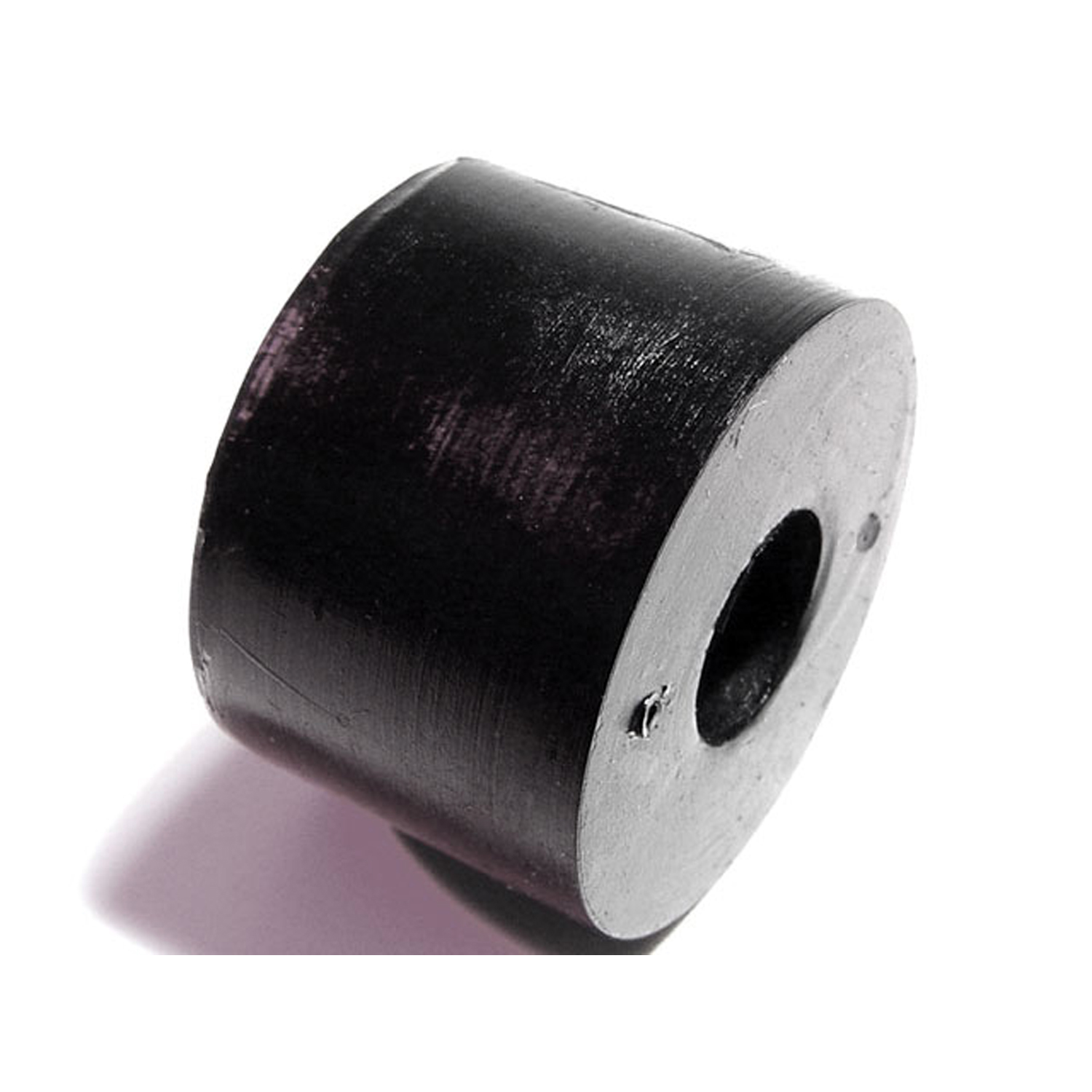 1949 Frazer Manhattan Shock Absorber Grommet. 1" bottom O.D., 5/8" high-BN 13Shock Absorber Grommet. 1" bottom O.D., 5/8" high., with 3/8" I.D. Each
 1949 Frazer Manhattan Driveshaft Carrier Support Grommet. 1-5/8" wide X 1/2" high-BN 31Driveshaft Carrier Support Grommet. 1-5/8" wide X 1/2" high. Each
 1949 Frazer Manhattan Tail-light Pads. 13-1/8" long X 4-1/8" wide. Pair R&L-MP 801-ATail-light Pads. 13-1/8" long X 4-1/8" wide. Pair R&L
 1949 Frazer Manhattan Trunk Emblem Pad. 13-3/16" long X 3-3/4" wide. Each-MP 801-BTrunk Emblem Pad. 13-3/16" long X 3-3/4" wide. Each
 1949 Frazer Manhattan Trunk Latch Pad. 16-3/4" X 4-3/8" wide. Each-MP 801-CTrunk Latch Pad. 16-3/4" X 4-3/8" wide. Each
 1949 Frazer Manhattan Tail-light Pads. 11-1/2" long X 4-5/8" wide. Pair R&L-MP 801-ETail-light Pads. 11-1/2" long X 4-5/8" wide. Pair R&L
 1949 Frazer Manhattan Trunk Handle Mounting Pad. 16-1/2" long X 2-3/8" wide-MP 801-FTrunk Handle Mounting Pad. 16-1/2" long X 2-3/8" wide. Each
 1949 Frazer Manhattan Rubber Heel Mat. Meant to be sewn into carpeting. Black-RM 40Rubber Heel Mat. Meant to be sewn into carpeting. Black. 6-7/8" X 13-3/4". Each
 1949 Frazer Manhattan Rubber Heel Mat. Meant to be sewn into carpeting. Gray-RM 40-BRubber Heel Mat. Meant to be sewn into carpeting. Gray. 6-7/8" X 13-3/4". Each
 1949 Frazer Manhattan Rubber Heel Mat. Meant to be sewn into carpeting. Brown-RM 40-CRubber Heel Mat. Meant to be sewn into carpeting. Brown. 6-7/8" X 13-3/4". Each
 1949 Frazer Manhattan Roof Rail Seals. 2-pieces 57-1/2" long, 2-pieces 21" long-RR 5500Roof Rail Seals. 2-pieces 57-1/2" long, 2-pieces 21" long. Set of four.
 1949 Frazer Manhattan Flexible glass-run channel-WC 11-72Flexible glass-run channel. Mohair lined, cloth covered with stainless steel bead. Used on side windows. 72 in. long. Each. NOTE: $20 special shipping charge applies for domestic orders. Call or email for overseas shipping costs. Part can be sectioned in two equal lengths to reduce overseas shipping costs.
Why Choose Metro?
For over 100 years, Metro Moulded Parts has been the pinnacle of quality in classic car restoration parts. Our commitment to precision and authenticity in every component ensures a perfect fit and an OEM-level appearance.
- Expert Craftsmanship & Quality: Each part is a testament to our dedication to reliability and perfection, crafted from original designs and thoroughly tested.
- Advanced Technology: We use cutting-edge techniques to create flawless, long-lasting parts that surpass others in performance.
- SuperSoft Sponge – The Ultimate Door Seal: Not only are our door seals 30% softer than competitors', but they're also guaranteed to never leak. They effectively reduce wind and road noise, enhancing your classic car's comfort and driving experience.
- Proudly American: Our parts are a product of American craftsmanship, made in the USA with a spirit of excellence and heritage.
- Unrivaled Warranty: We back our products with a 30-year industry-leading warranty, a testament to our confidence in their quality.
Join us in preserving the legacy of classic cars with parts that are crafted for perfection, not just made.