

Image of 1950 Frazer Standard F50, Note: These illustrations use artistic license and may differ from actual historical models.
Performance Metrics
Fundamental Metrics
Emotional Appeal
MMP Rating
| Engine Specifications | |
|---|---|
| Engine: | Inline 6 |
| Displacement: | 226 cubic inches |
| Horsepower: | Estimated 112 hp |
| Torque: | 200 lb-ft |
| Compression Ratio: | Estimated 7.0:1 |
| Ignition System: | Distributor and coil |
| Cooling System: | Liquid-cooled |
| Performance Specifications | |
| 0-60 Time: | Information not available |
| 1/4 Mile Time: | Information not available |
| Top Speed: | Estimated 90 mph |
| Transmission and Drive | |
| Drive Type: | Rear-wheel drive |
| Transmission Type: | 3-speed manual |
| Fuel and Efficiency | |
| Fuel System Type: | Carburetor |
| MPG: | Information not available |
| Dimensions and Brakes | |
| Brakes: | Drum brakes |
| Wheelbase: | 123.5 inches |
| Weight: | Estimated 3,400 lbs |
Note: Specifications for classic cars are given to the best of our ability, considering the limited and variant data available.
1950 Frazer Standard F-50: A Guide to Kaiser-Frazer’s American Sedan
The 1950 Frazer Standard F-50 was a roomy, six-cylinder sedan from one of postwar America’s most ambitious independent automakers. Built by Kaiser-Frazer Corporation, it paired distinctive styling with straightforward mechanicals at a time when the Big Three dominated the market. The F-50 was not a high-volume hit, but it represents a fascinating chapter in the effort to build a fresh American car company after World War II.
Frazer was named for Joseph W. Frazer, the veteran automotive executive who led the company alongside industrialist Henry J. Kaiser. Their partnership brought together Frazer’s industry experience and Kaiser’s manufacturing resources. Cars were assembled at the company’s enormous Willow Run complex in Michigan, a former wartime aircraft plant converted to automobile production.
Here is a detail that makes the F-50 especially interesting: it belonged to a marque that lasted only a few years. Frazer production ended after the 1951 model year, making the 1950 Standard part of the brand’s final period rather than the start of a long-running model line.
Clean Lines and a Comfortable Cabin
The F-50’s styling was more modern than the upright prewar designs it replaced. Its body had a smooth, flowing profile, with integrated fenders, a low hood, and a long-looking four-door silhouette. At the front, a prominent grille and substantial bumpers gave the car a confident face without the heavy chrome ornamentation that would characterize many later-1950s cars. Frazer design reflected the postwar fashion for clean, aerodynamic forms, while retaining the generous proportions American buyers expected.
Inside, the Standard offered a broad front bench, a full-width dashboard, and room for six passengers, depending on how generously occupants were seated. Cloth upholstery and durable trim suited the model’s practical position in the range. The interior was designed for comfort on long trips, not sporting intimacy: the seating was wide, the controls were conventional, and visibility from the driver’s seat was generally good for a car of its size.
Period color availability varied by market and production run. Buyers could typically choose from conservative shades such as black, gray, blue, green, and maroon, paired with coordinated interior fabrics. Dark, dignified colors were common choices, though brighter blues and greens helped the Frazer look contemporary on the road. Exact combinations should be checked against the car’s paint and trim codes, as replacement interiors and repaints are common on surviving examples.
The F-50 designation refers to the 1950 Frazer Standard four-door sedan. Frazer’s broader range also included better-equipped Manhattan models and other body configurations, but the F-50’s straightforward sedan layout was the practical heart of the Standard line. It offered the essential Frazer experience without the Manhattan’s more upscale trim and equipment.
Independent Thinking in a Big Three Market
The F-50’s significance lies partly in what it represented. Kaiser-Frazer was a serious attempt to establish a new, large-scale American automaker after the war. The company entered a market where Ford, General Motors, and Chrysler had enormous dealer networks, deep supplier relationships, and the ability to refresh their models frequently. Kaiser-Frazer had to compete with limited resources while trying to make its cars look and feel different.
Frazer’s streamlined design helped set it apart from many contemporary cars that carried over more prewar styling cues. Its proportions looked modern, and its cabin emphasized space and comfort. The F-50 was not a technological revolution, but it showed how an independent manufacturer could bring fresh styling and a new nameplate into a crowded market.
That ambition was difficult to sustain. Competition intensified as the established automakers returned to full production, while Kaiser-Frazer faced financial and manufacturing pressures. Frazer’s short life makes the F-50 a useful snapshot of the postwar independent-car challenge: a distinctive product could attract attention, but building a lasting business required scale, distribution, and constant investment.
Six-Cylinder Power and Easygoing Road Manners
Power came from a 226-cubic-inch (about 3.7-liter) L-head inline-six, rated at roughly 115 horsepower in period specifications. The engine drove the rear wheels through a three-speed manual transmission. Depending on equipment and production details, overdrive could be available, making highway cruising less busy and potentially improving fuel economy at steady speeds.
Published performance figures for an individual F-50 can vary, and modern condition matters enormously. A sound, correctly tuned example is generally estimated to reach 60 mph in roughly 16 to 18 seconds, with a top speed in the neighborhood of 85 to 90 mph. Those are period-car estimates, not numbers to expect from every surviving car. A tired engine, worn clutch, old tires, or a poorly adjusted carburetor can make performance noticeably slower.
The F-50 was built for calm progress rather than quick cornering. Its six-cylinder engine delivered useful low-speed pulling power, while the manual gearbox gave the driver direct control over the car’s modest performance. On ordinary roads, the long-wheelbase sedan should feel composed and comfortable. Bumps are absorbed more gently than in a short, stiff car, though decades-old shocks, springs, and rubber bushings can make a surviving example wallow or rattle.
On winding roads, the F-50 rewards a smooth driving style. Its size, period tires, and steering geometry are better suited to measured inputs than abrupt direction changes. The engine’s sound is a subdued six-cylinder growl, not a performance-car roar. Behind the wheel, the experience is relaxed and distinctly mechanical: a broad bench seat, a large steering wheel, a conventional clutch, and a leisurely climb through the gears.
Living With a Frazer Today
In its day, the Standard was intended as family transportation, a business sedan, and a comfortable long-distance car. Today, an F-50 is more likely to be a show entry, a touring car for local events, or a carefully used weekend driver than a daily commuter. Its spacious cabin and unhurried character suit scenic drives and vintage-car gatherings particularly well.
Routine service is familiar to anyone who has worked on a traditional American car: ignition tune-ups, carburetor adjustment, fluid changes, brake work, and attention to cooling and charging systems. The basic engine and drivetrain are comparatively simple, and many repairs do not require specialized electronic equipment. However, simplicity does not mean every part is easy to find. Frazer-specific trim, body hardware, glass, and interior pieces can take patience to locate, and some components may require repair or careful adaptation.
Before buying, pay close attention to rust, previous collision repairs, brake condition, and the quality of any restoration. Inspect the frame and structural areas, check that the engine maintains oil pressure and temperature, and confirm that the transmission shifts properly. A car that has been stored for years may need a full recommissioning even if it looks presentable. A specialist familiar with Kaiser-Frazer cars can help distinguish normal age-related wear from costly model-specific problems.
F-50 Facts and Common Criticisms
The F-50’s most notable distinction is its place in a short-lived marque. Frazer disappeared after the 1951 model year, and the company’s later history became intertwined with Kaiser’s changing plans and markets. That brief production run makes an authentic Frazer an unusual sight today, though it does not automatically make every example a rare or high-value collector car.
There are no widely recognized F-50 speed or endurance records, and the model is not chiefly remembered for racing. Its story is more closely tied to postwar manufacturing, independent-car competition, and the attempt to establish a new American brand. Celebrity ownership claims are also not a defining part of the F-50’s history, so buyers should treat unsupported stories about famous previous owners with care.
Common criticisms are fair but predictable for a lower-volume independent car. The F-50 does not have the performance of a V8-powered rival, its parts supply is less convenient than that of a Ford or Chevrolet, and its handling is comfort-oriented rather than athletic. Its styling, however, gives it real presence, and its rarity offers something different from the familiar postwar classics seen at every cruise night.
Collector Value and Rarity
Exact model-by-model production figures for the 1950 F-50 are not consistently reported in commonly available references. A reasonable working estimate is that roughly 7,500 Frazer cars of all types were produced for the 1950 model year, with the Standard F-50 representing only a portion of that total. A rough estimate of about 2,000 to 4,000 F-50 sedans is plausible, but it should be treated as an informed estimate rather than a factory-confirmed count.
Survivors are uncommon, and good, original examples are harder to find than cars that need major restoration. As a broad U.S. market guide, a project might sell for around $3,000 to $8,000, a usable driver for approximately $8,000 to $15,000, and a well-restored or exceptionally preserved car for roughly $15,000 to $25,000. An outstanding example with strong documentation or a particularly high-quality restoration could exceed that range, while condition, originality, and local demand can shift prices considerably.
Frazer values are generally driven more by condition and buyer interest than by a fast-moving collector-market trend. The F-50 has the ingredients for gradual appreciation: limited production, distinctive styling, and a compelling independent-automaker story. Still, it remains a niche collectible, and restoration costs can easily exceed the market value of the finished car. The best purchases are usually solid, complete examples rather than ambitious projects.
Why the 1950 Frazer Standard F-50 Still Matters
The 1950 Frazer Standard F-50 combined modern postwar styling, a comfortable six-passenger layout, and uncomplicated six-cylinder engineering. It was not the fastest or most technologically radical sedan of its era, but it stood out as part of a bold effort to challenge the established American automakers.
For today’s enthusiast, the F-50 offers a less predictable route into classic-car ownership: a spacious, distinctive sedan with a story that reaches beyond its specification sheet. It is a reminder that automotive history was shaped not only by the companies that survived, but also by the ambitious challengers that dared to build something different.
1950 Frazer Standard F50 Catalog of Parts
 1950 Frazer STANDARD F50 Body Cushion Pad. Used between frame and body-BC 34Body Cushion Pad. Used between frame and body. Up to 22 used per car. 1-11/16" O.D., 9/16" I.D. Each
 1950 Frazer STANDARD F50 Shock Absorber Grommet. 1" bottom O.D-BN 11Shock Absorber Grommet. 1" bottom O.D., 3/4" high, with 5/8" I.D. Each
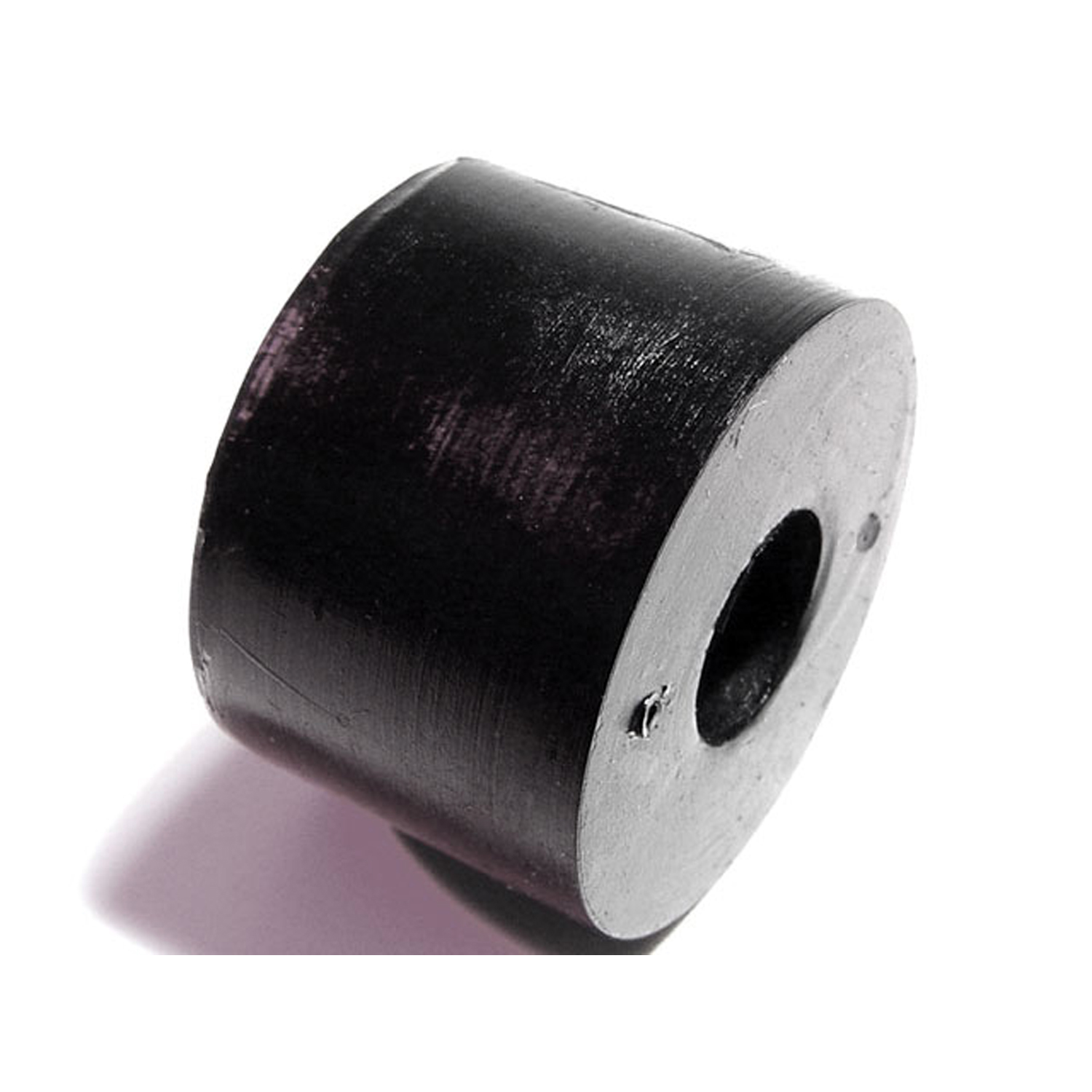 1950 Frazer STANDARD F50 Shock Absorber Grommet. 1" bottom O.D., 5/8" high-BN 13Shock Absorber Grommet. 1" bottom O.D., 5/8" high., with 3/8" I.D. Each
 1950 Frazer STANDARD F50 Driveshaft Carrier Support Grommet. 1-5/8" wide X 1/2" high-BN 31Driveshaft Carrier Support Grommet. 1-5/8" wide X 1/2" high. Each
 1950 Frazer STANDARD F50 Tail-light Pads. 13-1/8" long X 4-1/8" wide. Pair R&L-MP 801-ATail-light Pads. 13-1/8" long X 4-1/8" wide. Pair R&L
 1950 Frazer STANDARD F50 Trunk Emblem Pad. 13-3/16" long X 3-3/4" wide. Each-MP 801-BTrunk Emblem Pad. 13-3/16" long X 3-3/4" wide. Each
 1950 Frazer STANDARD F50 Trunk Latch Pad. 16-3/4" X 4-3/8" wide. Each-MP 801-CTrunk Latch Pad. 16-3/4" X 4-3/8" wide. Each
 1950 Frazer STANDARD F50 Tail-light Pads. 11-1/2" long X 4-5/8" wide. Pair R&L-MP 801-ETail-light Pads. 11-1/2" long X 4-5/8" wide. Pair R&L
 1950 Frazer STANDARD F50 Trunk Handle Mounting Pad. 16-1/2" long X 2-3/8" wide-MP 801-FTrunk Handle Mounting Pad. 16-1/2" long X 2-3/8" wide. Each
 1950 Frazer STANDARD F50 Rubber Heel Mat. Meant to be sewn into carpeting. Black-RM 40Rubber Heel Mat. Meant to be sewn into carpeting. Black. 6-7/8" X 13-3/4". Each
 1950 Frazer STANDARD F50 Rubber Heel Mat. Meant to be sewn into carpeting. Gray-RM 40-BRubber Heel Mat. Meant to be sewn into carpeting. Gray. 6-7/8" X 13-3/4". Each
 1950 Frazer STANDARD F50 Rubber Heel Mat. Meant to be sewn into carpeting. Brown-RM 40-CRubber Heel Mat. Meant to be sewn into carpeting. Brown. 6-7/8" X 13-3/4". Each
 1950 Frazer STANDARD F50 Roof Rail Seals. 2-pieces 57-1/2" long, 2-pieces 21" long-RR 5500Roof Rail Seals. 2-pieces 57-1/2" long, 2-pieces 21" long. Set of four.
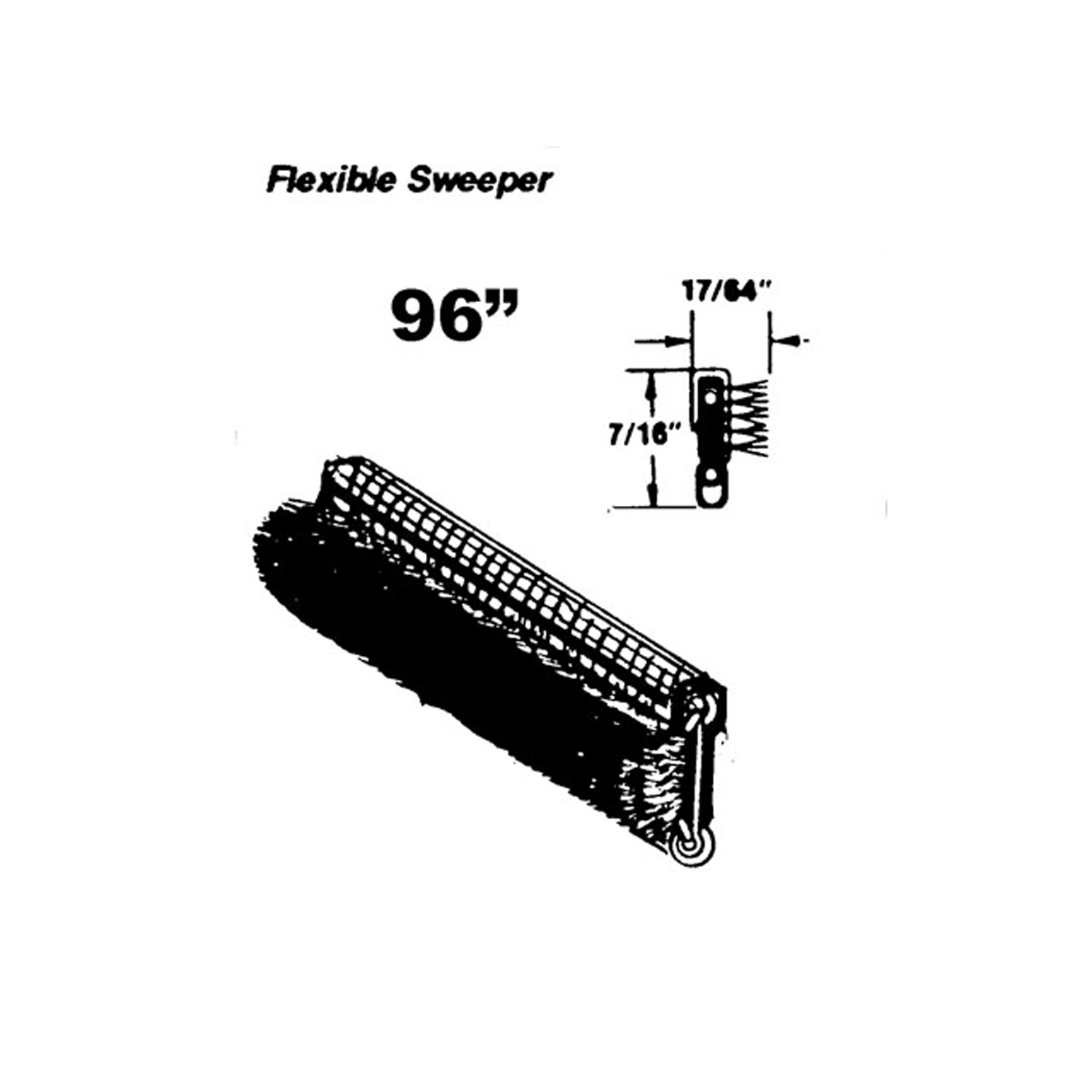 1950 Frazer STANDARD F50 Flexible window sweeper-WC 5-96Flexible window sweeper. Made with black electro-plated steel. 96 in. long. Each. NOTE: $20 special shipping charge applies for domestic orders. Call or email for overseas shipping costs. Part can be sectioned in two or three equal lengths to reduce overseas shipping costs.
Why Choose Metro?
For over 100 years, Metro Moulded Parts has been the pinnacle of quality in classic car restoration parts. Our commitment to precision and authenticity in every component ensures a perfect fit and an OEM-level appearance.
- Expert Craftsmanship & Quality: Each part is a testament to our dedication to reliability and perfection, crafted from original designs and thoroughly tested.
- Advanced Technology: We use cutting-edge techniques to create flawless, long-lasting parts that surpass others in performance.
- SuperSoft Sponge – The Ultimate Door Seal: Not only are our door seals 30% softer than competitors', but they're also guaranteed to never leak. They effectively reduce wind and road noise, enhancing your classic car's comfort and driving experience.
- Proudly American: Our parts are a product of American craftsmanship, made in the USA with a spirit of excellence and heritage.
- Unrivaled Warranty: We back our products with a 30-year industry-leading warranty, a testament to our confidence in their quality.
Join us in preserving the legacy of classic cars with parts that are crafted for perfection, not just made.