

Image of 1938 Gmc Ac250, Note: These illustrations use artistic license and may differ from actual historical models.
Performance Metrics
Fundamental Metrics
Emotional Appeal
MMP Rating
| Engine Specifications | |
|---|---|
| Engine Options: | Inline 6 |
| Displacement Range: | 230-235 cubic inches |
| Horsepower Range: | Estimated 76-85 hp |
| Torque: | Not available |
| Compression Ratio: | Not available |
| Ignition System: | Distributor and coil |
| Cooling System: | Liquid-cooled |
| Performance Specifications | |
| 0-60 Time: | Not available |
| 1/4 Mile Time: | Not available |
| Top Speed: | Estimated 55-60 mph |
| Transmission and Drive | |
| Drive Type: | Rear-wheel drive |
| Transmission Type: | 3-speed manual |
| Fuel and Efficiency | |
| Fuel System Type: | Carburetor |
| MPG: | Not available |
| Dimensions and Brakes | |
| Brakes: | Drum brakes |
| Wheelbase: | 125 inches |
| Weight: | Estimated 3,500-4,000 lbs |
Note: Specifications for classic cars are given to the best of our ability, considering the limited and variant data available.
1938 GMC AC 250: A Working Truck with Streamlined Style
The 1938 GMC AC 250 looks ready for work even at a standstill: a tall, upright grille, rounded fenders, and a long hood give this truck the confident presence of a machine built to earn its keep. It belongs to GMC’s prewar AC truck generation, a line that combined sturdy commercial-truck engineering with a noticeably more modern look than the blunt work vehicles of earlier years.
GMC grew from the Rapid Motor Vehicle Company, a truck maker General Motors acquired in 1909. By the late 1930s, GMC was an established commercial brand, building everything from light pickups to heavier chassis for businesses and municipalities. The AC 250 name identifies a particular version within the AC range, but period model designations and specifications can be confusing: exact payload ratings, engines, and equipment depended on chassis configuration and market. The truck’s serial plate and original sales paperwork are the best way to confirm a specific example’s details.
One intriguing part of the AC 250’s story is how many different jobs a truck like this could take on. It might leave the factory as a chassis cab, then be fitted by a local body builder with a stake bed, delivery body, service body, or other specialized equipment. That flexibility is a big reason surviving trucks can look quite different from one another.
Art Deco Lines and a Practical Cab
The AC 250’s design reflects the move toward smoother, more streamlined styling during the 1930s. Its hood and fenders have rounded contours, while the upright front end gives it a purposeful, almost architectural appearance. The grille is the visual centerpiece, framed by headlights and broad front fenders. Depending on the body and equipment, running boards and a robust bumper add to its substantial, work-ready stance.
The cab was designed primarily for function. Expect a large steering wheel, straightforward gauges, simple switches, and a bench seat rather than the plush trim found in a passenger car. Materials were chosen for durability and ease of cleaning. Painted metal, rubber floor covering, and sturdy upholstery were appropriate for a vehicle likely to spend its days on dusty roads or at a busy job site. A restored truck may have replacement upholstery or reproduction trim, so cabin details can differ from one example to another.
Color depended on the buyer and the truck’s intended use. Fleet customers often favored practical, easy-to-maintain finishes, while privately owned trucks could be ordered or repainted in more distinctive shades. Black, dark green, blue, and red tones are commonly seen on restored examples, but a present-day truck’s paint is not proof of its original factory color. Factory paint records or traces of earlier finishes can help establish the original scheme.
The AC 250 was a chassis platform as much as a single body style. A pickup or closed delivery body suited smaller businesses, while stake beds, flatbeds, dump bodies, and custom commercial bodies made the truck useful for hauling and municipal work. Many bodies were supplied or modified outside the factory. That means the most iconic surviving configuration is often the one that best reflects its local history, rather than one universal factory version.
What Set the AC 250 Apart
The AC series arrived as truck design was becoming more polished without abandoning its central purpose: carrying loads reliably. The GMC offered a more composed, contemporary appearance than many earlier commercial trucks, while retaining the heavy-duty frame, straightforward mechanical layout, and adaptable chassis that business owners needed. It was part of a broader shift toward trucks that looked modern but remained easy to service.
Its significance is less about a single groundbreaking invention and more about the practical evolution of the American work truck. Manufacturers were refining cab comfort, visibility, styling, and mechanical capability, and GMC competed in that changing market with a broad range of commercial vehicles. The AC 250’s lasting appeal comes from that combination: period character, useful proportions, and a design that can accommodate many kinds of working bodywork.
Engine, Speed, and Road Manners
Specifications varied by configuration, so there is no single performance figure that applies to every 1938 AC 250. GMC’s AC-era trucks were commonly fitted with inline-six engines, with displacement and output depending on the model and duty rating. A 228-cubic-inch GMC six is associated with trucks of this period, but the engine in an individual AC 250 should be verified by its engine number and original documentation. Many surviving trucks have also been rebuilt or fitted with replacement engines.
These trucks were built for useful low-speed pulling, not fast acceleration. A sound, lightly loaded example might manage roughly 45 to 55 mph, depending on gearing, tire size, engine condition, and body style. A 0-to-60-mph time was not a meaningful factory performance measure for a commercial truck of this era. In real use, acceleration would be slow, and some examples may not comfortably reach 60 mph at all, particularly when carrying a load. Treat any precise modern performance claim with caution unless it is tied to a specific, tested truck.
On the road, the AC 250 feels substantial and mechanical. The engine’s six-cylinder note is steady and unfiltered, while the manual transmission and large steering wheel keep the driver closely involved. Steering effort can be considerable at low speed, especially without a load on the front axle. A solid-axle truck with period tires also communicates bumps directly through the chassis, and a short or empty truck can feel lively over uneven surfaces.
On winding roads, measured inputs are the order of the day. The truck’s size, steering play, braking capacity, and high center of gravity make it less suited to quick maneuvers than a modern vehicle. Wind can also affect a tall-bodied example, particularly one with a box or delivery body. Properly maintained brakes, tires, steering components, and wheel bearings are essential before regular road use.
Living with a 1938 GMC Truck
Today, an AC 250 is most at home as a show vehicle, parade truck, collection centerpiece, or occasional-use hauler. Some owners use restored examples for local events or light-duty work, but regular commuting is rarely the goal. Its pace, noise, braking, and lack of modern safety equipment make it a very different proposition from a contemporary pickup.
The mechanical layout is generally approachable for an owner comfortable with older vehicles. Many jobs involve conventional components that a competent independent mechanic can understand, and common maintenance includes ignition service, carburetor tuning, cooling-system checks, lubrication, and attention to the manual gearbox and rear axle. Parts availability varies: routine service items and some reproduction components can be found, but correct trim, body panels, and model-specific pieces may take time to locate.
Condition matters more than the badge. Rust in the cab, frame, and body mounts can turn a seemingly simple restoration into a major project. Before buying, inspect the frame for repairs or cracks, check the cab corners and floor, verify that the brakes work evenly, and look for signs of an engine or transmission swap. A truck with sound structure and complete, identifiable components is usually a better prospect than a shiny but incomplete project.
AC 250 Facts and Myths
The AC 250’s adaptable chassis is one of its most interesting traits. A truck could be tailored to a local business, and decades of rebuilding and body changes mean that two surviving examples may have very different histories. An old stake bed or delivery body can be just as historically revealing as an original-looking pickup body.
There is no widely cited production total for the exact AC 250 configuration, and GMC production records are not always easy to separate by model, body, and destination. It is safer to describe the model as uncommon in today’s market than to claim a precise number of surviving or originally built trucks. No particular speed, sales, or endurance record is generally associated with the AC 250.
Its most common criticism is also part of its character: it is slow, noisy, and physically demanding compared with a modern truck. Braking and handling require more anticipation, and cab comfort is basic. Those traits make it less convenient for everyday transport, but they also provide the direct, hands-on experience that classic-truck enthusiasts value.
Collector Value and Availability
Values depend heavily on condition, completeness, body style, and the quality of any restoration. As a broad present-day estimate, a rough project might sell for about $5,000 to $15,000, while a solid driver could fall around $15,000 to $30,000. A high-quality restoration or especially appealing, well-documented example could bring roughly $30,000 to $50,000 or more. These are general market estimates, not a guaranteed appraisal, and unusual commercial bodies or extensive restoration work can move a price substantially in either direction.
Exact AC 250 production and survival figures are difficult to establish, so rarity is best judged by the individual truck’s configuration and condition. Complete, original-looking examples are less commonly encountered than modified or partially restored trucks, and a rare body style may attract more interest than a standard chassis. Over the long term, well-presented prewar trucks have generally benefited from growing appreciation for early commercial vehicles, though values can fluctuate with restoration costs and collector demand. Exceptional restorations may hold strong value, but restoration expenses do not always translate into an equal increase in sale price.
A Prewar Workhorse Worth Remembering
The 1938 GMC AC 250 captures an important moment in truck history: commercial vehicles were gaining smoother styling and better road manners while remaining firmly rooted in practical work. Its adaptable chassis, straightforward mechanical character, and distinctive prewar appearance make it appealing to collectors and working-truck enthusiasts alike. It may not be quick or comfortable by modern standards, but it tells its story honestly, one solid six-cylinder note and steel-bodied mile at a time.
1938 Gmc Ac250 Catalog of Parts
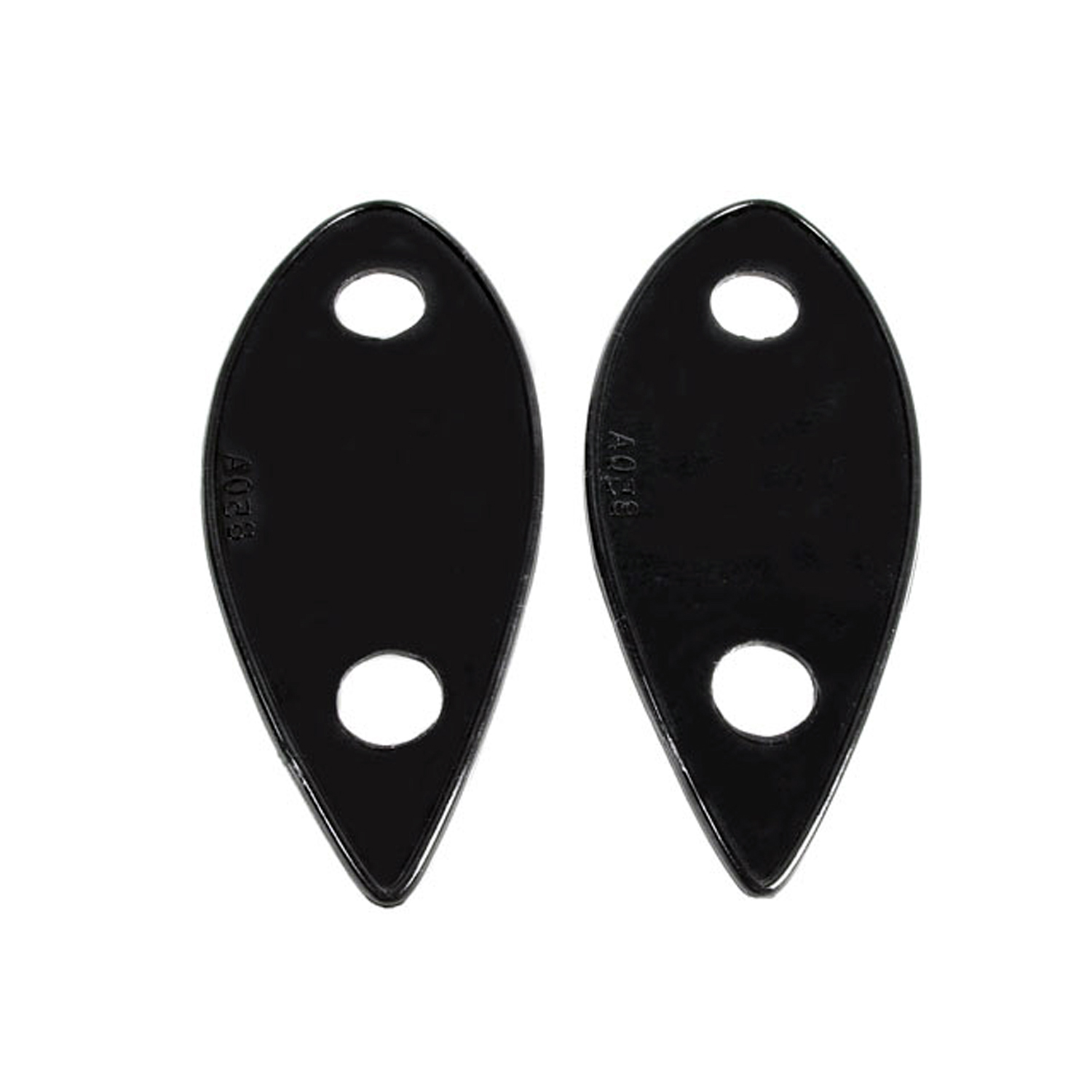 1938 GMC AC250 Headlight Pads. 2-3/4" wide X 6-3/8" long. Pair-MP 850-AHeadlight Pads. 2-3/4" wide X 6-3/8" long. Pair
Why Choose Metro?
For over 100 years, Metro Moulded Parts has been the pinnacle of quality in classic car restoration parts. Our commitment to precision and authenticity in every component ensures a perfect fit and an OEM-level appearance.
- Expert Craftsmanship & Quality: Each part is a testament to our dedication to reliability and perfection, crafted from original designs and thoroughly tested.
- Advanced Technology: We use cutting-edge techniques to create flawless, long-lasting parts that surpass others in performance.
- SuperSoft Sponge – The Ultimate Door Seal: Not only are our door seals 30% softer than competitors', but they're also guaranteed to never leak. They effectively reduce wind and road noise, enhancing your classic car's comfort and driving experience.
- Proudly American: Our parts are a product of American craftsmanship, made in the USA with a spirit of excellence and heritage.
- Unrivaled Warranty: We back our products with a 30-year industry-leading warranty, a testament to our confidence in their quality.
Join us in preserving the legacy of classic cars with parts that are crafted for perfection, not just made.