

Image of 1942 Gmc Cc150, Note: These illustrations use artistic license and may differ from actual historical models.
Performance Metrics
Fundamental Metrics
Emotional Appeal
MMP Rating
| Engine Specifications | |
|---|---|
| Engine Options: | Inline 6 |
| Displacement Range: | 228 cubic inches |
| Horsepower Range: | Estimated 76-90 hp |
| Torque: | Estimated 170-200 lb-ft |
| Compression Ratio: | 6.6:1 |
| Ignition System: | Distributor and coil |
| Cooling System: | Liquid-cooled |
| Performance Specifications | |
| 0-60 Time: | Not available due to the age and type of vehicle |
| 1/4 Mile Time: | Not available due to the age and type of vehicle |
| Top Speed: | 45-55 mph |
| Transmission and Drive | |
| Drive Type: | Rear-wheel drive |
| Transmission Type: | 4-speed manual |
| Fuel and Efficiency | |
| Fuel System Type: | Carburetor |
| MPG: | Estimated 10-15 mpg |
| Dimensions and Brakes | |
| Brakes: | Hydraulic drum brakes |
| Wheelbase: | 125 inches |
| Weight: | Estimated 3,500-4,000 lbs |
Note: Specifications for classic cars are given to the best of our ability, considering the limited and variant data available.
1942 GMC CC-150: A Workhorse Caught in a Turning Point
The 1942 GMC CC-150 arrived just as America’s truck industry was being redirected from civilian life to wartime production. Built by General Motors Truck and Coach, the CC-150 was a sturdy, medium-duty pickup from GMC’s newly modernized C-series generation. Its rounded cab and bold front end gave it a more contemporary look than many prewar work trucks, while its straightforward mechanicals were made for hauling, farm work, and everyday service.
The “CC” designation identifies GMC’s conventional-cab series, while “150” refers to its place in the company’s weight-class lineup. The CC-150 is generally identified as a three-quarter-ton model, positioned between lighter pickups and heavier one-ton trucks. Exact equipment and specifications could vary by body and chassis configuration, so surviving trucks should be checked against their serial numbers and original documentation.
Its model year is part of the story. In 1942, U.S. manufacturers shifted their plants toward military production, sharply limiting the supply of new civilian vehicles. That makes the CC-150 a snapshot of the transition: a practical prewar truck produced at the edge of a historic industrial change.
Rounded Cab, Rugged GMC Character
The CC-150’s styling reflects the streamlined direction of early-1940s truck design. Its rounded cab corners, curved fenders, broad hood, and upright grille softened the appearance of earlier, more angular work trucks. The front end is especially distinctive, with a substantial grille and GMC lettering that give the truck a confident, purposeful face. Details such as grille trim and lamps can differ by production date and equipment.
Inside, the cabin was simple and durable rather than luxurious. The painted metal dashboard, large steering wheel, clear analog gauges, and broad bench seat were designed to stand up to work clothes, dust, and long hours behind the wheel. Upholstery materials and trim depended on the original specification and could vary, but the overall impression is utilitarian: easy-to-clean surfaces and controls that were meant to be used, not admired.
Color choices were commercial rather than fashion-driven. Buyers could order practical solid colors, while fleets and businesses often specified paint to match their company identity. Today, restorers frequently choose traditional dark greens, reds, blues, or black, but an original paint record or surviving finish is the best guide to a particular truck’s factory color.
Pickup, Chassis, and Work-Body Options
The familiar pickup configuration is the most recognizable CC-150 today, but GMC trucks could be ordered in different chassis and body arrangements to suit their jobs. Depending on the order, the platform could support a pickup bed, stake or service body, or a specialized commercial body installed by a body builder. The pickup is the most iconic choice for collectors because it shows off the rounded cab and fenders in their complete form.
As a three-quarter-ton truck, the CC-150 offered a useful step up in carrying capacity from a light-duty pickup. Its heavier-duty chassis and running gear made it attractive to farms, tradespeople, and small businesses that needed a truck capable of regular hauling without moving into a larger commercial vehicle.
Engineering for the Job
GMC’s C-series update brought a more modern appearance and a cab designed to make routine driving and work more manageable. The CC-150’s key innovation was not an exotic gadget. It was the combination of a contemporary enclosed cab, practical controls, and a sturdy commercial chassis in a truck that could serve a wide range of customers.
Power came from GMC’s 228-cubic-inch inline-six, commonly listed at approximately 93 horsepower in this period. A manual transmission sent power to the rear wheels. The engine’s long-stroke, low-revving character suited hauling and steady work better than rapid acceleration. Mechanical brakes and a conventional ladder-frame chassis kept the design serviceable with the tools and skills available to many independent mechanics.
Compared with some rivals, GMC’s identity rested on its truck-focused engineering and its own line of engines, rather than simply offering a lightly adapted passenger-car powertrain. The CC-150 was not a technology showcase, but it represented a key post-Depression-era move toward trucks that were more comfortable and better integrated while remaining robust working machines.
Road Manners and Performance
Period truck specifications and surviving examples vary, and GMC did not promote the CC-150 with modern performance figures. A stock truck is best thought of as a 45-to-55-mph working vehicle, with a possible top speed in the neighborhood of 55 to 65 mph depending on gearing, tire size, load, and mechanical condition. That upper figure is not a recommendation for sustained modern freeway driving.
There is no dependable factory 0-to-60-mph figure for the CC-150. With its modest power, working-truck gearing, and substantial weight, acceleration is leisurely, and some examples may struggle to reach 60 mph in ordinary conditions. The more meaningful measure is how readily the six-cylinder engine pulls away at low speed with a load aboard.
The driving experience is direct and mechanical. The inline-six produces a steady, unhurried rumble, while the tall steering wheel and manual controls put the driver in close contact with the truck. The solid work-truck suspension can feel firm over sharp bumps, especially when the bed is empty. On winding roads, the CC-150 rewards a relaxed pace: its size, period tires, and vintage steering call for anticipation rather than quick corrections. Wind and road noise are part of the experience, not defects to be mistaken for modern refinement.
Ownership, Repairs, and Everyday Use
Today, most CC-150s are used as show vehicles, weekend cruisers, farm or property trucks, and restoration projects. Some remain in light-duty service, but regular highway commuting is less practical unless the truck has been carefully maintained or upgraded. Modern traffic moves faster, and the original braking, lighting, and handling systems deserve respect.
The basic mechanical layout is an advantage for owners. The engine, manual transmission, and chassis are conventional, and many repairs can be handled by a capable home mechanic. Age is the bigger challenge. Fuel-system deterioration, worn steering and suspension parts, tired brakes, electrical faults, and rust can all turn a seemingly simple project into a long one. Before buying, inspect the frame, cab corners, floor, running boards, bed, and areas around the windshield and fenders.
Replacement parts are available through vintage-truck specialists, parts suppliers, swap meets, and the classic GMC community, but availability varies. Some wear items can be sourced or adapted more easily than model-specific trim and sheet metal. Original GMC components and correct body parts may take patience to find, so a complete truck is often a better starting point than an inexpensive but heavily dismantled example.
Wartime Rarity and Other CC-150 Facts
The CC-150’s most notable historical distinction is its timing. It belongs to the final wave of civilian GMC trucks before wartime needs transformed American manufacturing. Trucks remained essential during the war, but civilian buyers faced severe limits on new-vehicle availability as factories shifted toward military work.
There is no widely accepted, model-specific production total for the 1942 CC-150. GMC production records are not always presented in a way that makes a precise count by model and body style easy to confirm. A reasonable estimate is that several thousand may have been built, but that should be treated as an informed approximation rather than a verified factory figure. Surviving examples are less common than familiar postwar pickups, particularly in original, complete condition.
The CC-150 is not known for a famous speed record or celebrity connection. Its appeal is more grounded: it represents the everyday trucks that kept farms, businesses, and local services running just before the United States entered a period of enormous industrial change. A frequent criticism is its modest speed and basic comfort by modern standards. Those are real limitations, but they also reflect the truck’s original purpose: dependable work rather than fast, quiet travel.
Collector Value and Market Outlook
Values depend heavily on condition, originality, completeness, and body style. As a broad current-market guide, a project-grade CC-150 may fall around $5,000 to $12,000. A usable driver or older restoration might bring roughly $12,000 to $25,000, while a well-finished, high-quality restoration can reach approximately $25,000 to $45,000 or more. Exceptional examples with strong provenance, rare configurations, or unusually correct details may exceed that range.
The market for early GMC trucks is generally supported by their rugged character and their relative scarcity compared with better-known postwar pickups. Prices have tended to favor sound, complete trucks over ambitious projects, and top restorations can command a premium. Appreciation is not guaranteed: restoration costs are high, and condition has a greater effect on value than the model name alone. Buyers should also consider whether modifications are reversible and whether the truck retains its original engine and major components.
A Civilian Truck at the Edge of an Era
The 1942 GMC CC-150 combines rounded prewar styling, a durable six-cylinder drivetrain, and the straightforward construction of a working truck. Its performance is modest, its cabin is plain, and its surviving numbers are difficult to pin down precisely. Yet its historical timing gives it a character that goes beyond its specifications.
For collectors, the CC-150 is a handsome and practical link between prewar truck design and the wartime production shift. It was built to earn its keep, and that honest purpose remains its strongest appeal: a GMC workhorse from the moment America’s roads, factories, and history were about to change.
1942 Gmc Cc150 Catalog of Parts
 1942 GMC CC150 Rear Window Seal '42-'66 GM Full Size Trucks With Small Window-VWS 7313-URear Window Seal '42-'66 GM Full Size Trucks With Small Window, Includes Lockstrip, Set of 2.
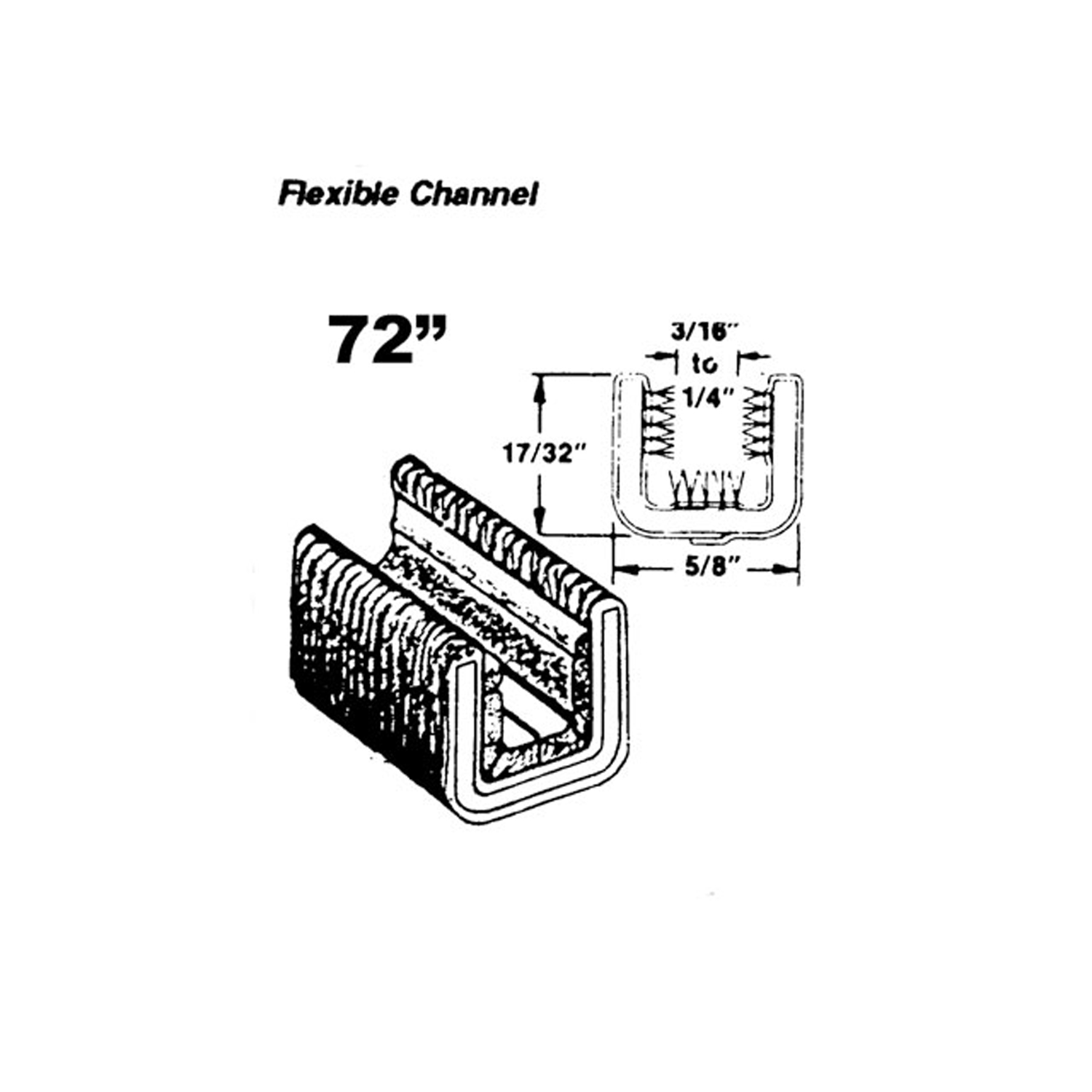 1942 GMC CC150 Flexible glass-run channel-WC 26-72Flexible glass-run channel. For models without framed side glass. Unbeaded, pile-lined. 72 in. long. Each. NOTE: $20 special shipping charge applies for domestic orders. Call or email for overseas shipping costs. Part can be sectioned into two equal lengths to reduce overseas shipping costs.
Why Choose Metro?
For over 100 years, Metro Moulded Parts has been the pinnacle of quality in classic car restoration parts. Our commitment to precision and authenticity in every component ensures a perfect fit and an OEM-level appearance.
- Expert Craftsmanship & Quality: Each part is a testament to our dedication to reliability and perfection, crafted from original designs and thoroughly tested.
- Advanced Technology: We use cutting-edge techniques to create flawless, long-lasting parts that surpass others in performance.
- SuperSoft Sponge – The Ultimate Door Seal: Not only are our door seals 30% softer than competitors', but they're also guaranteed to never leak. They effectively reduce wind and road noise, enhancing your classic car's comfort and driving experience.
- Proudly American: Our parts are a product of American craftsmanship, made in the USA with a spirit of excellence and heritage.
- Unrivaled Warranty: We back our products with a 30-year industry-leading warranty, a testament to our confidence in their quality.
Join us in preserving the legacy of classic cars with parts that are crafted for perfection, not just made.