
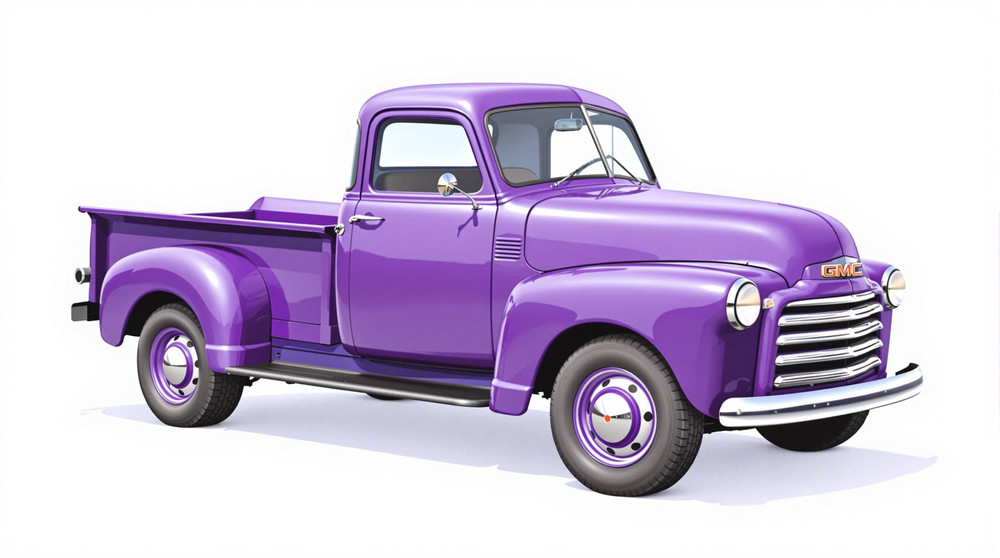
Image of 1947 Gmc Fc101, Note: These illustrations use artistic license and may differ from actual historical models.
Performance Metrics
Fundamental Metrics
Emotional Appeal
MMP Rating
| Engine Specifications | |
|---|---|
| Engine: | Inline 6 |
| Displacement: | 228 cubic inches |
| Horsepower: | Estimated 93-100 hp |
| Torque: | 175 lb-ft |
| Compression Ratio: | Estimated 6.6:1 |
| Ignition System: | Distributor and coil |
| Cooling System: | Liquid-cooled |
| Performance Specifications | |
| 0-60 Time: | Not available due to the age and type of vehicle |
| 1/4 Mile Time: | Not available due to the age and type of vehicle |
| Top Speed: | 70 mph |
| Transmission and Drive | |
| Drive Type: | Rear-wheel drive |
| Transmission Type: | 3-speed manual |
| Fuel and Efficiency | |
| Fuel System Type: | Carburetor |
| MPG: | Estimated 10-15 mpg |
| Dimensions and Brakes | |
| Brakes: | Drum brakes |
| Wheelbase: | 125 inches |
| Weight: | Estimated 3,500 lbs |
Note: Specifications for classic cars are given to the best of our ability, considering the limited and variant data available.
1947 GMC FC-101: The Cab-Over Workhorse
The 1947 GMC FC-101 puts its cab right over the front axle, giving this postwar truck a distinctive, almost face-to-face presence on the road. Built by General Motors Truck and Coach, it belonged to GMC’s forward-control range, designed to put a useful cargo body on a shorter overall vehicle than a conventional truck could manage.
The FC-101 arrived as American businesses were replacing worn-out wartime equipment and getting back to civilian work. Its cab-forward layout made it practical for delivery routes, service fleets, and businesses working in tight streets or crowded yards. A memorable detail is that the driver sat directly above the front wheels, with the engine beneath the cab rather than out in a long hood. That arrangement gave the truck its compact footprint, but also made engine access and cab comfort different from those of a standard pickup.
Exact specifications can vary with the truck’s chassis, engine, and commercial body. Surviving examples may also have been modified during decades of work, so the original data plate and parts documentation are useful when identifying a particular FC-101.
Forward-Control Styling and Cab Details
The FC-101’s shape is all business: a blunt, upright nose, broad windshield, rounded cab corners, and a tall profile that makes the cab look almost perched over the front axle. Its short front end is the defining styling feature. Compared with a conventional 1940s truck, the cab-over design looks compact from bumper to cab, even when the truck is carrying a substantial body behind it.
Inside, expect a straightforward commercial cabin rather than passenger-car trim. A broad bench seat, painted metal surfaces, simple gauges, and practical controls suited a working driver. Materials were chosen for durability and cost, not luxury. The elevated driving position gave a clear view ahead, although the cab could feel noisy and exposed by modern standards. Engine heat and sound were part of the experience, especially on a long day behind the wheel.
Features depended on the truck’s specification and equipment ordered by its first owner. A manual transmission and a simple instrument panel were typical of the period. The forward-control layout was the major piece of engineering: it saved space ahead of the cargo area, but required the engine and service points to be accessed from within or beneath the cab area. Check an individual truck carefully, since later repairs and conversions may have changed its original equipment.
Paint choices were shaped by GMC’s ordering options and the needs of commercial buyers. Fleet customers often chose practical company colors, while privately ordered trucks could be more individual. Red, green, blue, and neutral shades are commonly seen on restored examples, but a surviving truck’s current paint should not be assumed to be its factory color. Original paint traces, build records, and period color references are the best guides.
The FC-101 was fundamentally a commercial chassis, not one single cargo-body style. Depending on its original order and later bodywork, it could be equipped as a platform or flatbed, stake truck, delivery vehicle, or another specialist body built by a commercial-body supplier. Flatbeds and stake bodies are among the most recognizable configurations today. This flexibility was a major part of the FC’s appeal: businesses could tailor the truck to the job.
Why the FC-101 Mattered
In the late 1940s, cab-over-engine trucks offered a practical answer to a basic commercial problem: how to carry useful cargo while keeping the overall vehicle short and maneuverable. By moving the cab forward, GMC made more of the truck’s length available for the body. That could matter on crowded city streets, in delivery yards, and wherever turning and parking space were limited.
The FC-101 was not a radical high-speed machine, nor did it introduce a single technology that transformed the entire industry. Its significance lies in applying forward-control packaging to everyday work. The layout gave small businesses and fleets an alternative to the long-hood truck, and it helped establish the cab-over as a familiar form in delivery and commercial transport.
Compared with conventional trucks of its day, the FC-101’s biggest distinction was its cab position and compact front profile. That design also brought compromises: access to the engine was less convenient, the cab could transmit heat and noise, and the driver sat closer to road impacts. The forward-control idea endured in many later commercial vehicles, even as their construction, safety systems, and comfort improved considerably.
Engine, Speed, and Road Manners
A commonly reported powerplant for the FC-101 is GMC’s 228-cubic-inch inline-six, paired with a manual transmission. Period ratings for this engine are often given at about 93 horsepower, though the exact engine and output should be confirmed on an individual truck. It was a low-speed, work-oriented six-cylinder: the aim was useful pulling power for a loaded vehicle, not quick acceleration.
GMC did not advertise a modern 0-to-60-mph figure for this work truck, and a precise number would depend on engine condition, gearing, load, tires, and road surface. As a rough modern estimate, an unloaded example might need well over 30 seconds to approach 60 mph, if it can reach that speed comfortably at all. A practical top speed is generally in the 50-to-60-mph neighborhood, but many owners will prefer to cruise more slowly. These are estimates, not factory performance claims.
On the road, the FC-101 feels tall, purposeful, and very different from a modern pickup. Its upright seating position offers a commanding view, but the cab-over layout places the driver above the front axle, so bumps can feel pronounced. The steering is likely to feel slower and heavier than a modern vehicle, especially at low speed, while a tall body can be pushed around by crosswinds. On winding roads, measured inputs and modest speeds suit the truck better than quick cornering.
The engine’s sound is part of its appeal: a steady, mechanical inline-six note, accompanied by the transmission, tires, and working-truck vibrations that modern vehicles largely filter out. Shifting, braking, and steering all ask for more deliberate effort. In good condition, the FC-101 can be enjoyable on local drives and at events, but it is best treated as a vintage commercial vehicle rather than a contemporary highway cruiser.
Living With a GMC FC-101
Today, FC-101s are most often used as show trucks, parade vehicles, display pieces, occasional local drivers, or rolling advertisements for a business. A well-restored flatbed can make an especially striking event vehicle, while an unrestored example may still appeal to someone who values its working history.
Maintenance is comparatively straightforward for an owner comfortable with older mechanical systems. The engine and chassis are conventional in many respects, and a mechanically minded enthusiast can handle routine service, ignition work, and basic repairs with period manuals and the right tools. The challenge is often finding correct parts, body panels, glass, trim, or model-specific components rather than understanding the basic mechanics. Inspect the cooling system, brakes, steering, wiring, tires, and frame carefully before regular road use.
Reliability depends more on condition and restoration quality than on age alone. A truck that has sat for years may need fuel-system, brake, electrical, and rubber-component work before it is safe to drive. The engine’s location also makes service access less familiar than on a conventional pickup, so check how the cab and engine-access panels have been maintained. A pre-purchase inspection by someone experienced with vintage trucks is money well spent.
FC-101 Facts and Common Criticisms
The FC-101’s most unusual feature is also its most obvious one: the driver sits over the front axle, with the engine tucked beneath the cab. That packaging is why the truck can carry a useful body without a long conventional hood. It is a practical design choice that gives the GMC much of its distinctive character.
There is no widely cited FC-101 production total or headline speed record to point to. GMC’s model-level production figures are not consistently available in commonly used public references, and the FC-101 was a working truck rather than a record-setting special edition. It is safer to describe it as a relatively uncommon survivor than to assign it an exact production number. A rough estimate might place 1947 FC-101 production in the hundreds to low thousands, but that is an informed guess, not a confirmed factory figure.
Common criticisms include the noisy, warm cab, limited modern safety equipment, modest speed, and the sharper ride over rough pavement. The cab-over arrangement can also make routine engine access less convenient than on a long-hood truck. Those drawbacks are real, but they are part of the tradeoff behind the truck’s compact, useful layout.
Collector Values and Market Outlook
Values vary considerably with running condition, rust, completeness, body style, and the quality of any restoration. As a broad current-market estimate, a project truck might fall around $5,000 to $12,000. A running, presentable example could bring roughly $15,000 to $30,000, while a high-quality restoration or especially attractive commercial-body example may reach $30,000 to $55,000 or more. These are guide ranges rather than guaranteed sale prices; location and the cost of transporting a large vintage truck can make a major difference.
FC-101s are not as commonly available as familiar postwar pickups, but they do appear through specialist dealers, online listings, auctions, and vintage-truck gatherings. Patina and honest working history can be appealing, though missing or incorrect parts may make a project expensive. A complete truck with a sound cab and frame is usually a stronger starting point than a superficially shiny restoration with structural problems underneath.
Values for distinctive vintage commercial vehicles have generally benefited from growing interest in period advertising, industrial design, and unusual show vehicles. The FC-101’s market is narrower than that for popular pickups, so prices can be uneven. Well-restored examples may appreciate over time, but the truck should be bought for its character and condition rather than treated as a guaranteed investment.
The Lasting Appeal of the 1947 GMC FC-101
The 1947 GMC FC-101 is a practical postwar work truck with an unmistakable cab-over silhouette. Its forward-control layout made room for cargo, its simple mechanical character suits hands-on owners, and its commercial roots give each surviving example a story beyond its paint and polish. It is not fast, quiet, or effortless by modern standards, but that is not the point.
For collectors and classic-truck fans, the FC-101 offers a glimpse of a period when smart packaging and honest utility mattered more than comfort or speed. Its compact stance and commanding cab still turn heads, making this GMC a memorable reminder that a working truck can become an automotive icon.
1947 Gmc Fc101 Catalog of Parts
 1947 GMC FC101 Rear Window Seal '42-'66 GM Full Size Trucks With Small Window-VWS 7313-URear Window Seal '42-'66 GM Full Size Trucks With Small Window, Includes Lockstrip, Set of 2.
Why Choose Metro?
For over 100 years, Metro Moulded Parts has been the pinnacle of quality in classic car restoration parts. Our commitment to precision and authenticity in every component ensures a perfect fit and an OEM-level appearance.
- Expert Craftsmanship & Quality: Each part is a testament to our dedication to reliability and perfection, crafted from original designs and thoroughly tested.
- Advanced Technology: We use cutting-edge techniques to create flawless, long-lasting parts that surpass others in performance.
- SuperSoft Sponge – The Ultimate Door Seal: Not only are our door seals 30% softer than competitors', but they're also guaranteed to never leak. They effectively reduce wind and road noise, enhancing your classic car's comfort and driving experience.
- Proudly American: Our parts are a product of American craftsmanship, made in the USA with a spirit of excellence and heritage.
- Unrivaled Warranty: We back our products with a 30-year industry-leading warranty, a testament to our confidence in their quality.
Join us in preserving the legacy of classic cars with parts that are crafted for perfection, not just made.