
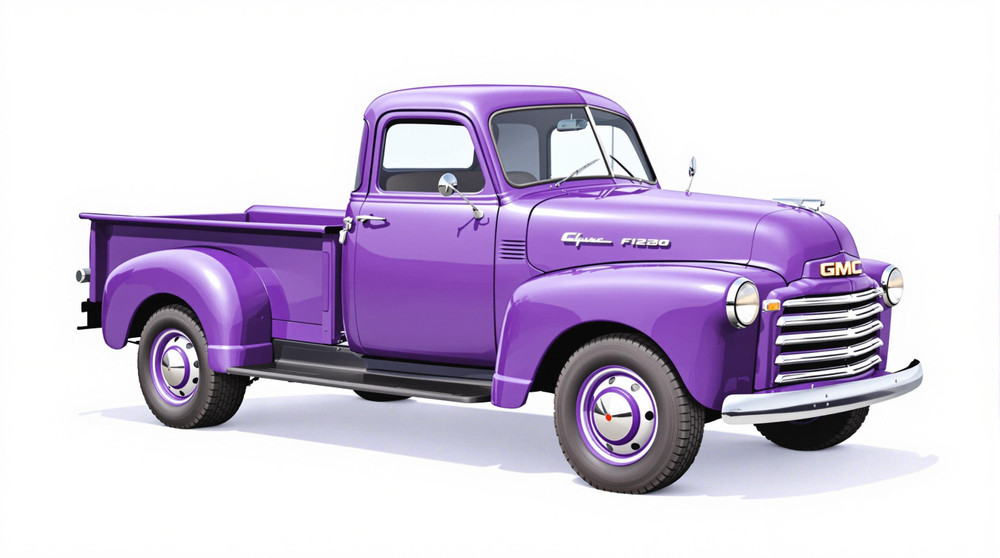
Image of 1947 Gmc Fc152, Note: These illustrations use artistic license and may differ from actual historical models.
Performance Metrics
Fundamental Metrics
Emotional Appeal
MMP Rating
| Engine Specifications | |
|---|---|
| Engine: | 228 cubic inch inline 6-cylinder |
| Displacement: | 228 cubic inches |
| Horsepower: | 93-100 hp |
| Torque: | 175 lb-ft |
| Compression Ratio: | 6.6:1 |
| Ignition System: | Distributor and coil |
| Cooling System: | Liquid-cooled |
| Performance Specifications | |
| 0-60 Time: | Not available due to the age and type of vehicle |
| 1/4 Mile Time: | Not available due to the age and type of vehicle |
| Top Speed: | 60-65 mph |
| Transmission and Drive | |
| Drive Type: | Rear-wheel drive |
| Transmission Type: | 4-speed manual |
| Fuel and Efficiency | |
| Fuel System Type: | Carburetor |
| MPG: | 10-12 mpg |
| Dimensions and Brakes | |
| Brakes: | Hydraulic drum brakes |
| Wheelbase: | 125 inches |
| Weight: | 3,400 lbs |
Note: Specifications for classic cars are given to the best of our ability, considering the limited and variant data available.
1947 GMC FC-152: The Postwar Cab-Over Workhorse
The 1947 GMC FC-152 brought a bold, practical idea to postwar trucking: put the cab over the engine, shorten the truck’s overall length, and leave more room for the load. Built by General Motors Truck and Coach, the FC-152 was a forward-control, cab-over-engine truck from GMC’s newly introduced Advance-Design era. Its tall, commanding cab and commercial-duty chassis made it a distinctive sight on working streets and highways.
The FC-152 arrived as American businesses were rebuilding and expanding after World War II. Demand for delivery trucks, construction vehicles, and fleet equipment was rising, while operators needed to carry useful loads without always buying a longer vehicle. The cab-over layout helped answer that need. One intriguing detail is right there in the name: “FC” stands for forward control, while “152” refers to its nominal 152-inch wheelbase.
Advance-Design Styling and Cab Features
The FC-152 has the unmistakable proportions of a classic COE: a high, flat-fronted cab, upright windshield, broad grille, and short front overhang. Rounded edges soften the otherwise businesslike shape, while large headlamps and a prominent GMC grille give the truck a face that is easy to recognize. Its high seating position also gives it a more commanding road presence than a conventional pickup of the same era.
Inside, the emphasis was on function rather than luxury. The cab typically used painted metal surfaces, a straightforward instrument panel, and durable upholstery suited to commercial work. The seating and trim could vary with the original order and later repairs, so surviving trucks may show anything from basic work-truck finishes to carefully restored or customized interiors. Expect a practical driving position, simple controls, and limited sound insulation by modern standards.
Equipment was similarly work-focused. The FC-152 offered a forward-control layout, a manual transmission, and heavy-duty running gear intended for commercial service. Instrumentation was basic, and modern conveniences such as power steering, air conditioning, and advanced safety equipment were not part of the ordinary package. Specific engine, axle, brake, and transmission details can vary by build and surviving configuration, so a particular truck’s data plate and components are the best guides to its original specification.
These were commercial vehicles, not lifestyle pickups with a standardized palette of fashionable colors. Buyers and fleets could specify practical paint colors, and trucks were often repainted during decades of service. Red, green, blue, gray, cream, and fleet-specific colors are common choices on restored examples, but no single shade can be called the definitive FC-152 color.
The basic offering was a cab-and-chassis truck, which could be fitted with equipment for different jobs. Depending on the order and subsequent upfitting, FC-152 chassis could serve with cargo bodies, stake beds, flatbeds, or other commercial bodies. The flatbed and stake-bed styles are among the most recognizable today because they show off the truck’s long, useful frame and working-truck character.
Why the GMC FC-152 Mattered
The FC-152’s significance is less about introducing a new engine or a record-breaking feature and more about making a different truck layout useful to American businesses. By placing the driver above the front axle and engine, a cab-over could offer a shorter overall package than a conventional truck with a similar working capacity. That could make loading areas, crowded streets, and tight delivery routes easier to manage.
GMC’s postwar Advance-Design trucks helped establish a fresh visual identity for the company after wartime production. The FC-152 carried that new-era look into the medium- and heavy-duty commercial world. It was not alone in using a cab-over layout, but its combination of GMC styling, practical proportions, and commercial flexibility set it apart from ordinary pickups and long-nosed trucks of the period.
Cab-over trucks remained a familiar sight in delivery and fleet work for decades. The FC-152 was part of that broader shift toward packaging the cab and cargo capacity efficiently. Its lasting influence is visible in the continued use of COE designs wherever maneuverability and a compact overall footprint matter.
Engine, Speed, and Road Manners
Many 1947 GMC trucks used a GMC inline-six, with engine displacement and output depending on the model and specification. A 248-cubic-inch six is often associated with heavier GMC applications of the era, but engines may have been changed during the truck’s working life. For a surviving FC-152, it is wiser to confirm the engine by its markings and paperwork than to assume every example left the factory with the same unit.
There is no commonly published factory 0-to-60-mph figure for the FC-152, and that measurement was not especially useful for a loaded commercial truck. As a broad modern estimate, an unloaded, mechanically sound example might take roughly 30 to 45 seconds to reach 60 mph, if its gearing, tires, and condition allow it to get there at all. A practical top speed is likely around 45 to 55 mph for many original-style setups. These are estimates, not factory test results, and a particular truck may be slower or faster.
On the road, the FC-152 feels like a working vehicle rather than a vintage car. The inline-six produces a steady mechanical rumble, the manual gearbox asks for deliberate shifts, and the driver sits high above the road. The cab-over layout can make the front end feel close and immediate, while the truck’s size and weight call for planning ahead. At low speeds it can be useful in tight spaces, but its steering, braking, and visibility are not comparable to a modern truck.
Uneven pavement brings out the truck’s commercial character. With little or no cargo, the suspension may feel firm and choppy over bumps. A load can settle the ride, but it also increases stopping distances and demands careful driving. On windy roads, a tall cab and a high-sided body can catch crosswinds, so smooth steering inputs and moderate speeds are sensible. Original tires, worn steering parts, brake condition, and axle gearing all have a major effect on how an FC-152 behaves today.
Living With a 1947 GMC FC-152
Most FC-152s were built to earn their keep. Typical roles included local deliveries, farm and construction work, hauling materials, and service for municipal or commercial fleets. Today, surviving examples are more likely to be found at truck shows, in private collections, on farms, or in occasional parade and display use than in everyday commercial service.
The mechanical layout is from an era when many repairs could be handled with ordinary tools and practical know-how. The engine and driveline are comparatively straightforward, and parts may be sourced through specialist vintage-truck suppliers, clubs, and salvage networks. However, “simple” does not mean effortless: model-specific trim, body panels, glass, wiring components, and correct drivetrain parts can take patience to locate. A cab-over also places the engine close to the driver, so access for some service jobs can be tighter than on a conventional truck.
Before buying one, inspect the frame, cab corners, floor, lower body, and areas around the windshield for rust or old repairs. Check the steering and brakes carefully, and confirm that tires are suitable for the truck’s weight and intended use. A sound, complete truck is generally a much better starting point than a cheap project with missing cab pieces or an undocumented engine swap.
FC-152 Facts and Common Criticisms
The FC-152 is a useful reminder that postwar trucks were often ordered as working platforms rather than finished, one-size-fits-all vehicles. The chassis could support different commercial bodies, and many trucks were altered or rebuilt during years of service. That history is part of their appeal, but it also means surviving examples may differ considerably from one another.
There is no widely recognized FC-152 speed record or major competition achievement to point to. Its story is rooted in everyday work: deliveries, hauling, and fleet service. Nor is there a well-established celebrity connection that defines the model. Its historical importance comes from its place in GMC’s postwar commercial range and the practical role cab-over trucks played in American business.
Common criticisms are straightforward. The cab can be noisy and hot, the ride can be harsh when the truck is empty, and the driving position may feel unfamiliar to someone used to a modern vehicle. Parts for a specific body style can be scarce, and the truck’s modest speed and old-fashioned brakes make it unsuitable for fast modern traffic. Those drawbacks are also part of its honest, no-nonsense character.
Collector Value and Rarity
Exact production figures for the 1947 FC-152 are difficult to pin down, and a dependable model-specific total is not readily available. As an informed estimate rather than a documented factory count, perhaps 1,000 to 3,000 examples of the exact FC-152 configuration were built for the 1947 model year. The number of survivors is surely much lower, particularly for trucks retaining their original bodies and drivetrains.
In the current U.S. collector market, a project or incomplete truck might bring roughly $8,000 to $18,000, depending heavily on rust, completeness, and title status. A running, presentable example could fall around $20,000 to $40,000. A well-restored, correctly finished truck or an especially appealing body conversion may reach $45,000 to $75,000 or more. These are broad estimates, not guaranteed sale prices; condition, provenance, location, and the quality of the restoration make a substantial difference.
Interest in unusual vintage trucks has generally supported values, especially for complete and well-restored examples. Still, the FC-152 is a niche collectible, and restoration costs can exceed the finished truck’s market value. Prices are best understood as condition-driven rather than as a guaranteed investment trend. Originality, a documented history, sound metal, and a desirable body can matter more than an expensive but poorly executed restoration.
A Distinctive Postwar GMC
The 1947 GMC FC-152 combined the fresh look of GMC’s postwar Advance-Design era with the practical advantages of a cab-over truck. Its upright cab, adaptable chassis, and work-first engineering made it a useful commercial vehicle, while its rarity and unmistakable profile have given it lasting appeal among classic-truck enthusiasts. It may not be fast or quiet, but the FC-152 tells a compelling story about American industry getting back to work after the war. Few vintage trucks wear their purpose so plainly, or so memorably.
1947 Gmc Fc152 Catalog of Parts
 1947 GMC FC152 Rear Window Seal '42-'66 GM Full Size Trucks With Small Window-VWS 7313-URear Window Seal '42-'66 GM Full Size Trucks With Small Window, Includes Lockstrip, Set of 2.
Why Choose Metro?
For over 100 years, Metro Moulded Parts has been the pinnacle of quality in classic car restoration parts. Our commitment to precision and authenticity in every component ensures a perfect fit and an OEM-level appearance.
- Expert Craftsmanship & Quality: Each part is a testament to our dedication to reliability and perfection, crafted from original designs and thoroughly tested.
- Advanced Technology: We use cutting-edge techniques to create flawless, long-lasting parts that surpass others in performance.
- SuperSoft Sponge – The Ultimate Door Seal: Not only are our door seals 30% softer than competitors', but they're also guaranteed to never leak. They effectively reduce wind and road noise, enhancing your classic car's comfort and driving experience.
- Proudly American: Our parts are a product of American craftsmanship, made in the USA with a spirit of excellence and heritage.
- Unrivaled Warranty: We back our products with a 30-year industry-leading warranty, a testament to our confidence in their quality.
Join us in preserving the legacy of classic cars with parts that are crafted for perfection, not just made.