
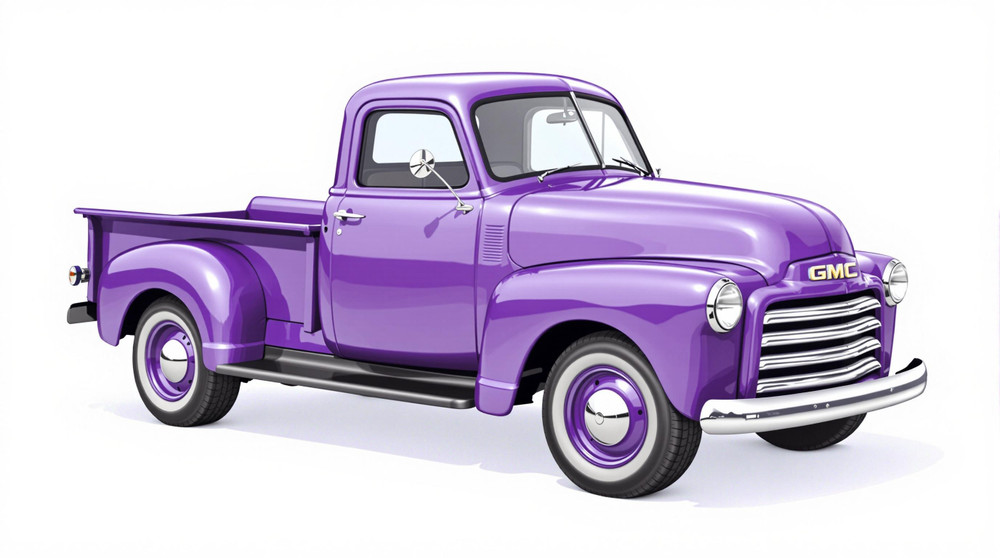
Image of 1949 Gmc Fc102, Note: These illustrations use artistic license and may differ from actual historical models.
Performance Metrics
Fundamental Metrics
Emotional Appeal
MMP Rating
| Engine Specifications | |
|---|---|
| Engine: | Inline 6 |
| Displacement: | 228 cubic inches |
| Horsepower: | Estimated 92-100 hp |
| Torque: | 175 lb-ft |
| Compression Ratio: | Estimated 6.6:1 |
| Ignition System: | Distributor and coil |
| Cooling System: | Liquid cooled |
| Performance Specifications | |
| 0-60 Time: | Not available due to the age and type of vehicle |
| 1/4 Mile Time: | Not available due to the age and type of vehicle |
| Top Speed: | 70 mph |
| Transmission and Drive | |
| Drive Type: | Rear wheel drive |
| Transmission Type: | 3-speed manual |
| Fuel and Efficiency | |
| Fuel System Type: | Carburetor |
| MPG: | Estimated 10-15 mpg |
| Dimensions and Brakes | |
| Brakes: | Drum brakes |
| Wheelbase: | 116 inches |
| Weight: | Estimated 3,400 lbs |
Note: Specifications for classic cars are given to the best of our ability, considering the limited and variant data available.
1949 GMC FC102: The Cab-Forward Truck Built for the City
With its driver perched over the front axle and its short, blunt nose aimed straight into postwar traffic, the 1949 GMC FC102 looks ready to squeeze a little more work out of every inch of road. GMC built it as a forward-control truck, a cab-over-engine design that put the cab at the front of the chassis instead of behind a long hood. The result was a practical commercial vehicle with a distinctive profile and more usable body length for its overall size.
The FC102 came from General Motors’ GMC truck division during the postwar boom in construction, delivery, and small-business transport. It belonged to the broader Advance Design era, which began in 1947 and brought GMC trucks a more modern appearance and updated cabs. One intriguing detail is that the FC102’s unusual cab-forward layout was not simply a styling flourish: it was a packaging solution. Moving the cab forward helped operators fit a longer cargo body into a compact wheelbase, a valuable advantage on crowded streets and tight delivery routes.
Cab-Forward Styling and Work-Ready Design
The FC102 has the rounded, substantial look associated with early Advance Design trucks, but its proportions are unmistakably different from a conventional pickup. There is no long hood stretching ahead of the windshield. Instead, the cab sits high and forward, with a broad front face, rounded fenders, and a prominent grille giving the truck a sturdy, almost architectural appearance. Its upright stance and large windows make it look purpose-built rather than sleek, and that is part of its appeal today.
Inside, the FC102 was designed for a working driver, not a luxury-car buyer. Expect a broad bench seat, a straightforward instrument panel, simple controls, and painted metal surfaces. Materials and trim depended on the truck’s original specification and subsequent fleet or bodybuilder work. Compared with a modern cab, it is sparse, but the upright seating position and relatively open glass area give the driver a commanding view of the road.
GMC’s color choices could vary by year, market, and order, and commercial buyers often specified fleet colors. Period-style restorations commonly use shades such as red, green, blue, cream, or black, but no single color defines every FC102. The best color choice for a restoration is usually the truck’s documented original paint, if it can be established from surviving records or traces beneath later coatings.
The FC102 was a chassis intended to work with commercial bodies rather than one fixed passenger-style body. Depending on its original configuration, it could serve as a delivery truck, stake-bed, flatbed, or other vocational vehicle. The box-bodied delivery version is among the most recognizable interpretations of the cab-over layout, while surviving trucks may also appear as bare chassis conversions or customized haulers.
Why GMC Used Forward Control
In a conventional truck, the engine and hood occupy space ahead of the cab. The FC102’s forward-control arrangement moved the driver and passenger over or close to the front axle, shortening the vehicle’s front end. For operators, that meant a compact truck could carry a longer body than a conventional design of similar overall length. It also gave the driver a close view of the front corners, which could be useful when maneuvering through loading areas and narrow streets.
The FC102 did not invent the cab-over truck, but it brought the format to GMC buyers at a time when cities were expanding and delivery fleets needed to make efficient use of limited space. Its design reflects a practical postwar priority: carry useful cargo, turn in tight quarters, and keep the vehicle manageable in urban service. The basic cab-over idea remains familiar in modern delivery and medium-duty trucks, even though today’s versions benefit from decades of advances in safety, comfort, and powertrain engineering.
Compared with a conventional GMC pickup, the FC102’s biggest distinction was its packaging. It offered a more unusual silhouette and a different driving position, but it also asked owners to accept more complex access to the engine and a less familiar service routine. That trade-off is central to the truck’s character: it was an efficient tool first, and a conversation piece only decades later.
Engine, Speed, and Driving Feel
Many FC102 trucks are associated with GMC’s 228-cubic-inch inline-six, a durable, low-revving engine suited to commercial work. Exact specifications can differ with engine swaps, production details, and restoration history, but a typical original-style truck would pair a six-cylinder engine with a manual transmission, often a four-speed. These were built to move loads reliably, not to deliver modern acceleration.
Factory performance figures for individual FC102 configurations are difficult to pin down, and speed depended heavily on axle gearing, tire size, load, and body style. As a practical estimate, an unloaded, mechanically sound example might reach roughly 55 to 65 mph. A 0-to-60-mph time is rarely a meaningful figure for this kind of truck; expect a slow climb that could take well over 30 seconds, if the truck and gearing allow it to reach 60 at all. Those are estimates, not guaranteed factory test results.
Behind the wheel, the inline-six tends to work with a steady mechanical murmur rather than a sharp, high-revving note. The manual gearbox rewards deliberate shifts, and the driver feels closely connected to the machinery through the steering wheel, pedals, and solid chassis. Expect more vibration and engine noise than in a modern vehicle, along with a truck-like ride that can feel firm when unloaded.
On rough pavement, the FC102’s age and suspension design are obvious. A loaded truck may settle into its work, while an empty one can bounce over bumps. Its cab-forward position also gives the driver a different sense of motion than a conventional pickup, particularly over uneven surfaces. The short front end helps with visibility and maneuvering, but a tall body can catch crosswinds, and narrow roads or winding routes call for measured steering and sensible speeds. This is a truck to enjoy at a relaxed pace, not hustle like a sports car.
Living With a 1949 FC102
In its working life, the FC102 was a commercial vehicle for deliveries, local hauling, and specialized business use. Today, owners are more likely to use one for weekend drives, local shows, business displays, parades, or light-duty hauling. A well-restored example can be a striking show truck, while a weathered survivor may appeal to someone who values patina and mechanical history over flawless paint.
Routine maintenance is approachable for an owner comfortable with older vehicles. The engine and chassis use conventional mechanical systems, and many repairs do not require modern diagnostic equipment. However, the truck’s age means that condition matters more than reputation. Brakes, steering components, electrical wiring, cooling systems, tires, and fuel lines deserve careful inspection before regular road use.
Parts availability is mixed. Mechanical components shared with other GMC trucks can be easier to locate than FC-specific cab, trim, or body pieces. A missing original panel or unusual cab detail may require patient searching, fabrication, or help from a specialist. Before buying, check for rust in the cab and frame, confirm the engine and transmission configuration, and inspect the braking system closely. A running truck is not necessarily a roadworthy truck.
FC102 Facts, Myths, and Common Complaints
The FC102’s most memorable trivia is built into its design: the driver sits far farther forward than in a conventional pickup, giving the truck its distinctive cab-over stance. That layout also explains why the FC102 can look surprisingly compact beside a long-bodied delivery truck. Its appeal today comes less from a famous speed record or celebrity connection and more from being an uncommon, purpose-driven piece of postwar commercial design.
There is no widely cited FC102 production total that reliably separates the model from related GMC truck configurations. As a rough, unverified estimate, production for a particular model year may have been in the low thousands rather than the tens of thousands, but surviving records and model breakdowns are not clear enough to treat that as a confirmed figure. The broader Advance Design truck family was produced in substantial numbers; the forward-control versions are much less commonly encountered today.
Common criticisms are understandable. The cab can be noisy and warm, the ride is dated, braking and steering feel require more attention than modern drivers expect, and engine access is less straightforward than with a conventional hood. Those limitations are part of the original design compromise, not evidence that the truck was poorly conceived. It was engineered around cargo capacity and maneuverability, not comfort or speed.
Collector Value and Market Outlook
FC102 values vary widely because condition, originality, body style, and completeness make a major difference. As a broad 2026 market estimate, a project or incomplete truck might sell for about $8,000 to $18,000. A running, presentable example could land around $20,000 to $40,000, while a high-quality restoration or especially appealing finished delivery truck may reach $45,000 to $65,000 or more. These are general estimates, not a formal appraisal, and regional demand can move prices substantially.
Availability is limited compared with ordinary GMC pickups, but the FC102 is not impossible to find. The challenge is often locating a complete truck with its correct cab and commercial body, rather than finding any example at all. Over the long term, unusual postwar trucks have gained collector interest, particularly when restored with their original commercial character intact. Values are best described as condition-sensitive and generally steady to appreciating for excellent examples, rather than guaranteed to rise every year.
Buyers should budget for specialized bodywork and hard-to-find trim as well as the engine and chassis. A low purchase price can become expensive if the cab, glass, or body components are missing. Conversely, a sound, complete truck with documented history can be worth a premium because it saves years of searching and fabrication.
A Distinctive Piece of GMC Truck History
The 1949 GMC FC102 combines the practical thinking of a working truck with a design that remains instantly recognizable. Its cab-forward layout helped businesses carry more within a compact footprint, while its inline-six power and straightforward controls reflected the sturdy priorities of postwar commercial transport. It is not quick, quiet, or effortless by modern standards, but it offers a direct connection to a time when truck design was shaped by the demands of the route and the load.
For collectors, the FC102 is more than an unusual GMC silhouette. It is a rolling example of how manufacturers rethought space and utility after the war, and a reminder that the most memorable vehicles are often the ones built to solve a very specific problem.
1949 Gmc Fc102 Catalog of Parts
 1949 GMC FC102 Rear Window Seal '42-'66 GM Full Size Trucks With Small Window-VWS 7313-URear Window Seal '42-'66 GM Full Size Trucks With Small Window, Includes Lockstrip, Set of 2.
Why Choose Metro?
For over 100 years, Metro Moulded Parts has been the pinnacle of quality in classic car restoration parts. Our commitment to precision and authenticity in every component ensures a perfect fit and an OEM-level appearance.
- Expert Craftsmanship & Quality: Each part is a testament to our dedication to reliability and perfection, crafted from original designs and thoroughly tested.
- Advanced Technology: We use cutting-edge techniques to create flawless, long-lasting parts that surpass others in performance.
- SuperSoft Sponge – The Ultimate Door Seal: Not only are our door seals 30% softer than competitors', but they're also guaranteed to never leak. They effectively reduce wind and road noise, enhancing your classic car's comfort and driving experience.
- Proudly American: Our parts are a product of American craftsmanship, made in the USA with a spirit of excellence and heritage.
- Unrivaled Warranty: We back our products with a 30-year industry-leading warranty, a testament to our confidence in their quality.
Join us in preserving the legacy of classic cars with parts that are crafted for perfection, not just made.