

Image of 1950 Gmc Truck, Note: These illustrations use artistic license and may differ from actual historical models.
Performance Metrics
Fundamental Metrics
Emotional Appeal
MMP Rating
| Engine Specifications | |
|---|---|
| Engine: | 228 CID I6, 248 CID I6, 270 CID I6, 302 CID I6 |
| Displacement: | 228-302 cubic inches |
| Horsepower: | 92-130 hp |
| Torque: | 200-270 lb-ft |
| Compression Ratio: | 7.4:1 |
| Ignition System: | Points and condenser |
| Cooling System: | Liquid-cooled |
| Performance Specifications | |
| 0-60 Time: | Estimated 20-30 seconds |
| 1/4 Mile Time: | Not available |
| Top Speed: | 60-70 mph |
| Transmission and Drive | |
| Drive Type: | Rear-wheel drive |
| Transmission Type: | 3-speed manual, 4-speed manual |
| Fuel and Efficiency | |
| Fuel System Type: | Carburetor |
| MPG: | Estimated 10-15 mpg |
| Dimensions and Brakes | |
| Brakes: | Drum brakes |
| Wheelbase: | 125-137 inches |
| Weight: | 3,500-4,500 lbs |
Note: Specifications for classic cars are given to the best of our ability, considering the limited and variant data available.
1950 GMC Truck: A Postwar Workhorse With Lasting Style
The 1950 GMC truck makes a strong first impression with its broad hood, upright grille, and unmistakable postwar shape. Built by General Motors’ GMC division, it belonged to the Advance-Design generation, a fresh line of trucks introduced for 1947 and produced through 1955. These trucks helped move American work vehicles away from their prewar roots, pairing sturdier, roomier cabs with a look that could be as appealing on a farm as it was in a suburban driveway.
GMC shared much of the Advance-Design body and engineering with Chevrolet, but it gave its trucks a distinct identity through GMC badging, trim details, and its own truck-engine lineage. A notable feature of the era was the cab, which GMC promoted for its generous width and practical visibility. The 1950 model was not a radical redesign, but it refined a formula that was already proving its worth across the country.
Advance-Design Looks and Practical Details
The truck’s styling is handsome without being fussy. A tall, rounded hood flows into a prominent front grille, while separate rounded front fenders frame the wheels. The cab sits upright and has a two-piece windshield, a broad bench seat, and a compact rear window. Running boards connect the fenders and give the truck a solid, purposeful profile. GMC emblems and model details distinguish it from its Chevrolet cousin, though the two share much of their basic cab and sheet-metal design.
Inside, the 1950 GMC is work-focused. The dashboard is mostly painted metal, with simple, clearly arranged gauges and controls. The bench seat was designed for durability and room for a driver and passenger, not luxury-car comfort. Depending on specification and condition, upholstery could be basic cloth or vinyl-like material. A rubber floor mat was typical in a working truck, making cleanup easier after a day on the job. Compared with a modern pickup, the cabin is sparse, but its straightforward layout is part of the appeal.
Factory paint choices varied with model, equipment, and production details. Period trucks could be ordered in practical solid colors, including shades of green, blue, red, gray, and cream or other light colors. Buyers often chose colors that suited a business or farm, while restored examples today are frequently finished in period-inspired colors that emphasize the rounded bodywork. Exact availability should be checked against the truck’s original paint codes and documentation.
The most recognizable body style is the conventional pickup, particularly the half-ton model with a short, open cargo bed. GMC also offered heavier-duty versions and commercial configurations, with availability depending on chassis and model series. Buyers could find trucks configured for jobs such as hauling, delivery, or farm work, including stake and other commercial bodies. The pickup is the version most commonly associated with the 1950 GMC today.
Engineering for the Working Day
GMC’s defining mechanical feature was its own inline six-cylinder engine rather than simply adopting Chevrolet’s smaller truck six. Many light-duty 1950 GMCs used a 228-cubic-inch GMC six, rated at about 105 horsepower, though exact equipment varied by series and specification. It was built for low-speed pulling and steady service, not quick acceleration. A manual transmission was standard in many configurations, with gearing selected to suit the truck’s payload and intended work.
The Advance-Design generation’s significance lies less in a single breakthrough than in how thoroughly it addressed everyday truck needs. The roomy cab, improved visibility, sturdy chassis, and wide range of work configurations made the truck more useful as both a commercial tool and a personal vehicle. GMC’s separate engine and branding also helped distinguish it in a market where many buyers wanted the familiarity of a GM truck but preferred GMC’s heavy-duty reputation.
Performance and Road Manners
Period road-test figures for individual 1950 GMC configurations are not consistently available, and performance depended heavily on gearing, tires, load, engine condition, and body style. As a useful real-world estimate, a sound light-duty truck might reach 0 to 60 mph in roughly 25 to 35 seconds. A plausible top speed is around 60 to 70 mph, although sustained high-speed cruising is not what the truck was designed for. Heavier models and trucks carrying a load would be slower.
On the road, the GMC feels deliberate and mechanical. The inline six produces a steady, low-pitched working sound, while the manual gearbox and unassisted steering ask the driver to participate rather than simply point and go. The front end can feel heavy at low speeds, and the truck’s brakes and steering are much less assisted than those of a modern pickup. Its solid axles and work-oriented suspension handle a load well, but an empty truck can bounce over sharp bumps. On a winding road, its tall stance, narrow tires, and relatively slow steering reward smooth inputs and moderate speeds.
Living With a 1950 GMC
Today, owners use these trucks as weekend drivers, farm and property vehicles, parade entries, and show trucks. Some are carefully restored to factory appearance, while others wear tasteful period-style upgrades. They are not generally chosen for racing or modern daily commuting, though a well-maintained example can handle occasional local trips.
Mechanical simplicity is one of the GMC’s strongest ownership advantages. The engine bay is accessible, and many routine jobs can be handled by an owner with basic tools and shop-manual guidance. The main challenges are often age-related rather than mysterious: worn brakes, tired steering components, electrical problems, rust, and hard-to-source trim or model-specific parts. The GMC six is durable when properly maintained, but buyers should look for oil leaks, cooling-system issues, low oil pressure, and evidence of neglected service. Sheet metal and cab condition deserve close inspection, since body repairs can quickly become more expensive than basic mechanical work.
GMC Truck Facts and Common Criticisms
The 1950 GMC belongs to a design family that remained in production through 1955, with a major styling change arriving for the 1955 second-series trucks. That long production run is one reason Advance-Design trucks are familiar sights at vintage-truck gatherings. They were built in many configurations, so two trucks from the same year can differ substantially in chassis, payload rating, and equipment.
There is no reliable, widely cited production total for every 1950 GMC pickup configuration. As a broad estimate, GMC likely built on the order of about 100,000 trucks across its full range in 1950, with light-duty pickups accounting for only part of that number. A precise figure for a particular series or body style should be treated cautiously unless supported by factory records. The truck is not exceptionally rare as a model, but original, rust-free examples and well-documented restorations are much harder to find.
There is no widely recognized speed or endurance record associated with the 1950 GMC, and its significance is rooted in everyday service rather than competition. Common criticisms are easy to understand: modest acceleration, a basic cabin, heavy controls, and a ride that can be choppy when the bed is empty. Those limitations are also reminders that this was designed as a working vehicle, not a comfort-focused modern pickup.
Collector Values and Availability
Prices vary with body style, rust, completeness, mechanical condition, and the quality of any restoration. As a general U.S. market estimate, a project truck may sell for about $5,000 to $12,000. A usable driver in fair to good condition might bring roughly $12,000 to $25,000, while a high-quality restoration commonly falls in the $25,000 to $45,000 range. Exceptional examples, rare configurations, or trucks with unusually strong documentation can exceed those figures. These are broad estimates, not a substitute for comparing recent local sales.
Values have generally been strongest for clean, finished pickups, while incomplete projects can be harder to sell as restoration costs rise. The model’s classic styling and broad enthusiast following support steady demand, but condition makes a major difference. Rather than assume every truck will climb in value, collectors should buy the best body and documentation they can afford. A complete, honest truck is often a better long-term prospect than a shiny restoration hiding structural rust.
Why the 1950 GMC Still Matters
The 1950 GMC combines a distinctive postwar look with the practical engineering of a true work truck. Its roomy Advance-Design cab, GMC six-cylinder power, and broad range of working configurations made it useful in its own time, while its rounded fenders and upright grille have kept it appealing to collectors decades later. It is not fast or refined by modern standards, but that is not the point. The 1950 GMC remains a memorable example of the American truck as both dependable tool and enduring piece of design.
1950 Gmc Truck Catalog of Parts
 1950 GMC Truck Shock Absorber Grommet. 1" bottom O.D-BN 11Shock Absorber Grommet. 1" bottom O.D., 3/4" high, with 5/8" I.D. Each
 1950 GMC Truck Front motor mount-MM 1Front motor mount. Fits all '32 Chevy passenger cars and Sedan Delivery (BA/BB); '32-'42 Chevy pickups; '33-'55 Chevy Commercial and Utility (1st Series) vehicles; '39-'54 GMC pickups. 1-3/8 in. W x 7-5/8 in. L. Replaces OEM#'s 3657520/37339939. One used per vehicle. Each.
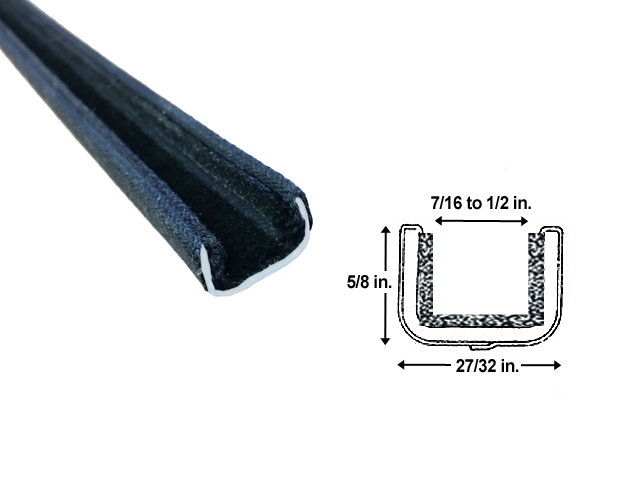 1950 GMC Truck Flexible window channel-WC 18-60Flexible window channel. Fits '50-'63 Chevrolet and GMC full-size pick-up trucks. 60 in. long. Each.
Why Choose Metro?
For over 100 years, Metro Moulded Parts has been the pinnacle of quality in classic car restoration parts. Our commitment to precision and authenticity in every component ensures a perfect fit and an OEM-level appearance.
- Expert Craftsmanship & Quality: Each part is a testament to our dedication to reliability and perfection, crafted from original designs and thoroughly tested.
- Advanced Technology: We use cutting-edge techniques to create flawless, long-lasting parts that surpass others in performance.
- SuperSoft Sponge – The Ultimate Door Seal: Not only are our door seals 30% softer than competitors', but they're also guaranteed to never leak. They effectively reduce wind and road noise, enhancing your classic car's comfort and driving experience.
- Proudly American: Our parts are a product of American craftsmanship, made in the USA with a spirit of excellence and heritage.
- Unrivaled Warranty: We back our products with a 30-year industry-leading warranty, a testament to our confidence in their quality.
Join us in preserving the legacy of classic cars with parts that are crafted for perfection, not just made.