

Image of 1951 Gmc 150, Note: These illustrations use artistic license and may differ from actual historical models.
Performance Metrics
Fundamental Metrics
Emotional Appeal
MMP Rating
| Engine Specifications | |
|---|---|
| Engine: | 228 cubic inch inline 6-cylinder |
| Displacement: | 228 cubic inches |
| Horsepower: | 93-100 hp |
| Torque: | 175 lb-ft |
| Compression Ratio: | 7.2:1 |
| Ignition System: | Distributor and coil |
| Cooling System: | Liquid-cooled |
| Performance Specifications | |
| 0-60 Time: | Not available due to the age and type of vehicle |
| 1/4 Mile Time: | Not available due to the age and type of vehicle |
| Top Speed: | 70 mph |
| Transmission and Drive | |
| Drive Type: | Rear-wheel drive |
| Transmission Type: | 3-speed manual |
| Fuel and Efficiency | |
| Fuel System Type: | Carburetor |
| MPG: | 10-12 mpg |
| Dimensions and Brakes | |
| Brakes: | Drum brakes |
| Wheelbase: | 125.25 inches |
| Weight: | 3,400 lbs |
Note: Specifications for classic cars are given to the best of our ability, considering the limited and variant data available.
1951 GMC 150: The Heavy-Duty Side of GMC’s Classic Pickup
The 1951 GMC 150 was built for owners who needed more truck than a half-ton pickup could provide, but still wanted a practical vehicle they could drive to work, the farm, or the lumberyard. Part of GMC’s celebrated postwar “Advance-Design” generation, the 150 was a three-quarter-ton pickup with sturdy underpinnings, a distinctive rounded cab, and the straight-six power that made GMC trucks familiar sights on American roads.
GMC had been part of General Motors since 1909, and by 1951 it had established a clear identity alongside Chevrolet. The two brands shared some engineering and styling foundations, but GMC marketed its trucks as robust, work-focused machines. One intriguing detail: the “150” badge identified the truck’s capacity class, not its engine size or horsepower. It was the middle rung in GMC’s light-duty lineup, positioned above the 100-series half-ton and below heavier models.
Advance-Design Style and Cab
The 1951 GMC 150 wears the rounded, confident shape that defines the Advance-Design trucks. Its broad hood, proud front fenders, large round headlamps, and substantial grille give it a purposeful face without making it look crude. The cab sits high, with a wide windshield and generous side glass that help the truck feel open by early-1950s standards. Many examples have the attractive five-window cab, whose small corner windows improve visibility and give the truck an especially recognizable profile.
Inside, the focus is on durability rather than ornament. The dashboard is painted metal, the controls are straightforward, and the broad bench seat is covered in practical period upholstery. A rubber floor mat, simple instrumentation, and a large steering wheel suit the truck’s working role. Do not expect modern sound insulation or plush trim: the cabin is honest, easy to clean, and designed to be used.
GMC’s factory colors varied by year and production details. Period trucks could be found in solid colors such as greens, blues, reds, grays, and light neutral shades, with trim and wheel colors adding contrast. Today, red, dark green, blue, cream, and black examples are especially common sights at shows, though the most desirable color is often the one documented by the truck’s original paint code.
Body Styles and Practical Choices
The 150-series name covered more than one way to put the chassis to work. Buyers could choose a conventional pickup or order a cab-and-chassis configuration for a service body, stake bed, or other commercial fit-out. The pickup is the most familiar and collectible version, especially when it retains its original-style bed, running boards, and steel wheels. Equipment and body availability could vary with the specific order, so surviving factory documentation is valuable when identifying an unusual example.
As a three-quarter-ton model, the 150 was built with a heavier-duty mission than a 100-series pickup. Its longer wheelbase and stronger chassis made it better suited to carrying heavier loads and handling demanding work. Exact dimensions and equipment depend on the truck’s configuration, so a model plate and period GMC parts or sales literature are the best guides for a particular vehicle.
Engineering and Historical Significance
The Advance-Design generation arrived in 1947, when American businesses and families were eager to replace aging wartime equipment and expand civilian operations. GMC’s 1951 trucks carried that postwar design forward, pairing a more comfortable, roomier cab with the rugged construction commercial users expected. The result helped establish the modern pickup as both a serious work vehicle and a useful everyday transport.
The 150’s importance is not that it introduced a single revolutionary technology. Its achievement was bringing practical improvements together: better outward visibility, a more accommodating cab, a wide range of chassis applications, and power suited to sustained work. GMC also kept its own identity through its truck-focused engineering and engine offerings, even as it shared broader General Motors resources with Chevrolet. That blend of corporate scale and distinct truck character remains part of GMC’s appeal.
Engine, Speed, and Road Manners
A common engine in the 1951 GMC 150 was GMC’s 228-cubic-inch overhead-valve inline-six. Period ratings are generally around 105 horsepower, with torque near 200 lb-ft, though exact specifications can vary by engine and configuration. Transmission choice also depended on the truck’s equipment; three- and four-speed manual gearboxes appear across the range. Check the engine stamp and transmission tag rather than assuming every surviving 150 left the factory identically equipped.
GMC did not publish modern-style acceleration figures for the 150, and a truck’s gearing, load, and condition make a large difference. As a broad real-world estimate, a healthy, lightly loaded example may take roughly 25 to 35 seconds to reach 60 mph. Top speed is usually in the neighborhood of 60 to 65 mph, but that does not mean it is happiest cruising there. The truck is geared for useful pulling power, not fast highway travel.
On the road, the six-cylinder makes a deep, steady mechanical hum, accompanied by the whir of the gearbox and plenty of tire and wind noise. The steering is slower and heavier than a modern driver expects, especially at parking speeds. Its solid axles and work-oriented suspension can hop over sharp bumps when the bed is empty, while a load often settles the ride. On a winding road, it rewards a measured pace: anticipate turns, leave room for the drum brakes, and avoid treating it like a modern sport utility vehicle.
Living With a 1951 GMC 150
Most surviving 150s now serve as weekend drivers, farm and ranch vehicles, parade trucks, or show-quality restorations. They are also popular candidates for tasteful restomods, although originality tends to matter more to traditional GMC collectors. A well-preserved truck can still do occasional hauling, but regular heavy work puts extra strain on components that may be more than 70 years old.
Routine repairs are approachable for an owner with basic mechanical skills. The inline-six is relatively accessible, the mechanical systems are uncomplicated, and many service parts are available through classic-truck suppliers. The main challenges are often age rather than complexity: worn steering and suspension joints, brake cylinders, tired wiring, rusted fuel lines, and hard-to-find trim or cab-specific parts. Original six-volt electrical systems can be less forgiving of poor grounds and aging connections, so careful wiring maintenance matters.
GMC 150 Trivia and Common Complaints
The 150-series truck is a useful reminder that early pickups were sold as working equipment first. Many were ordered in plain configurations and spent decades on farms, construction sites, and local delivery routes. That work history is one reason an untouched, complete example can be more interesting to collectors than a freshly painted truck with an uncertain past.
There is no widely accepted, model-specific production total for 1951 GMC 150 pickups, and no famous speed or endurance record defines the series. A cautious estimate is that roughly 5,000 to 15,000 150-series trucks may have been built for the U.S. market during the model year, but that is an informed estimate, not a verified factory figure. Nor is there a well-documented celebrity ownership story that stands above the truck’s everyday working history.
Common criticisms are familiar to anyone who has driven an old work truck: modest acceleration, heavy manual steering, drum brakes that need more stopping distance, and a bouncy ride when unloaded. Those traits are part of the period experience, but they also explain why a thorough mechanical inspection is essential before buying one.
Collector Value and Availability
As a general 2026 U.S. market guide, a project-quality 1951 GMC 150 might sell for about $5,000 to $12,000. A usable driver in solid condition commonly falls around $15,000 to $30,000, while a high-quality, well-documented restoration can reach roughly $35,000 to $60,000 or more. Exceptional originality, desirable equipment, excellent workmanship, and local demand can move a sale outside those ranges.
The 150 is less common than the familiar half-ton pickup, but it is not so rare that buyers should expect every example to command a premium. Trucks appear periodically through specialist dealers, online auctions, regional classifieds, and vintage-truck shows. Values for classic pickups rose substantially during the broader vintage-truck boom, then became more selective: condition, correct details, and build quality now matter more than simply owning an old truck. A complete, usable example generally attracts more interest than an ambitious project with missing parts.
Why the 1951 GMC 150 Still Matters
The 1951 GMC 150 combines the handsome Advance-Design shape with the extra-duty capability that made the three-quarter-ton class so useful. It is not fast, plush, or effortless by modern standards. Instead, it offers simple mechanical character, a distinctive GMC identity, and a direct connection to the postwar era when pickups were becoming more comfortable without giving up their working roots.
For collectors, the 150 is a rewarding alternative to the more common half-ton truck. For drivers, it is a reminder that a pickup can feel substantial, purposeful, and engaging at ordinary speeds. Its appeal is built into the design: a hardworking GMC that has earned its place in classic-truck history one job at a time.
1951 Gmc 150 Catalog of Parts
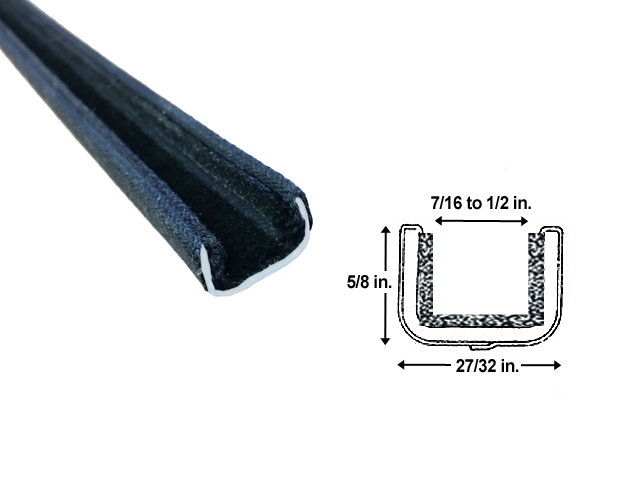 1951 GMC 150 Flexible window channel-WC 18-60Flexible window channel. Fits '50-'63 Chevrolet and GMC full-size pick-up trucks. 60 in. long. Each.
Why Choose Metro?
For over 100 years, Metro Moulded Parts has been the pinnacle of quality in classic car restoration parts. Our commitment to precision and authenticity in every component ensures a perfect fit and an OEM-level appearance.
- Expert Craftsmanship & Quality: Each part is a testament to our dedication to reliability and perfection, crafted from original designs and thoroughly tested.
- Advanced Technology: We use cutting-edge techniques to create flawless, long-lasting parts that surpass others in performance.
- SuperSoft Sponge – The Ultimate Door Seal: Not only are our door seals 30% softer than competitors', but they're also guaranteed to never leak. They effectively reduce wind and road noise, enhancing your classic car's comfort and driving experience.
- Proudly American: Our parts are a product of American craftsmanship, made in the USA with a spirit of excellence and heritage.
- Unrivaled Warranty: We back our products with a 30-year industry-leading warranty, a testament to our confidence in their quality.
Join us in preserving the legacy of classic cars with parts that are crafted for perfection, not just made.