

Image of 1951 Gmc 250, Note: These illustrations use artistic license and may differ from actual historical models.
Performance Metrics
Fundamental Metrics
Emotional Appeal
MMP Rating
| Engine Specifications | |
|---|---|
| Engine: | Inline 6 |
| Displacement: | 228 cubic inches |
| Horsepower: | 93-100 hp |
| Torque: | 175 lb-ft |
| Compression Ratio: | 7.2:1 |
| Ignition System: | Points and condenser |
| Cooling System: | Liquid-cooled |
| Performance Specifications | |
| 0-60 Time: | Not available due to the age and type of vehicle |
| 1/4 Mile Time: | Not available due to the age and type of vehicle |
| Top Speed: | 70 mph |
| Transmission and Drive | |
| Drive Type: | Rear-wheel drive |
| Transmission Type: | 3-speed manual |
| Fuel and Efficiency | |
| Fuel System Type: | Carburetor |
| MPG: | 10-12 mpg |
| Dimensions and Brakes | |
| Brakes: | Drum brakes |
| Wheelbase: | 125.25 inches |
| Weight: | 3,600 lbs |
Note: Specifications for classic cars are given to the best of our ability, considering the limited and variant data available.
1951 GMC 250: A Heavy-Duty Pickup with Honest Charm
The 1951 GMC 250 is the kind of truck that looks ready to leave the driveway with a load in the bed and come home after a long day still asking for more. Built by General Motors’ GMC Truck and Coach Division, it was a three-quarter-ton member of GMC’s postwar Advance-Design line, aimed at buyers who needed more capacity than a half-ton pickup could comfortably provide.
The 250 belongs to a generation of trucks that helped turn the pickup from a basic work tool into a more versatile part of American life. Farmers, contractors, shop owners, and small businesses relied on trucks like this as the country expanded during the postwar boom. A notable detail is that the GMC was not simply a Chevrolet pickup with a different badge: GMC used its own truck-engine family, giving the 250 a mechanical identity of its own.
Advance-Design Looks and Practical Details
The 1951 GMC 250 wears the rounded, substantial styling that defines the Advance-Design era. Its broad hood flows into rounded front fenders, while the tall cab and upright windshield give it a purposeful, easy-to-read silhouette. The grille is the visual centerpiece: a wide, horizontal arrangement that sets the GMC apart from the closely related Chevrolet trucks. A large GMC badge makes the difference clear without resorting to excessive ornament.
Inside, the cab is functional rather than luxurious. The dashboard is straightforward, with clear instruments and simple controls designed to be used with work gloves and understood at a glance. Materials were chosen for durability: painted metal, rubber floor covering, and a practical bench seat. Compared with modern pickups, the cab is narrow and spare, but its uncluttered layout is part of the appeal. A heater, radio, and other comfort or convenience equipment could be ordered depending on the truck’s original specification.
Paint choices varied by year, configuration, and market, and fleet buyers often ordered trucks in business colors. Period examples could be found in solid shades such as blue, green, red, gray, and cream or white. Today, restored trucks are often finished in deep blues, traditional reds, or two-tone combinations that make the rounded bodywork stand out. For an accurate restoration, the truck’s paint code and original build records are better guides than a general color chart.
The 250-series chassis could be ordered in different working configurations, including pickup and cab-and-chassis forms that could be fitted with commercial bodies such as stake or platform beds. The pickup is the most familiar and collectible version. Exact availability depended on the chassis and market, so a surviving truck’s body may reflect a later conversion or a locally fitted commercial body.
What Made the GMC 250 Different
The Advance-Design trucks were not radical in the way a modern concept vehicle might be. Their importance came from steady, practical improvements in comfort, visibility, and usability compared with many prewar work trucks. The cab-forward layout gave the driver a more spacious-feeling cabin and improved the view ahead, while the wide windshield and relatively upright driving position suited long hours behind the wheel.
GMC’s separate identity mattered, too. The company had a long history of building commercial vehicles, and its trucks were engineered around work rather than passenger-car styling. The 250’s heavier-duty chassis and three-quarter-ton role made it a useful middle ground: more capable than a light pickup, but less imposing and costly than a larger commercial truck. Its design was part of a broader shift in which pickups became indispensable for both business and home life.
The 1951 model sits near the end of the original Advance-Design period. The generation continued into the mid-1950s, and its rounded fenders, upright cab, and broad grille became enduring visual shorthand for a postwar American pickup. GMC did not invent the modern pickup, but trucks like the 250 helped establish the combination of everyday usability and serious load-carrying ability that buyers still expect.
228 Six Performance and Road Manners
Most 1951 GMC 250s were powered by GMC’s 228-cubic-inch inline-six, part of a family of engines often nicknamed “Jimmy” engines. Period specifications are commonly listed at roughly 93 horsepower, though output can vary with the exact engine, carburetor, and condition. A manual transmission was typical, with a four-speed gearbox a common choice for a truck intended to carry substantial loads. Equipment and driveline details could differ between individual trucks.
There is no single dependable factory 0-to-60-mph figure for every 1951 GMC 250 configuration. As a period work truck with low gearing, a heavy chassis, and modest horsepower, it was not built for quick acceleration. A realistic modern estimate is roughly 25 to 35 seconds to reach 60 mph, depending on gearing, load, engine condition, and transmission. Top speed is similarly dependent on setup, but about 60 to 70 mph is a reasonable estimate for a mechanically sound truck on suitable roads. Sustained high-speed cruising is not its natural job.
On a rough road, the solid axles and leaf springs deliver the firm, busy ride expected of a working truck. An empty bed can make the rear end feel especially stiff over sharp bumps; a moderate load often settles it down. On winding roads, the tall stance, heavy steering, and truck tires call for measured inputs rather than quick corrections. Crosswinds are noticeable, particularly with a tall commercial body or an empty bed.
Driving a 250 is a hands-on experience. The six-cylinder produces a steady mechanical growl, while the manual gearbox rewards deliberate shifts. Steering and braking demand more effort than a modern pickup, and the driver sits upright with a clear view over the hood. It feels sturdy and direct, but it asks its owner to plan ahead, especially in traffic or on steep grades.
Living with a 1951 GMC 250
These trucks were designed for daily work, and many were used for years as farm pickups, contractor vehicles, delivery rigs, and general-purpose transportation. Today, a sound 250 can serve as a weekend driver, a vintage business vehicle, or a show truck. It can also handle occasional hauling, although using an unrestored example at its original working limits is rarely wise.
Mechanical simplicity is one of the GMC’s strongest ownership advantages. The inline-six, manual transmission, and straightforward chassis can be serviced by a mechanically capable owner with ordinary tools. Many routine repairs are approachable, and the engine design is well understood by vintage-truck specialists. The main challenges are often not complicated engineering but age-related wear, corrosion, and sourcing the correct parts for a GMC-specific component or a particular body configuration.
Before buying, inspect the cab corners, floor, rocker areas, fenders, frame, and bed carefully. Check the engine for oil pressure and signs of overheating, and evaluate the clutch, transmission, brakes, steering, and rear axle. Many trucks have been modified over seven decades, so a vehicle advertised as original may have a replacement engine, updated electrical system, or non-factory bodywork.
Useful Trivia and Common Complaints
The “250” designation identifies the truck’s series and weight class, not the engine’s displacement. That distinction is easy to miss because GMC also used engine sizes as part of its model and marketing language in other eras. The 1951 250’s 228-cubic-inch six is a different matter from the truck’s series number.
There is no widely recognized 1951 GMC 250 production record for a speed, endurance, or sales milestone. Nor is the model chiefly known for a celebrity-owned example. Its significance is quieter: it represents the dependable commercial trucks that supported farms, trades, and small businesses across the postwar United States. Exact production totals for the 250 series are difficult to establish from commonly available published figures. A reasonable, clearly approximate estimate is 10,000 to 25,000 trucks across the series and its configurations, rather than a verified factory count.
Common criticisms are familiar to anyone who has driven a working-era pickup: modest acceleration, heavy controls, limited cabin comfort, and a ride that can be harsh when the bed is empty. Original six-volt electrical systems and old drum brakes also require attention and can feel dated in modern traffic. These are not hidden flaws so much as reminders that the truck was engineered for a different time and purpose.
Collector Value and Market Outlook
Values depend heavily on condition, originality, body style, and the quality of any restoration. As a broad current-market guide, a project truck may sell for about $5,000 to $12,000. A running, usable example with decent cosmetics often falls around $12,000 to $25,000. A well-restored pickup can bring roughly $25,000 to $45,000, with exceptional examples or highly desirable builds sometimes asking more. These are estimates, not fixed price guides, and local markets can vary considerably.
The 1951 GMC 250 is less common than the familiar half-ton pickup, but it is not so rare that a determined buyer will never find one. The market is strongest for complete, well-documented pickups with sound metal and tasteful restorations. Modified trucks can attract buyers too, but they appeal to a different group than stock restorations.
Classic-truck values rose strongly during the broader vintage-pickup boom, then became more selective. Today, condition and workmanship matter more than simply owning an old truck. Good examples are likely to hold value and may appreciate gradually, while rough projects can be expensive to restore relative to their eventual selling price. Buying the best, most complete truck the budget allows is usually the smarter route.
Why the 1951 GMC 250 Still Matters
The 1951 GMC 250 combines distinctive Advance-Design styling, a durable GMC inline-six, and the extra capacity of a three-quarter-ton chassis. It is not fast or plush, and its ride makes no attempt to disguise its working roots. What it offers instead is honest engineering, approachable mechanicals, and a strong connection to the businesses and families that depended on trucks every day.
For collectors, it is a handsome alternative to the more familiar half-ton pickup. For drivers, it is a reminder that capability once came with a manual gearbox, a simple cab, and a driver who did part of the work. The GMC 250 may be a product of 1951, but its blend of character and usefulness is exactly why it still earns a place on the road today.
1951 Gmc 250 Catalog of Parts
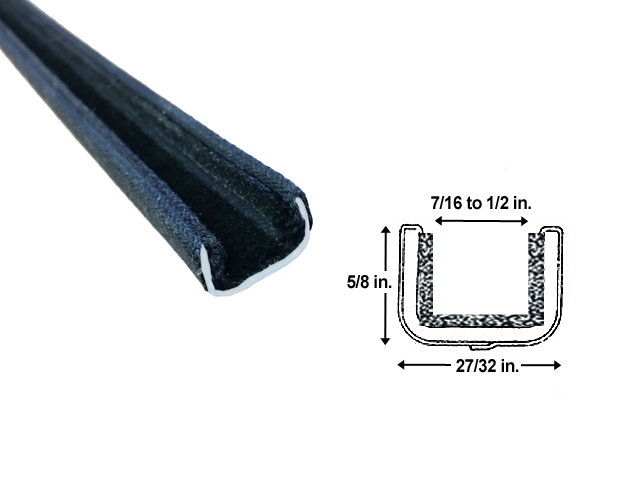 1951 GMC 250 Flexible window channel-WC 18-60Flexible window channel. Fits '50-'63 Chevrolet and GMC full-size pick-up trucks. 60 in. long. Each.
Why Choose Metro?
For over 100 years, Metro Moulded Parts has been the pinnacle of quality in classic car restoration parts. Our commitment to precision and authenticity in every component ensures a perfect fit and an OEM-level appearance.
- Expert Craftsmanship & Quality: Each part is a testament to our dedication to reliability and perfection, crafted from original designs and thoroughly tested.
- Advanced Technology: We use cutting-edge techniques to create flawless, long-lasting parts that surpass others in performance.
- SuperSoft Sponge – The Ultimate Door Seal: Not only are our door seals 30% softer than competitors', but they're also guaranteed to never leak. They effectively reduce wind and road noise, enhancing your classic car's comfort and driving experience.
- Proudly American: Our parts are a product of American craftsmanship, made in the USA with a spirit of excellence and heritage.
- Unrivaled Warranty: We back our products with a 30-year industry-leading warranty, a testament to our confidence in their quality.
Join us in preserving the legacy of classic cars with parts that are crafted for perfection, not just made.