
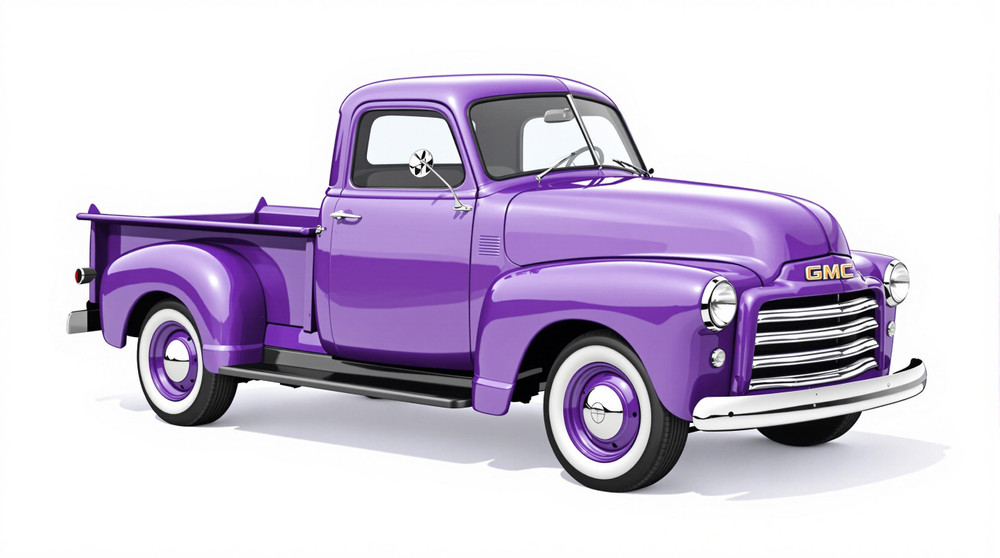
Image of 1951 Gmc Series 253-22, Note: These illustrations use artistic license and may differ from actual historical models.
Performance Metrics
Fundamental Metrics
Emotional Appeal
MMP Rating
| Engine Specifications | |
|---|---|
| Engine Options: | Inline 6 |
| Displacement Range: | 228 cubic inches |
| Horsepower Range: | Estimated 93-100 hp |
| Torque: | 175 lb-ft |
| Compression Ratio: | Estimated 7.0:1 |
| Ignition System: | Distributor and coil |
| Cooling System: | Liquid-cooled |
| Performance Specifications | |
| 0-60 Time: | Information not available |
| 1/4 Mile Time: | Information not available |
| Top Speed: | Estimated 70 mph |
| Transmission and Drive | |
| Drive Type: | Rear-wheel drive |
| Transmission Type: | 4-speed manual |
| Fuel and Efficiency | |
| Fuel System Type: | Carburetor |
| MPG: | Information not available |
| Dimensions and Brakes | |
| Brakes: | Drum brakes |
| Wheelbase: | 125 inches |
| Weight: | Estimated 3,500 lbs |
Note: Specifications for classic cars are given to the best of our ability, considering the limited and variant data available.
1951 GMC Series 253-22: A One-Ton Workhorse with Staying Power
The 1951 GMC Series 253-22 was built for the days when a truck was expected to earn its keep, not pose for photographs. It belongs to GMC’s Advance Design generation, the postwar trucks that helped move American farms, shops, and businesses from wartime recovery into a fast-growing economy.
GMC, the truck-making division of General Motors, introduced the Advance Design line in 1947. Its broader cab, substantial construction, and more finished appearance marked a major step forward from many prewar work trucks. The 253-22 is generally identified as a one-ton, conventional-cab model, though the exact body and equipment fitted to an individual truck should be confirmed from its serial plate and factory records. GMC model codes can be confusing, and the chassis could be ordered or adapted for different working bodies.
One detail that makes a 1951 especially appealing to enthusiasts is its place late in the original Advance Design run. The series remained in production through 1955, but 1954 brought a major styling update, including a one-piece windshield. The 1951 retains the earlier split windshield and classic front-end treatment, a look many collectors consider the quintessential postwar GMC.
Advance Design Styling and Cab Details
The 1951 GMC has a purposeful, upright shape, with a broad hood, rounded front fenders, and a cab that looks more substantial than the trucks that came before it. GMC’s grille is a strong visual signature. Its tall vertical bars give the front end a different character from the more familiar horizontal-bar Chevrolet grille of the same period. A prominent GMC badge, rounded headlamp housings, and a solid-looking bumper complete the face.
The cab was designed to give drivers more room and a better view of the road than many earlier commercial vehicles. Inside, the presentation is straightforward: a painted metal dashboard, large instruments, a broad steering wheel, and practical controls arranged for work rather than ornament. Upholstery was typically durable cloth or vinyl-like material, depending on trim and supplier, with equipment and finish varying by order. Deluxe cab equipment could add comfort and convenience items such as a dome light, armrests, and additional trim. These trucks were utilitarian, but the cab felt more considered than a bare-bones prewar workspace.
Factory paint choices varied by year, body, and order. Period GMC trucks appeared in solid colors such as blues, greens, reds, grays, and darker neutral shades, with fleet buyers often choosing a company color. Today, deep blue and green trucks are especially popular at shows, while traditional black and red restorations also have strong appeal. For an accurate restoration, paint codes and surviving traces of original color are more useful than relying on a modern color chart.
The 253-22 designation describes a chassis configuration, not a guarantee that every surviving example left the factory as the same kind of body. A pickup bed is the most recognizable form, but commercial chassis could also support flatbeds, stake beds, service bodies, and other equipment. The standard pickup is the most familiar and sought-after version among collectors, while specialized bodies offer a more unusual glimpse of the truck’s working life.
Work-Truck Engineering and Historical Importance
The Advance Design series helped establish the postwar pickup as a vehicle that could serve both the jobsite and the family. Its larger cab, more usable interior, and streamlined exterior reflected changing expectations: buyers wanted a truck that worked hard but was not punishing to drive. GMC’s one-ton models extended that idea to heavier commercial use, providing a sturdier platform for payloads and business-specific bodies.
GMC also stood apart from Chevrolet through its truck-focused identity and its own engine lineup. A typical 1951 GMC used a robust overhead-valve inline-six, commonly from the 228-cubic-inch family, although engine fitment depended on model and specification. These GMC engines are often called “Jimmy” sixes by enthusiasts. They were built with truck service in mind and are distinct from Chevrolet’s better-known Stovebolt sixes, even though the two brands shared corporate resources and many broader components.
The model’s lasting influence is less about a single breakthrough gadget and more about the way it combined useful capacity with improved everyday livability. The Advance Design trucks helped set the visual and practical template for postwar pickups, and their rounded fenders, upright grille, and wide cab remain instantly recognizable.
Engine, Speed, and Road Manners
Exact specifications depend on the truck’s original engine, gearing, body, and later modifications. A common 228-cubic-inch GMC six produced roughly 100 horsepower in period trim. Heavier-duty versions and optional engine combinations varied, so a surviving 253-22 should be assessed by its engine number and build information rather than assumed to match every published figure. Manual transmissions were typical, with a four-speed gearbox especially appropriate to a one-ton work truck.
GMC did not market this as a fast road vehicle, and reliable factory acceleration figures are difficult to establish for a specific 253-22 configuration. As a modern estimate, a stock, properly running example might take roughly 30 seconds or more to reach 60 mph, and a loaded or low-geared truck may struggle to reach that speed at all. A plausible top speed is around 55 to 65 mph, depending heavily on axle ratio, tire size, engine condition, and load. These are practical estimates, not guaranteed factory test results.
On the road, the truck feels solid and deliberate. The inline-six delivers its power in a steady, low-revving manner, while the manual gearbox rewards a patient driver who shifts with purpose. Expect engine rumble, gear whine, wind noise, and the occasional rattle from a vehicle designed for work decades before modern sound insulation. The steering is heavier and less precise than a modern truck’s, and the large wheel requires more effort during parking and slow turns.
Its chassis is suited to carrying weight, not carving corners. A one-ton truck can feel firm when empty, with bumps and potholes sending a noticeable thump through the cab. On winding roads, careful speed and smooth steering are essential, especially if the truck has a tall body or is carrying a load. Crosswinds can also push against a flat-sided bed or commercial body. Properly maintained brakes, tires, suspension, and steering components make a major difference to confidence and safety.
Owning and Maintaining a 1951 GMC
Today, a 253-22 can be a show vehicle, a weekend cruiser, a promotional truck for a small business, or a working classic used for light hauling. Its one-ton capacity makes it especially attractive to owners who want a period-correct flatbed or service-truck setup. It is less commonly used as a daily driver than a half-ton pickup, partly because its gearing, ride, braking, and speed are better suited to local trips than modern highway traffic.
Mechanical repairs are generally approachable for an owner with basic tools and experience. The engine bay is comparatively accessible, and the truck’s mechanical systems are less electronically complicated than those of a modern vehicle. Parts support for the Advance Design family is broad, though 1951 GMC-specific trim and certain heavy-duty components can take more searching. Before buying, inspect the frame, cab corners, floor, running boards, bed, and lower fenders for rust. Also check the engine’s oil pressure and cooling, transmission and rear axle noise, brake condition, and the availability of correct one-ton wheels and tires.
Reliability depends more on condition and maintenance than on age alone. A well-restored truck can be dependable for local use, but a neglected example may need attention to its fuel system, wiring, cooling system, brakes, and worn steering parts before it is roadworthy. Original six-volt electrical equipment may still be present, while some trucks have been converted to 12 volts. Either arrangement can work when properly installed, but a conversion should be checked for correct bulbs, charging components, and wiring.
Rare Details, Myths, and Collector Interest
The 253-22 is not known for a single celebrity owner, famous speed record, or headline-grabbing competition victory. Its distinction is its everyday history: trucks like it delivered supplies, carried tools, and supported businesses across the country. That working role is part of the appeal. Signs of honest use, such as an old commercial body or period lettering, can make an example more compelling than a heavily customized truck, provided its structure is sound.
There is no dependable, widely published production total for the specific 253-22 configuration. GMC built trucks in multiple series and body combinations, and production records are not always broken down in a way that gives a verified count for this exact designation. A reasonable estimate is several thousand to perhaps around 10,000 examples of the configuration, but that should be treated as an informed guess, not an official figure. Surviving original one-ton trucks are less common than half-ton pickups, particularly when they retain their correct chassis and equipment.
Common criticisms are familiar to anyone who has driven an old work truck: modest acceleration, heavy steering, limited braking performance by modern standards, and a firm ride when unladen. The split windshield can also be less convenient than a modern panoramic windshield. None of these shortcomings is surprising for a 1951 commercial vehicle, but they are important considerations for anyone planning regular highway use.
1951 GMC 253-22 Values and Availability
Values vary widely with rust, originality, mechanical condition, and body style. As a broad current-market estimate, a rough project may sell for about $5,000 to $12,000. A usable driver or older restoration might bring roughly $15,000 to $30,000, while a high-quality, correctly restored truck can reach approximately $30,000 to $50,000 or more. Exceptional restorations, rare commercial bodies, and especially well-documented examples can exceed that range, while heavily modified or incomplete trucks may fall below it.
Advance Design GMCs remain popular, and well-presented examples have generally held interest among classic-truck buyers. The half-ton pickup usually attracts the largest audience, while a one-ton 253-22 can be harder to find and may appeal to a narrower group. That can make values uneven: rarity helps, but condition and the practicality of the body style matter just as much. Prices are best understood as a guide, not a promise, and recent comparable sales are essential when valuing a specific truck.
Why the 253-22 Still Matters
The 1951 GMC Series 253-22 combines the confident styling of the Advance Design era with the sturdier foundations of a one-ton work truck. Its vertical-bar grille, roomy cab, truck-built inline-six, and straightforward mechanical layout give it character without relying on modern performance. It is not quick or luxurious, but it offers an honest connection to the postwar businesses and communities it was built to serve.
More than seven decades later, the 253-22 remains a handsome reminder that a great truck does not need to be complicated. It needs to be useful, durable, and memorable, and this GMC still manages all three.
1951 Gmc Series 253-22 Catalog of Parts
 1951 GMC Series 253-22 Rear Window Seal '42-'66 GM Full Size Trucks With Small Window-VWS 7313-URear Window Seal '42-'66 GM Full Size Trucks With Small Window, Includes Lockstrip, Set of 2.
Why Choose Metro?
For over 100 years, Metro Moulded Parts has been the pinnacle of quality in classic car restoration parts. Our commitment to precision and authenticity in every component ensures a perfect fit and an OEM-level appearance.
- Expert Craftsmanship & Quality: Each part is a testament to our dedication to reliability and perfection, crafted from original designs and thoroughly tested.
- Advanced Technology: We use cutting-edge techniques to create flawless, long-lasting parts that surpass others in performance.
- SuperSoft Sponge – The Ultimate Door Seal: Not only are our door seals 30% softer than competitors', but they're also guaranteed to never leak. They effectively reduce wind and road noise, enhancing your classic car's comfort and driving experience.
- Proudly American: Our parts are a product of American craftsmanship, made in the USA with a spirit of excellence and heritage.
- Unrivaled Warranty: We back our products with a 30-year industry-leading warranty, a testament to our confidence in their quality.
Join us in preserving the legacy of classic cars with parts that are crafted for perfection, not just made.