

Image of 1952 Gmc Truck, Note: These illustrations use artistic license and may differ from actual historical models.
Performance Metrics
Fundamental Metrics
Emotional Appeal
MMP Rating
| Engine Specifications | |
|---|---|
| Engine Options: | 228 CID I6, 248 CID I6, 270 CID I6, 302 CID I6 |
| Displacement Range: | 228-302 cubic inches |
| Horsepower Range: | 92-130 hp |
| Torque: | 200-270 lb-ft |
| Compression Ratio: | 7.2:1 |
| Ignition System: | Battery Ignition |
| Cooling System: | Liquid-cooled |
| Performance Specifications | |
| 0-60 Time: | Estimated 20-30 seconds |
| 1/4 Mile Time: | Estimated 20-25 seconds |
| Top Speed: | 70-75 mph |
| Transmission and Drive | |
| Drive Type: | Rear-wheel drive |
| Transmission Type: | 3-speed manual, 4-speed manual |
| Fuel and Efficiency | |
| Fuel System Type: | Carburetor |
| MPG: | Estimated 10-15 mpg |
| Dimensions and Brakes | |
| Brakes: | Drum brakes |
| Wheelbase: | 125-137 inches |
| Weight: | 3,500-4,500 lbs |
Note: Specifications for classic cars are given to the best of our ability, considering the limited and variant data available.
1952 GMC Truck: A Workhorse with Lasting Style
The 1952 GMC pickup brings together the honest utility of a postwar work truck and the rounded, unmistakable style of early-1950s American design. Built by General Motors’ truck division, it belonged to GMC’s postwar “New Design” family, introduced in 1947. Its bold grille, sturdy six-cylinder engine, and practical cab made it a familiar sight on farms, job sites, and small-business routes across the country.
GMC shared much of its cab and basic body design with Chevrolet trucks of the era, but it gave its own models distinctive trim and mechanical details. A notable difference was GMC’s use of its own engines, including the 228-cubic-inch inline-six in many light-duty models. That separate engine identity helped set GMC apart from its Chevrolet sibling, even when the two trucks looked closely related.
Rounded Fenders and a Hardworking Cab
The 1952 GMC’s exterior is defined by its rounded front fenders, tall hood, upright cab, and broad grille. GMC lettering announces the brand across the front, while the grille’s horizontal bars and surrounding trim give the truck a face that is both purposeful and unusually friendly. The overall shape is substantial without looking overly massive, and its flowing fender lines soften what is fundamentally a working machine.
Inside, the cab is simple and durable rather than luxurious. The metal dashboard places the gauges and controls within easy reach, and the bench seat is designed for practical use. Depending on configuration and condition, upholstery may be vinyl or another utilitarian material, with a rubber floor mat helping contain dirt and wear. Compared with a modern pickup, the cabin is noisy, sparse, and upright, but its straightforward layout is part of the appeal.
Color choices varied by model, equipment, and ordering preferences. Solid work-truck colors were common, while two-tone paint could give a pickup a more personal look. Restored examples often wear period-inspired shades such as green, blue, red, cream, or black, though original paint combinations should be checked against the individual truck’s build information where available.
Pickup, Panel, and Commercial Configurations
The best-known version is the conventional pickup, valued today for its open cargo bed and classic proportions. GMC also offered its truck platform in commercial forms such as panel deliveries, stake bodies, and chassis-cab configurations, depending on the model and application. These variations allowed buyers to adapt the truck for deliveries, hauling, farming, and other trades.
GMC’s model designations reflected differences in carrying capacity and chassis equipment. The light-duty pickup is the version most often seen at shows and among private collectors, while heavier configurations are less common and can be harder to find in complete, original condition. Exact availability depended on the model series and the buyer’s requirements.
GMC Engineering in the Postwar Years
The 1952 truck was part of the postwar shift toward vehicles that could serve both business and personal needs. Its rounded styling was more modern than the upright, prewar trucks it replaced, yet the design remained conservative enough for commercial buyers. GMC’s combination of a comfortable enclosed cab, useful load capacity, and familiar mechanical layout helped make the truck versatile for work and everyday transport.
What distinguished GMC from many competitors was its truck-focused identity and its use of GMC-built engines. The 228-cubic-inch inline-six found in many light-duty examples was designed for steady pulling and serviceability, not high-revving performance. The truck’s legacy is less about introducing a single revolutionary feature than about refining the practical pickup: a vehicle comfortable enough for regular road use and tough enough to earn its keep.
228 Six Performance and Road Manners
Many light-duty 1952 GMC pickups used a 228-cubic-inch (3.7-liter) inline-six, commonly rated at roughly 100 horsepower, though specifications varied by model and configuration. Heavier GMC trucks could use larger-displacement six-cylinder engines. A manual transmission was typical, with three-speed and, depending on configuration, four-speed options available. Rear-wheel drive was standard on the familiar pickup, while specialized chassis and conversions could differ.
Period performance figures are not consistent across every model, axle ratio, and body style, so modern speed estimates should be treated as approximate. A light-duty pickup in sound condition might reach roughly 60 to 65 mph, but it was not designed for fast highway travel. A 0-to-60-mph run could take around 30 seconds or longer, especially with a load or a tall final-drive ratio. Its real strength was steady low-speed pulling, not acceleration.
On a smooth road, the truck feels deliberate and mechanical. The six-cylinder engine produces a deep, measured note, and the manual gearbox asks for purposeful shifts. Steering and braking require more effort than in a modern pickup, and the solid-axle suspension can transmit bumps directly through the cab. On winding roads, its tall stance and truck-oriented steering favor an unhurried pace. Crosswinds and uneven pavement are reminders that this is a vintage work vehicle, not a contemporary touring truck.
Living with a 1952 GMC
Today, owners use these trucks as weekend drivers, show vehicles, parade participants, and occasional light-duty haulers. Some are carefully restored to factory-style specification, while others receive modern upgrades such as improved brakes, updated electrical systems, or revised suspension components. A well-preserved original can be especially appealing to collectors, while a modified truck may suit an owner who values regular use over historical correctness.
Mechanical simplicity is a major ownership advantage. The inline-six, manual transmission, and largely straightforward chassis are accessible to experienced home mechanics, and many service procedures are easier to understand than those on modern vehicles. Parts availability is generally good for common restoration items, though finding correct trim, unmodified components, or pieces for a less common commercial body can take more effort.
Age brings predictable concerns. Check the frame and cab for rust, especially around the lower cab, floor, and body seams. Inspect the cooling system, brakes, steering, wiring, and fuel system before regular road use. Many trucks have been repaired or modified over the decades, so verifying the quality of previous work is just as important as checking the condition of the original components.
1952 GMC Truck Facts and Myths
The truck’s GMC identity is more than a grille badge: its engine family gave the brand a mechanical distinction from Chevrolet trucks that shared much of the same basic appearance. Another point worth remembering is that GMC’s “New Design” naming belongs to its own postwar truck range; the closely related Chevrolet line is widely known as Advance-Design.
There is no widely recognized speed or endurance record associated with the 1952 GMC pickup. Its significance lies in everyday service rather than headline-grabbing competition. These trucks worked as farm vehicles, delivery rigs, and small-business transportation, often remaining in service long after newer models arrived. Their long working lives are part of why surviving examples can show substantial variation in condition and originality.
Common criticisms are familiar to anyone who has driven an unmodified example: modest acceleration, heavy steering, limited braking performance by modern standards, and a relatively noisy cab. Those traits are not defects so much as reminders of the truck’s age and purpose. Properly maintained, it can be enjoyable on back roads and at modest speeds, but it deserves modern traffic awareness and sensible expectations.
Collector Values and Availability
There is no dependable single production figure for every 1952 GMC body and model series, and surviving trucks are difficult to count because many were rebuilt, converted, or scrapped after years of commercial use. As a broad estimate, production was likely in the tens of thousands for the year across GMC’s truck range, but that is not a verified total for the pickup alone. The light-duty pickup is the most familiar collector version; specialized commercial bodies and well-preserved heavy-duty trucks are less commonly encountered.
U.S. asking and sale prices vary sharply with condition, originality, body style, and the quality of restoration. As a general guide, a project truck may fall around $5,000 to $12,000, a usable driver often lands in the $15,000 to $35,000 range, and a high-quality restoration can reach roughly $35,000 to $65,000 or more. Exceptional examples and unusual configurations may exceed those ranges, while incomplete or heavily modified trucks may sell for less.
Values have generally benefited from continued interest in classic pickups, especially clean, original-looking examples. The market is selective, however: a documented restoration, sound bodywork, and correct details usually matter more than expensive modifications. Rather than assuming every 1952 GMC is appreciating quickly, buyers should compare recent sales for trucks of similar condition and configuration.
Why the 1952 GMC Still Matters
The 1952 GMC truck is a distinctive postwar pickup with rounded styling, straightforward engineering, and a practical six-cylinder heart. It was built to work, yet its design has aged into an appealing classic, and its GMC-specific mechanical character gives it a story beyond its shared roots with Chevrolet.
For collectors, it offers accessible vintage-truck ownership and a wide range of restoration possibilities. For drivers, it delivers a tactile, unfiltered experience that modern vehicles rarely provide. The 1952 GMC remains a reminder that a good work truck can become an enduring piece of automotive history.
1952 Gmc Truck Catalog of Parts
 1952 GMC Truck Shock Absorber Grommet. 1" bottom O.D-BN 11Shock Absorber Grommet. 1" bottom O.D., 3/4" high, with 5/8" I.D. Each
 1952 GMC Truck Front motor mount-MM 1Front motor mount. Fits all '32 Chevy passenger cars and Sedan Delivery (BA/BB); '32-'42 Chevy pickups; '33-'55 Chevy Commercial and Utility (1st Series) vehicles; '39-'54 GMC pickups. 1-3/8 in. W x 7-5/8 in. L. Replaces OEM#'s 3657520/37339939. One used per vehicle. Each.
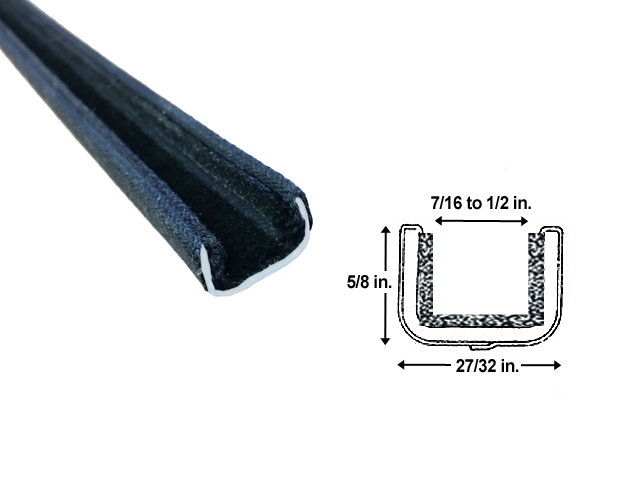 1952 GMC Truck Flexible window channel-WC 18-60Flexible window channel. Fits '50-'63 Chevrolet and GMC full-size pick-up trucks. 60 in. long. Each.
Why Choose Metro?
For over 100 years, Metro Moulded Parts has been the pinnacle of quality in classic car restoration parts. Our commitment to precision and authenticity in every component ensures a perfect fit and an OEM-level appearance.
- Expert Craftsmanship & Quality: Each part is a testament to our dedication to reliability and perfection, crafted from original designs and thoroughly tested.
- Advanced Technology: We use cutting-edge techniques to create flawless, long-lasting parts that surpass others in performance.
- SuperSoft Sponge – The Ultimate Door Seal: Not only are our door seals 30% softer than competitors', but they're also guaranteed to never leak. They effectively reduce wind and road noise, enhancing your classic car's comfort and driving experience.
- Proudly American: Our parts are a product of American craftsmanship, made in the USA with a spirit of excellence and heritage.
- Unrivaled Warranty: We back our products with a 30-year industry-leading warranty, a testament to our confidence in their quality.
Join us in preserving the legacy of classic cars with parts that are crafted for perfection, not just made.