

Image of 1954 Gmc 250, Note: These illustrations use artistic license and may differ from actual historical models.
Performance Metrics
Fundamental Metrics
Emotional Appeal
MMP Rating
| Engine Specifications | |
|---|---|
| Engine: | Inline 6 |
| Displacement: | 235 cubic inches |
| Horsepower: | Estimated 105-125 hp |
| Torque: | 200 lb-ft |
| Compression Ratio: | Estimated 7.5:1 |
| Ignition System: | Distributor and coil |
| Cooling System: | Liquid-cooled |
| Performance Specifications | |
| 0-60 Time: | Information not available |
| 1/4 Mile Time: | Information not available |
| Top Speed: | Estimated 70-75 mph |
| Transmission and Drive | |
| Drive Type: | Rear-wheel drive |
| Transmission Type: | 4-speed manual |
| Fuel and Efficiency | |
| Fuel System Type: | Carburetor |
| MPG: | Estimated 10-15 mpg |
| Dimensions and Brakes | |
| Brakes: | Drum brakes |
| Wheelbase: | 125.25 inches |
| Weight: | Estimated 3,500-4,000 lbs |
Note: Specifications for classic cars are given to the best of our ability, considering the limited and variant data available.
1954 GMC 250: A One-Ton Workhorse with Classic GMC Character
The 1954 GMC 250 was built to carry a serious load, not to pose for photographs, yet its rounded cab, bold grille, and upright stance have made it one of the most appealing American work trucks of the 1950s. The “250” designation identified a heavy-duty, one-ton GMC series. It was part of the Advance Design family, a postwar generation of trucks designed by General Motors’ truck division for farms, businesses, and everyday hauling.
GMC’s roots stretch back to the Rapid Motor Vehicle Company, acquired by General Motors in 1909. The GMC name was established in 1911, and by the 1950s the brand had earned a reputation for rugged commercial vehicles. GMC trucks shared much of their basic architecture with Chevrolet trucks, but GMC gave buyers its own engines, details, and identity.
One memorable detail about the 1954 model year is that it marked a major update to the Advance Design cab. The redesigned windshield became a single piece, giving the truck a cleaner view ahead and a more modern look. The model also sits at an interesting crossroads: it was among the final developments of the Advance Design era, shortly before GMC’s new-generation trucks arrived for 1955.
Advance Design Styling and Cab Details
The GMC 250 has the unmistakable proportions of a classic postwar truck: a tall, rounded cab; broad hood; separate front fenders; and a substantial grille that gives the nose a confident, almost bulldog-like expression. The 1954 grille and front-end details were revised from earlier Advance Design trucks, while the one-piece windshield helped make the cab feel less segmented. Depending on trim and equipment, brightwork could add a little extra polish, but the design remained rooted in function.
Inside, the cab is straightforward and durable. The metal dashboard, large steering wheel, simple gauges, and broad bench seat put ease of use ahead of luxury. Upholstery was typically utilitarian cloth or vinyl, with a rubber floor mat that could take muddy boots and worksite grime. Sound insulation and creature comforts are modest by modern standards, but the controls are easy to understand and the view over the hood is excellent.
Technology was practical for the period. The 1954 GMC relied on a conventional electrical system, mechanical drum brakes, and manual steering. A driver had to supply the effort that modern power steering provides, especially at low speed or with a load aboard. The updated one-piece windshield was a meaningful visibility improvement, but this remained a traditional truck with a manual transmission and a solid, work-focused layout.
Factory paint choices varied by market and specification, with period colors spanning reds, blues, greens, grays, and cream tones. Restorers often favor a red cab with a cream or white accent, or a single dark green or blue finish. Those combinations suit the truck’s rounded bodywork, though original paint charts and surviving paint traces are the best guides for an accurate restoration.
One-Ton Body Styles and Work Options
The GMC 250 was primarily a one-ton chassis series, rather than a single fixed body style. Buyers could find it as a pickup or order a chassis configuration for a commercial body. Depending on the exact wheelbase and equipment, versions could be fitted as a stake truck, platform truck, service vehicle, or other business body. Not every body was built directly by GMC; many commercial bodies came from specialist suppliers.
The pickup is the most familiar and collectible version today. Its long, practical bed and unmistakable Advance Design cab make it the image most people associate with a 1954 GMC. A chassis-cab truck, however, tells the other half of the story: these vehicles were working platforms intended to earn their keep in local delivery, agriculture, construction, and municipal service.
Why the 1954 GMC 250 Mattered
The 1954 GMC 250 represents a mature stage in the postwar truck boom. Manufacturers were responding to expanding businesses, suburban growth, and the need for dependable vehicles that could handle more than light household chores. GMC’s one-ton series offered greater carrying capacity than a half-ton pickup, while retaining a conventional cab and mechanical layout that small businesses and independent owners could understand and service.
Its place in automotive history is less about a single breakthrough than about the evolution of the useful, mass-produced truck. The Advance Design generation helped establish the visual language of the postwar American pickup: rounded sheet metal, integrated cab design, and a balance between commercial toughness and everyday usability. The 1954 cab update also shows how manufacturers were improving visibility and appearance without abandoning the proven mechanical formula.
Compared with many contemporaries, the GMC 250 stood out through its heavier-duty specification and GMC-specific powertrain identity. It was not a luxury truck, and it did not try to be one. Its lasting influence is visible in the way later pickups continued to serve as both work equipment and personal transportation, a dual role that has become central to the truck market.
Engine, Speed, and Road Manners
Engine and transmission specifications depended on the truck’s rating and configuration. A 248-cubic-inch GMC inline-six is commonly associated with one-ton examples, while other GMC six-cylinder engines, including 228- and 270-cubic-inch versions, appeared across the broader truck range. A 248 was rated at roughly 125 horsepower in period applications. The exact engine in a surviving truck should be verified by its identification numbers and original documentation, since decades of engine swaps are common.
Manual transmissions were typical, with gearing chosen for dependable pulling rather than quick acceleration. A 1954 GMC 250 was not built for rapid starts or high-speed cruising. As a broad real-world estimate, a sound, lightly loaded truck might reach roughly 60 to 70 mph, depending on axle ratio, tire size, engine condition, and transmission. Getting from 0 to 60 mph could take around 25 to 35 seconds, and longer with a load. These are estimates, not universal factory figures, and the truck is most comfortable at moderate road speeds.
On a rough road, the heavy-duty chassis feels sturdy, but its solid axles and period suspension transmit more movement than a modern pickup. The ride can be firm when the truck is empty and more settled with some weight in the bed. On winding roads, the driver feels the tall body, manual steering, and weight of the truck, so smooth inputs and sensible cornering speeds are important.
The driving experience is wonderfully mechanical. The inline-six produces a steady, low-pitched working sound, while the gear lever and large steering wheel make the driver an active participant. There is no power steering to hide the front tires’ weight and no modern braking assistance to erase the need for planning. A well-maintained example can feel relaxed and dependable, but it asks the driver to work with the machinery rather than simply direct it.
Living with a GMC 250 Today
Historically, the 250 was a business and farm truck. Today, owners use surviving examples as weekend drivers, show vehicles, vintage haulers, and rolling restorations. Some still work around farms or properties, but many are now too valuable, or too old, for heavy commercial use. Their upright cab and low-speed character make them especially enjoyable on back roads, at local shows, and in parades.
Routine service is relatively approachable for an owner comfortable with older vehicles. The engine bay is accessible, the mechanical systems are straightforward, and many repairs can be handled with ordinary tools and a workshop manual. Parts support for common GMC six-cylinder engines and basic service items is generally good, although trim, model-specific pieces, and some heavy-duty components can take more searching. Before buying, inspect the frame, cab corners, floor, bed, brakes, steering, and cooling system. Rust repair and incomplete restorations can quickly cost more than routine mechanical work.
Reliability depends heavily on maintenance and previous repairs. A properly rebuilt engine and refreshed brake system can make the truck a dependable local driver, but age-related issues such as worn wiring, fuel-system problems, tired suspension parts, and brittle hoses should be expected. Original six-volt electrical equipment also needs sound connections and a healthy battery to work as intended.
GMC 250 Trivia and Common Criticisms
The “250” badge describes the truck series, not the engine displacement. That distinction matters because GMC engine sizes varied across the range, and a truck’s current engine may not be the one it left the factory with. The GMC 250’s commercial roots also mean that many were used hard, rebuilt, or fitted with specialized bodies, so surviving examples can differ substantially from one another.
There is no widely recognized speed, sales, or endurance record associated specifically with the 1954 GMC 250. Nor is a particular celebrity ownership story central to its history. Its significance is more everyday and arguably more interesting: trucks like this delivered supplies, supported farms, and kept small businesses moving. That practical service is the reason survivors can be so well used and why original, unmodified examples are not always easy to find.
Common criticisms are part of the ownership reality. The truck is slow by modern traffic standards, its brakes require more anticipation, the cabin can be noisy, and the steering feels heavy at low speed. The one-piece windshield improves the view, but the cab still lacks modern safety features and climate control. For many enthusiasts, those limitations are also part of the appeal: the truck feels honest, direct, and unmistakably from its era.
1954 GMC 250 Values and Availability
Exact production figures for the GMC 250 series are not consistently published in easily verifiable model-by-model totals. A reasonable working estimate is that production likely reached the low tens of thousands, perhaps around 10,000 to 25,000 trucks, but that should be treated as an informed estimate rather than a factory-confirmed count. Surviving examples are less common than half-ton pickups, especially in original condition, though the model is not so rare that it never appears on the market.
As a broad U.S. market guide in 2026, a project truck might sell for roughly $5,000 to $12,000. A usable driver in solid condition could fall around $15,000 to $30,000, while a well-restored example may bring approximately $35,000 to $55,000 or more. Body style, originality, rust, restoration quality, documentation, and local demand all affect the final price. A highly finished pickup may attract more buyers than a less familiar commercial-body version, even when the latter is rarer.
Values have generally benefited from growing interest in vintage pickups, but the market is selective. The best examples, especially those with quality restorations and correct details, tend to hold value better than rough projects. Appreciation is not guaranteed, and restoration costs can exceed the value of the finished truck. Buyers should prioritize condition and workmanship over optimistic claims about rarity.
A Lasting One-Ton Classic
The 1954 GMC 250 combines the rounded charm of the Advance Design era with the substance of a genuine one-ton work truck. Its updated cab, straightforward inline-six power, and flexible commercial chassis made it useful in its own time, while its honest mechanics and distinctive styling keep it appealing today. It is not fast, plush, or effortless, but it delivers something many modern vehicles cannot: a direct connection to the work and road ahead. That is the enduring appeal of the GMC 250, a hardworking classic with character in every panel.
1954 Gmc 250 Catalog of Parts
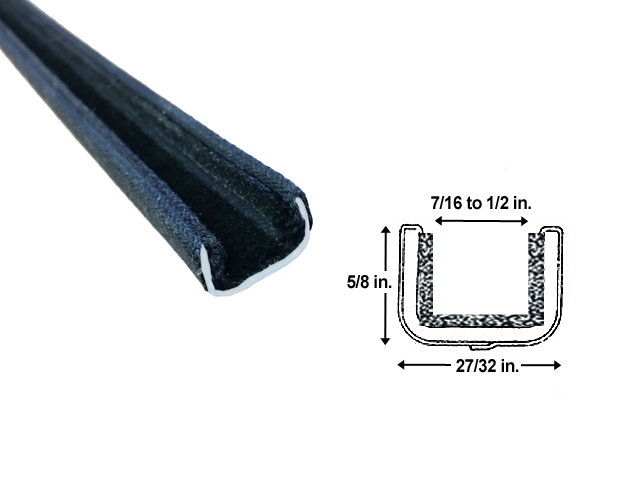 1954 GMC 250 Flexible window channel-WC 18-60Flexible window channel. Fits '50-'63 Chevrolet and GMC full-size pick-up trucks. 60 in. long. Each.
Why Choose Metro?
For over 100 years, Metro Moulded Parts has been the pinnacle of quality in classic car restoration parts. Our commitment to precision and authenticity in every component ensures a perfect fit and an OEM-level appearance.
- Expert Craftsmanship & Quality: Each part is a testament to our dedication to reliability and perfection, crafted from original designs and thoroughly tested.
- Advanced Technology: We use cutting-edge techniques to create flawless, long-lasting parts that surpass others in performance.
- SuperSoft Sponge – The Ultimate Door Seal: Not only are our door seals 30% softer than competitors', but they're also guaranteed to never leak. They effectively reduce wind and road noise, enhancing your classic car's comfort and driving experience.
- Proudly American: Our parts are a product of American craftsmanship, made in the USA with a spirit of excellence and heritage.
- Unrivaled Warranty: We back our products with a 30-year industry-leading warranty, a testament to our confidence in their quality.
Join us in preserving the legacy of classic cars with parts that are crafted for perfection, not just made.