

Image of 1955 Gmc 150-22, Note: These illustrations use artistic license and may differ from actual historical models.
Performance Metrics
Fundamental Metrics
Emotional Appeal
MMP Rating
| Engine Specifications | |
|---|---|
| Engine: | Inline 6 |
| Displacement: | 235-261 cubic inches |
| Horsepower: | Estimated 105-130 hp |
| Torque: | 200-215 lb-ft |
| Compression Ratio: | Estimated 7.5:1 |
| Ignition System: | Distributor and coil |
| Cooling System: | Liquid-cooled |
| Performance Specifications | |
| 0-60 Time: | Information not available |
| 1/4 Mile Time: | Information not available |
| Top Speed: | Estimated 70-75 mph |
| Transmission and Drive | |
| Drive Type: | Rear-wheel drive |
| Transmission Type: | 3-speed manual, 4-speed manual |
| Fuel and Efficiency | |
| Fuel System Type: | Carburetor |
| MPG: | Estimated 10-12 mpg |
| Dimensions and Brakes | |
| Brakes: | Drum brakes |
| Wheelbase: | 125.25 inches |
| Weight: | Estimated 3,500-4,000 lbs |
Note: Specifications for classic cars are given to the best of our ability, considering the limited and variant data available.
1955 GMC 150-22: A Blue Chip Workhorse
The 1955 GMC 150-22 brought modern styling to a truck built for real work. It belongs to GMC’s second-series 1955 lineup, often called the “Blue Chip” trucks, and combines a newly styled cab with the sturdy chassis and straightforward mechanicals that made mid-century GMC pickups dependable farm, trade, and delivery vehicles.
GMC grew out of General Motors’ early truck operations, which included the Rapid Motor Vehicle Company. By the 1950s, it was an established truck maker with its own identity, even though many components were shared with Chevrolet. The 150-22 was a three-quarter-ton pickup, positioned above a half-ton model for buyers who needed more carrying capacity. The “22” is part of GMC’s model designation; buyers checking a particular truck should confirm its wheelbase and equipment from its data plate and original records.
There is an important 1955 distinction: GMC sold both first- and second-series trucks that year. The second-series models received the major redesign, including the fresh cab and wraparound windshield. That makes a genuine second-series 1955 especially appealing to enthusiasts who want early modern styling without giving up the character of a traditional work truck.
Blue Chip Styling and Cab Details
The 150-22 has the upright, purposeful proportions of a classic pickup, but its 1955 cab looks noticeably more contemporary than the design it replaced. The broad windshield curves around the front corners, improving the driver’s view and giving the cab a lighter, more open appearance. A sculpted hood, rounded fenders, and GMC’s distinctive grille give the front end a character separate from its Chevrolet relatives.
Inside, the emphasis is on function. The steel dashboard is simple and easy to read, with essential gauges and controls arranged for practical use. A broad bench seat, basic door trim, and rubber floor covering suit a truck expected to haul tools, feed, or building supplies rather than pamper its occupants. Upholstery and trim varied with equipment and upholstery choices, but the materials were generally durable and easy to clean. Compared with a modern pickup, the cabin is spare. Compared with earlier trucks, the wraparound glass and updated layout feel like a meaningful step forward.
GMC offered a range of factory paint colors, with availability changing by year and order. Solid colors such as red, green, blue, and cream shades are commonly associated with the era, and contrasting paint could give the truck a more dressed-up look. Today, restored examples are often seen in period-inspired two-tone combinations, though the original paint code is the best guide for an accurate restoration.
The 150-22 is most closely associated with the conventional pickup body, but GMC’s wider truck range could also be ordered in work-oriented configurations such as chassis-cab and stake-bed forms. The pickup is the most recognizable version, thanks to its separate cargo box and familiar rounded-fender profile. Equipment and body availability depended on the particular order, so not every 150-series truck left the factory in the same configuration.
Engineering for Work, Not Show
The Blue Chip redesign mattered because it brought a more modern cab and improved visibility to a vehicle that remained fundamentally built for service. GMC did not reinvent the pickup’s basic formula: a body-on-frame chassis, a solid rear axle, leaf springs, and a straightforward powertrain were still the right tools for rough roads and regular hauling. The result was a truck that looked current without becoming difficult for a small-town garage or owner to maintain.
Engine choices depended on configuration and market. GMC’s inline-six engines were the traditional choice, with the 248-cubic-inch six commonly associated with heavier light-duty models. A Pontiac-derived 287-cubic-inch V8 was also available on some 1955 second-series GMC trucks, a notable option for buyers wanting stronger acceleration and a different engine note. Equipment should be checked against the truck’s original documentation, since engines are frequently swapped during decades of work and restoration.
That blend of GMC-specific identity and shared GM engineering is part of the model’s appeal. Parts sourcing is generally more manageable than for a low-volume independent truck, while the GMC grille and badging give it a look distinct from a Chevrolet of the same era. Its lasting influence is less about a single groundbreaking invention and more about helping establish the comfortable, recognizable postwar pickup shape that became familiar across American roads.
Road Manners and Real-World Performance
There is no dependable factory 0-to-60-mph figure or top-speed rating commonly used for the 150-22 today. Performance varied with engine, gearing, tires, load, and condition. As a practical estimate, a six-cylinder truck might take roughly 25 to 35 seconds to reach 60 mph when lightly loaded. An unloaded truck in sound condition may manage a top speed in the neighborhood of 65 to 75 mph, but sustained high-speed driving is not what its gearing, brakes, or vintage tires were designed for.
On the road, the GMC feels substantial and deliberate. The inline six delivers its power with a steady mechanical hum, while a V8-equipped example adds a deeper exhaust note and stronger response. The steering is unassisted and requires more effort at low speeds than a modern truck. The ride can feel firm when the bed is empty, since the rear springs were designed to carry a load. Add cargo and the suspension settles into its intended working rhythm.
On bumpy roads, the solid axles and leaf springs transmit more movement into the cab than a contemporary independent suspension would. On winding roads, the truck rewards smooth inputs rather than quick changes of direction. Crosswinds and uneven pavement require attention, especially with period tires. Drum brakes demand more planning and pedal effort than modern power-assisted systems, so a safe example needs carefully maintained brakes, tires, steering, and suspension.
Living With a 1955 GMC Pickup
Owners use the 150-22 as a weekend driver, a farm or property truck, a parade vehicle, and a show-quality restoration. Some are still asked to do light hauling, although regular highway commuting is less comfortable and less safe than it is in a modern pickup. Its best role is often a mix: useful enough to enjoy, but valuable enough that owners avoid exposing an especially nice restoration to daily wear.
The mechanical layout is relatively accessible. Routine service on the engine, ignition, cooling system, and brakes is within reach of a capable home mechanic with the right tools and a factory shop manual. Replacement parts for common wear items and many restoration components are available through classic-truck suppliers. GMC-specific trim and certain model details can take more searching, and a poorly repaired body or frame can turn a simple project into an expensive one.
Reliability depends heavily on condition and previous repairs. Before buying, inspect the frame, cab corners, floor, cab mounts, and bed for rust or amateur patchwork. Check that the brakes stop evenly, the steering has no excessive play, and the engine holds temperature under load. A clean, properly maintained truck can be dependable for occasional use, but age-related wiring, seals, fuel-system parts, and cooling components deserve close attention.
1955 GMC 150-22 Facts and Common Criticisms
The second-series 1955 GMC’s wraparound windshield is one of its signature visual features. The year is also notable for the availability of a V8 in parts of GMC’s light-truck range, giving buyers a choice beyond the familiar straight six. The 150-22 was a working model, not a limited-edition performance truck, and there is no widely recognized national speed or endurance record associated with it.
There is also no well-established model-specific production total for the 150-22 that can be stated with confidence. GMC production figures are more often discussed across broader model or series groupings. A reasonable estimate is that production was in the several-thousand to low-tens-of-thousands range, but that should be treated as an informed approximation, not an archival count. Surviving trucks are not exceptionally rare, though original, unmodified examples are much harder to find than altered or heavily restored ones.
The familiar criticisms are part of the vintage-truck experience: slow acceleration, substantial steering effort, modest braking performance, and limited comfort on long trips. The three-quarter-ton specification can also make the ride feel stiff without cargo. These are not defects so much as reminders that the GMC was designed around durability and load capacity, not modern convenience.
Collector Value and Market Outlook
Values vary widely with rust, originality, body style, engine, and restoration quality. As a broad 2026 U.S. market estimate, a project truck may sell for about $5,000 to $12,000. A usable driver in solid condition might bring roughly $15,000 to $30,000, while a well-restored example could reach $35,000 to $60,000 or more. Exceptional, highly original trucks or top-level restorations can exceed that range, while a rough or incomplete example may fall below it.
The 150-22 generally attracts a smaller audience than a half-ton pickup, but its three-quarter-ton identity gives it extra utility and a distinctive place in the lineup. Prices for good classic trucks have shown long-term strength, although the market moves with condition, regional demand, and restoration costs. The best examples tend to hold interest, while project values can be difficult to justify once bodywork and parts are added up. Original GMC details, a documented engine, and a solid frame usually matter more than a flashy repaint.
Why the 150-22 Still Matters
The 1955 GMC 150-22 captures a pivotal moment in pickup design: the work truck was becoming more modern in appearance and more comfortable to use, but it had not lost its mechanical simplicity. Its wraparound windshield, GMC-specific styling, practical cab, and sturdy three-quarter-ton foundation make it both a useful piece of truck history and an enjoyable classic to own.
It may not be fast or soft-riding, and it asks its driver to work a little harder than a modern pickup does. That is part of its charm. The 150-22 is a reminder that a good truck was once measured not by screens or luxury options, but by how faithfully it showed up for the next job.
1955 Gmc 150-22 Catalog of Parts
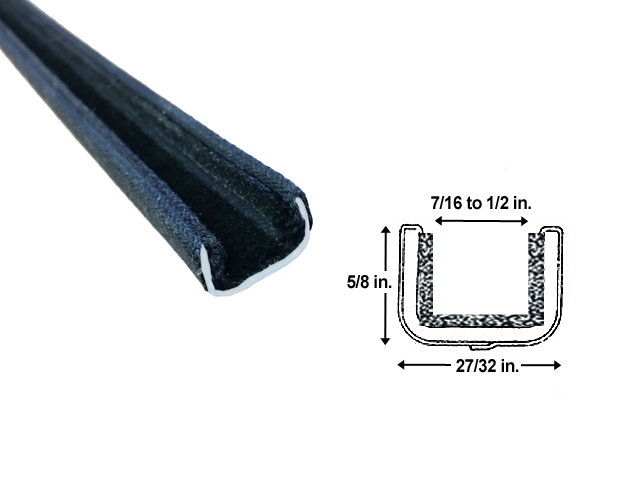 1955 GMC 150-22 Flexible window channel-WC 18-60Flexible window channel. Fits '50-'63 Chevrolet and GMC full-size pick-up trucks. 60 in. long. Each.
Why Choose Metro?
For over 100 years, Metro Moulded Parts has been the pinnacle of quality in classic car restoration parts. Our commitment to precision and authenticity in every component ensures a perfect fit and an OEM-level appearance.
- Expert Craftsmanship & Quality: Each part is a testament to our dedication to reliability and perfection, crafted from original designs and thoroughly tested.
- Advanced Technology: We use cutting-edge techniques to create flawless, long-lasting parts that surpass others in performance.
- SuperSoft Sponge – The Ultimate Door Seal: Not only are our door seals 30% softer than competitors', but they're also guaranteed to never leak. They effectively reduce wind and road noise, enhancing your classic car's comfort and driving experience.
- Proudly American: Our parts are a product of American craftsmanship, made in the USA with a spirit of excellence and heritage.
- Unrivaled Warranty: We back our products with a 30-year industry-leading warranty, a testament to our confidence in their quality.
Join us in preserving the legacy of classic cars with parts that are crafted for perfection, not just made.