
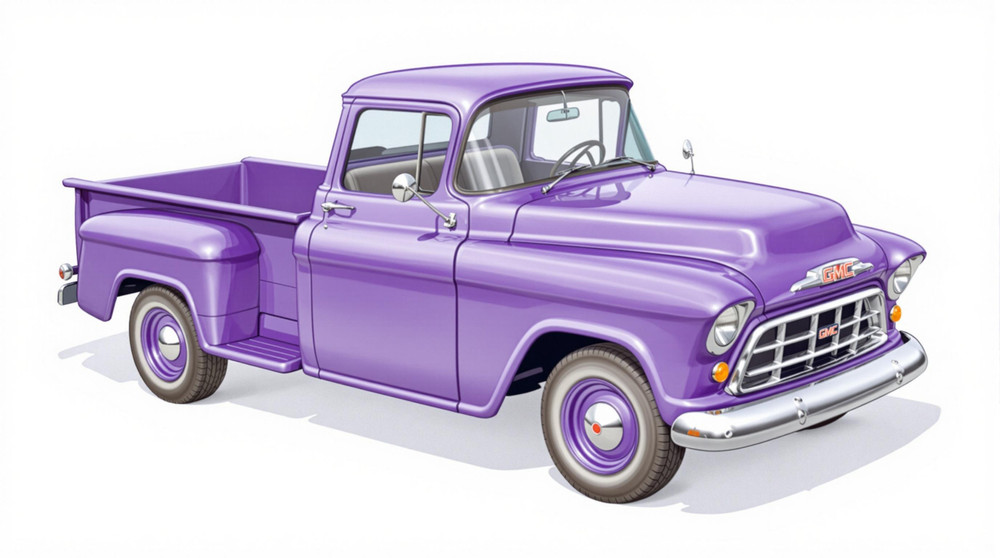
Image of 1955 Gmc Series 150-8 2nd Series, Note: These illustrations use artistic license and may differ from actual historical models.
Performance Metrics
Fundamental Metrics
Emotional Appeal
MMP Rating
| Engine Specifications | |
|---|---|
| Engine Options: | 248.5 cu in (4.1 L) I6, 270 cu in (4.4 L) I6 |
| Displacement Range: | 248.5 - 270 cu in |
| Horsepower Range: | 125 - 140 hp |
| Torque: | 210 - 240 lb-ft |
| Compression Ratio: | 7.4:1 |
| Ignition System: | Distributor and coil |
| Cooling System: | Liquid-cooled |
| Performance Specifications | |
| 0-60 Time: | Information not available |
| 1/4 Mile Time: | Information not available |
| Top Speed: | 70 - 75 mph |
| Transmission and Drive | |
| Drive Type: | Rear-wheel drive |
| Transmission Type: | 3-speed manual, 4-speed manual |
| Fuel and Efficiency | |
| Fuel System Type: | Carburetor |
| MPG: | 10 - 12 mpg |
| Dimensions and Brakes | |
| Brakes: | Drum brakes |
| Wheelbase: | 125.25 in |
| Weight: | 3,400 - 3,800 lbs |
Note: Specifications for classic cars are given to the best of our ability, considering the limited and variant data available.
1955 GMC Series 150-8: The Second-Series Blue Chip Pickup
The 1955 GMC Series 150-8 arrived at the midpoint of a model year and made an immediate impression with a fresh cab, a broader windshield, and the sturdy presence of a working truck. It belongs to GMC’s “Blue Chip” line, the company’s name for its newly styled 1955 second-series trucks. The 150-8 was a three-quarter-ton pickup with an 8-foot bed, built by General Motors’ GMC Truck division for owners who needed more capacity than a light-duty half-ton could offer.
That “second series” label matters. GMC sold an earlier, first-series 1955 truck with the previous body design, then introduced the extensively restyled second series during the year. The two are both 1955 models, but they look and feel like different generations. For today’s enthusiasts, the second-series truck is the one most people picture when they think of a mid-1950s GMC pickup.
Blue Chip Styling and a More Modern Cab
The second-series GMC traded the upright, prewar-influenced look of its predecessor for a lower, wider, more contemporary shape. Its rounded hood flows into pronounced front fenders, while the headlights sit in sculpted housings that give the truck a purposeful, slightly hooded expression. A bold grille and GMC badging distinguish it from its Chevrolet Task Force relative, even though the two shared much of their basic cab architecture.
The cab was a major part of the redesign. A wide, curved windshield improved the view ahead and gave the truck a more open appearance than earlier models. The door glass and cab windows helped brighten the interior, while the broad hood and fenders remained easy reference points for placing the truck on the road. Compared with later pickups, visibility is still framed by substantial pillars, but the overall effect was a meaningful step toward the modern pickup cab.
Inside, the 150-8 was practical rather than luxurious. The cabin used painted metal surfaces, a straightforward dashboard, easy-to-read instruments, and a broad bench seat. Materials were selected for durability and ease of cleaning, not plushness. A heater, radio, trim upgrades, and other comfort equipment could be ordered depending on the truck’s original specification. Many surviving examples have been modified over the decades, so a restored truck’s interior may not reflect its factory equipment.
Engines, Equipment, and Color Choices
GMC’s engine lineup was a defining difference from many rivals. The 150-8 was typically fitted with a GMC inline-six, with displacement and output varying by engine selection and specification. A 248-cubic-inch six is commonly associated with light-duty GMC trucks of the period, while larger GMC sixes and the newly available 287-cubic-inch V8 could be found in the broader 1955 second-series range. Exact availability depended on model, production timing, and equipment, so an individual truck should be checked by its engine numbers and original documentation.
The second-series trucks also moved into the 12-volt electrical era, an important practical improvement over older 6-volt systems. Manual transmissions were the norm, with three-speed and four-speed configurations appearing across the range. Equipment varied, but the basic recipe stayed consistent: a sturdy ladder frame, rear-wheel drive, conventional leaf-spring rear suspension, and mechanical simplicity that suited commercial work.
Factory paint choices varied by year, body configuration, and ordering practice. Period GMCs were offered in work-truck shades as well as brighter colors, with two-tone combinations available on suitably equipped trucks. Cream, white, red, blue, green, and gray tones are among the colors seen on restored examples, though a color’s popularity today does not prove it was original to a particular truck. For an authentic restoration, a paint code or reliable factory record is more dependable than a modern color chart.
Why the 150-8 Configuration Matters
The “150” identifies GMC’s three-quarter-ton class, while “8” refers to the long, 8-foot pickup bed. That combination made the truck a useful middle ground: more substantial than a half-ton, but less specialized than a heavy commercial chassis. The long bed was especially practical for contractors, farmers, delivery operators, and fleet buyers carrying lumber, tools, feed, or bulky equipment.
GMC offered the second-series line in several weight classes and body configurations, including pickups and commercial chassis intended for other bodies. The 150-8’s long-bed pickup layout is one of the clearest expressions of the truck’s working purpose. It is also a popular configuration among collectors because the proportions look unmistakably like a classic American pickup while retaining useful cargo space.
A Turning Point in GMC Truck Design
The 1955 second-series trucks arrived during a period when American manufacturers were reshaping pickups for both work and personal use. Postwar buyers wanted trucks that could handle a job during the week yet feel less crude on the drive home. GMC answered with a more modern cab and cleaner styling while keeping the frame, suspension, and drivetrain focused on serviceability.
What set GMC apart was its strong identity as a truck specialist within General Motors. Its models shared family resemblance and components with Chevrolet, but GMC offered its own grille treatment, badging, and engine character. The brand’s larger-displacement inline-sixes helped establish a reputation for torque and durability. The Blue Chip styling did not reinvent the pickup, but it helped move the segment away from strictly utilitarian design and toward the more polished trucks that would follow.
The second-series designation is itself a small but memorable piece of automotive history. A buyer could purchase a 1955 GMC with either the earlier first-series body or the newer second-series design, making the model year a transition point rather than a single uniform specification.
Road Manners and Real-World Performance
There is no single reliable factory 0-to-60-mph or top-speed figure for every GMC 150-8. Engine choice, axle ratio, transmission, tire size, vehicle condition, and cargo load all affect performance. As a broad modern estimate, a healthy six-cylinder truck might take roughly 20 to 30 seconds to reach 60 mph, while an unloaded example could reach approximately 65 to 75 mph under favorable conditions. These are estimates, not guaranteed specifications, and the truck was designed for useful torque and steady work rather than quick acceleration.
On the road, the GMC feels unmistakably vintage. The steering is slower and heavier than that of a modern pickup, particularly at parking speeds, and the driver works a large steering wheel with more deliberate input. The suspension is tuned to carry loads, so an empty truck can bounce and jiggle over broken pavement. Add cargo, and the ride generally settles down, though it remains a firm, work-oriented setup.
The inline-six delivers a steady, purposeful note, with mechanical sounds that are part of the experience rather than something to hide. The manual transmission asks the driver to plan shifts and maintain momentum, especially on hills. On winding roads, the tall stance, solid rear axle, and period tires call for smooth, measured driving. Crosswinds and road irregularities are more noticeable than they are in a modern vehicle, and drum brakes require greater anticipation. A well-maintained example can be enjoyable at sensible speeds, but it should not be driven as if it has modern braking or handling equipment.
Living With a 1955 GMC 150-8
Today, these trucks serve as weekend drivers, restoration projects, show vehicles, farm or property runabouts, and parade participants. Some owners keep them close to original; others install updated brakes, steering components, cooling systems, or engines to make regular use easier. Modifications can improve usability, but they may reduce appeal to collectors seeking factory-correct examples.
Routine maintenance is straightforward by classic-vehicle standards. The engine bay is accessible, the mechanical systems are comparatively simple, and many jobs can be handled by an experienced home mechanic with ordinary tools. Parts availability is generally good for common service items and restoration components, although trim pieces, correct details, and model-specific parts can take more searching. Before buying, inspect the frame, cab corners, floor, bed, and areas around the windshield for rust or old repairs. Also check that the truck’s brakes, steering, and electrical system are safe and functional rather than assuming a recent cosmetic restoration included a full mechanical overhaul.
Worth Knowing Before You Buy
The GMC 150-8 is not generally known as a limited-edition model, and there are no widely documented speed or endurance records attached specifically to this configuration. Its interest comes from its place in the 1955 redesign, its three-quarter-ton capacity, and the distinctive GMC identity. No single celebrity association or famous historical event is central to the model’s story.
One common criticism is that the truck can feel slow, noisy, and demanding by modern standards. That is fair: it lacks modern safety features, quietness, and effortless power. Another challenge is that restorations can blur the line between factory equipment and later additions. Buyers should verify the engine, transmission, trim, and paint details instead of relying on a seller’s description alone.
Collector Value and Availability
Production figures for the exact 150-8 configuration are not consistently published in a way that allows a confident model-by-model total. As a clearly labeled estimate rather than a factory figure, several thousand to perhaps 15,000 examples may have been built. The actual number could differ substantially, and the number of surviving, well-documented trucks is smaller still. The 150-8 is uncommon enough to attract interest, but it is not generally considered an unobtainable rarity.
Condition, originality, rust, engine specification, and restoration quality drive value. A rough project might sell for around $3,000 to $8,000. A usable driver or older restoration could fall roughly in the $10,000 to $20,000 range, while a high-quality, well-documented restoration may reach approximately $25,000 to $40,000 or more. Exceptional examples can exceed that range, but asking prices and completed sales are not the same thing, and regional demand matters.
Values for solid, appealing 1950s pickups have generally benefited from continued collector interest, though the market is selective. A clean, original truck or a thoughtful restoration tends to be easier to sell than a poorly executed custom build. Rather than assuming steady appreciation, buyers should treat the GMC as a desirable classic with value tied closely to condition and authenticity.
The Lasting Appeal of the Blue Chip GMC
The 1955 GMC Series 150-8 combines the useful capacity of a three-quarter-ton pickup with the fresh styling of GMC’s landmark second-series redesign. Its curved windshield, practical cab, robust mechanical layout, and long bed make it both a significant mid-century work truck and an engaging collector vehicle. It may not be fast or refined by modern standards, but that is not the point. The 150-8 earns its appeal the old-fashioned way: honest capability, distinctive GMC character, and a place at the start of a new chapter in pickup design.
1955 Gmc Series 150-8 2nd Series Catalog of Parts
 1955 GMC Series 150-8 2nd Series Rear Window Seal '42-'66 GM Full Size Trucks With Small Window-VWS 7313-URear Window Seal '42-'66 GM Full Size Trucks With Small Window, Includes Lockstrip, Set of 2.
 1955 GMC Series 150-8 2nd Series Rear Window Seal '55-'66 GM Full Size Truck w/ black lockstrip-VWS 7313-VRear Window Seal '55-'66 GM Full Size Truck, Second Series With Large Window. Includes Lockstrip, Set of 2.
 1955 GMC Series 150-8 2nd Series Rear Window Seal, 55-66 GM Full Size Truck w/ Chrome Lockstrip-VWS 7313-WRear Window Seal, 55-66 GM Full Size Truck, Second Series With Large Window. Chrome Lockstrip Included, Set Of 2.
Why Choose Metro?
For over 100 years, Metro Moulded Parts has been the pinnacle of quality in classic car restoration parts. Our commitment to precision and authenticity in every component ensures a perfect fit and an OEM-level appearance.
- Expert Craftsmanship & Quality: Each part is a testament to our dedication to reliability and perfection, crafted from original designs and thoroughly tested.
- Advanced Technology: We use cutting-edge techniques to create flawless, long-lasting parts that surpass others in performance.
- SuperSoft Sponge – The Ultimate Door Seal: Not only are our door seals 30% softer than competitors', but they're also guaranteed to never leak. They effectively reduce wind and road noise, enhancing your classic car's comfort and driving experience.
- Proudly American: Our parts are a product of American craftsmanship, made in the USA with a spirit of excellence and heritage.
- Unrivaled Warranty: We back our products with a 30-year industry-leading warranty, a testament to our confidence in their quality.
Join us in preserving the legacy of classic cars with parts that are crafted for perfection, not just made.