
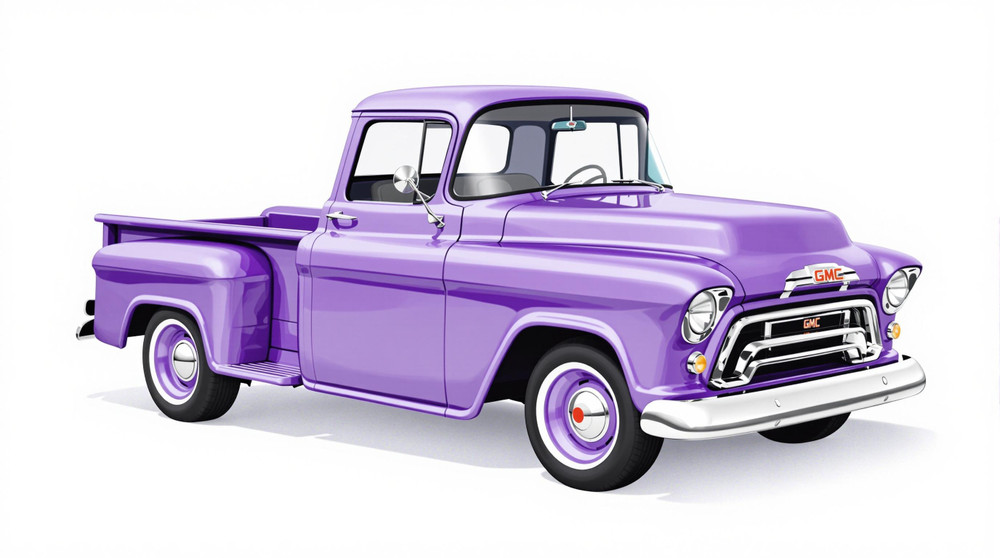
Image of 1956 Gmc Series 252, Note: These illustrations use artistic license and may differ from actual historical models.
Performance Metrics
Fundamental Metrics
Emotional Appeal
MMP Rating
| Engine Specifications | |
|---|---|
| Engine: | 248ci Inline 6 |
| Displacement: | 248 cubic inches (4.1 liters) |
| Horsepower: | 125-130 hp |
| Torque: | 210 lb-ft |
| Compression Ratio: | 7.5:1 |
| Ignition System: | Points and condenser |
| Cooling System: | Liquid-cooled |
| Performance Specifications | |
| 0-60 Time: | Not available due to the age and type of vehicle |
| 1/4 Mile Time: | Not available due to the age and type of vehicle |
| Top Speed: | 70-75 mph |
| Transmission and Drive | |
| Drive Type: | Rear-wheel drive |
| Transmission Type: | 3-speed manual |
| Fuel and Efficiency | |
| Fuel System Type: | Carburetor |
| MPG: | 10-12 mpg |
| Dimensions and Brakes | |
| Brakes: | Drum brakes |
| Wheelbase: | 125 inches |
| Weight: | 3,500 lbs |
Note: Specifications for classic cars are given to the best of our ability, considering the limited and variant data available.
1956 GMC Series 252: A Heavy-Duty Classic Built to Work
The 1956 GMC Series 252 was not designed to pose in a showroom window. It was built to haul, tow, and keep working long after the pavement ended. A two-ton conventional truck from General Motors’ truck division, the 252 combined sturdy commercial engineering with the rounded, confident styling that made mid-1950s GMCs instantly recognizable.
GMC had been building commercial vehicles since the early 1900s, and by the 1950s its trucks were familiar sights on farms, construction sites, and delivery routes. The 1956 model belonged to GMC’s second-series trucks, introduced for the 1955 model year. These trucks arrived during a period of rapid growth in American road transport, when expanding suburbs, new highways, and a booming economy increased demand for dependable work vehicles.
One detail that makes the Series 252 especially interesting is that it was a working chassis first and a finished vehicle second. Buyers could order a cab and chassis, then have a dump body, stake bed, flatbed, or specialized commercial body fitted to suit the job. That flexibility helped make trucks like the 252 useful across a wide range of industries.
Blue Chip Styling and a Practical Cab
GMC promoted its postwar trucks as “Blue Chip” vehicles, emphasizing a combination of capability and modern design. The 1956 Series 252 wore a broad, upright front end, a substantial grille, rounded front fenders, and a tall hood that gave it a purposeful stance. Its cab looked more contemporary than the upright work trucks of earlier decades, with a broad windshield and generous glass area that improved the view from the driver’s seat.
Chrome and bright trim varied by configuration and equipment, but the overall look remained businesslike. The truck’s large wheels, high ground clearance, and heavy frame made clear that styling had not come at the expense of utility. A long-wheelbase chassis could look especially imposing, while a shorter configuration appeared more compact and maneuverable for local work.
Inside, the Series 252 was built for long shifts rather than luxury. The cab generally featured a painted metal dashboard, straightforward gauges, a broad steering wheel, and a bench seat trimmed in practical materials such as vinyl or cloth, depending on specification. The finish was durable and easy to clean, though modern drivers may find the seat and sound insulation basic by today’s standards. Controls were simple, direct, and designed to be understood without a learning curve.
Factory paint choices depended on model year, body configuration, and ordering details. Work-truck colors were often practical shades such as red, green, blue, cream, and gray, while fleet owners frequently specified company colors. Restored examples in bright red, deep blue, or classic cream-and-green combinations tend to draw attention at shows, but there was no single color that defined every Series 252.
Chassis Choices and Working Bodies
The Series 252 designation identified a heavy-duty, two-ton class truck, but it did not mean every 252 left the factory in the same form. Many were sold as cab-and-chassis trucks, allowing a dealer, body builder, or owner to add the equipment required for the job. Common applications included stake and platform beds, dump bodies, service bodies, and other commercial installations.
The most recognizable version today is often a conventional cab fitted with a stake bed or flatbed. Those configurations show off the truck’s proportions and make its working purpose easy to understand. Dump trucks and vocational bodies were also important in period, but they can be harder to find intact because many spent decades in demanding service.
It is worth remembering that a surviving truck’s body may not be original. Commercial bodies were frequently replaced as businesses changed, equipment wore out, or a chassis moved from one owner to another. For collectors, the cab, frame, identification information, and mechanical specification can be just as important as the body currently fitted.
Engineering for the Job
At the heart of many GMC trucks of this era was a durable inline six-cylinder engine. A 270-cubic-inch GMC six was a common heavy-truck powerplant, although exact engine and transmission specifications could vary with configuration and order. GMC also offered different equipment combinations across its truck range, so buyers should verify the engine and drivetrain in any particular 252 rather than assume every example is identical.
The Series 252 used a conventional front-engine, rear-wheel-drive layout with a substantial frame, heavy-duty axles, and leaf springs. Its mechanical approach was familiar to fleet mechanics and independent repair shops. The design prioritized serviceability and load-carrying ability over comfort, fuel economy, or high-speed performance.
Compared with a light-duty pickup, the 252’s real advantage was its work capacity and the ability to accept specialized bodies. It was a serious commercial chassis, not simply a larger-looking pickup. That distinction is central to understanding the model: its significance lies less in introducing a revolutionary new technology than in delivering dependable, adaptable equipment at a time when American businesses needed it.
Performance and Road Manners
There is no single reliable top-speed or acceleration figure for every Series 252. Engine choice, rear-axle ratio, transmission, tire size, body style, and cargo load all changed the truck’s performance. As a broad estimate, a mechanically sound, lightly loaded example might reach roughly 55 to 65 mph. A 0-to-60-mph run could take around 35 to 50 seconds, and some heavily geared or loaded trucks may not reach 60 mph comfortably at all. These are practical estimates, not factory performance claims.
On the road, the 252 feels like the heavy commercial vehicle it is. The steering requires more effort than a modern truck, especially at low speed, and the driver sits high above the road with a commanding view. The long wheelbase helps the truck settle into a straight line, but tight turns require planning. The broad steering wheel and manual controls give the driver a direct connection to the machine, though not necessarily an easy one in congested traffic.
Leaf springs and a heavy frame are excellent for carrying loads, but an empty truck can ride firmly over broken pavement. Add cargo and the suspension becomes more composed. On winding roads, the truck rewards steady inputs and moderate speed rather than quick cornering. Crosswinds can affect a tall-bodied or lightly loaded example, and braking distances are far longer than those of a modern passenger vehicle.
The engine’s soundtrack is part of the experience: a measured six-cylinder rumble under load, accompanied by the mechanical sounds of a working transmission and chassis. The Series 252 feels deliberate rather than fast. Driving one is a reminder that commercial vehicles were once operated through skill, anticipation, and mechanical sympathy rather than electronic assistance.
Living With a Series 252
In its working years, the 252 could serve as a farm truck, construction vehicle, delivery chassis, municipal truck, or hauler for a small business. Today, owners more often use one for local parades, truck shows, occasional hauling, or as a carefully maintained weekend vehicle. Some restorers build them as rolling displays of period commercial equipment, while others preserve the patina and working character.
Routine maintenance is straightforward by classic-truck standards. The engine bay is accessible, many systems are mechanical, and basic service does not require specialized diagnostic equipment. Owners should pay particular attention to cooling-system condition, ignition components, fuel delivery, steering and brake wear, wheel bearings, and chassis lubrication. Age-related wiring repairs and leaks are common considerations, as are worn cab mounts and corrosion in the cab, fenders, running boards, and frame.
Parts availability is mixed. Common engine service items and many general mechanical components can be sourced through classic-truck suppliers, while model-specific trim, cab details, and heavy-duty chassis parts may require patience. A complete truck is often a better starting point than a cheap, incomplete project. Before buying, confirm the truck’s identity and inspect the frame, steering, brakes, and drivetrain carefully. A large truck can be expensive to transport and restore even when its purchase price looks attractive.
Details Collectors Like to Know
The Series 252’s appeal is its commercial honesty. Unlike a luxury car with a famous movie appearance or a limited-edition badge, its story is tied to everyday work. GMC’s heavy trucks helped move building materials, farm goods, equipment, and local deliveries during the postwar expansion of the United States.
There is no widely recognized Series 252 speed, sales, or endurance record associated with the model. Its achievement was practical: it could be configured for many jobs and maintained by the mechanics who kept local businesses operating. Celebrity ownership is not a defining part of its history either. The truck’s strongest claim to fame is the role it played in ordinary working life.
One common criticism is that the truck is slow, noisy, and tiring to drive by modern standards. That is fair. It also lacks modern safety features, including contemporary crash protection, power steering, and modern braking systems. Those limitations should be taken seriously, particularly if the truck will share busy roads with modern traffic. Its age and heavy-duty construction do not make it invulnerable.
Series 252 Values and Rarity
GMC did not make easy-to-find public production totals for every individual model and configuration, so an exact Series 252 count is difficult to establish. As an informed estimate rather than a verified factory figure, perhaps 2,000 to 5,000 examples were built in a given model year across the range of 252 configurations. The surviving population is considerably smaller, especially for original, complete trucks with documented history.
Values depend heavily on condition, running gear, completeness, and the quality of any restoration. A rough project or incomplete chassis might sell for about $3,000 to $8,000. A usable driver with a sound cab and presentable body could fall in the $10,000 to $22,000 range. A well-restored, correctly configured example may bring roughly $25,000 to $45,000, with exceptional restorations or unusually desirable bodywork potentially exceeding that range. These are broad North American estimates, not a formal appraisal.
The market is relatively specialized. A restored 1950s pickup may attract a larger pool of buyers than a two-ton commercial truck, so a Series 252 can take longer to sell. Values have generally benefited from growing interest in vintage work trucks, but condition and restoration costs limit how much buyers will pay. The best examples are likely to hold or gradually gain value, while rough projects can remain difficult to justify financially.
Why the 1956 GMC 252 Still Matters
The 1956 GMC Series 252 brings together mid-century styling, practical engineering, and the adaptability that made commercial trucks essential to American growth. Its broad cab, substantial frame, inline-six power, and range of body options tell the story of a vehicle designed to earn its keep.
It is not a fast or plush classic, and that is precisely the point. The Series 252 represents a time when a truck was a tool first, shaped around the demands of farms, businesses, and growing communities. Kept on the road today, it remains more than a handsome old workhorse: it is a rolling piece of industrial history.
1956 Gmc Series 252 Catalog of Parts
 1956 GMC Series 252 Rear Window Seal '55-'66 GM Full Size Truck w/ black lockstrip-VWS 7313-VRear Window Seal '55-'66 GM Full Size Truck, Second Series With Large Window. Includes Lockstrip, Set of 2.
 1956 GMC Series 252 Rear Window Seal, 55-66 GM Full Size Truck w/ Chrome Lockstrip-VWS 7313-WRear Window Seal, 55-66 GM Full Size Truck, Second Series With Large Window. Chrome Lockstrip Included, Set Of 2.
Why Choose Metro?
For over 100 years, Metro Moulded Parts has been the pinnacle of quality in classic car restoration parts. Our commitment to precision and authenticity in every component ensures a perfect fit and an OEM-level appearance.
- Expert Craftsmanship & Quality: Each part is a testament to our dedication to reliability and perfection, crafted from original designs and thoroughly tested.
- Advanced Technology: We use cutting-edge techniques to create flawless, long-lasting parts that surpass others in performance.
- SuperSoft Sponge – The Ultimate Door Seal: Not only are our door seals 30% softer than competitors', but they're also guaranteed to never leak. They effectively reduce wind and road noise, enhancing your classic car's comfort and driving experience.
- Proudly American: Our parts are a product of American craftsmanship, made in the USA with a spirit of excellence and heritage.
- Unrivaled Warranty: We back our products with a 30-year industry-leading warranty, a testament to our confidence in their quality.
Join us in preserving the legacy of classic cars with parts that are crafted for perfection, not just made.