
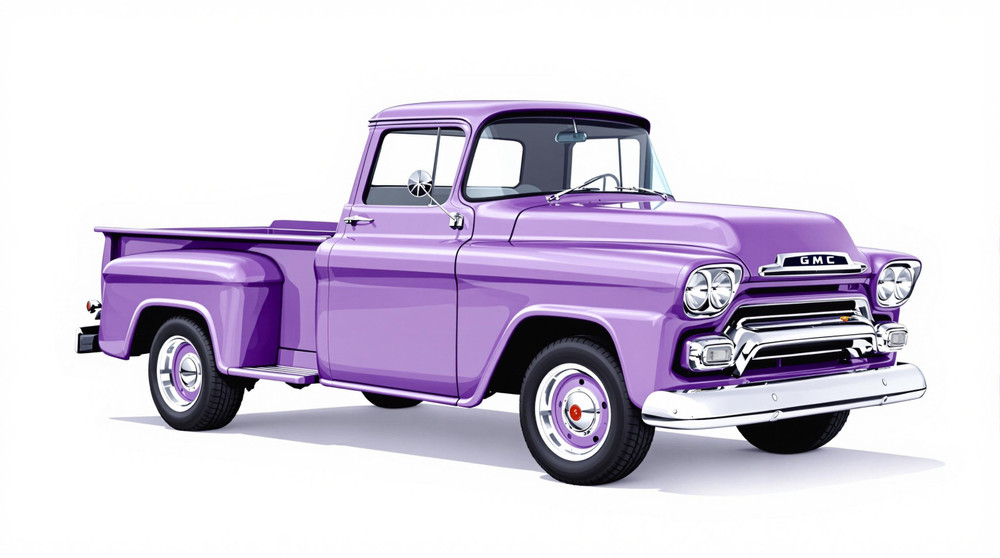
Image of 1958 Gmc Pm152, Note: These illustrations use artistic license and may differ from actual historical models.
Performance Metrics
Fundamental Metrics
Emotional Appeal
MMP Rating
| Engine Specifications | |
|---|---|
| Engine Options: | Likely equipped with a GMC inline 6-cylinder engine |
| Displacement Range: | 235-302 cubic inches |
| Horsepower Range: | Estimated 130-180 hp |
| Torque: | Estimated 210-280 lb-ft |
| Compression Ratio: | 7.5:1 |
| Ignition System: | Conventional points ignition system |
| Cooling System: | Liquid-cooled |
| Performance Specifications | |
| 0-60 Time: | Not available due to the vehicle's age and type |
| 1/4 Mile Time: | Not available due to the vehicle's age and type |
| Top Speed: | Estimated 60-70 mph |
| Transmission and Drive | |
| Drive Type: | Rear-wheel drive |
| Transmission Type: | Likely equipped with a 3 or 4-speed manual transmission |
| Fuel and Efficiency | |
| Fuel System Type: | Carbureted |
| MPG: | Estimated 10-15 mpg |
| Dimensions and Brakes | |
| Brakes: | Likely equipped with drum brakes on both front and rear |
| Wheelbase: | 125-145 inches |
| Weight: | Estimated 4,000-5,000 lbs |
Note: Specifications for classic cars are given to the best of our ability, considering the limited and variant data available.
1958 GMC PM152: A Task Force-Era Workhorse
The 1958 GMC PM152 brings together the bold styling of America’s postwar truck boom and the straightforward hardware of a working pickup. Built by GMC, the truck division of General Motors, it belongs to the second-generation Task Force family, introduced in 1955. The PM152 is generally identified as a 150-series, three-quarter-ton pickup, though the exact configuration is best confirmed from the truck’s model and serial plate.
GMC grew out of the Rapid Motor Vehicle Company, a commercial vehicle maker acquired by General Motors in 1909. By the late 1950s, GMC had established its own identity alongside Chevrolet: the two brands shared some engineering, but GMC trucks had distinct styling and powertrain details. The PM152 arrived during an especially energetic period for pickup design, when trucks were becoming more comfortable and more polished without losing their working purpose.
A notable detail of the 1958 model year is its front-end treatment. The truck adopted a quad-headlamp layout, giving it a more modern, car-like face than earlier Task Force models. That four-headlight look is one of the quickest ways to distinguish a 1958 truck from many of its predecessors.
Bold 1958 GMC Styling
The PM152 has the broad shoulders and upright proportions that make late-1950s pickups so recognizable. Its wide hood, rounded front fenders, substantial grille, and prominent GMC lettering create a strong, purposeful profile. The windshield wraps gently around the cab, while the cab roof and door glass keep the overall shape clean rather than overly ornate. In 1958, the quad headlights added a fresh, more contemporary appearance to the front end.
Inside, the cab is practical and uncomplicated. Painted metal surfaces, a simple instrument panel, a large steering wheel, and durable seat upholstery reflect the truck’s working role. Materials were chosen to tolerate daily use, not to imitate a luxury car. Depending on the original equipment and trim, an owner might find a heater, radio, armrests, or upgraded seat covering, but the basic cabin remains refreshingly direct: clear gauges, easy-to-reach controls, and plenty of room to work the wheel.
The electrical system was 12-volt, a useful improvement over older 6-volt systems for starting and operating accessories. A manual transmission was typical, with different gearbox and equipment choices available depending on specification. Power steering and other convenience features were not universal, so surviving examples can differ considerably.
GMC offered its trucks in a range of solid colors, and two-tone combinations were also popular. Red and white, blue and white, green and white, and cream-toned combinations suit the period particularly well. Exact paint names and availability varied by year and configuration, and an individual truck may have been repainted more than once.
The PM152 designation refers to a particular truck configuration, not every body style sold by GMC. The wider 1958 GMC lineup included pickup bodies and other commercial configurations, with chassis and bed options varying by series. A three-quarter-ton pickup with a long, useful bed is the most recognizable form associated with this kind of truck. When assessing one, check the model plate and chassis details rather than assuming every PM152 left the factory with identical equipment.
Why the Task Force Generation Matters
The 1958 GMC PM152 was not a radical engineering breakthrough, but it illustrates an important change in how Americans viewed pickups. Trucks were still expected to haul tools, supplies, and agricultural loads, yet they were increasingly asked to serve as personal transportation too. The Task Force cab, more finished interior, and more expressive styling helped make a pickup appealing beyond the farm or job site.
GMC also stood apart from many competitors through its brand-specific engines and detailing. Its trucks shared the broader General Motors parts and engineering ecosystem, but GMC buyers could choose a vehicle with a distinct appearance and a reputation for heavy-duty-minded construction. The result was a truck that felt familiar to service and repair while still looking different from its Chevrolet counterpart.
The PM152’s lasting appeal comes from that balance. It has the visual drama of a late-fifties vehicle, but its basic construction remains understandable to mechanics and owners. The model is part of the bridge between purely utilitarian postwar pickups and the more comfort-oriented trucks that followed.
Engine, Speed, and Road Manners
Many 1958 GMC pickups used GMC’s 270-cubic-inch inline-six, a long-serving engine valued for its straightforward design and work-ready torque. A 336-cubic-inch GMC V8 was also available in the period, depending on configuration. Engine output and equipment varied, so buyers should verify what is actually installed rather than relying on a badge or seller description. Decades of swaps and rebuilds are common in old pickups.
GMC did not publish modern-style acceleration figures for every PM152 configuration, and reliable period test data is limited. As a practical estimate, a stock truck with the six-cylinder engine might take roughly 25 to 30 seconds to reach 60 mph, depending on gearing, load, engine condition, and transmission. A healthy V8-equipped truck could be quicker. A reasonable estimated top speed is around 65 to 75 mph, but that does not mean sustained highway cruising is comfortable or advisable in an unrestored example.
On the road, the PM152 feels like a working truck, not a modern pickup. The engine gives a steady mechanical growl, and the driver sits upright behind a large steering wheel. The manual gearbox and clutch require deliberate input, while the truck’s size and steering demand attention at low speeds. Depending on the suspension and tires fitted, rough pavement can bring a firm, busy ride. A heavy load may settle the truck and improve its composure, but an empty bed can make bumps more noticeable.
On winding roads, expect slower responses and more body movement than you would find in a modern vehicle. Crosswinds can also be felt, especially with a tall, lightly loaded body. Good brakes, sound steering components, appropriate tires, and careful speed selection make a major difference. A well-maintained PM152 can be enjoyable on back roads and at local events, but it is best driven with its age and braking distances in mind.
Living With a PM152
Today, the 1958 GMC PM152 is most often a weekend driver, show truck, restoration project, or dependable local-use classic. Some owners still put their trucks to work, but regular heavy hauling can accelerate wear and may not suit a restored or historically preserved example. Its solid, useful character is part of the appeal, though comfort and speed are firmly from another era.
Routine maintenance is approachable for an owner familiar with older vehicles. The engine bay is generally accessible, and many service tasks involve conventional mechanical parts rather than complex electronics. Keeping the cooling system, ignition, fuel delivery, brakes, steering, and charging system in good order is essential. Originality can complicate repairs: some GMC-specific parts are less plentiful than comparable Chevrolet pieces, and trim, sheet metal, glass, or model-specific components may take time to locate.
Reliability depends more on condition and quality of past repairs than on the badge alone. Inspect the frame, cab mounts, floor, rocker panels, bed, and lower fenders for rust or old patchwork. Check for worn steering joints, brake problems, cooling-system issues, and signs of an improvised engine or transmission swap. A truck that starts easily is not necessarily roadworthy, so a careful mechanical inspection is money well spent.
PM152 Facts and Common Misconceptions
The 1958 GMC’s quad-headlamp front end is a useful year-specific clue, but it should not be treated as proof of a truck’s exact model or originality. Parts are often changed during decades of use, and restored trucks may combine components from different years. Documentation, serial information, and close inspection are more reliable than appearance alone.
There is no widely recognized PM152 speed, endurance, or sales record that defines the model. Nor is there a dependable, commonly cited production total for the PM152 configuration by itself. GMC production figures are often reported across broader model groups, making a precise PM152 count difficult to establish. A sensible estimate is that many thousands of trucks across the wider series were built, while the surviving, correctly identified PM152 examples are a much smaller subset.
Common criticisms are familiar to anyone who has driven a mid-century pickup: modest acceleration, heavy controls, limited safety equipment by modern standards, and a ride that can become uncomfortable on rough roads. These are not hidden flaws so much as reminders of the truck’s age and original purpose. The same mechanical simplicity that limits refinement also makes the PM152 appealing to hands-on owners.
Collector Value and Availability
Values vary widely with rust, originality, mechanical condition, documentation, and the quality of restoration. As a broad 2026 estimate for the U.S. market, a rough project might sell for about $5,000 to $12,000. A usable driver could fall around $15,000 to $30,000, while a well-restored, attractive example may bring roughly $30,000 to $50,000 or more. Exceptional restorations, rare equipment, or strong provenance can exceed that range, while incomplete or heavily modified trucks may sell for less.
The PM152 is uncommon compared with Chevrolet pickups from the same era, but it is not so scarce that parts or examples never appear. Listings tend to be regional, and condition varies dramatically. Values for desirable vintage pickups have generally strengthened over the long term, though the market moves with restoration costs and collector demand. The best trucks are likely to remain the most resilient; ordinary drivers and projects can fluctuate more sharply.
Because exact PM152 production figures are hard to pin down, rarity is best judged by the individual truck’s specification and condition. A documented, largely original example is more compelling than a truck identified only by a sales listing. Verify the model plate, engine, chassis, and any claimed factory options before paying a premium.
A Distinctive GMC With Working Roots
The 1958 GMC PM152 combines late-fifties styling, straightforward mechanicals, and genuine utility in one appealing package. Its quad headlights give it a memorable face, while its three-quarter-ton character separates it from lighter pickups built mainly for personal use. It is not fast or especially refined, but it rewards careful ownership with a direct, mechanical driving experience and a strong presence wherever it goes.
For collectors, the PM152 is a chance to own something familiar in shape yet less common than its Chevrolet cousin. For enthusiasts who value honest design over modern comfort, this GMC remains exactly what a classic truck should be: handsome, useful, and unmistakably built to work.
1958 Gmc Pm152 Catalog of Parts
 1958 GMC PM152 Rear Window Seal '42-'66 GM Full Size Trucks With Small Window-VWS 7313-URear Window Seal '42-'66 GM Full Size Trucks With Small Window, Includes Lockstrip, Set of 2.
 1958 GMC PM152 Rear Window Seal '55-'66 GM Full Size Truck w/ black lockstrip-VWS 7313-VRear Window Seal '55-'66 GM Full Size Truck, Second Series With Large Window. Includes Lockstrip, Set of 2.
 1958 GMC PM152 Rear Window Seal, 55-66 GM Full Size Truck w/ Chrome Lockstrip-VWS 7313-WRear Window Seal, 55-66 GM Full Size Truck, Second Series With Large Window. Chrome Lockstrip Included, Set Of 2.
Why Choose Metro?
For over 100 years, Metro Moulded Parts has been the pinnacle of quality in classic car restoration parts. Our commitment to precision and authenticity in every component ensures a perfect fit and an OEM-level appearance.
- Expert Craftsmanship & Quality: Each part is a testament to our dedication to reliability and perfection, crafted from original designs and thoroughly tested.
- Advanced Technology: We use cutting-edge techniques to create flawless, long-lasting parts that surpass others in performance.
- SuperSoft Sponge – The Ultimate Door Seal: Not only are our door seals 30% softer than competitors', but they're also guaranteed to never leak. They effectively reduce wind and road noise, enhancing your classic car's comfort and driving experience.
- Proudly American: Our parts are a product of American craftsmanship, made in the USA with a spirit of excellence and heritage.
- Unrivaled Warranty: We back our products with a 30-year industry-leading warranty, a testament to our confidence in their quality.
Join us in preserving the legacy of classic cars with parts that are crafted for perfection, not just made.