
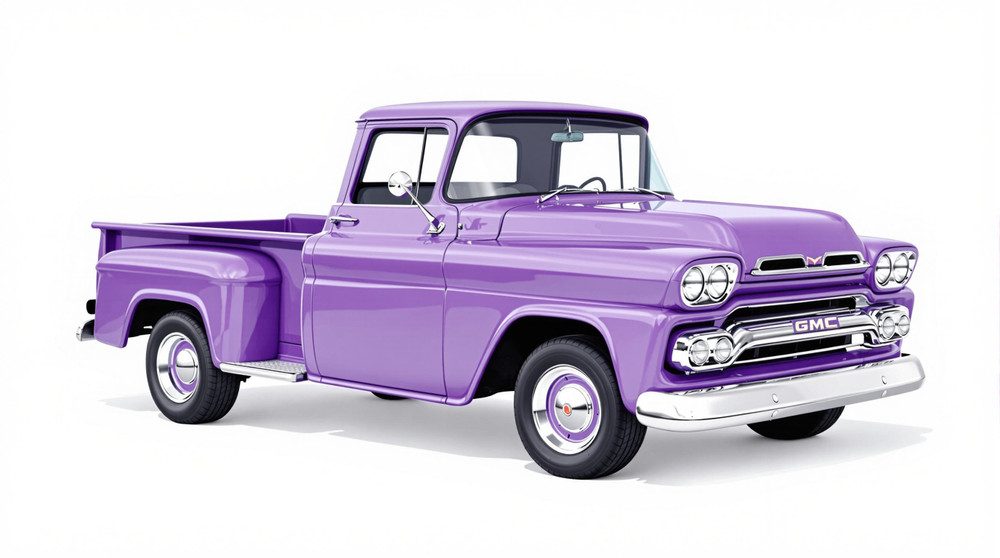
Image of 1959 Gmc Series 252, Note: These illustrations use artistic license and may differ from actual historical models.
Performance Metrics
Fundamental Metrics
Emotional Appeal
MMP Rating
| Engine Specifications | |
|---|---|
| Engine: | GMC 6-cylinder engine |
| Displacement: | 235-302 cubic inches |
| Horsepower: | 130-180 hp |
| Torque: | 210-280 lb-ft |
| Compression Ratio: | 7.5:1 |
| Ignition System: | Distributor and coil |
| Cooling System: | Liquid-cooled |
| Performance Specifications | |
| 0-60 Time: | Not available |
| 1/4 Mile Time: | Not available |
| Top Speed: | 70-80 mph |
| Transmission and Drive | |
| Drive Type: | Rear-wheel drive |
| Transmission Type: | 3-speed manual or 4-speed Hydra-Matic automatic |
| Fuel and Efficiency | |
| Fuel System Type: | Carburetor |
| MPG: | 10-15 mpg |
| Dimensions and Brakes | |
| Brakes: | Drum brakes |
| Wheelbase: | 114-126 inches |
| Weight: | 3,500-4,500 lbs |
Note: Specifications for classic cars are given to the best of our ability, considering the limited and variant data available.
1959 GMC Series 252: A Heavy-Duty Truck Built to Work
The 1959 GMC Series 252 was made for jobs that had outgrown the ordinary pickup. A substantial, cab-forward work truck with a rugged chassis, it belonged to GMC’s medium- and heavy-duty commercial lineup, where buyers chose a cab and chassis and then equipped it for a particular trade. GMC, the truck division of General Motors, built vehicles like the 252 for farms, construction sites, local delivery fleets, and municipal work.
The Series 252 is not a familiar pickup name, and that is part of its appeal today. It was a working platform rather than a single, fixed body style, so surviving examples can look very different depending on whether they carried a flatbed, dump body, service body, or another commercial setup. Its 1959 model year also represents the final chapter of the distinctive 1955-to-1959 GMC cab design, before the next generation arrived.
1959 GMC 252 Styling and Cab Details
The 252’s appearance is all business, but it has plenty of period character. Its broad front end, prominent grille, tall hood, and four-headlamp arrangement give it a face that is unmistakably late-1950s GMC. The cab has a large, wraparound windshield that opens up the driver’s view and visually lightens a truck whose frame and chassis were designed for serious loads. On many examples, the long hood and exposed front fenders make the truck look purposeful rather than sleek.
Inside, function comes first. The cab is generally a straightforward place to work, with a painted metal dashboard, simple instruments, a large steering wheel, and durable upholstery. Vinyl or similarly hard-wearing seat coverings and a rubber floor mat suited the truck’s working life better than plush trim would have. Equipment varied by order, so details such as seat configuration, gauges, heater, radio, and other accessories depend on the individual truck.
Paint choices varied with GMC’s offerings and customer orders. Solid colors were common, including fleet-friendly whites, reds, blues, greens, and yellows, with commercial buyers often specifying a company color. A fresh two-tone restoration can look striking, but many original 252s left service wearing a single practical color, then acquired new paint as they changed owners or jobs.
The key body choice was usually not a showroom-style trim package but the equipment fitted behind the cab. A Series 252 could be ordered as a cab-and-chassis and turned into a stake truck, flatbed, dump truck, wrecker, or specialized service vehicle. The flatbed and stake-bed configurations are among the most recognizable today, while dump and utility bodies reflect the truck’s everyday commercial role.
Where the Series 252 Fits in GMC History
GMC’s 1950s trucks helped establish the brand’s image as a maker of sturdy, professionally oriented vehicles. The Series 252 carried that idea into a heavier class than the pickups most people picture when they hear “classic GMC.” Its importance lies less in introducing a single headline technology and more in offering businesses a durable platform that could be adapted to many different tasks.
The truck’s cab design also captures a significant moment in American vehicle styling. The broad glass, rounded forms, and bold front-end treatment belong to the postwar era, when commercial vehicles began to look more modern without giving up their body-on-frame construction and straightforward mechanicals. Compared with a light-duty pickup, the 252’s heavier chassis, larger components, and upfit-friendly layout made its working purpose clear.
Its lasting influence is practical rather than fashionable: the truck represents the flexible chassis-cab formula still used by modern commercial vehicles. Buy the basic platform, select the wheelbase and equipment, then build the body around the job. That adaptability is why medium-duty trucks like the 252 served so many industries, even if they rarely received the publicity given to passenger cars or pickup models.
Engine, Speed, and Road Manners
Engine and drivetrain specifications depended on the original order, and surviving trucks may have been modified during decades of service. Period GMC six-cylinder engines were common in work-truck applications, with engine choice, transmission, axle ratio, and rear-wheel configuration all affecting performance. Before buying one, check the identification numbers and component tags rather than assuming that every Series 252 has the same engine or gearing.
Exact acceleration figures are difficult to apply to a commercial chassis that could carry very different bodies and loads. As a practical estimate, an unloaded, mechanically sound example might reach 0 to 60 mph in roughly 35 to 50 seconds, if its gearing and engine allow it to reach that speed. A working truck with a heavy body or cargo will be slower, and in many cases 60 mph is not a useful or comfortable target. Depending on gearing and condition, an approximate top speed might fall in the 50 to 65 mph range, but that is an estimate, not a universal factory specification.
Expect a driving experience that feels distinctly old-fashioned. The engine produces a steady mechanical rumble, the large steering wheel requires more effort than a modern vehicle, and the transmission is likely to have a deliberate, truck-like feel. The ride can be firm when empty, particularly over broken pavement, while a working load may settle the suspension. On winding roads, the tall stance, long wheelbase, and heavy-duty tires call for measured cornering and generous braking distance. Crosswinds can also be noticeable, especially with a tall or broad body fitted behind the cab.
These trucks were built for hauling and low-speed work, not modern traffic pace. Braking systems, steering, tires, and suspension should all be inspected before road use. A well-maintained 252 can be satisfying on local roads and at moderate speeds, but its age and original design make defensive driving essential.
Living with a 1959 GMC 252
Most Series 252s spent their lives as work vehicles, and that remains their natural role in the classic-truck world. Today, owners use them as restored show trucks, parade vehicles, farm and property haulers, period-correct business displays, or occasional local drivers. A carefully restored example can attract attention at a show precisely because it is less common than a half-ton pickup.
Mechanical work is often approachable for an experienced home mechanic. The truck’s basic systems are comparatively simple, and many repairs do not require the diagnostic equipment used on modern vehicles. However, its size and weight mean that jobs such as brake, clutch, axle, and chassis repairs may need proper lifting equipment and extra hands. Parts availability varies: common service items may be obtainable, while model-specific trim, body parts, and correct commercial components can take patience to locate.
Reliability depends more on condition and maintenance than on the badge. Look for rust in the cab, frame damage, worn steering components, leaks, tired brakes, and evidence of overloading. Also inspect any fitted body and its attachment points. A truck that has worked hard for decades may have been repaired or altered many times, so a thorough inspection is worth more than a fresh coat of paint.
Facts and Myths About the GMC 252
One useful fact for new enthusiasts is that “252” identifies a truck series or model designation, not a 252-cubic-inch engine. The name can be confusing because GMC used a range of engine sizes and configurations across its truck line. The exact equipment on any individual vehicle should be confirmed from its identification information and surviving documentation.
There is no widely recognized speed, sales, or endurance record associated specifically with the Series 252, nor is it famous for a particular celebrity owner or single landmark event. Its notable story is the everyday one: trucks like it supported farms, contractors, delivery operators, and local governments across the country. That less glamorous history is also why many examples were used up, rebuilt, or scrapped rather than preserved.
A common criticism is that the 252 is slow, noisy, and demanding by modern standards. Those observations are fair, particularly when the truck is compared with a contemporary pickup. It was engineered to carry equipment and work steadily, not to offer quick acceleration, quiet cruising, or car-like handling. Its age also means comfort and safety features are limited by today’s expectations.
1959 GMC Series 252 Collector Values
Series 252 production figures are not commonly published as a clean, model-specific total, and the truck’s many body and chassis configurations complicate any count. A reasonable estimate is that several thousand were built, perhaps around 3,000 to 10,000 across the model year and relevant configurations. That is a broad estimate, not a confirmed factory production figure. Surviving trucks are considerably harder to find than ordinary vintage pickups because many spent their entire lives in demanding commercial service.
Values vary sharply with condition, body type, completeness, and the quality of the restoration. As a general U.S. market estimate, a project or rough runner might sell for about $5,000 to $12,000. A usable, presentable truck could fall around $12,000 to $25,000, while a high-quality restoration or especially appealing original configuration may bring roughly $25,000 to $50,000 or more. A rare, professionally restored, or unusually well-documented example can exceed that range, though commercial trucks usually have a smaller buyer pool than popular pickups.
Like many classic work trucks, the 252’s value tends to reward sound condition and distinctive presentation rather than costly restoration alone. Interest in vintage commercial vehicles has supported prices for good examples, but values can be uneven because buyers must consider transport, storage, parts sourcing, and the truck’s limited highway comfort. A complete, honest truck with a documented history is often a smarter collector purchase than a shiny restoration with hidden mechanical or structural problems.
Why the 1959 GMC 252 Still Matters
The 1959 GMC Series 252 is a snapshot of American working life at the end of the 1950s: a strong chassis, a practical cab, and the flexibility to become whatever a business needed. It lacks the speed and comfort of a modern truck, but it offers simple mechanical character, unmistakable period styling, and a direct connection to the people and industries that kept the country moving.
For collectors, its appeal is not just that it is old or unusual. It is a genuine working GMC whose story is written in its chassis, body, and wear. Restored as a showpiece or preserved as a useful classic, the Series 252 remains a memorable reminder that some of the most important vehicles in automotive history were built not for the spotlight, but for the job.
1959 Gmc Series 252 Catalog of Parts
 1959 GMC Series 252 Rear Window Seal '55-'66 GM Full Size Truck w/ black lockstrip-VWS 7313-VRear Window Seal '55-'66 GM Full Size Truck, Second Series With Large Window. Includes Lockstrip, Set of 2.
 1959 GMC Series 252 Rear Window Seal, 55-66 GM Full Size Truck w/ Chrome Lockstrip-VWS 7313-WRear Window Seal, 55-66 GM Full Size Truck, Second Series With Large Window. Chrome Lockstrip Included, Set Of 2.
Why Choose Metro?
For over 100 years, Metro Moulded Parts has been the pinnacle of quality in classic car restoration parts. Our commitment to precision and authenticity in every component ensures a perfect fit and an OEM-level appearance.
- Expert Craftsmanship & Quality: Each part is a testament to our dedication to reliability and perfection, crafted from original designs and thoroughly tested.
- Advanced Technology: We use cutting-edge techniques to create flawless, long-lasting parts that surpass others in performance.
- SuperSoft Sponge – The Ultimate Door Seal: Not only are our door seals 30% softer than competitors', but they're also guaranteed to never leak. They effectively reduce wind and road noise, enhancing your classic car's comfort and driving experience.
- Proudly American: Our parts are a product of American craftsmanship, made in the USA with a spirit of excellence and heritage.
- Unrivaled Warranty: We back our products with a 30-year industry-leading warranty, a testament to our confidence in their quality.
Join us in preserving the legacy of classic cars with parts that are crafted for perfection, not just made.