
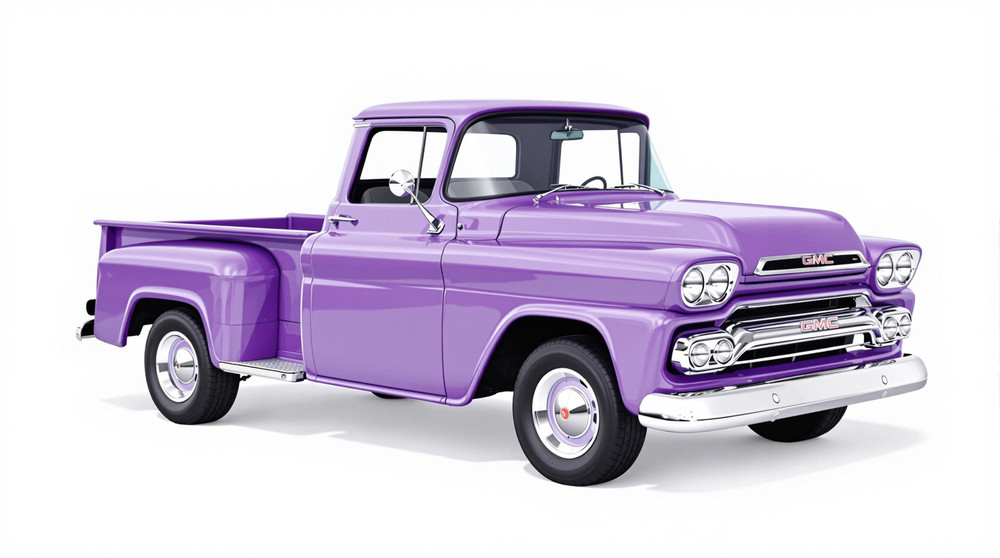
Image of 1959 Gmc Series 253, Note: These illustrations use artistic license and may differ from actual historical models.
Performance Metrics
Fundamental Metrics
Emotional Appeal
MMP Rating
| Engine Specifications | |
|---|---|
| Engine: | Inline 6 |
| Displacement: | 3.9L |
| Horsepower: | Estimated 130-150 HP |
| Torque: | 210-220 lb-ft |
| Compression Ratio: | Estimated 7.5:1 |
| Ignition System: | Distributor ignition |
| Cooling System: | Liquid cooled |
| Performance Specifications | |
| 0-60 Time: | Information not available |
| 1/4 Mile Time: | Information not available |
| Top Speed: | Estimated 70-75 mph |
| Transmission and Drive | |
| Drive Type: | Rear wheel drive |
| Transmission Type: | 3-speed manual |
| Fuel and Efficiency | |
| Fuel System Type: | Carburetor |
| MPG: | Estimated 10-12 mpg |
| Dimensions and Brakes | |
| Brakes: | Drum brakes |
| Wheelbase: | 114 inches |
| Weight: | Estimated 3,500-4,000 lbs |
Note: Specifications for classic cars are given to the best of our ability, considering the limited and variant data available.
1959 GMC Series 253: A Classic Pickup with a Nameplate Mystery
The 1959 GMC pickup brings together late-1950s style, honest working-truck engineering, and the kind of mechanical simplicity that still appeals to hands-on owners. It belongs to GMC’s second-generation “Task Force” era, a period when pickups were becoming more comfortable and stylish without giving up their practical roots.
One detail deserves a little care: “Series 253” is not a consistently documented GMC retail-series name in surviving references. Period GMC trucks were identified through model and chassis codes, and modern listings sometimes use those numbers differently. The exact identity of a particular truck should be checked against its data plate, serial number, and original paperwork. This guide focuses on the 1959 GMC light-duty pickup commonly advertised under the Series 253 label.
GMC, the truck division of General Motors, shared much of its basic architecture with Chevrolet but gave its trucks distinct styling, badging, and, in many cases, GMC-built engines. The 1959 model year was also the final year of the Task Force generation. That makes these trucks a handsome endpoint to a significant chapter in postwar pickup design.
Task Force Styling in Its Final Year
The 1959 GMC has a broad, confident stance. Its front end is dominated by a wide grille, substantial hood, and paired headlamps at each side, giving the truck a more modern face than the single-headlamp pickups of earlier years. The fenders flow cleanly into the body, while the cab’s rounded roof and generous glass keep the design from feeling overly bulky. It looks built for work, but it also has the polish of a decade increasingly interested in comfort and personal style.
Inside, the cab is straightforward and durable. Painted metal surfaces, a simple instrument panel, a broad steering wheel, and a bench seat define the experience. Depending on trim and condition, upholstery could be vinyl or cloth-and-vinyl, with rubber floor covering common in work-oriented examples. The materials are sturdy rather than luxurious, and the cabin is easy to understand at a glance. A well-preserved deluxe-cab truck may have brighter trim and more comfortable appointments, but it remains a practical workspace.
Available equipment varied by model and order. Buyers could choose features such as a heater and defroster, radio, brighter trim, and different seat or interior treatments. Power steering and power brakes were not universal, so their presence should be verified rather than assumed. By modern standards, the technology is basic: the driver gets clear gauges and direct mechanical controls, not electronic assistance or extensive safety equipment.
Factory paint choices varied with trim and ordering combinations. Solid colors in shades such as red, blue, green, cream, and white were typical of the period, while two-tone combinations added extra visual punch. Today, red-and-white, blue-and-white, and other high-contrast schemes are especially popular at shows, though a correct, documented original color can matter more to a serious restorer than a fashionable repaint.
Body Styles and Configurations
The pickup is the most familiar 1959 GMC light-duty body style, offered with different bed lengths and rear-fender treatments. A step-side design, with exposed rear fenders and a narrow running board beside the bed, gives the truck a traditional work-truck look. The wider, more integrated bed style looks smoother and more contemporary. Naming conventions differ between GMC literature and modern enthusiasts, so it is wise to describe the actual body rather than rely on a single label.
GMC’s broader 1959 truck range also included chassis-cab and commercial configurations, with heavier models serving delivery, utility, and business uses. Those versions should not be confused with a light-duty pickup simply because they share a similar cab or styling cues. For collectors, the clean, original pickup is usually the most recognizable and sought-after configuration.
Why the 1959 GMC Matters
The 1959 pickup captures a turning point in truck design. In the years after World War II, pickups were evolving from bare-bones tools into vehicles that could handle a workday and still feel comfortable on the drive home. The Task Force trucks helped establish that balance through more carlike cabins, improved visibility, stronger styling, and a broader range of equipment.
GMC also stood apart from many rivals through its identity as a dedicated truck maker. Although it shared corporate resources and some components with Chevrolet, GMC often used its own engines and emphasized heavy-duty engineering. That distinction gave buyers a reason to choose GMC beyond the badge, and it remains part of the appeal today.
The 1959 model is particularly interesting because it closes out the Task Force generation. It retains the familiar shape of the earlier trucks while wearing late-decade updates, making it a useful snapshot of how quickly American pickup design was changing. Its lasting influence is less about one revolutionary feature than about helping make the pickup a desirable personal vehicle as well as a dependable work machine.
Engine, Speed, and Road Manners
Engine availability depended on the truck’s series and order. GMC’s own inline-six engines were known for durability and steady low-speed pulling power, while optional V8 power gave some trucks stronger acceleration and a more relaxed feel under load. Exact specifications should be confirmed from the engine number and original documentation, since engines are often replaced during decades of use.
There is no single trustworthy factory 0-to-60 mph figure for every 1959 GMC configuration. Axle ratio, transmission, tire size, engine, and cargo weight all make a substantial difference. As a broad real-world estimate, a six-cylinder pickup may take roughly 20 seconds or more to reach 60 mph, while a V8-equipped example could be closer to the mid-to-high teens. These are estimates, not period test results.
Top speed is similarly dependent on gearing and condition. A healthy truck might reach roughly 65 to 80 mph, but that does not mean it is happiest cruising there. With period brakes, steering, tires, and suspension, a moderate highway pace is more comfortable and prudent. The truck was engineered to carry a load and work reliably, not to chase modern traffic at high speed.
On a rough road, the solid-axle suspension and leaf springs deliver a firm, sometimes bouncy ride, especially when the bed is empty. Add a useful load and the rear suspension settles down. On winding roads, the steering feels heavier and less precise than a modern pickup, and the high seating position makes body movement noticeable. The driving experience is wonderfully physical: a large steering wheel, a mechanical gear change, engine vibration through the cab, and the low, purposeful note of an old truck working under load.
Living with a 1959 GMC
Owners use these GMCs as weekend cruisers, show trucks, farm vehicles, occasional work pickups, and restoration projects. A carefully maintained example can handle local driving well, but it is not a modern daily driver in the usual sense. It lacks contemporary crash protection, fuel economy, braking performance, and traffic-friendly acceleration.
Routine maintenance is approachable for an owner with basic mechanical skills. The engine bay is generally accessible, and many common service jobs rely on familiar tools and straightforward mechanical systems. Tune-ups, brake work, cooling-system repairs, and suspension service are manageable for a competent home mechanic. The main challenge is not necessarily complexity but finding the right parts and identifying any changes made by previous owners.
Before buying, inspect the frame, cab corners, floor, bed, and lower fenders for rust. Check the brakes, steering play, cooling system, and charging system, then compare the engine and chassis numbers with the vehicle’s paperwork where possible. Originality can add value, but a quality restoration with sound repairs is often a better ownership prospect than a shiny truck hiding structural problems.
Trivia, Appeal, and Common Complaints
One of the most appealing facts about the 1959 GMC is that it represents the final model year of the Task Force generation. It is also a reminder that GMC and Chevrolet pickups of the period could look related while differing in engines, trim, and model identification. For restorers, those distinctions make careful research part of the fun.
No widely recognized production or speed record is associated specifically with the 1959 Series 253, and reliable production totals for that exact label are difficult to establish. GMC built trucks in substantial numbers across its full range, but surviving examples vary greatly by configuration and condition. Claims of an especially rare Series 253 should be supported by factory documentation or a clear interpretation of the truck’s serial and model codes.
Common criticisms are familiar to anyone who has driven an old pickup: slow acceleration, heavy steering, modest braking by modern standards, a firm ride when unloaded, and limited cabin comfort. Parts availability is generally workable, but some GMC-specific components and trim can take more effort to source than common Chevrolet equivalents. Those compromises are part of the truck’s character, but they should be understood before purchase.
Collector Value and Market Outlook
As of 2026, a rough U.S. market guide for a 1959 GMC pickup is about $4,000 to $10,000 for a project, $12,000 to $25,000 for a usable driver, and roughly $25,000 to $45,000 or more for a well-restored example. Exceptional, highly original, or especially well-documented trucks can exceed that range. Cab style, engine, drivetrain, rust condition, restoration quality, and regional demand all affect the final price.
Exact production numbers for the “Series 253” label are not readily established, so a precise surviving-population estimate would be misleading. The broader 1959 GMC pickup is uncommon enough to attract enthusiasts, but it is not generally treated as a one-of-a-few collector vehicle. Trucks with rare factory equipment, verified original drivetrains, or unusually strong documentation are harder to find than ordinary examples.
Values have generally been strongest for clean, restored trucks and tasteful custom builds. The market tends to reward solid metal, correct details, and credible restoration work more than dramatic modifications. Over the long term, well-kept examples appear stable to gradually appreciating, though classic-truck prices can move with wider collector trends. A project is not automatically a bargain once rust repair, missing trim, and mechanical work are counted.
A Late-Fifties GMC Worth Remembering
The 1959 GMC combines distinctive late-Task Force styling with practical engineering and a direct, engaging driving experience. Its broad grille, useful pickup configurations, and work-ready character make it instantly recognizable, while its final-year status gives it a special place in GMC history.
Whether restored to factory form or kept as a hardworking driver, this GMC offers more than nostalgia. It tells the story of the pickup’s move from humble tool to vehicle people were proud to own, and it does so with the unmistakable sound and feel of a truck built in an entirely different era.
1959 Gmc Series 253 Catalog of Parts
 1959 GMC Series 253 Rear Window Seal '42-'66 GM Full Size Trucks With Small Window-VWS 7313-URear Window Seal '42-'66 GM Full Size Trucks With Small Window, Includes Lockstrip, Set of 2.
 1959 GMC Series 253 Rear Window Seal '55-'66 GM Full Size Truck w/ black lockstrip-VWS 7313-VRear Window Seal '55-'66 GM Full Size Truck, Second Series With Large Window. Includes Lockstrip, Set of 2.
 1959 GMC Series 253 Rear Window Seal, 55-66 GM Full Size Truck w/ Chrome Lockstrip-VWS 7313-WRear Window Seal, 55-66 GM Full Size Truck, Second Series With Large Window. Chrome Lockstrip Included, Set Of 2.
Why Choose Metro?
For over 100 years, Metro Moulded Parts has been the pinnacle of quality in classic car restoration parts. Our commitment to precision and authenticity in every component ensures a perfect fit and an OEM-level appearance.
- Expert Craftsmanship & Quality: Each part is a testament to our dedication to reliability and perfection, crafted from original designs and thoroughly tested.
- Advanced Technology: We use cutting-edge techniques to create flawless, long-lasting parts that surpass others in performance.
- SuperSoft Sponge – The Ultimate Door Seal: Not only are our door seals 30% softer than competitors', but they're also guaranteed to never leak. They effectively reduce wind and road noise, enhancing your classic car's comfort and driving experience.
- Proudly American: Our parts are a product of American craftsmanship, made in the USA with a spirit of excellence and heritage.
- Unrivaled Warranty: We back our products with a 30-year industry-leading warranty, a testament to our confidence in their quality.
Join us in preserving the legacy of classic cars with parts that are crafted for perfection, not just made.