
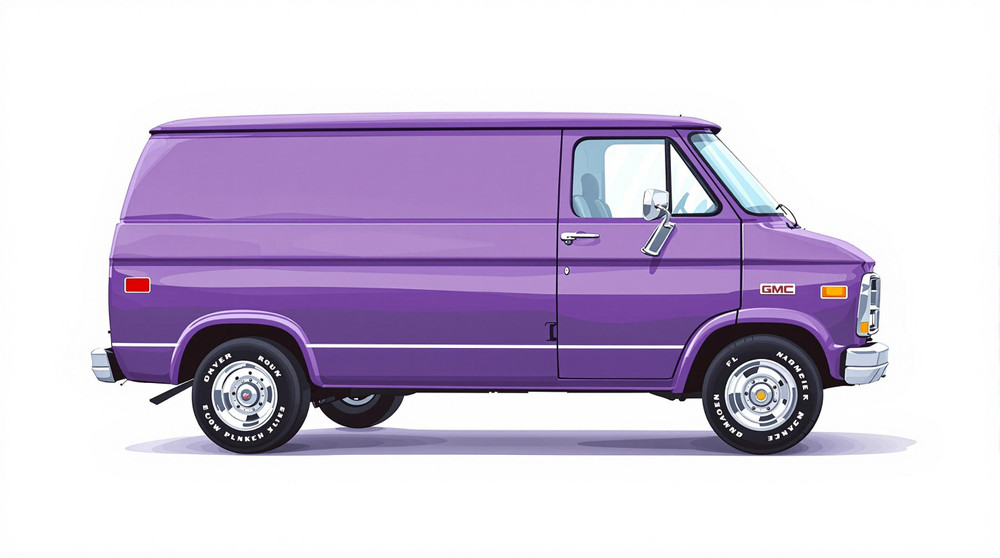
Image of 1976 Gmc P25, Note: These illustrations use artistic license and may differ from actual historical models.
Performance Metrics
Fundamental Metrics
Emotional Appeal
MMP Rating
| Engine Specifications | |
|---|---|
| Engine: | 4.1L 250 cu in I6, 4.8L 292 cu in I6, 5.7L 350 cu in V8, 6.6L 400 cu in V8 |
| Displacement: | 250-400 cu in |
| Horsepower: | 100-180 hp |
| Torque: | 175-300 lb-ft |
| Compression Ratio: | 8.0:1 - 8.5:1 |
| Ignition System: | Conventional breaker-point ignition system |
| Cooling System: | Liquid-cooled |
| Performance Specifications | |
| 0-60 Time: | Estimated 15-20 seconds |
| 1/4 Mile Time: | Estimated 20-25 seconds |
| Top Speed: | 80-90 mph |
| Transmission and Drive | |
| Drive Type: | Rear-wheel drive |
| Transmission Type: | 3-speed automatic, 4-speed manual |
| Fuel and Efficiency | |
| Fuel System Type: | Carburetor |
| MPG: | Estimated 10-15 mpg |
| Dimensions and Brakes | |
| Brakes: | Front disc, rear drum |
| Wheelbase: | 125 inches |
| Weight: | 4,500-5,000 lbs |
Note: Specifications for classic cars are given to the best of our ability, considering the limited and variant data available.
1976 GMC P25: The Classic Step Van Built to Work
The 1976 GMC P25 was made for a job, not a beauty contest, and its square, walk-in design turned it into one of the most recognizable work vans of its era. Built by GMC as part of General Motors’ P-series commercial range, the P25 was a forward-control chassis commonly fitted with a tall delivery body by a specialist body manufacturer. That distinction matters: a P25 could look like a parcel van, a bakery truck, a utility vehicle, or a custom camper depending on who built its body and how its first owner equipped it.
Its working roots give the P25 a place in an important chapter of American vehicle history. In the 1970s, door-to-door delivery, repair services, and small businesses needed vehicles that could carry bulky loads while making frequent stops. A step van’s low entry and upright cargo space suited those routines far better than a conventional pickup. One intriguing detail is that the GMC badge did not necessarily tell you who built the body. Many P25s wore bodies from specialist firms, so two trucks with the same GMC designation could have strikingly different shapes and layouts.
Exterior Design and Step-Van Layout
The P25’s styling is all business: a broad, nearly flat front, upright windshield, tall roof, and large rectangular cargo area. Its forward-control layout places the driver close to the front of the vehicle, giving the van a short nose and a compact overall footprint for its carrying capacity. Large side panels offered plenty of room for company lettering, while the high roof and generous rear volume made it practical to stand or move around inside.
Step vans were built around access and utility. A side entry door, wide rear doors, and a low step made repeated deliveries easier than climbing in and out of a high-sided truck. Exact door arrangements, roof heights, and cargo dimensions depended on the body builder and the individual order. Many examples also have a prominent engine cover inside the cab, a reminder that the powertrain sits close to the driver in this cab-over-style design.
Commercial buyers could order basic equipment or add conveniences such as power steering, power brakes, upgraded seating, and different transmission or axle combinations. Paint was often selected by the fleet or original customer rather than by a consumer-style trim program. White was a common practical choice for delivery fleets, but yellow, red, blue, and company-specific colors were also seen. Today, restored and converted vans often wear bold period graphics or custom paint.
Cabin Materials and 1970s Technology
Inside, the P25 prioritized durability over polish. Expect a utilitarian cab with painted metal surfaces, hard-wearing vinyl upholstery, simple gauges, and straightforward controls. The materials were chosen to tolerate long shifts and frequent use, not to imitate a passenger-car luxury interior. Equipment varied, but the driver’s essentials were typically easy to reach and easy to understand.
By modern standards, the technology is simple. Depending on the specification, a P25 could have power steering and power-assisted brakes, but there were no electronic driver aids, infotainment systems, or modern safety features. The high seating position and broad windshield gave the driver a commanding view of traffic, while the large mirrors helped with the practical challenge of maneuvering a tall, wide-bodied vehicle.
The P25 was a chassis designation, not a single finished body style. Common versions included parcel and delivery vans, bakery and service trucks, and other walk-in commercial bodies. The classic parcel-delivery configuration, with a tall rectangular body and side access, is probably the most iconic today. Some P-series vehicles were also adapted for specialty work or recreational conversions, though exact applications depended on the chassis and body supplier.
Why the GMC P25 Mattered
The P25 was part of a larger shift toward purpose-built commercial vehicles. Its boxy body used space efficiently, while the forward-control layout helped keep the vehicle compact relative to its cargo area. A driver could step in and out repeatedly without the high climb associated with many pickups and conventional vans. For delivery companies and local businesses, those details could save time over a full workday.
It was not alone in the market. Ford, Dodge, and independent body builders also supplied step vans and delivery vehicles. The GMC’s appeal came from combining a General Motors chassis and service network with a body that could be configured for many different jobs. Its lasting influence is less about a specific styling trend and more about the usefulness of the walk-in delivery-van formula, a layout that remains familiar in modern parcel fleets and mobile businesses.
The 1976 model year also sat in a period of changing emissions requirements and higher fuel costs. Commercial buyers still needed capacity and dependable operation, but running costs mattered more than ever. That made the P25’s simple, work-oriented design attractive, even as its size and fuel consumption limited its appeal as a general-purpose family vehicle.
Engine, Speed, and Road Manners
Engine and transmission combinations varied by chassis and order. P25 examples commonly used a gasoline inline-six or small-block V8, with a manual transmission or an automatic available depending on configuration. Because the finished van’s weight, body, axle ratio, and equipment could differ substantially, there is no single performance figure that accurately describes every 1976 P25.
As a practical estimate, a typical gasoline-powered P25 is a slow vehicle by modern standards. A lightly loaded example may reach 60 mph in roughly 20 to 30 seconds, while a heavily loaded or lower-powered van can take longer. A plausible top-speed range is about 65 to 75 mph, but that is an estimate rather than a guaranteed factory specification. Tire condition, gearing, body shape, engine health, and load all have a major effect. These vans were designed to carry cargo reliably, not to set highway-speed records.
On the road, the driver sits high and forward, with a close connection to the engine and the traffic ahead. A six-cylinder version tends to deliver a steady, workmanlike sound; a V8 adds a deeper rumble and more relaxed pulling power. Either way, acceleration is best described as deliberate. The engine is close enough that noise and heat can be more noticeable than in a modern van, especially under load.
The tall body catches crosswinds, and a P25 feels less nimble on a winding road than a passenger car. Its steering and suspension are geared toward commercial duty, so bumps can feel firm or choppy when the van is empty. A load may settle the ride, but it also increases stopping distances and demands more careful cornering. The high driving position and broad view are helpful in town, while parking, tight turns, and narrow roads reward patience and good mirror use.
Owning and Maintaining a P25
Today, P25s serve several roles. Some remain working vehicles for trades, farms, and small businesses. Others have been converted into food trucks, mobile workshops, campers, or eye-catching show vehicles. Their roomy interiors and flat-sided bodies make them especially appealing to people who want a customizable platform with vintage character.
Many mechanical jobs are approachable for an experienced home mechanic. The engines and drivetrains are from a familiar era of American trucks, and basic service parts are often available through classic-GM suppliers and general parts channels. Routine work includes ignition and carburetor tuning, cooling-system maintenance, brake inspection, and careful attention to belts, hoses, and fluid leaks.
Condition matters more than the badge. Before buying, inspect the frame, body mounts, floors, cab steps, and lower body panels for corrosion. Check the brakes carefully, including the condition of the lines and hoses, and make sure the tires are rated appropriately for the vehicle’s weight. Older wiring, worn steering components, and neglected cooling systems can turn a seemingly simple project into an expensive one. A specialist body can also make repairs harder if its manufacturer or original parts are difficult to identify.
Rare Details, Myths, and Common Criticisms
There is no widely recognized limited-edition 1976 P25 or dependable public production total for the model in the way there might be for a collectible passenger car. GMC production records are not commonly broken down into a clear count covering every P25 chassis and body configuration. A sensible estimate is that production reached the thousands, but assigning a precise number would be speculation. The number of surviving examples in any particular body style is smaller and varies by region.
The P25 is not known for a major speed, sales, or endurance record, nor is there a widely documented celebrity-owned example that defines its reputation. Its claim to fame is practical: versions of the basic step-van formula became familiar fixtures in delivery fleets and local businesses. Many surviving trucks have since gained a second life as food trucks and mobile businesses, giving them a visible presence at festivals, markets, and car shows.
Common criticisms are easy to understand. The van can be noisy, thirsty, slow, and tiring to drive for long distances. Its large flat sides are vulnerable to rust and parking-lot damage, while its height and broad body make it sensitive to wind and difficult to squeeze into some modern parking spaces. Those drawbacks are part of the trade-off for a vehicle designed around cargo access and usable interior volume.
Collector Value and Availability
Values depend heavily on mechanical condition, rust, body style, and the quality of any conversion. As a broad U.S. market estimate for 2026, a rough project might sell for around $3,000 to $8,000. A usable, roadworthy example could fall in the $8,000 to $18,000 range, while a well-restored or professionally converted van may bring roughly $20,000 to $45,000 or more. A polished food-truck conversion can exceed that range if its equipment and business-ready condition justify the price, though commercial equipment does not automatically add value for every buyer.
P25s are uncommon compared with familiar passenger classics, but they are not uniformly rare. Work vehicles often had hard lives, and many were scrapped when repairs became uneconomical. Clean, original examples are therefore harder to find than rough project vans. The market has improved as buyers have embraced vintage commercial vehicles and mobile-business conversions, but values remain highly dependent on condition and usability rather than a formal rarity premium. Well-documented restorations and solid, rust-free bodies are the safest bets for long-term appeal.
The 1976 GMC P25’s Lasting Appeal
The 1976 GMC P25 is a practical classic with a distinctive silhouette and a clear purpose. Its forward-control layout, walk-in body, and durable commercial cabin made it a useful tool for delivery fleets and small businesses. Today, those same features make it an adaptable base for restorations, food trucks, campers, and mobile workshops.
It will not win many arguments about speed, comfort, or fuel economy. What it offers instead is space, character, and a direct link to the working streets of 1970s America. A good P25 is more than an old van: it is a rolling piece of commercial history, ready for another shift.
1976 Gmc P25 Catalog of Parts
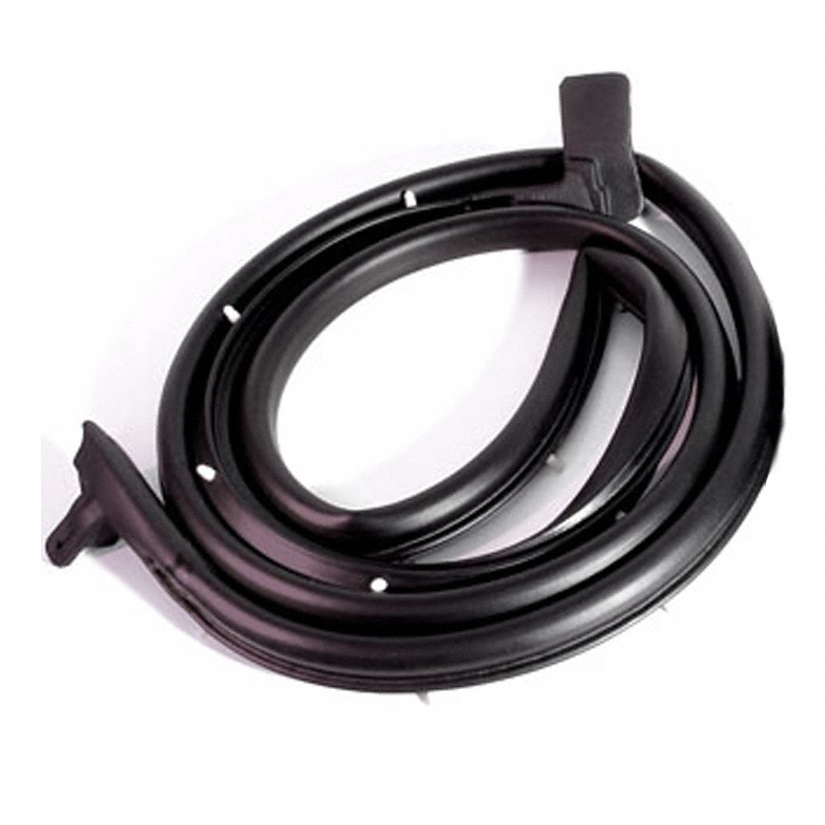 1976 GMC P25 Rear Cargo Door Seal. RH (passenger's side)-LM 13-VR/PSRear Cargo Door Seal. RH (passenger's side). For full-size vans (1996 early design). Each.Rear Cargo Door Seal. RH (passenger's side). For full-size vans (1996 early design). Each.
Why Choose Metro?
For over 100 years, Metro Moulded Parts has been the pinnacle of quality in classic car restoration parts. Our commitment to precision and authenticity in every component ensures a perfect fit and an OEM-level appearance.
- Expert Craftsmanship & Quality: Each part is a testament to our dedication to reliability and perfection, crafted from original designs and thoroughly tested.
- Advanced Technology: We use cutting-edge techniques to create flawless, long-lasting parts that surpass others in performance.
- SuperSoft Sponge – The Ultimate Door Seal: Not only are our door seals 30% softer than competitors', but they're also guaranteed to never leak. They effectively reduce wind and road noise, enhancing your classic car's comfort and driving experience.
- Proudly American: Our parts are a product of American craftsmanship, made in the USA with a spirit of excellence and heritage.
- Unrivaled Warranty: We back our products with a 30-year industry-leading warranty, a testament to our confidence in their quality.
Join us in preserving the legacy of classic cars with parts that are crafted for perfection, not just made.