

Image of 1976 Gmc P35, Note: These illustrations use artistic license and may differ from actual historical models.
Performance Metrics
Fundamental Metrics
Emotional Appeal
MMP Rating
| Engine Specifications | |
|---|---|
| Engine: | 5.7L V8, 6.6L V8, 7.4L V8 |
| Displacement: | 350 - 454 cubic inches |
| Horsepower: | 145 - 230 hp |
| Torque: | 255 - 360 lb-ft |
| Compression Ratio: | 8.0:1 - 8.5:1 |
| Ignition System: | Conventional distributor with points |
| Cooling System: | Liquid-cooled |
| Performance Specifications | |
| 0-60 Time: | Estimated 10 - 15 seconds |
| 1/4 Mile Time: | Estimated 17 - 20 seconds |
| Top Speed: | 85 - 95 mph |
| Transmission and Drive | |
| Drive Type: | Rear-wheel drive |
| Transmission Type: | 3-speed automatic, 4-speed manual |
| Fuel and Efficiency | |
| Fuel System Type: | Carburetor |
| MPG: | Estimated 8 - 12 mpg |
| Dimensions and Brakes | |
| Brakes: | Front disc, rear drum |
| Wheelbase: | 125 inches |
| Weight: | 4,500 - 5,500 lbs |
Note: Specifications for classic cars are given to the best of our ability, considering the limited and variant data available.
1976 GMC P35: The Workhorse Behind the Box
The 1976 GMC P35 was built to make a living, not make an entrance, and that straightforward purpose is exactly what gives this forward-control chassis its appeal today. Rather than a complete van with one fixed body, the P35 was a commercial platform GMC supplied to businesses and specialist body builders. They turned it into everything from parcel-delivery step vans to mobile workshops and recreational vehicles.
GMC, the truck and commercial-vehicle division of General Motors, shared much of its engineering with Chevrolet. The P35 belonged to the P-series family of forward-control chassis: the driver sat above and ahead of the front axle, with the engine housed beneath a doghouse inside the cab. That layout maximized usable space behind the driver, a major advantage for businesses that needed room for cargo, equipment, or custom interiors.
Its historical significance is less about a single famous trim package and more about the flexible platform it represented. In the 1970s, delivery companies and trades needed vehicles that could be adapted to specific jobs. The P35 gave body makers a heavy-duty foundation for building exactly that. One intriguing detail: a P35 seen on the road might have been wearing a body designed and installed by a separate company, so two trucks with the same GMC chassis could look entirely different.
Forward-Control Design and Body Choices
The P35’s appearance was dictated by function. Its cab-forward profile placed the short nose close to the windshield, while a tall, broad body rose directly behind the cab. The flat sides and squared-off roof were practical rather than decorative, creating a large, easy-to-use cargo area and making the vehicle straightforward to letter with company names and graphics. Depending on the body, it could look like a compact delivery truck or a towering commercial rig.
The chassis itself did not come with one universal interior. Cab fittings and finish varied with specification, while the body builder or later owner often determined the rest. Expect hard-wearing surfaces, simple controls, durable upholstery, and trim chosen for cleaning and longevity rather than luxury. On many examples, the engine doghouse takes up a prominent portion of the cab floor, a reminder that the P35 was designed around a working layout.
Equipment depended on the order. Power steering, power brakes, different transmission choices, and other convenience features could be specified, but they should not be assumed on every surviving truck. Its technology was practical for the period: a conventional gasoline engine and drivetrain, commercial-grade chassis components, and a body that could be tailored to the customer’s job. This was not a computer-controlled vehicle or a purpose-built aerodynamic van; its innovation was adaptability.
There was no single signature P35 paint palette because finished vehicles were often painted to suit the fleet or body maker. White, cream, red, and other solid colors were common on working trucks, while company colors and painted logos were part of the vehicle’s identity. The most iconic look today is often a brightly lettered delivery or step van, though plain white examples and carefully restored custom conversions have their own appeal.
Common body styles included walk-in or step-van bodies for delivery work, parcel and bread-truck bodies, utility and service bodies, and recreational or specialty conversions. The tall step van is arguably the P35’s most recognizable form, since its standing-height cargo space and rear access suited frequent stops. But the chassis could also support less familiar bodies, which is why condition and body-builder details matter when identifying a particular example.
Why the P35 Mattered
The P35’s contribution to automotive history was not a breakthrough engine or a revolutionary styling trend. It was a useful answer to a commercial problem: how to give a business a durable platform that could be configured for its own work. Its forward-control arrangement kept the overall vehicle compact relative to the volume available behind the cab, while the separate chassis-and-body approach allowed specialized manufacturers to build vehicles that a conventional passenger-car factory would not produce in the same variety.
That flexibility set the P35 apart from ordinary passenger vans and made it part of a broader tradition of commercial chassis supplied to independent body builders. The idea remains familiar today in cutaway vans and incomplete-vehicle platforms used for delivery trucks, buses, ambulances, and recreational vehicles. The P35 was not the only vehicle to use this formula, but it is a memorable example from an era when a truck’s final shape often depended on the job it had to perform.
Performance, Speed, and Road Manners
Exact performance figures are difficult to pin down because a P35’s engine, transmission, axle ratio, tires, body weight, and cargo load could all vary. Period gasoline powertrains included V8 options, with specific availability depending on the chassis order. A heavily loaded delivery body would behave very differently from a lightly equipped conversion, even if both carried a P35 identification.
As a broad real-world estimate, a sound, lightly loaded example might reach roughly 70 to 80 mph, although cruising at lower speeds is more comfortable and sensible. A 0-to-60 mph time in the neighborhood of 20 to 30 seconds is a reasonable estimate for many configurations, not a guaranteed factory specification. A tall body, low gearing, an older automatic transmission, or a full cargo load can make acceleration slower. These figures are best treated as period-work-truck expectations rather than modern performance claims.
On the road, the P35 feels tall, broad, and unmistakably commercial. Its long, upright body can be affected by crosswinds, and a driver needs to plan ahead when changing lanes or navigating tight turns. The ride can be firm when the truck is empty, since commercial suspensions are built to carry weight. Add a proper load and the chassis may feel more settled, but bumps still arrive with a solid, truck-like message.
The engine’s sound is close and prominent because it sits beneath the cab. Expect mechanical rumble, fan noise, and transmission sounds to be more present than in a modern van. The driver sits forward with a commanding view of the road, but the steering and braking feel, visibility around the body, and turning behavior all depend on the individual build and its condition. The experience is hands-on: watch the mirrors, leave room to stop, and treat it like the working truck it was designed to be.
Living with a 1976 GMC P35
Today, P35s are used as vintage delivery trucks, food-service vehicles, mobile workshops, camper conversions, promotional vehicles, and show entries. Some are restored to represent a particular trade or fleet; others are deliberately kept rough and honest. Their boxy shape and broad sides make them natural candidates for retro graphics and custom interiors.
Maintenance is manageable for an owner comfortable with older American trucks, but the chassis is only part of the story. Engine and transmission service can be familiar to a competent mechanic, and many mechanical components are related to widely used GM truck parts. Body panels, doors, glass, trim, and specialized chassis parts can be more challenging, especially when the vehicle has a rare body or has been modified repeatedly.
Before buying, inspect the frame, suspension mounting points, steering, brakes, and floor structure carefully. Check for rust around the cab, windshield, wheel openings, body seams, and areas where water may have collected. A large step-van body can conceal corrosion or past repairs. Also verify that the engine and transmission match the vehicle’s needs and that the cooling system, tires, and brakes are suitable for its actual weight. A truck that has spent decades working may have a long list of small repairs even if it appears complete.
Useful Facts and Common Complaints
The P35 was a chassis designation, not a single, tightly defined body model. That helps explain the wide variety of surviving examples and why published production totals for a particular finished body can be hard to find. Buyers may encounter GMC chassis carrying bodies from independent manufacturers, as well as later conversions whose original purpose is no longer obvious.
There is no widely recognized P35 speed record or famous factory racing achievement. Its accomplishments were everyday ones: carrying goods, tools, and equipment through years of commercial service. Nor is there a single celebrity-owned edition that defines the model’s history. Its most notable appearances are often in the working fleets and local businesses that used these trucks, rather than in headline-making events.
Common criticisms are easy to understand. The cab can be noisy and hot, the ride can feel stiff, and the tall body is vulnerable to wind. Fuel economy is modest by modern standards, especially with a large body or heavy load. Parts availability also varies: routine mechanical items may be easier to source than body-specific pieces. For many enthusiasts, those drawbacks are part of the charm, but they deserve a realistic budget.
Collector Value and Market Outlook
Values vary widely because a P35 is only half the story; the body, condition, and quality of any conversion matter just as much. As a general U.S. market estimate, a project or worn-out example might sell for about $2,000 to $7,000. A usable driver with a sound body could fall around $8,000 to $18,000, while a well-restored, distinctive, or professionally converted example may bring roughly $20,000 to $40,000 or more. Exceptional custom builds can exceed that range, but their value depends heavily on workmanship and buyer demand.
There is no dependable, widely cited production total for 1976 P35 chassis as a standalone model. GMC sold commercial chassis for use in many applications, and completed vehicles could be recorded under a body maker or fleet specification. As a deliberately broad estimate, production may have reached several thousand and perhaps the low tens of thousands for a model year, but that is a guess, not a documented factory figure. Individual body styles and configurations can be far scarcer than the chassis designation suggests.
Prices have generally benefited from growing interest in vintage commercial vehicles, food trucks, and retro camper conversions. Still, the market is selective. A solid, usable truck with a desirable body tends to attract more attention than a rusty project, and expensive custom work does not always return its full cost at resale. The best examples are likely to hold their appeal, while ordinary work-worn trucks remain priced according to condition and practicality.
The P35’s Working Legacy
The 1976 GMC P35 is best understood as a versatile commercial foundation rather than a single finished van. Its forward-control layout, adaptable chassis, and compatibility with a range of bodies made it useful to businesses and builders, while its unmistakable step-van profile gives it lasting character. Performance is modest, comfort is utilitarian, and ownership rewards careful inspection and mechanical patience.
For collectors, the P35’s appeal lies in its honest purpose and the stories told by its body, paint, and working details. It may never have been designed to turn heads, but more than four decades later, a well-kept example still does exactly that.
1976 Gmc P35 Catalog of Parts
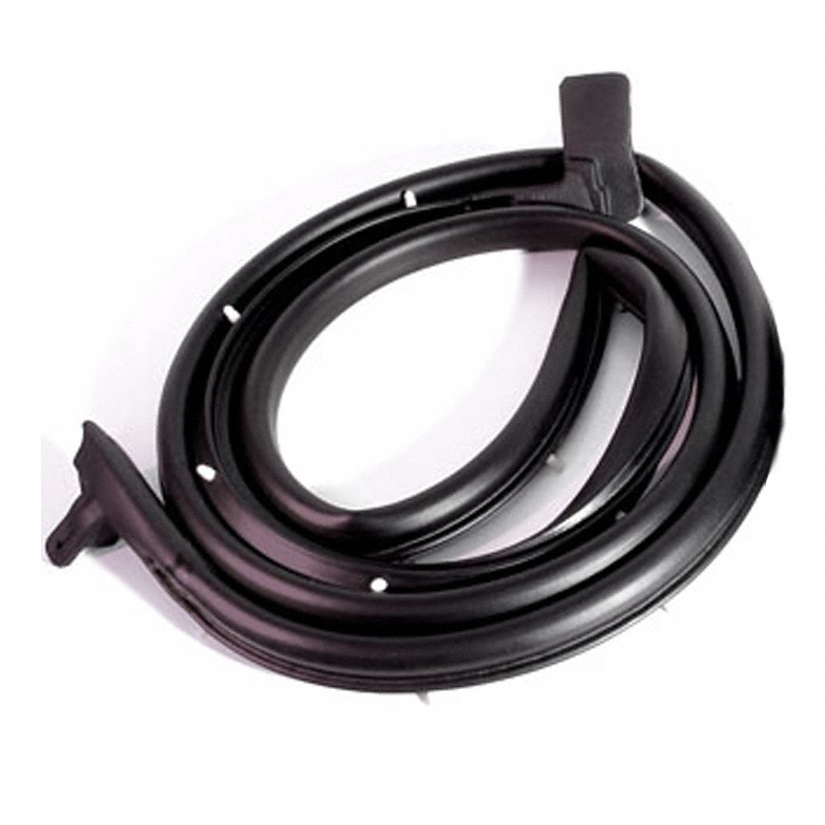 1976 GMC P35 Rear Cargo Door Seal. RH (passenger's side)-LM 13-VR/PSRear Cargo Door Seal. RH (passenger's side). For full-size vans (1996 early design). Each.Rear Cargo Door Seal. RH (passenger's side). For full-size vans (1996 early design). Each.
Why Choose Metro?
For over 100 years, Metro Moulded Parts has been the pinnacle of quality in classic car restoration parts. Our commitment to precision and authenticity in every component ensures a perfect fit and an OEM-level appearance.
- Expert Craftsmanship & Quality: Each part is a testament to our dedication to reliability and perfection, crafted from original designs and thoroughly tested.
- Advanced Technology: We use cutting-edge techniques to create flawless, long-lasting parts that surpass others in performance.
- SuperSoft Sponge – The Ultimate Door Seal: Not only are our door seals 30% softer than competitors', but they're also guaranteed to never leak. They effectively reduce wind and road noise, enhancing your classic car's comfort and driving experience.
- Proudly American: Our parts are a product of American craftsmanship, made in the USA with a spirit of excellence and heritage.
- Unrivaled Warranty: We back our products with a 30-year industry-leading warranty, a testament to our confidence in their quality.
Join us in preserving the legacy of classic cars with parts that are crafted for perfection, not just made.