

Image of 1982 Gmc S15, Note: These illustrations use artistic license and may differ from actual historical models.
Performance Metrics
Fundamental Metrics
Emotional Appeal
MMP Rating
| Engine Specifications | |
|---|---|
| Engine Options: | 1.9L I4, 2.0L I4, 2.8L V6 |
| Displacement Range: | 1.9L - 2.8L |
| Horsepower Range: | 82-115 hp (approximate) |
| Torque: | 125-150 lb-ft (approximate) |
| Compression Ratio: | 8.5:1 - 9.2:1 (approximate) |
| Ignition System: | Electronic ignition (Transistorized) |
| Cooling System: | Liquid cooled |
| Performance Specifications | |
| 0-60 Time: | 15-20 seconds (approximate) |
| 1/4 Mile Time: | 18-22 seconds (approximate) |
| Top Speed: | 90-100 mph (approximate) |
| Transmission and Drive | |
| Drive Type: | Rear-wheel drive (RWD) |
| Transmission Type: | 4-speed manual, 3-speed automatic |
| Fuel and Efficiency | |
| Fuel System Type: | Carburetor |
| MPG: | 20-25 mpg (approximate) |
| Dimensions and Brakes | |
| Brakes: | Front disc, rear drum |
| Wheelbase: | 117.9 in |
| Weight: | 2,800-3,200 lbs (approximate) |
Note: Specifications for classic cars are given to the best of our ability, considering the limited and variant data available.
1982 GMC S-15: GM’s Compact Pickup Takes Shape
The 1982 GMC S-15 brought full-size truck attitude to a smaller, more manageable package. Built by General Motors, it was GMC’s counterpart to the Chevrolet S-10 and one of the first entries in GM’s new compact-pickup family. It offered the practical basics of a pickup without the bulk and fuel appetite of a full-size truck, making it a natural fit for commuters, small businesses, and weekend projects.
The S-15 arrived as American automakers were responding to growing interest in smaller, more economical trucks. Rather than simply shrinking a full-size model, GM developed a dedicated compact platform shared across its Chevrolet and GMC brands. A telling detail for collectors: the GMC pickup was called the S-15 when it debuted, while the closely related S-15 Jimmy SUV followed in 1983. The pickup name later became Sonoma.
Compact Truck Styling and Options
The S-15 has the upright, purposeful shape that defines an early-1980s pickup. Its squared-off cab, flat hood, simple rectangular grille, and clean body sides look practical rather than ornamental. GMC-specific grille details and badging gave it a distinct face, even though the truck shared much of its structure with the S-10. The result is a compact truck with recognizable GMC character and uncomplicated, easy-to-service design.
Buyers could choose a regular cab with either a standard or longer cargo bed, along with different trim and equipment packages. Rear-wheel drive was the standard layout for the 1982 pickup. Four-wheel drive became part of the S-15 story in later model years, so it is important not to assume every early S-15 has it. The regular-cab pickup is the classic 1982 configuration, with the long-bed version appealing to owners who needed extra cargo space.
Inside, the S-15 is straightforward and workmanlike. Hard-wearing vinyl and basic cloth upholstery, durable plastic trim, and clear, uncomplicated controls suit a truck designed for everyday use. Depending on equipment, buyers could add conveniences such as air conditioning, an AM/FM radio, power steering, and power brakes. Paint choices varied by trim and configuration, with white, red, blue, silver, and earth tones among the period-appropriate favorites. Two-tone treatments were available on some versions, but the clean single-color truck remains especially recognizable.
1982 S-15 Engines and Technology
Two engines defined the early S-15 range. The standard 2.5-liter four-cylinder, commonly known as the Iron Duke, produced roughly 92 horsepower. Buyers seeking more power could choose a 2.8-liter V6, rated at about 110 horsepower in period specifications. Exact output and equipment can vary with emissions configuration, transmission, and market.
These were not high-tech performance engines by modern standards, but they reflected the era’s shift toward electronic engine controls and tighter emissions management. The S-15 paired familiar mechanical components with electronic ignition and emissions systems. Depending on the truck, transmissions included a manual gearbox or an automatic, and the available combinations influenced both acceleration and fuel use. Its appeal was less about gadgetry than about giving buyers a useful truck in a smaller footprint.
Why the GMC S-15 Mattered
The S-15 helped establish the compact pickup as a serious part of GM’s truck lineup, rather than a niche alternative. It offered a useful bed and truck-style utility while being easier to maneuver and park than a full-size pickup. That combination suited a changing market, where buyers increasingly wanted a truck that could handle errands and commuting as well as hauling.
Its shared platform with the Chevrolet S-10 also showed how GM could serve different brand identities with a common engineering base. The GMC version delivered the same basic capability with its own grille, trim, and branding. The S-15 did not invent the compact pickup, but it helped make the format a mainstream, long-running choice. Its descendants carried the idea forward through the Sonoma and later GMC small-truck offerings.
Performance and Driving Feel
Performance depends on engine, gearing, transmission, and truck condition. As a broad period-based estimate, a 2.8-liter V6 S-15 can reach 0 to 60 mph in roughly 12 to 14 seconds, while a four-cylinder example may take closer to 15 to 18 seconds. Top speed is generally around 90 to 100 mph, though these trucks were built for utility, not sustained high-speed driving. Treat those figures as estimates rather than guaranteed test results for every 1982 configuration.
On the road, the S-15 feels light and relatively easy to place compared with a full-size pickup. Its ladder-frame construction and leaf-spring rear suspension are suited to carrying cargo, but an empty bed can make the rear end feel firm over sharp bumps. On winding roads, modest power and period tires encourage a relaxed pace. Strong crosswinds can also remind the driver that a compact pickup is still a tall, box-sided truck.
The four-cylinder has a steady, hardworking sound, while the V6 adds a fuller note and more relaxed acceleration. Steering and braking feel distinctly vintage, with less precision and assistance than a modern truck. That mechanical simplicity is part of the experience: the driver feels the road, hears the engine, and gets a direct sense of how the truck is working.
Owning and Maintaining an S-15
Today, a 1982 S-15 can serve as a weekend driver, light-duty hauler, restoration project, or display truck. Its compact size makes it easier to use in town than a full-size classic pickup, although age, safety equipment, and condition should be considered before choosing one as a daily driver.
Routine maintenance is generally approachable for a mechanically minded owner. The engine bay is relatively simple, and many mechanical components are shared with Chevrolet S-10 models of the same era. Common checks include cooling-system condition, carburetor and ignition operation, brake lines, suspension bushings, steering components, and transmission behavior. Rust deserves particular attention around the cab corners, rocker panels, floor, bed, and frame. Parts availability is reasonable for common mechanical items, but trim-specific pieces and sound body panels can take more searching.
S-15 Trivia and Common Complaints
The S-15’s name did not last forever. GMC eventually replaced it with the Sonoma name for the 1991 model year. The S-15 also belongs to an important chapter in the evolution of GM’s compact trucks, with the S-10 and S-15 families later expanding into sport-utility models and more capable four-wheel-drive versions.
There is no widely recognized 1982 S-15 production record or celebrity connection that defines the model. Its more meaningful distinction is its role in GM’s first model year for the S-10 and S-15 compact-pickup platform. Common criticisms are familiar to owners of many early compact trucks: modest power, a basic cabin, limited modern safety features, and vulnerability to rust. The four-cylinder can feel slow when carrying a load, while the V6 is still a product of its era rather than a modern performance engine.
Collector Value and Availability
The 1982 S-15 is an accessible classic rather than a rare blue-chip collectible. A rough project or non-running truck may sell for about $1,000 to $3,000. A usable driver in fair condition might bring roughly $4,000 to $8,000, while a clean, well-maintained example can reach about $8,000 to $14,000. A carefully restored or unusually original truck may command $15,000 to $20,000 or more, especially if it has desirable equipment and little rust. These are broad U.S. estimates, and local market, originality, and condition make a major difference.
Exact 1982 GMC S-15 pickup production figures are not consistently published in easily verifiable model-specific totals. A reasonable estimate is that production was in the tens of thousands, perhaps around 25,000 to 40,000 trucks, but that should be treated as an informed estimate rather than an official count. S-15s appear regularly enough that buyers can find projects and drivers, though rust-free, original examples are increasingly scarce.
Values have generally risen from the bargain-truck level as interest in 1980s pickups has grown. The strongest gains tend to go to clean, unmodified trucks, while heavily worn or rusty examples remain budget projects. The S-15 is unlikely to match the prices of rare muscle cars, but a well-preserved truck has a solid niche among compact-truck enthusiasts.
The 1982 GMC S-15’s Lasting Appeal
The 1982 GMC S-15 combined useful pickup capability, compact dimensions, simple engineering, and distinctive GMC styling at a moment when buyers were embracing smaller trucks. It was never about speed or luxury. Its strengths were practicality, approachable size, and a design that has aged into a familiar piece of American truck history.
For today’s enthusiast, the S-15 offers an enjoyable way into classic-truck ownership, whether the goal is a tidy weekend driver or a hands-on restoration. Small in stature but important in the evolution of GM trucks, the 1982 S-15 proves that a pickup does not need to be enormous to leave a lasting impression.
1982 Gmc S15 Catalog of Parts
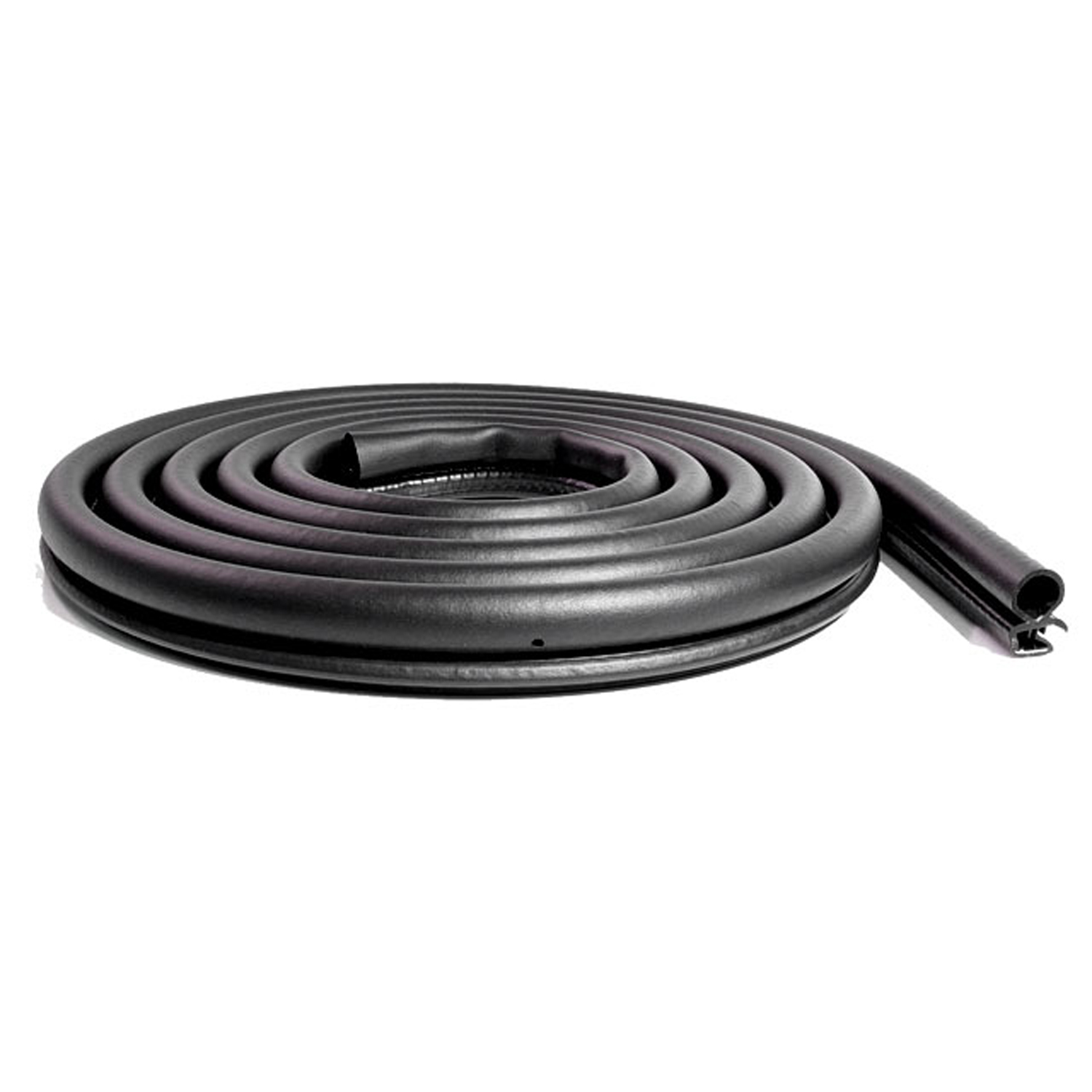 1982 GMC S15 Extruded door seal (imported). Universal replacement part-IS-MW00100Extruded door seal (imported). Universal replacement part. Made with flexible steel core. Fits front or rear and either side on passenger doors. Does not fit slider/cargo doors and liftgates on vans and mini-vans. 1-3/16 in. X 3/4 in. X 13 ft. 4 in. Each.
 1982 GMC S15 Glove Box Bumper. Each-SB 78-AGlove Box Bumper. Each
Why Choose Metro?
For over 100 years, Metro Moulded Parts has been the pinnacle of quality in classic car restoration parts. Our commitment to precision and authenticity in every component ensures a perfect fit and an OEM-level appearance.
- Expert Craftsmanship & Quality: Each part is a testament to our dedication to reliability and perfection, crafted from original designs and thoroughly tested.
- Advanced Technology: We use cutting-edge techniques to create flawless, long-lasting parts that surpass others in performance.
- SuperSoft Sponge – The Ultimate Door Seal: Not only are our door seals 30% softer than competitors', but they're also guaranteed to never leak. They effectively reduce wind and road noise, enhancing your classic car's comfort and driving experience.
- Proudly American: Our parts are a product of American craftsmanship, made in the USA with a spirit of excellence and heritage.
- Unrivaled Warranty: We back our products with a 30-year industry-leading warranty, a testament to our confidence in their quality.
Join us in preserving the legacy of classic cars with parts that are crafted for perfection, not just made.