

Image of 1928 Graham-Paige Model 614, Note: These illustrations use artistic license and may differ from actual historical models.
Performance Metrics
Fundamental Metrics
Emotional Appeal
MMP Rating
| Engine Specifications | |
|---|---|
| Engine Options: | Inline 6-cylinder engine |
| Displacement Range: | 3.3L |
| Horsepower Range: | Estimated 70-80 HP |
| Torque: | Not available |
| Compression Ratio: | Not available |
| Ignition System: | Distributor and coil |
| Cooling System: | Water-cooled |
| Performance Specifications | |
| 0-60 Time: | Not available |
| 1/4 Mile Time: | Not available |
| Top Speed: | 60-70 mph |
| Transmission and Drive | |
| Drive Type: | Rear-wheel drive |
| Transmission Type: | 3-speed manual |
| Fuel and Efficiency | |
| Fuel System Type: | Carburetor |
| MPG: | Not available |
| Dimensions and Brakes | |
| Brakes: | Mechanical drum brakes |
| Wheelbase: | 114 inches |
| Weight: | Estimated 2,800-3,000 lbs |
Note: Specifications for classic cars are given to the best of our ability, considering the limited and variant data available.
1928 Graham-Paige Model 614: A New Name on the American Road
The 1928 Graham-Paige Model 614 announced itself with the quiet confidence of a company that had already built its reputation in a very different kind of vehicle: the truck. It was an early passenger car from Graham-Paige Motors Corporation, the Detroit manufacturer formed when the Graham brothers acquired the Paige-Detroit Motor Car Company in 1927. The Model 614 brought together Paige’s established car-building operation and the Graham family’s experience in manufacturing and business.
The model’s name offers a useful clue to its specification: it was a six-cylinder car on a 114-inch wheelbase. That made it a substantial, middle-sized American automobile, positioned for buyers who wanted comfort and presence without stepping up to a more expensive luxury car. A notable wrinkle in its history is that the Graham-Paige name was brand-new, but the company was not starting from scratch. Its first cars drew on Paige’s factory, engineering, and dealer network, allowing the new marque to arrive with a full range rather than a single experimental model.
Classic Coachwork and a Roomy Cabin
The 614 wore the upright, formal look that defined late-1920s American cars. A tall radiator shell and long hood led the eye toward a squared-off passenger compartment, while separate fenders curved over narrow, high-profile tires. Headlamps stood proudly beside the radiator, and running boards linked the front and rear fenders into one continuous visual line. The overall effect was substantial rather than sporty, with bright metal trim and polished details supplying much of the car’s ornament.
Depending on body style, buyers could choose an open car or an enclosed model. Period offerings in this class included sedans, coupes, and touring or roadster-style bodies, although exact availability could vary by production run and market. The four-door sedan was a natural choice for family and business use, while an open touring body offered the most traditional prewar motoring experience. Since surviving cars are not always identified consistently in listings, specific body-style claims are best checked against factory literature or the car’s original documentation.
Inside, the 614 was designed for practical comfort, not modern luxury. Expect a broad bench seat, a large steering wheel, a simple instrument panel, and durable upholstery, with materials and trim dependent on body and specification. Higher-grade finishes could include more carefully detailed cloth or leather upholstery and polished wood or painted trim. As with any nearly century-old car, the cabin in an individual example may have been retrimmed, so original materials are a matter of provenance rather than assumption.
Factory paint choices were period colors rather than today’s expansive palette. Dark blues, greens, maroons, and black were common choices across the era, sometimes accented with contrasting body or wheel colors. Exact Graham-Paige color names and combinations should be confirmed from original paint records, if available. A deep, formal body color is especially at home on the 614’s upright coachwork.
Six-Cylinder Power and Period Equipment
At the heart of the Model 614 was a side-valve, or L-head, inline six-cylinder engine of roughly 169 cubic inches. Published specifications commonly put its output at about 45 horsepower, delivered through a conventional manual transmission. That was respectable power for a full-size car of its price class in 1928, though the engine was built for steady pulling and smooth progress, not high-revving performance.
The 614’s engineering was rooted in proven practice: a separate chassis, a clutch and manual gearbox, leaf-spring suspension, and brakes at all four wheels. Those features were familiar to buyers of the time, but the combination made the car a capable all-rounder. The exact brake arrangement and equipment can differ by production details and surviving-car configuration, so restorers should verify specifications for the particular chassis rather than rely on a generic listing.
What the 614 Added to Graham-Paige’s Story
The Model 614 matters less as a radical technical breakthrough than as part of a remarkably ambitious launch. The Graham brothers had made their name in commercial vehicles, and the Paige acquisition gave them an immediate route into the passenger-car market. In 1928, the new company could offer cars across several sizes and price points, helping establish Graham-Paige as a serious independent manufacturer during an era dominated by much larger firms.
The 614 also represents a moment when the American car was becoming more accessible and standardized. Six-cylinder power, enclosed bodywork, and four-wheel braking were increasingly sought-after features, while buyers still expected cars to be repaired and maintained by local mechanics. The Graham-Paige offered a traditional, well-proportioned alternative to mass-market models, with a more substantial feel than a basic four-cylinder runabout.
It did not introduce the later design language for which the company became especially famous. Graham-Paige’s dramatic “Spirit of Motion,” often nicknamed the Sharknose, arrived a decade later. The 614’s significance is instead its role as an early foundation for the marque: a conventional-looking car that helped a new corporate name establish credibility and scale.
Road Manners: Steady, Not Sporty
With approximately 45 horsepower, a Model 614 in good mechanical condition was likely capable of a top speed in the neighborhood of 55 to 65 mph. That is a reasonable period-car estimate, not a guaranteed factory figure for every body and axle ratio. A 0-to-60-mph time is rarely documented for cars of this age; given the engine output, gearing, and weight, a time well over 30 seconds is a more sensible expectation than anything resembling modern acceleration. Many examples may struggle to reach 60 mph comfortably, especially on hills or with a full load.
On a smooth road, the 614’s long wheelbase and substantial chassis should make for a composed, deliberate ride. Its leaf springs and tall tires could absorb ordinary road imperfections, but sharp bumps would still be felt through the body and steering. On winding roads, the driver would need to plan ahead: the car’s height, period tires, steering geometry, and braking performance are a world away from a modern sedan. It is best driven at a measured pace, with extra room for stopping and cornering.
The experience is part of the appeal. The six-cylinder engine produces a steady mechanical hum, accompanied by the sounds of the gearbox, tires, and open air. The steering asks for more effort than a modern car, the controls require familiarity, and shifting is a hands-on task. A well-sorted 614 can feel reassuringly solid, but it rewards anticipation and smooth inputs rather than quick reactions.
Living With a 1928 Graham-Paige
Today, the Model 614 is primarily a show car, touring car, or occasional-use antique. It can take part in local parades and carefully planned vintage events, but it is not well suited to modern traffic, long high-speed commutes, or daily use. Its pace, braking distance, visibility, and lack of contemporary safety equipment call for a cautious owner and sensible routes.
Routine maintenance is manageable for an owner comfortable with older machinery. The engine uses period systems and materials, and many repairs can be performed with conventional hand tools. The bigger challenges are locating correct parts, identifying the car’s exact specification, and finding specialists familiar with prewar American vehicles. Ignition, carburetion, cooling, lubrication, brakes, and tire condition all deserve regular attention. Before driving any survivor, inspect the chassis, fuel system, steering, and brakes rather than assuming that a recent cosmetic restoration means the car is roadworthy.
Reliability depends heavily on condition and maintenance. A carefully restored example can be dependable on short, planned outings, while a neglected car may need extensive work before it is safe to run. Mechanical simplicity helps, but age does not: rubber, wiring, seals, and metal components can all deteriorate even when a car has been stored indoors.
Graham-Paige 614 Facts and Misconceptions
The Model 614 is sometimes overshadowed by the company’s later, more flamboyant cars. That makes it an appealing choice for enthusiasts who want an early Graham-Paige with a direct connection to the firm’s launch. It is also a useful reminder that the company’s history began with conventional, carefully engineered automobiles before its styling became more adventurous.
There is no widely recognized speed, endurance, or sales record associated specifically with the 614. Nor is it commonly linked to a single celebrated celebrity owner or landmark historical event. Its story is less about one famous moment and more about the Graham brothers’ transition from truck manufacturing into a competitive passenger-car business.
A common criticism of cars from this period is that they can be slow, demanding, and difficult to use in modern conditions. That is fair. The 614’s brakes and handling cannot match a current car, and parts availability is not as straightforward as it is for a Ford Model A. Its strengths are different: handsome proportions, mechanical character, and the rarity of seeing an early Graham-Paige on the road.
Collector Value and Availability
Model-specific production figures for the 1928 Model 614 are not consistently documented in readily available references. Graham-Paige built cars in meaningful numbers during its early years, but surviving 614s are now uncommon. As a broad estimate rather than a verified factory total, production may have been in the several-thousand range, perhaps roughly 5,000 to 10,000 cars. That estimate should not be treated as an official count, and the number of survivors is necessarily much smaller.
Values vary sharply with body style, completeness, originality, restoration quality, and documentation. As a general collector-market estimate, a project or incomplete car might fall around $5,000 to $12,000, while a sound, usable example could be roughly $15,000 to $30,000. A high-quality restoration or especially desirable body may bring $30,000 to $45,000 or more, though actual sales can fall outside these ranges. These are broad guide figures, not a formal appraisal, and a scarce body style can be difficult to price from a handful of comparable sales.
The 614 is a niche antique rather than a blue-chip investment car. Values tend to reward condition and authenticity, while restoration costs can exceed the eventual sale price. Interest in well-presented prewar cars remains steady among collectors, but the market is selective. A complete, documented car is generally a safer purchase than an ambitious restoration project, especially when correct trim and mechanical parts are missing.
Why the 1928 Graham-Paige Model 614 Still Matters
The Graham-Paige Model 614 combines a capable six-cylinder engine, handsome late-1920s coachwork, and the story of a new American marque finding its footing. It was not a record-breaker or a radical engineering experiment. Its appeal lies in being a well-proportioned, substantial car from a company whose ambitions would soon lead to some of the era’s most distinctive designs.
For collectors, the 614 offers more than a period-correct silhouette. It is a tangible piece of Graham-Paige’s first chapter, when the company turned its manufacturing experience toward the open road. That makes every surviving example a reminder that automotive history is shaped not only by the famous and the revolutionary, but also by the thoughtful, confident cars that helped a new name earn its place.
1928 Graham-Paige Model 614 Catalog of Parts
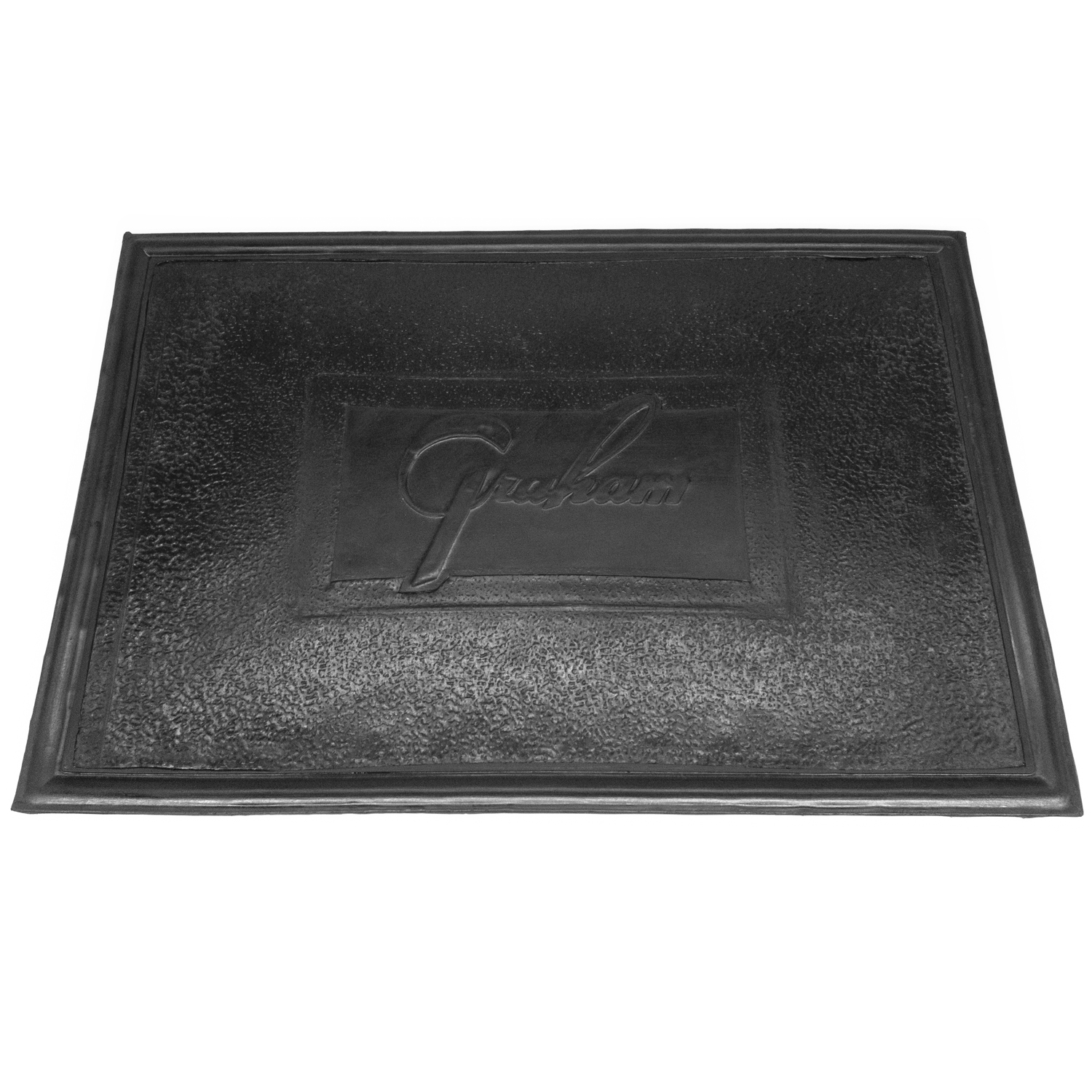 1928 Graham-Paige Model 614 Accessory Floor Mat - 12"X17"-AC 12Accessory Floor Mat - made of high quality black rubber with molded original emblem. Also designed to be sewn into new carpets. 12"X17", Each
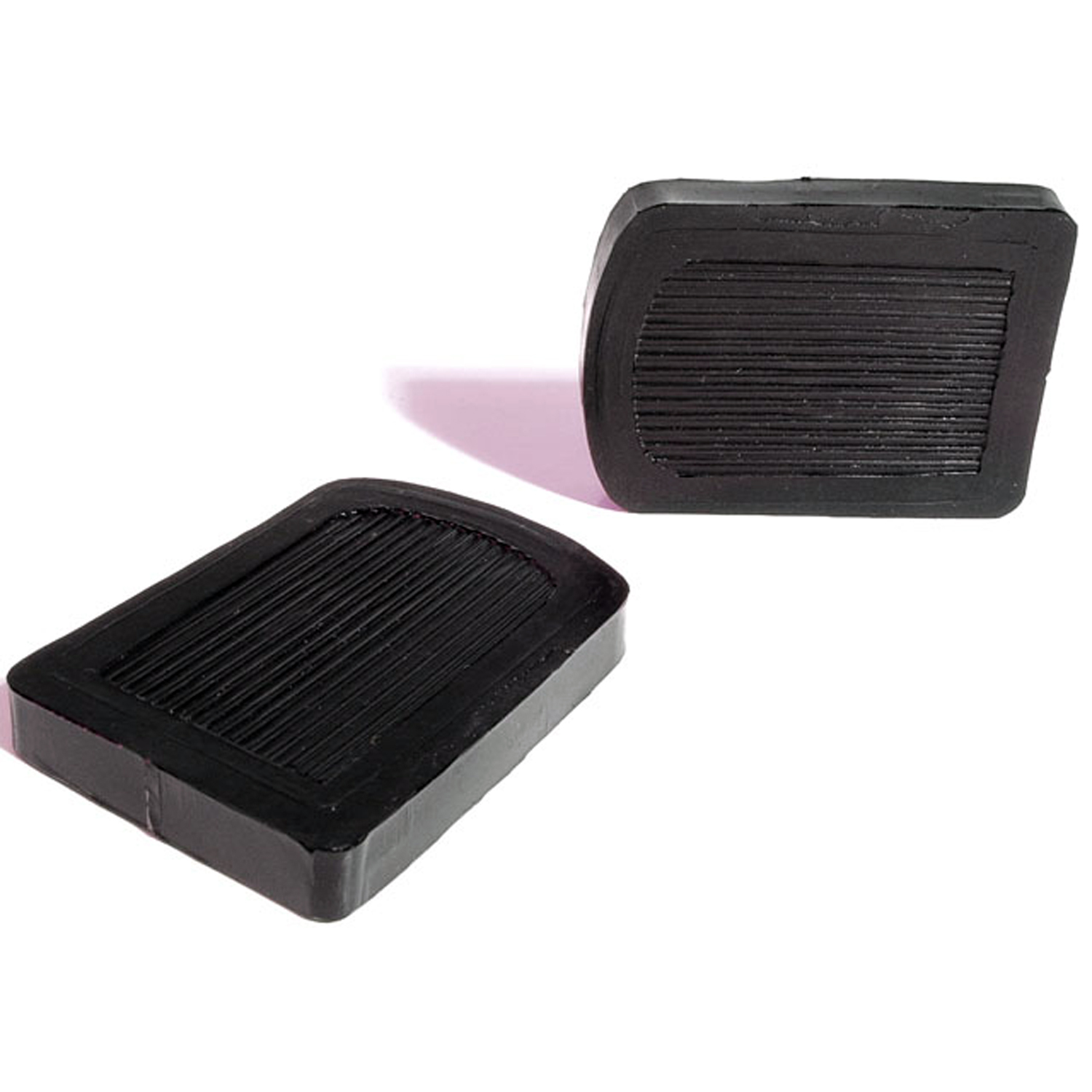 1928 Graham-Paige Model 614 Clutch and Brake Pedal Pads. 2-5/8" wide X 3-5/8" long-CB 25Clutch and Brake Pedal Pads. 2-5/8" wide X 3-5/8" long. Pair
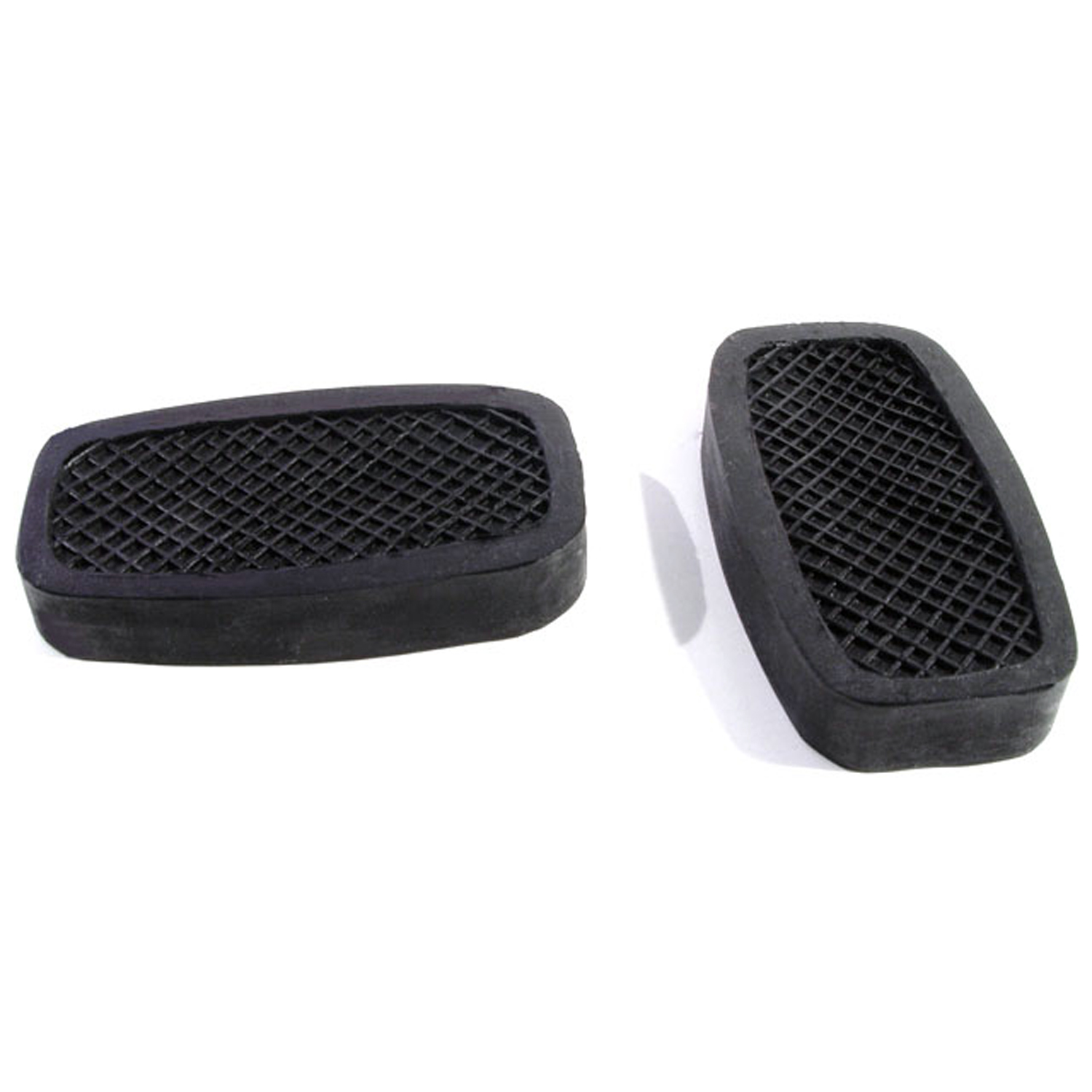 1928 Graham-Paige Model 614 Clutch and Brake Pedal Pads. 2" wide X 3-5/8" long. Pair-CB 46Clutch and Brake Pedal Pads. 2" wide X 3-5/8" long. Pair
Why Choose Metro?
For over 100 years, Metro Moulded Parts has been the pinnacle of quality in classic car restoration parts. Our commitment to precision and authenticity in every component ensures a perfect fit and an OEM-level appearance.
- Expert Craftsmanship & Quality: Each part is a testament to our dedication to reliability and perfection, crafted from original designs and thoroughly tested.
- Advanced Technology: We use cutting-edge techniques to create flawless, long-lasting parts that surpass others in performance.
- SuperSoft Sponge – The Ultimate Door Seal: Not only are our door seals 30% softer than competitors', but they're also guaranteed to never leak. They effectively reduce wind and road noise, enhancing your classic car's comfort and driving experience.
- Proudly American: Our parts are a product of American craftsmanship, made in the USA with a spirit of excellence and heritage.
- Unrivaled Warranty: We back our products with a 30-year industry-leading warranty, a testament to our confidence in their quality.
Join us in preserving the legacy of classic cars with parts that are crafted for perfection, not just made.