

Image of 1929 Graham-Paige Model 827, Note: These illustrations use artistic license and may differ from actual historical models.
Performance Metrics
Fundamental Metrics
Emotional Appeal
MMP Rating
| Engine Specifications | |
|---|---|
| Engine Options: | Straight-6 |
| Displacement Range: | 3.3L |
| Horsepower Range: | Estimated 70-80 HP |
| Torque: | Not available |
| Compression Ratio: | Not available |
| Ignition System: | Distributor and coil |
| Cooling System: | Water-cooled |
| Performance Specifications | |
| 0-60 Time: | Not available |
| 1/4 Mile Time: | Not available |
| Top Speed: | 70 mph |
| Transmission and Drive | |
| Drive Type: | Rear-wheel drive |
| Transmission Type: | 3-speed manual |
| Fuel and Efficiency | |
| Fuel System Type: | Carburetor |
| MPG: | Not available |
| Dimensions and Brakes | |
| Brakes: | Mechanical drum brakes |
| Wheelbase: | 114 inches |
| Weight: | Estimated 2,800 lbs |
Note: Specifications for classic cars are given to the best of our ability, considering the limited and variant data available.
1929 Graham-Paige Model 827: A Grand Independent
The 1929 Graham-Paige Model 827 brought eight-cylinder power and substantial American-road presence to a market dominated by established luxury marques. It was built by Graham-Paige Motors Corporation, the Detroit company formed when the Graham brothers acquired the Paige-Detroit Motor Car Company in 1927. The brothers had made their name in commercial vehicles, and their new passenger cars combined practical manufacturing experience with ambitions for a more refined, prestigious automobile.
The 827 belonged to Graham-Paige’s 1929 eight-cylinder range. Its model designation is commonly understood to refer to an eight-cylinder car on a 127-inch wheelbase. At a time when many buyers still chose six-cylinder cars, the 827 offered the smoothness and relaxed power associated with a more expensive class of automobile. One intriguing detail is that Graham-Paige was not a tiny boutique concern: by the end of the 1920s, it had become one of America’s most successful independent automakers, challenging much larger companies on style, equipment, and value.
Long-Hood Style and Coachbuilt Comfort
The Model 827 wore the confident proportions typical of a substantial late-1920s automobile. Its long hood led to an upright radiator and tall, separate headlights, while sweeping front fenders flowed back toward running boards and rear fenders. The result was formal and imposing, but not fussy. Wire or artillery-style wheels, depending on specification, and the period’s tall tires completed a stance that looked ready for open-road touring.
Graham-Paige offered the 827 in several closed and open body styles. Depending on the particular catalogue listing and coachwork, buyers could find forms such as sedans, coupes, roadsters, phaetons, and limousine-style bodies. Four-door sedans were among the practical, popular choices, while the more formal enclosed bodies appealed to buyers who wanted chauffeur-car dignity. An open touring body, with its folding top and exposed seating, is especially evocative today, though surviving examples vary greatly in rarity and condition.
Inside, the 827 aimed for comfort rather than bare-bones utility. Upholstery could include broadcloth, mohair, or leather, with wood trim and a carefully finished dashboard adding a touch of refinement. The cabin was spacious by everyday standards of the time, and the upright seating gave occupants a commanding view of the road. Exact trim, colors, and fittings depended on body style and buyer specification, so no single interior combination represents every Model 827.
Exterior colors also varied by year, body, and ordering practice. Period cars commonly used rich, deep colors and contrasting accents rather than today’s enormous paint palettes. Dark blues, greens, maroons, and black were natural choices for a formal sedan, while two-tone combinations could emphasize the body lines. A present-day car’s color may be a later repaint, so original paint evidence and factory documentation matter to collectors.
Eight-Cylinder Engineering for the Open Road
The 827’s central engineering feature was its straight-eight engine. Published specifications are not entirely consistent across surviving references, but the car is generally associated with an engine of roughly 299 cubic inches and output in the neighborhood of 90 to 100 horsepower. A three-speed manual transmission and rear-wheel drive were typical of the period. The straight-eight’s long crankshaft and evenly spaced firing pulses gave it a smooth, steady character that distinguished it from many less powerful cars.
Like other cars of its era, the Graham relied on mechanical systems that feel very different from those in a modern automobile. Four-wheel mechanical brakes were typical equipment for the period, and steering, clutch operation, and gear changes required more physical effort than a contemporary driver expects. The Model 827 was a substantial step forward in comfort and performance for its time, but it did not have modern conveniences such as power steering, anti-lock braking, or synchronized shifts in the modern sense.
Why the Model 827 Mattered
The Model 827 represented Graham-Paige’s approach to the independent-car market: offer substantial engineering, generous proportions, and polished styling without relying on the name recognition of the largest manufacturers. Its eight-cylinder power put it in competition with more prestigious cars, while the company’s manufacturing background helped it produce vehicles at meaningful scale.
The 827 was not a radical design that single-handedly redirected the industry. Its significance lies instead in the way it illustrates the strength of independent American automakers during the late 1920s. Graham-Paige could build a serious, well-equipped car that appealed to buyers who wanted more than basic transportation. The company’s later styling experiments, particularly its striking 1930s designs, would become more famous, but the 1929 models established the firm’s reputation for combining substance with distinctive presentation.
Performance and Road Manners
Exact performance depended on body weight, gearing, engine condition, and the accuracy of surviving specifications. As a reasonable period-based estimate, a well-maintained Model 827 might reach roughly 75 to 80 mph under favorable conditions. A modern-style 0-to-60-mph figure was not commonly published for cars of this age. Given its power and substantial mass, an estimate in the range of about 25 to 30 seconds is more credible than a brisk modern acceleration time, but it should be treated as an approximation, not a guaranteed factory test result.
On a smooth highway, the straight-eight would have delivered its power with a measured, even pull rather than a sharp surge. The engine’s sound is best imagined as a deep, rhythmic mechanical hum, accompanied by the tire and wind noise of a car with little sound insulation by modern standards. The ride, with its tall tires and period suspension, could soften ordinary road imperfections, but sharp bumps and rough surfaces would still make themselves known through the chassis and cabin.
On winding roads, the 827’s size and high, narrow-tire stance called for deliberate driving. It was designed for composed touring, not sports-car cornering. Steering required attention, braking distances were long by modern standards, and a driver needed to anticipate turns and traffic well ahead. A skilled owner could make good progress, but the most enjoyable pace was a relaxed one that let the car’s smooth engine and stately character shine.
Living with a Graham-Paige
Today, a Model 827 is generally used as a show car, a touring vehicle for vintage events, or a centerpiece in a collection. Regular commuting is possible only for an owner prepared for the limitations of a nearly century-old automobile, including slow traffic performance, period braking, and the need for careful pre-trip checks. Long-distance touring suits the car’s original character, provided it has been properly restored and maintained.
Mechanical work is approachable for an experienced vintage-car enthusiast, but not always easy for an average modern owner. The basic systems are understandable and largely mechanical, yet parts availability, specialist knowledge, and the condition of the engine and transmission can complicate repairs. Owners should pay particular attention to lubrication, cooling, ignition, brakes, tires, and the integrity of the fuel system. A car that has sat unused may need extensive recommissioning before it is safe to drive.
Reliability depends far more on the individual car’s maintenance and restoration history than on the badge alone. Original components can be valuable, but a sympathetic mechanical rebuild often makes a car more dependable for touring. Because parts are less readily available than for mass-market Fords or Chevrolets, preserving sound components and joining marque or vintage-car clubs can make ownership considerably easier.
Graham-Paige Facts and Myths
The Model 827’s appeal is rooted in its engineering and period presence rather than a widely documented speed record or famous celebrity connection. There is no commonly cited Model 827 record comparable to a major racing victory or a landmark endurance run. Individual cars may have colorful ownership histories, but claims of a particular celebrity owner should be supported by documentation rather than repeated as fact.
A common criticism of cars like the 827 is that they are heavy, slow to stop, and demanding to drive by modern standards. That is fair, particularly when judged against current traffic. Another challenge is that surviving cars can be difficult to assess: a polished restoration may hide non-original mechanical parts, while a well-preserved car may show age that collectors value. Buyers should inspect the chassis, engine, body wood where applicable, and documentation with the help of someone familiar with prewar automobiles.
Collector Value and Rarity
Reliable production totals for the Model 827 alone are difficult to establish, and surviving references do not always separate body styles and model variants consistently. A cautious estimate is that production was likely in the thousands, potentially reaching the low tens of thousands across the range. That is a reasoned estimate rather than a confirmed factory figure. Surviving examples are much scarcer than the original production might suggest, especially in complete, correctly identified condition.
As a broad U.S. market estimate, a project car or incomplete example might bring roughly $10,000 to $25,000, while a sound, presentable driver could fall around $25,000 to $55,000. A high-quality restoration, particularly in a desirable body style with strong provenance, might reach approximately $60,000 to $100,000 or more. These figures are only general guideposts: body style, originality, restoration quality, mechanical condition, and documentation can move the price substantially.
Values for prewar independents tend to be selective rather than uniformly rising. Exceptional cars with attractive bodywork and known history can remain in demand, but less common marques may take longer to sell than familiar mainstream classics. The Model 827 is best viewed as a car to buy for its character and historical interest, not as a guaranteed short-term investment. Careful restoration and realistic expectations are essential to preserving both its enjoyment and its market value.
A Distinctive Eight from Detroit
The 1929 Graham-Paige Model 827 combined straight-eight refinement, formal late-1920s styling, and the ambition of a rising independent automaker. It asks more of its driver than a modern classic, and its ownership requires patience, but that is part of its appeal. For collectors, it offers a chance to experience a confident, capable American automobile from a moment when independent makers still had room to challenge the giants.
1929 Graham-Paige Model 827 Catalog of Parts
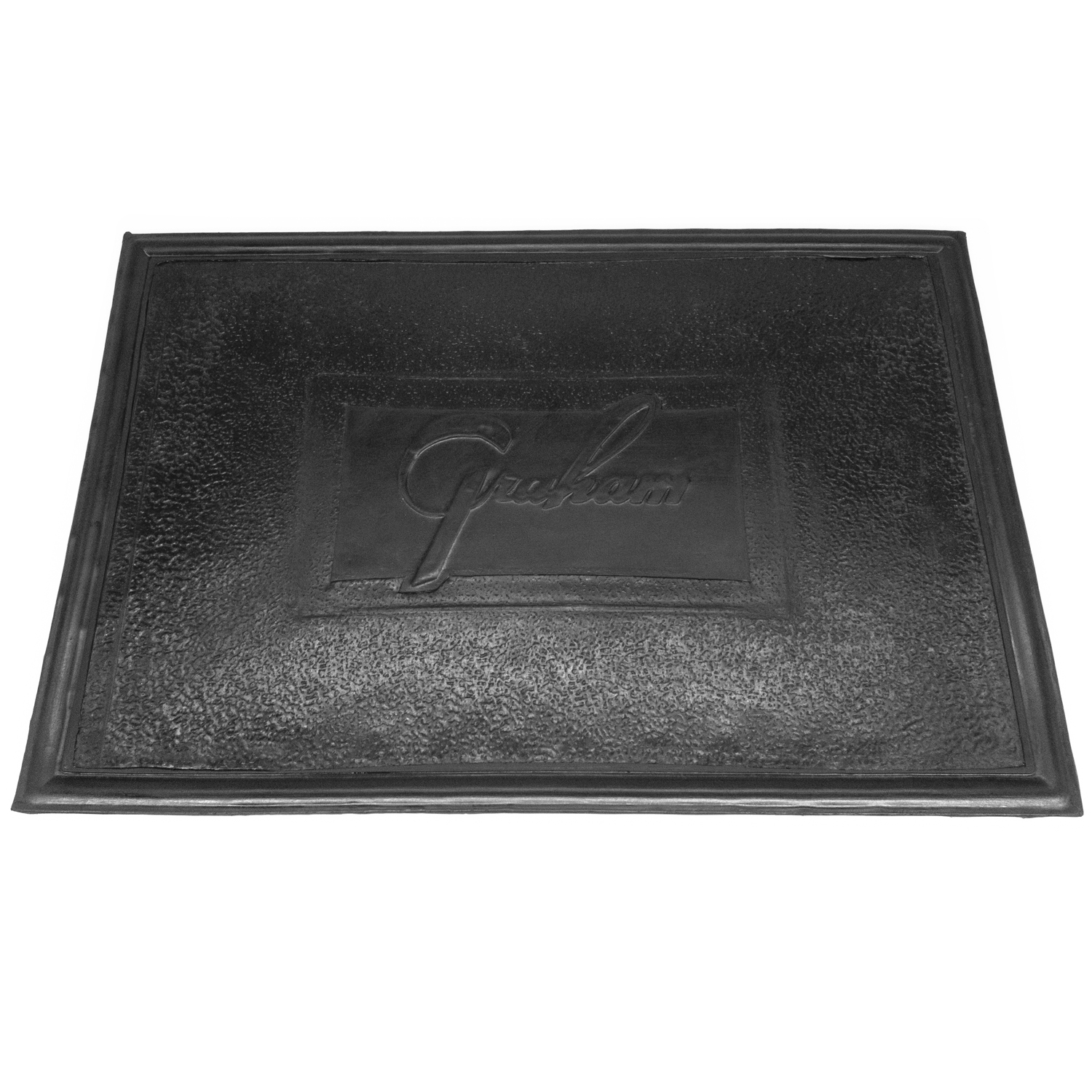 1929 Graham-Paige Model 827 Accessory Floor Mat - 12"X17"-AC 12Accessory Floor Mat - made of high quality black rubber with molded original emblem. Also designed to be sewn into new carpets. 12"X17", Each
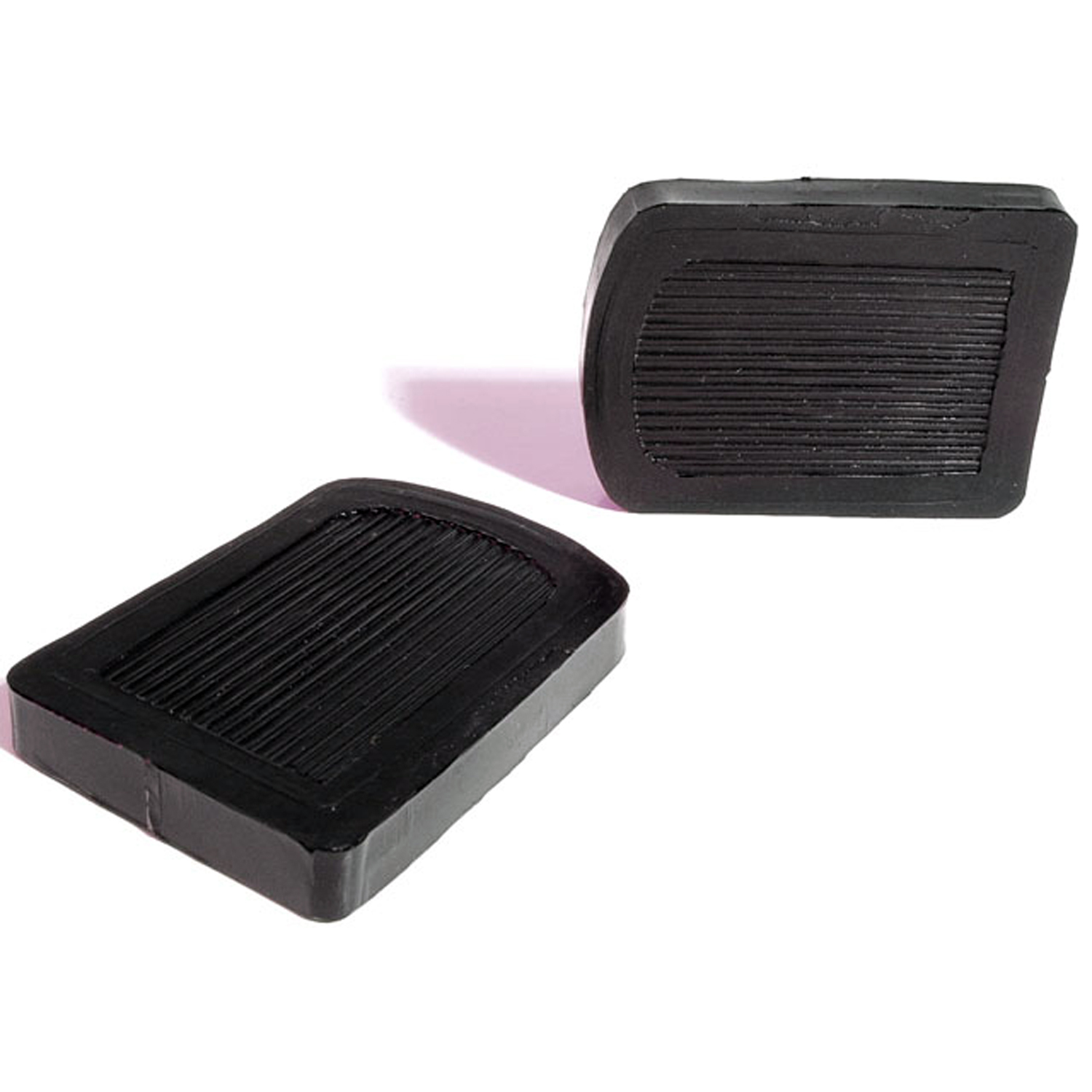 1929 Graham-Paige Model 827 Clutch and Brake Pedal Pads. 2-5/8" wide X 3-5/8" long-CB 25Clutch and Brake Pedal Pads. 2-5/8" wide X 3-5/8" long. Pair
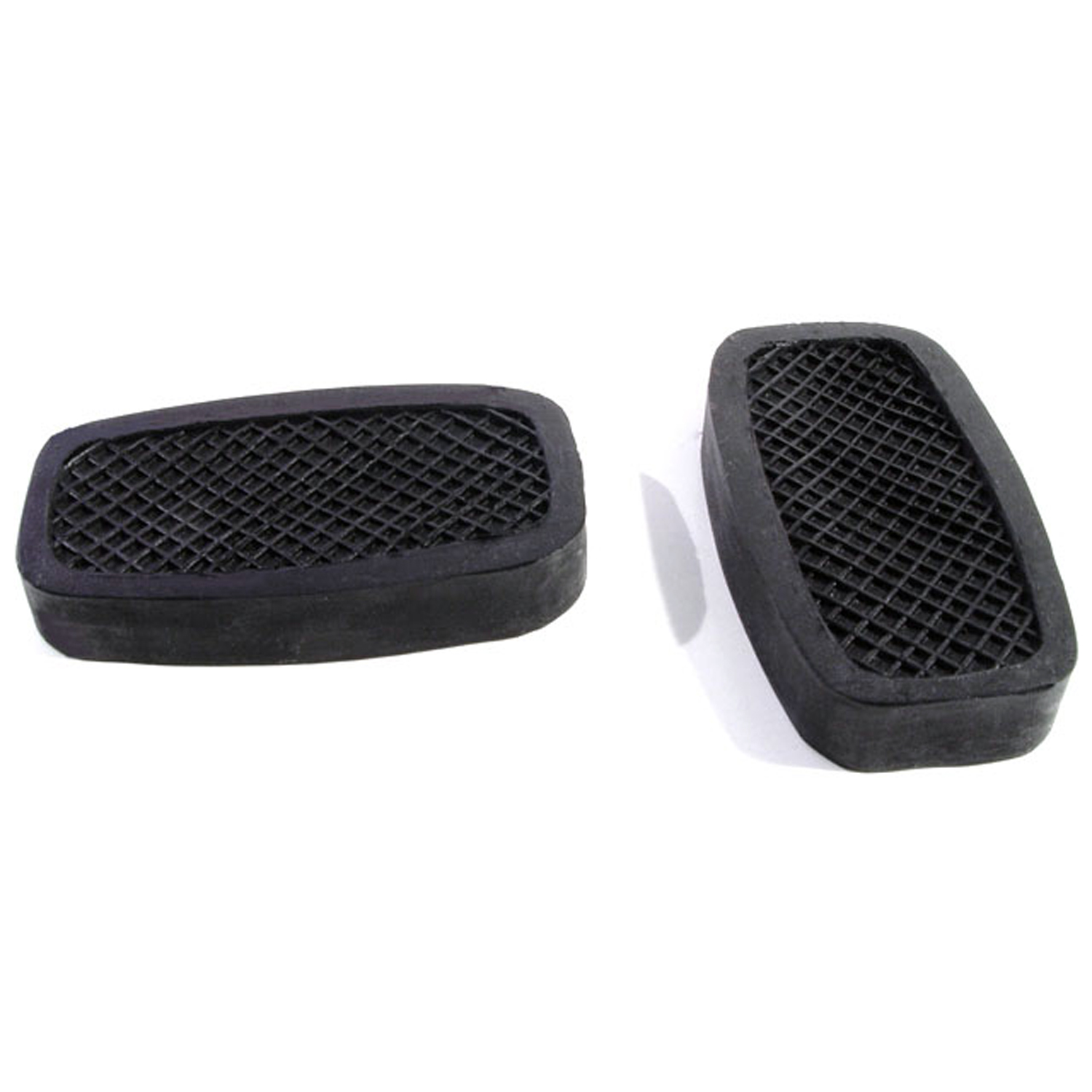 1929 Graham-Paige Model 827 Clutch and Brake Pedal Pads. 2" wide X 3-5/8" long. Pair-CB 46Clutch and Brake Pedal Pads. 2" wide X 3-5/8" long. Pair
 1929 Graham-Paige Model 827 Headlight Pads. 1-5/8" wide X 4-1/8" long. Pair-MP 792-EHeadlight Pads. 1-5/8" wide X 4-1/8" long. Pair
Why Choose Metro?
For over 100 years, Metro Moulded Parts has been the pinnacle of quality in classic car restoration parts. Our commitment to precision and authenticity in every component ensures a perfect fit and an OEM-level appearance.
- Expert Craftsmanship & Quality: Each part is a testament to our dedication to reliability and perfection, crafted from original designs and thoroughly tested.
- Advanced Technology: We use cutting-edge techniques to create flawless, long-lasting parts that surpass others in performance.
- SuperSoft Sponge – The Ultimate Door Seal: Not only are our door seals 30% softer than competitors', but they're also guaranteed to never leak. They effectively reduce wind and road noise, enhancing your classic car's comfort and driving experience.
- Proudly American: Our parts are a product of American craftsmanship, made in the USA with a spirit of excellence and heritage.
- Unrivaled Warranty: We back our products with a 30-year industry-leading warranty, a testament to our confidence in their quality.
Join us in preserving the legacy of classic cars with parts that are crafted for perfection, not just made.