

Image of 1951 Henry J Deluxe, Note: These illustrations use artistic license and may differ from actual historical models.
Performance Metrics
Fundamental Metrics
Emotional Appeal
MMP Rating
| Engine Specifications | |
|---|---|
| Engine: | 161 CID 6-cylinder |
| Displacement: | 161 CID (2.6L) |
| Horsepower: | 80 HP |
| Torque: | Estimated 125 lb-ft |
| Compression Ratio: | 7.2:1 |
| Ignition System: | Distributor and coil |
| Cooling System: | Liquid-cooled |
| Performance Specifications | |
| 0-60 Time: | Estimated 20 seconds |
| 1/4 Mile Time: | Not available |
| Top Speed: | 80 mph |
| Transmission and Drive | |
| Drive Type: | Rear-wheel drive |
| Transmission Type: | 3-speed manual |
| Fuel and Efficiency | |
| Fuel System Type: | Carburetor |
| MPG: | Estimated 25-30 MPG |
| Dimensions and Brakes | |
| Brakes: | Drum brakes |
| Wheelbase: | 100 inches |
| Weight: | 2,200 lbs |
Note: Specifications for classic cars are given to the best of our ability, considering the limited and variant data available.
The 1951 Henry J Deluxe was a small car with a big assignment: give American families an affordable new automobile at a time when many buyers wanted more than a used car but could not stretch to a full-size sedan.
Built by Kaiser-Frazer, the Henry J was named for industrialist Henry J. Kaiser, the company’s energetic co-founder. It arrived in 1950 as a compact, two-door alternative to the large, increasingly elaborate cars dominating U.S. roads. The 1951 Deluxe brought a little more comfort and finish to the formula while keeping the Henry J’s main appeal intact: modest size, straightforward engineering, and economy-minded running costs.
There was a serious economic story behind the car. Kaiser-Frazer had received a federal Reconstruction Finance Corporation loan, and the company committed to developing an inexpensive car for the mass market. The Henry J was the result. Its most memorable cost-cutting detail became automotive lore: early, basic versions were built without an exterior trunk lid, so luggage had to be loaded through the cabin. It was an ingenious way to save money, but not necessarily the feature owners bragged about.
Compact Styling, American Character
The Henry J looked distinctly American, but on a smaller scale. Its rounded hood flowed into a short rear deck, while the upright cabin, gently curved fenders, and modest grille gave the car a clean postwar profile. The proportions were unusual beside the broad, chrome-heavy sedans of the day. A 100-inch wheelbase helped keep the car nimble and compact, while its unibody construction avoided the separate frame used by many larger competitors.
The 1951 Henry J Deluxe was a two-door sedan, and that was the defining body style of the line. There was no coupe, convertible, or four-door version. Its simple silhouette made the car practical rather than glamorous, though period colors and bright trim helped dress it up. Factory paint choices varied by year and trim, with solid shades such as blue, green, gray, and red among the types buyers could find. Two-tone combinations added extra visual interest. Exact color availability depended on production date and equipment.
Inside, the Deluxe offered a more finished environment than the most basic Henry J. Buyers could expect a bench seat, durable upholstery, a straightforward painted-metal dashboard, and clear, easy-to-read instruments. The materials were practical rather than plush: cloth and vinyl-style coverings, simple door panels, and limited brightwork kept costs under control. It was a car designed to be used, not a lounge on wheels.
Simple Engineering, Smart Packaging
The Henry J’s compact size did not mean it was merely a scaled-down prewar design. Its unitized body was a relatively modern approach for an affordable American car, and its independent front suspension used coil springs. At the rear, a conventional live axle and leaf springs kept the layout sturdy and familiar to mechanics. Hydraulic brakes and a three-speed manual transmission completed a straightforward package.
Engine choices depended on version and equipment. Henry J buyers could get a 134-cubic-inch, side-valve four-cylinder or a 161-cubic-inch, side-valve inline-six. The four was aimed at maximum economy, while the six offered more relaxed acceleration. A Deluxe is commonly associated with the six-cylinder setup, though surviving cars and period specifications should be checked by serial number and original equipment rather than trim name alone.
Even the basic engineering reflected the car’s purpose. The Henry J had no automatic transmission to complicate the range, and its controls were familiar to anyone who had driven a postwar American car. Its compact footprint and relatively low weight were useful innovations in a market that often equated progress with ever-larger vehicles.
A Different Idea of the Family Car
The Henry J stood apart from contemporaries such as the Chevrolet Styleline, Ford Custom, and Plymouth Concord because it made compactness and affordability central to its identity. It was not a full-size car with fewer options. It was a purpose-built small car intended to make new-car ownership more accessible.
That idea was important, even if the business result was mixed. Kaiser-Frazer showed that there was room in the American market for a smaller domestic automobile, but low prices alone could not guarantee success. Buyers still expected convenience, comfort, and a well-equipped cabin. The trunk-lid controversy became a vivid example of how aggressive cost-cutting could undermine the very value customers wanted.
The Henry J also helped point toward the later popularity of compact American cars. It did not single-handedly create that market, and it was not the first small American car, but it was an early postwar effort to make a compact domestic vehicle a mainstream purchase. Its legacy is less about a specific styling cue than about the willingness to challenge the assumption that every American car had to be big.
Performance and Road Manners
Performance was modest by modern standards. The four-cylinder engine produced roughly 68 horsepower, while the 161-cubic-inch six was rated at about 80 horsepower, with specifications varying by year and source. Period testing and modern estimates generally put a six-cylinder car’s 0-to-60 mph time in the high teens, while the four-cylinder could take around 20 seconds or more. Top speed was roughly 80 to 85 mph for a healthy six-cylinder example, with the four usually a little slower.
Those figures suited the Henry J’s mission. It was built for commuting, errands, and economical family travel, not high-speed passing. On ordinary roads, the light car could feel more responsive than its power numbers suggest. The three-speed manual asked the driver to work the gear lever, especially on hills, but the uncomplicated controls made the car easy to understand.
Its suspension was tuned for the road conditions of its time. Coil springs up front helped absorb smaller bumps, while the rear leaf springs could feel firm over broken pavement, particularly with a light load. On winding roads, the short wheelbase and compact body made the Henry J feel manageable, though it was not a sports car. In crosswinds or at highway speed, the light weight and narrow proportions required a more attentive hand than a heavier sedan.
From behind the wheel, the experience is direct and mechanical. The side-valve engine gives a steady, unhurried note, and the manual transmission keeps the driver involved. There is no modern insulation or power-assisted polish to hide the car’s character. You hear the engine, feel the road, and make the small adjustments that were part of everyday driving in the early 1950s.
Living With a Henry J
Today, most Henry Js are enjoyed as hobby cars, local-show entries, and occasional weekend drivers. A well-sorted example can handle relaxed neighborhood trips and scenic drives, but modern highway traffic is a demanding environment for a small car with period brakes, modest power, and no contemporary safety equipment.
Mechanical simplicity is one of the car’s ownership advantages. The engines and basic running gear are conventional, and many repairs are within reach of a capable home mechanic with workshop manuals and patience. The challenge is often finding the right parts, trim, glass, and body pieces. Henry J-specific items can be harder to locate than common mechanical components, and rust repair or missing interior details may become more expensive than the car’s original purchase price suggests.
Before buying, inspect the body structure carefully, check the floor and lower panels for corrosion, and confirm the engine and transmission are sound. Look for evidence that the car has its correct trim and equipment, especially if it is advertised as a Deluxe. A running car with complete parts is often a better starting point than a cheaper project missing hard-to-find pieces.
Henry J Facts and Oddities
The Henry J’s most famous offshoot was the Sears Allstate. Sears sold Allstate-badged cars through its retail network in 1952 and 1953, using the Henry J as the basis and adding distinctive trim and branding. It was a novel attempt to sell a car through a department-store retailer, and it gave the compact Kaiser a second identity.
The trunk-lid story is another enduring talking point. Early low-cost Henry J models could lack an outside trunk opening, requiring owners to fold or move the rear seat to reach the luggage space. The arrangement illustrates just how tightly Kaiser-Frazer tried to control the price. Equipment and production details changed, so buyers should verify the configuration of any specific car rather than assume all 1951 examples are alike.
The Henry J was promoted as an economical alternative, and economy was central to its appeal. It was not a record-breaking speed machine, nor did it establish a major endurance-racing legacy. Its achievement was more everyday: putting a new, American-built compact car within reach of buyers who might otherwise have chosen a used vehicle.
Common criticisms remain familiar: the cabin is basic, the trunk arrangement on early cars can be awkward, and the performance is gentle. Some owners also find that the car’s low production volume makes restoration parts and specialist knowledge less convenient to source than for a Ford or Chevrolet of the same era.
Collector Values and Availability
Henry Js are uncommon compared with the most popular American classics, though they are not generally considered rare in the high-dollar sense. Roughly 130,000 Henry Js are often cited across the model’s production life, although published totals vary depending on the years and related Sears Allstate models included. The number built specifically as 1951 Deluxe cars is less consistently documented, and surviving examples are only a fraction of original production.
As a broad 2026 market estimate, a project car may sell for about $3,000 to $7,000, while a usable driver could fall around $8,000 to $16,000. A nicely restored or especially well-preserved example may bring roughly $18,000 to $30,000, with exceptional cars sometimes exceeding that range when condition, originality, and buyer interest align. These are guide figures, not guaranteed sale prices. Rust, completeness, documentation, and the quality of restoration matter more than a seller’s idea of rarity.
Values have tended to rise gradually rather than surge. The Henry J has a devoted following and a distinctive story, but its small-car status and limited mainstream nostalgia keep demand narrower than for high-volume Chevrolets and Fords. Clean, original cars are likely to remain the most appealing to collectors, while elaborate restorations can be difficult to recoup fully.
Why the 1951 Henry J Still Matters
The 1951 Henry J Deluxe combined compact dimensions, unibody construction, simple mechanicals, and a genuinely ambitious price-conscious mission. It was not luxurious, fast, or free of compromises. Instead, it offered a different answer to a postwar question: how could a manufacturer make a new American car accessible without building another full-size sedan?
That experiment left behind an unmistakable little classic. The Henry J’s charm lies in its honesty: a practical car from a period when American automakers were beginning to imagine a smaller future. It may have saved inches, trim, and even a trunk lid, but it made a lasting mark by proving that an American car could be compact by design, not by accident.
1951 Henry J Deluxe Catalog of Parts
 1951 Henry J Deluxe Shock Absorber Grommet. 1" bottom O.D-BN 11Shock Absorber Grommet. 1" bottom O.D., 3/4" high, with 5/8" I.D. Each
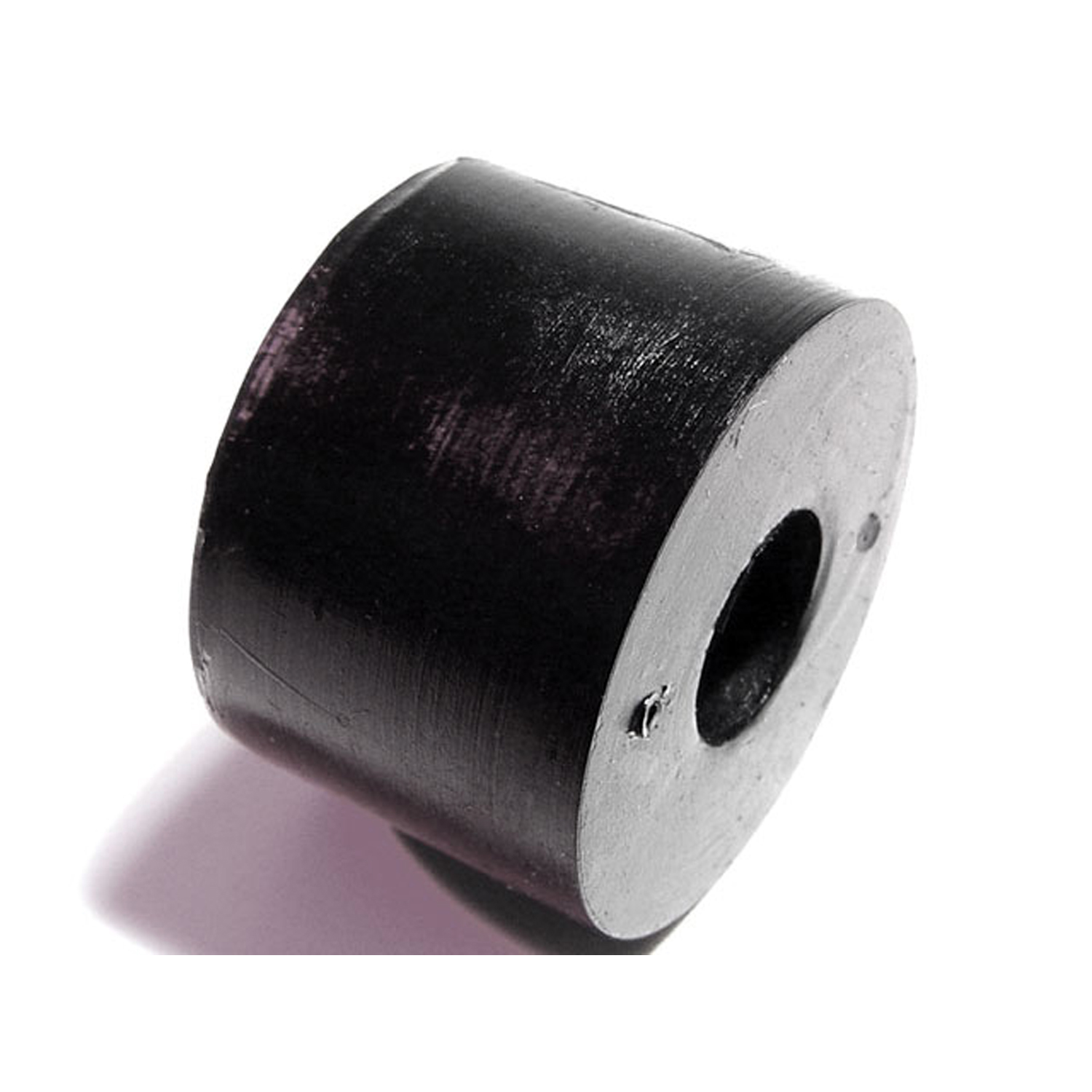 1951 Henry J Deluxe Shock Absorber Grommet. 1" bottom O.D., 5/8" high-BN 13Shock Absorber Grommet. 1" bottom O.D., 5/8" high., with 3/8" I.D. Each
 1951 Henry J Deluxe Clutch and Brake Pedal Pads. 2-1/8" wide X 3-1/4" long-CB 89Clutch and Brake Pedal Pads. 2-1/8" wide X 3-1/4" long. Pair
 1951 Henry J Deluxe Horn contact pad. 3 in. OD x 2 in. ID x 5/8 in. thk-RP 610Horn contact pad. 3 in. OD x 2 in. ID x 5/8 in. thk. Dense rubber. May work as an air-cleaner spacer for Kaiser-Darrin. Each.
Why Choose Metro?
For over 100 years, Metro Moulded Parts has been the pinnacle of quality in classic car restoration parts. Our commitment to precision and authenticity in every component ensures a perfect fit and an OEM-level appearance.
- Expert Craftsmanship & Quality: Each part is a testament to our dedication to reliability and perfection, crafted from original designs and thoroughly tested.
- Advanced Technology: We use cutting-edge techniques to create flawless, long-lasting parts that surpass others in performance.
- SuperSoft Sponge – The Ultimate Door Seal: Not only are our door seals 30% softer than competitors', but they're also guaranteed to never leak. They effectively reduce wind and road noise, enhancing your classic car's comfort and driving experience.
- Proudly American: Our parts are a product of American craftsmanship, made in the USA with a spirit of excellence and heritage.
- Unrivaled Warranty: We back our products with a 30-year industry-leading warranty, a testament to our confidence in their quality.
Join us in preserving the legacy of classic cars with parts that are crafted for perfection, not just made.