

Image of 1951 Henry J Standard, Note: These illustrations use artistic license and may differ from actual historical models.
Performance Metrics
Fundamental Metrics
Emotional Appeal
MMP Rating
| Engine Specifications | |
|---|---|
| Engine: | 134.2 cu in (2.2 L) I4, 161 cu in (2.6 L) I6 |
| Displacement: | 134.2 - 161 cu in |
| Horsepower: | 68 - 80 hp |
| Torque: | 114 - 125 lb-ft |
| Compression Ratio: | 7.0:1 |
| Ignition System: | Distributor and coil |
| Cooling System: | Water-cooled |
| Performance Specifications | |
| 0-60 Time: | Estimated 20 - 25 seconds |
| 1/4 Mile Time: | Not available |
| Top Speed: | 75 - 80 mph |
| Transmission and Drive | |
| Drive Type: | Rear-wheel drive |
| Transmission Type: | 3-speed manual |
| Fuel and Efficiency | |
| Fuel System Type: | Carburetor |
| MPG: | Estimated 20 - 25 mpg |
| Dimensions and Brakes | |
| Brakes: | Drum brakes |
| Wheelbase: | 100 in |
| Weight: | 2,200 - 2,400 lbs |
Note: Specifications for classic cars are given to the best of our ability, considering the limited and variant data available.
1951 Henry J Standard: America’s Bare-Bones Compact
The 1951 Henry J Standard made a bold promise: American motorists could have a new car without paying for the size, chrome, and extras that defined much of postwar Detroit. Built by Kaiser-Frazer Corporation, it was a compact, rear-wheel-drive two-door sedan designed to bring basic transportation within reach of more buyers.
The car was named for Henry J. Kaiser, the industrialist behind Kaiser-Frazer. Its development came at a pivotal moment: the United States was shifting from wartime production to a booming consumer economy, while carmakers looked for ways to serve buyers who wanted a new vehicle but could not afford a full-size model. A federal Reconstruction Finance Corporation loan helped Kaiser-Frazer pursue the project, adding an unusual business story to the car’s history.
The Standard was the most stripped-down Henry J. Its most memorable cost-saving measure was also its most controversial: the body had no conventional exterior trunk lid. Luggage was reached by folding the rear seat forward, a clever way to reduce complexity that many owners found inconvenient.
Compact Styling and Practical Details
At a time when many American cars wore long hoods, broad grilles, and generous chrome, the Henry J looked distinctly tidy. Its compact proportions, smooth body sides, integrated rear fenders, and sloping fastback roof gave it a modern, almost European character. The short front end and upright cabin made the car look smaller and more purposeful than the full-size sedans around it.
The Standard came only as a two-door sedan. It was not a separate body style from the better-equipped Henry J models, but a lower-priced trim level with fewer comfort and convenience features. Its cabin was deliberately simple, with durable upholstery, straightforward controls, and less brightwork than buyers would find in many rivals. Materials and detailing were functional rather than luxurious, and the Standard omitted some of the conveniences Americans had come to expect, including a conventional glove compartment and the outside-access trunk lid.
Factory colors varied by model year and production run. Period Henry Js appeared in familiar postwar shades such as black, gray, blue, green, and red. Brighter colors suited the car’s youthful image, while darker and more subdued finishes were also popular. When evaluating a restored example, check its paint code and production documentation rather than assuming every color seen on a surviving car was available on every 1951 Standard.
Four-Cylinder Power and Simple Engineering
The 1951 Henry J Standard used a 134.2-cubic-inch (2.2-liter) Willys-derived L-head four-cylinder engine. Contemporary specifications list output at about 68 horsepower, using the gross rating system of the era. Power went to the rear wheels through a three-speed manual transmission, typically operated by a column-mounted shifter.
The engineering was conventional where it mattered: a steel body, front-engine layout, rear-wheel drive, and familiar mechanical components. That simplicity helped keep the price down and made the car less intimidating to maintain than a more elaborate machine. The compact dimensions and relatively light weight also suited city driving and parking, even if the modest engine did not deliver brisk acceleration.
For its time, the Henry J’s biggest innovation was not a single breakthrough component. It was the idea of designing a new American car around economy from the outset, rather than merely removing a few options from a larger sedan. That approach helped prepare the ground for the American compact-car boom that followed.
Where the Henry J Fit in Automotive History
The Henry J arrived before compact cars became a major force in the U.S. market. Kaiser-Frazer hoped that a smaller, less expensive car would attract budget-minded families and first-time buyers. In that sense, it anticipated later American compacts, even though it did not match the sales success of the best-known cars in that category.
What set the Henry J apart was its directness. It was compact by American standards, uncomplicated, and focused on basic transportation. The design also showed that an affordable car did not have to resemble a shrunken full-size model. Its clean, fastback silhouette gave it a distinct identity, while its pared-back equipment made clear that the low price came with real compromises.
The car’s influence was more conceptual than mechanical. It did not single-handedly create the compact segment, but it was an early postwar attempt to make a small, purpose-built American economy car. Its story also illustrates a challenge that later compact-car makers faced: buyers might welcome lower prices and easier handling, but they still expected useful luggage space, comfort, and features.
Road Manners, Speed, and Driving Feel
Expect modest performance from the four-cylinder Standard. Period test results and modern estimates vary with vehicle condition, gearing, and test method, but a 0-to-60-mph time in the neighborhood of 20 to 25 seconds is a reasonable guide. Top speed is roughly 70 to 75 mph in a healthy, correctly tuned example. Those figures make the Henry J suitable for relaxed cruising, not fast highway work by modern standards.
Behind the wheel, the small engine tends to sound busy when asked to accelerate or climb a long grade. The three-speed manual rewards smooth, deliberate shifts, and drivers need to plan overtakes rather than rely on a quick burst of power. At steady speeds, the engine’s simple mechanical note is part of the car’s appeal: it feels honest and unfiltered, with little between the driver and the machinery.
The compact footprint is an advantage on narrow streets and in parking lots. The suspension and narrow tires deliver a period-style ride, absorbing ordinary road imperfections but transmitting sharper bumps more clearly than a modern car. On winding roads, the Henry J feels nimble compared with a full-size American sedan, though its manual steering and vintage tires call for measured inputs. Crosswinds and rough pavement are reminders that this is a light, mid-century car, not a modern touring machine.
Everyday Ownership and Maintenance
When new, the Henry J Standard was intended for everyday transportation. Today, most examples are used as hobby cars, local show vehicles, or occasional weekend drivers. A well-maintained car can handle short trips and leisurely outings, but its age, limited crash protection, and modest highway performance make it less suitable for routine commuting in modern traffic.
Its straightforward mechanical layout is friendly to owners comfortable with older cars. Basic service work, such as ignition tune-ups, brake maintenance, and routine engine repairs, follows familiar principles. The main ownership challenge is often not the design itself but finding parts, locating a specialist, and sorting out decades of previous repairs. Body and trim pieces can be more difficult to source than common mechanical items, and a complete, rust-free car is usually a better starting point than a cheap project.
Before buying, inspect the structure carefully, especially the floors, rocker areas, and other places where corrosion can hide. Check that the engine runs well, the cooling system is sound, and the brakes work evenly. Also test the rear-seat access to the luggage area. The missing trunk lid is a defining feature, but it is a practical limitation worth experiencing before committing to ownership.
Henry J Facts and Common Criticisms
The Henry J’s name was not a fictional marketing invention. It honored Henry J. Kaiser, whose industrial and automotive ambitions shaped the company. Another notable chapter came when Sears, Roebuck and Company sold a related version as the Allstate for a short period. The Allstate wore distinctive branding and trim, showing how the basic Henry J platform could be adapted for a different retail identity.
The Standard’s most frequent criticism was its luggage arrangement. Reaching the cargo space through the rear seat was inconvenient, especially when the car was occupied. Buyers also noted the sparse cabin, limited power, and the absence of the plush appointments common in larger American cars. Those were not accidental shortcomings so much as the cost of building a low-priced vehicle, but they help explain why the concept did not become an immediate mass-market triumph.
There is no widely recognized speed or endurance record that defines the 1951 Standard. Its significance is better understood through its role as an early American economy car and through the contrast it offered to the larger, more heavily equipped vehicles of its day.
Collector Values and Rarity
Exact production totals for individual Henry J trim levels can be difficult to establish from commonly cited figures. A reasonable estimate for the entire Henry J line across its production years is about 150,000 cars, with the 1951 model year accounting for a substantial share. That figure covers the broader Henry J family, not just the Standard, and surviving Standards are considerably less common than the total production number suggests.
As a broad U.S. market guide in 2026, a project car may sell for roughly $3,000 to $7,000, while a usable driver often falls around $8,000 to $15,000. A well-restored example may bring about $15,000 to $25,000, with exceptional cars sometimes exceeding that range. Condition, originality, documentation, and the quality of restoration matter greatly. These are estimates, not guaranteed sale prices, and the Standard’s sparse specification can make it more of a specialist’s choice than a broadly sought-after collectible.
Values have generally been steady to gradually firmer for clean, complete examples, rather than rising sharply across the board. As with many lesser-known postwar cars, a high-quality restoration can cost more than the market will repay. Buyers should prioritize sound structure and mechanical condition over cosmetic perfection, while sellers should recognize that unusual details, correct trim, and period documentation can make a car more appealing to the right collector.
Why the 1951 Henry J Standard Matters
The 1951 Henry J Standard was small, plain, and unapologetically economical, yet it represented a serious attempt to rethink what an American car could be. Its fastback styling, simple mechanical package, and low-cost mission made it stand apart from the chrome-laden full-size sedans that dominated the showroom.
It was not a perfect formula. The trunk arrangement frustrated owners, and the modest four-cylinder engine demanded patience. But those compromises are part of what makes the Standard such a revealing piece of automotive history. The Henry J did more than shrink an American car: it asked drivers to decide which comforts they truly needed, and it left behind a distinctive reminder of the industry’s first postwar push toward compact motoring.
1951 Henry J Standard Catalog of Parts
 1951 Henry J Standard Shock Absorber Grommet. 1" bottom O.D-BN 11Shock Absorber Grommet. 1" bottom O.D., 3/4" high, with 5/8" I.D. Each
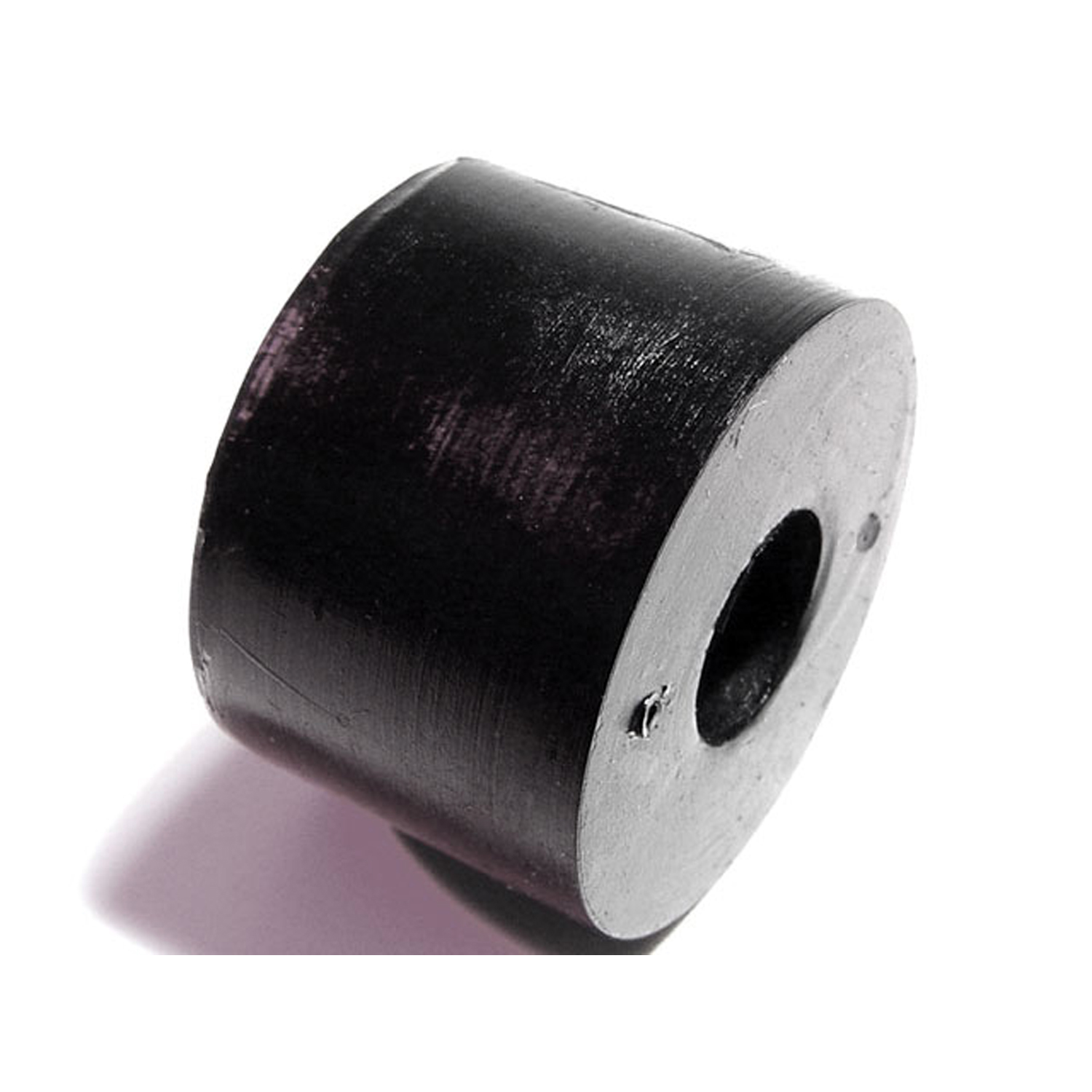 1951 Henry J Standard Shock Absorber Grommet. 1" bottom O.D., 5/8" high-BN 13Shock Absorber Grommet. 1" bottom O.D., 5/8" high., with 3/8" I.D. Each
 1951 Henry J Standard Clutch and Brake Pedal Pads. 2-1/8" wide X 3-1/4" long-CB 89Clutch and Brake Pedal Pads. 2-1/8" wide X 3-1/4" long. Pair
 1951 Henry J Standard Horn contact pad. 3 in. OD x 2 in. ID x 5/8 in. thk-RP 610Horn contact pad. 3 in. OD x 2 in. ID x 5/8 in. thk. Dense rubber. May work as an air-cleaner spacer for Kaiser-Darrin. Each.
Why Choose Metro?
For over 100 years, Metro Moulded Parts has been the pinnacle of quality in classic car restoration parts. Our commitment to precision and authenticity in every component ensures a perfect fit and an OEM-level appearance.
- Expert Craftsmanship & Quality: Each part is a testament to our dedication to reliability and perfection, crafted from original designs and thoroughly tested.
- Advanced Technology: We use cutting-edge techniques to create flawless, long-lasting parts that surpass others in performance.
- SuperSoft Sponge – The Ultimate Door Seal: Not only are our door seals 30% softer than competitors', but they're also guaranteed to never leak. They effectively reduce wind and road noise, enhancing your classic car's comfort and driving experience.
- Proudly American: Our parts are a product of American craftsmanship, made in the USA with a spirit of excellence and heritage.
- Unrivaled Warranty: We back our products with a 30-year industry-leading warranty, a testament to our confidence in their quality.
Join us in preserving the legacy of classic cars with parts that are crafted for perfection, not just made.