

Image of 1952 Henry J Vagabond, Note: These illustrations use artistic license and may differ from actual historical models.
Performance Metrics
Fundamental Metrics
Emotional Appeal
MMP Rating
| Engine Specifications | |
|---|---|
| Engine: | 134.2 cu in (2.2 L) I4, 161 cu in (2.6 L) I6 |
| Displacement: | 134.2 - 161 cu in |
| Horsepower: | 68 - 80 hp |
| Torque: | 114 - 125 lb-ft |
| Compression Ratio: | 7.0:1 |
| Ignition System: | Distributor and coil |
| Cooling System: | Water-cooled |
| Performance Specifications | |
| 0-60 Time: | Estimated 20 - 25 seconds |
| 1/4 Mile Time: | Not available |
| Top Speed: | 75 - 80 mph |
| Transmission and Drive | |
| Drive Type: | Rear-wheel drive |
| Transmission Type: | 3-speed manual |
| Fuel and Efficiency | |
| Fuel System Type: | Carburetor |
| MPG: | Estimated 20 - 25 mpg |
| Dimensions and Brakes | |
| Brakes: | Drum brakes |
| Wheelbase: | 100 in |
| Weight: | 2,420 lbs |
Note: Specifications for classic cars are given to the best of our ability, considering the limited and variant data available.
1952 Henry J Vagabond: A Compact Car with a Clever Twist
The 1952 Henry J Vagabond looked like a tidy postwar compact, but its folding rear seat and useful rear cargo opening gave it a dose of versatility that was unusual in an American car of its size. Built by Kaiser-Frazer, it was part of an ambitious effort to make practical, affordable motoring available to a wider range of buyers.
The Henry J was named for industrialist Henry J. Kaiser, whose company had entered the car business after World War II. Kaiser-Frazer developed the model as a small, economical alternative to the large family cars that dominated American roads. The Vagabond joined the Henry J range as a more flexible two-door utility model, blending passenger-car styling with cargo-carrying usefulness.
One intriguing detail is that the Vagabond anticipated the appeal of later hatchbacks. Its rear seat could fold to create a longer load space, making it useful for hauling items that would have been awkward to fit in a conventional sedan. It brought a practical idea to the American market well before hatchbacks became commonplace.
Compact Styling and Useful Design
The Henry J’s exterior was simple and purposeful. Its short hood, rounded front end, compact proportions, and relatively uncluttered bodywork gave it a distinct look beside the broad, chrome-heavy sedans of the early 1950s. The modest grille and clean sides helped keep the design visually light, while the Vagabond’s squared-off rear suggested that it had a job to do beyond carrying passengers.
Inside, the Vagabond was practical rather than luxurious. The cabin used straightforward upholstery, durable fabric or vinyl trim, painted metal surfaces, and simple controls. Buyers did not get the rich wood trim or generous chrome found in many larger cars, but the uncomplicated layout was easy to understand and maintain. The rear seat’s folding function was the key interior feature, turning the passenger area into useful cargo space when needed.
Equipment varied with trim and options. A three-speed manual transmission was standard, and overdrive was available on some cars. The Henry J’s straightforward mechanical layout kept the emphasis on low cost and ease of use rather than sophisticated conveniences. Its compact dimensions and relatively low weight were also part of the design brief.
Factory paint choices varied by model and production run. Period color selections included shades of black, red, blue, green, and light cream or tan. Brighter colors such as red and blue gave the compact body extra personality, while darker and neutral finishes suited buyers looking for a more restrained appearance. Exact availability depended on trim and the specific production batch.
The Vagabond was a two-door utility model within the broader Henry J family, which was otherwise best known for two-door sedans. It was the most distinctive choice for buyers who wanted a compact car with more flexible storage. The standard sedan remained the familiar, more conventional option, but the Vagabond’s cargo-friendly layout is what makes it especially memorable today.
Why the Henry J Mattered
The Henry J was an important attempt to rethink the American car for a changing market. In the years after World War II, many buyers wanted economical transportation, but the industry’s best-known products were still large and fuel-hungry. Kaiser-Frazer saw room for a smaller, lighter car that could serve as an affordable first car, a second household car, or basic everyday transportation.
The Henry J was not the first American compact, and it faced competition from cars such as the Nash Rambler. What set it apart was its combination of small-car dimensions, simple construction, and an ambitious price-conscious mission. Its compact layout made it easier to park and maneuver than a full-size sedan, while the Vagabond extended that practicality with its folding rear seat and cargo capacity.
The model also reflected the realities of building a low-priced car. Some Henry J versions were notably sparse, with features buyers had come to expect offered only as options or omitted to control costs. That approach helped keep the car simple, but it also made the Henry J an easy target for criticism when compared with better-equipped rivals.
The Vagabond’s most lasting contribution was its demonstration that a small passenger car could also serve as a flexible utility vehicle. It did not create the modern hatchback, but it explored the same basic idea: give the driver a useful rear opening and a cabin that can adapt to passengers or cargo.
Engine, Speed, and Road Manners
For 1952, Henry J buyers could choose between a 134-cubic-inch Willys L-head four-cylinder engine rated at about 68 horsepower and a 161-cubic-inch Willys L-head six-cylinder rated at roughly 80 horsepower. Both were paired with a three-speed manual transmission. The four-cylinder suited buyers focused on economy, while the six offered a little more flexibility when carrying passengers or climbing hills.
Period performance figures and modern estimates vary with engine, gearing, condition, and testing method. A four-cylinder Vagabond typically needs around 20 seconds to reach 60 mph, while a six-cylinder car may manage the run in roughly 17 to 19 seconds. Top speed is generally in the neighborhood of 75 to 80 mph, though these cars are most comfortable at more modest cruising speeds.
On a smooth road, the Henry J feels light and easy to place. Its compact size is an advantage in town, where it can slip into parking spaces and handle narrow streets without the effort required by a full-size car. The suspension uses independent front suspension and a live rear axle, a conventional arrangement for the period. It provides a straightforward ride, but short wheelbase and modest suspension travel mean sharp bumps can make themselves known.
On winding roads, the car’s relatively low weight helps it feel nimble, although its period tires, steering, and suspension are not designed for sports-car cornering. Strong crosswinds and uneven pavement can also remind the driver that this is a light compact from the early 1950s. The driving experience is direct and mechanical: expect a steady engine note, noticeable gear changes, and a ride that communicates the road rather than isolating the occupants from it.
Living with a 1952 Henry J
Today, most Vagabonds are used as show cars, weekend cruisers, or additions to collections focused on postwar American compacts. A well-sorted example can also handle occasional local driving, but regular highway use requires realistic expectations. Modern traffic moves faster, and the Henry J lacks the power, braking performance, and safety equipment of a contemporary car.
Routine mechanical work is relatively approachable for an experienced home mechanic. The engines are conventional, and many service tasks are less complicated than they are on later cars. However, age brings the usual challenges: worn suspension parts, brake and fuel-system issues, electrical faults, and deteriorated rubber components. Finding model-specific trim, glass, body panels, and Vagabond cargo-area parts can be harder than servicing the engine.
Parts availability is supported by the interest of Kaiser-Frazer and Willys enthusiasts, but the Vagabond’s unusual body pieces may take patience to locate. Before buying, inspect the body carefully for rust and previous repairs, and confirm that the rear-seat folding mechanism and cargo-area components are present. A complete, sound car is usually a better starting point than a cheap project missing rare trim.
Henry J Trivia and Common Complaints
The Henry J name itself was unusual: instead of a conventional model name, it used the name of company founder Henry J. Kaiser. Another related curiosity is the Allstate, a Henry J-based car sold through Sears. Allstates had different identifying details, including distinctive badging and trim, and gave the department-store retailer a brief role in the new-car business.
The Vagabond is best remembered for its practical rear-seat and cargo arrangement, rather than for speed records or competition achievements. There is no widely recognized production record or famous endurance accomplishment associated specifically with the 1952 model. Its significance is more about design experimentation and the way it anticipated later interest in compact, flexible cars.
Common criticisms include modest power, sparse equipment, limited rear-seat room, and a basic finish. Some early Henry J versions also drew complaints for cost-saving decisions, including limited luggage access on conventional sedan models. The Vagabond answered some of that practical criticism with its more useful rear layout, though it did not turn the small Henry J into a luxury car.
Rarity and Collector Values
Exact production figures for the Vagabond are difficult to pin down, and model-specific totals are not consistently reported. As a best estimate, several thousand were likely built across the Vagabond’s short run, perhaps around 5,000 to 10,000 in total. That is a broad estimate, not a verified factory tally. The number of surviving cars is much smaller, particularly for complete examples with their original rear-seat and cargo-area equipment.
In today’s collector market, a project or incomplete Vagabond might sell for roughly $2,000 to $6,000, depending on rust and missing parts. A running driver in fair to good condition could fall in the $7,000 to $15,000 range. A well-restored example may bring about $20,000 to $35,000, with exceptional, highly original cars potentially exceeding that range. Actual prices depend heavily on condition, documentation, location, and how many buyers are looking for this particular model.
Values have generally been more steady than explosive. The Vagabond’s rarity and unusual layout help it stand out, but its small enthusiast audience and modest performance keep it from the price levels reached by more famous classics. Over the long term, clean, complete cars are likely to hold more interest than neglected projects, with the best examples showing gradual appreciation rather than rapid gains.
A Small Car with a Big Idea
The 1952 Henry J Vagabond combined compact dimensions, simple mechanicals, and a flexible rear cabin at a time when most American manufacturers were still focused on larger cars. Its modest power and basic appointments are part of its character, while its folding-seat utility makes it feel surprisingly modern in concept.
For collectors, the Vagabond is more than a rare variation of a small Kaiser-Frazer. It is a reminder that useful, adaptable cars were being imagined long before the hatchback became a familiar sight in every driveway.
1952 Henry J Vagabond Catalog of Parts
 1952 Henry J Vagabond Shock Absorber Grommet. 1" bottom O.D-BN 11Shock Absorber Grommet. 1" bottom O.D., 3/4" high, with 5/8" I.D. Each
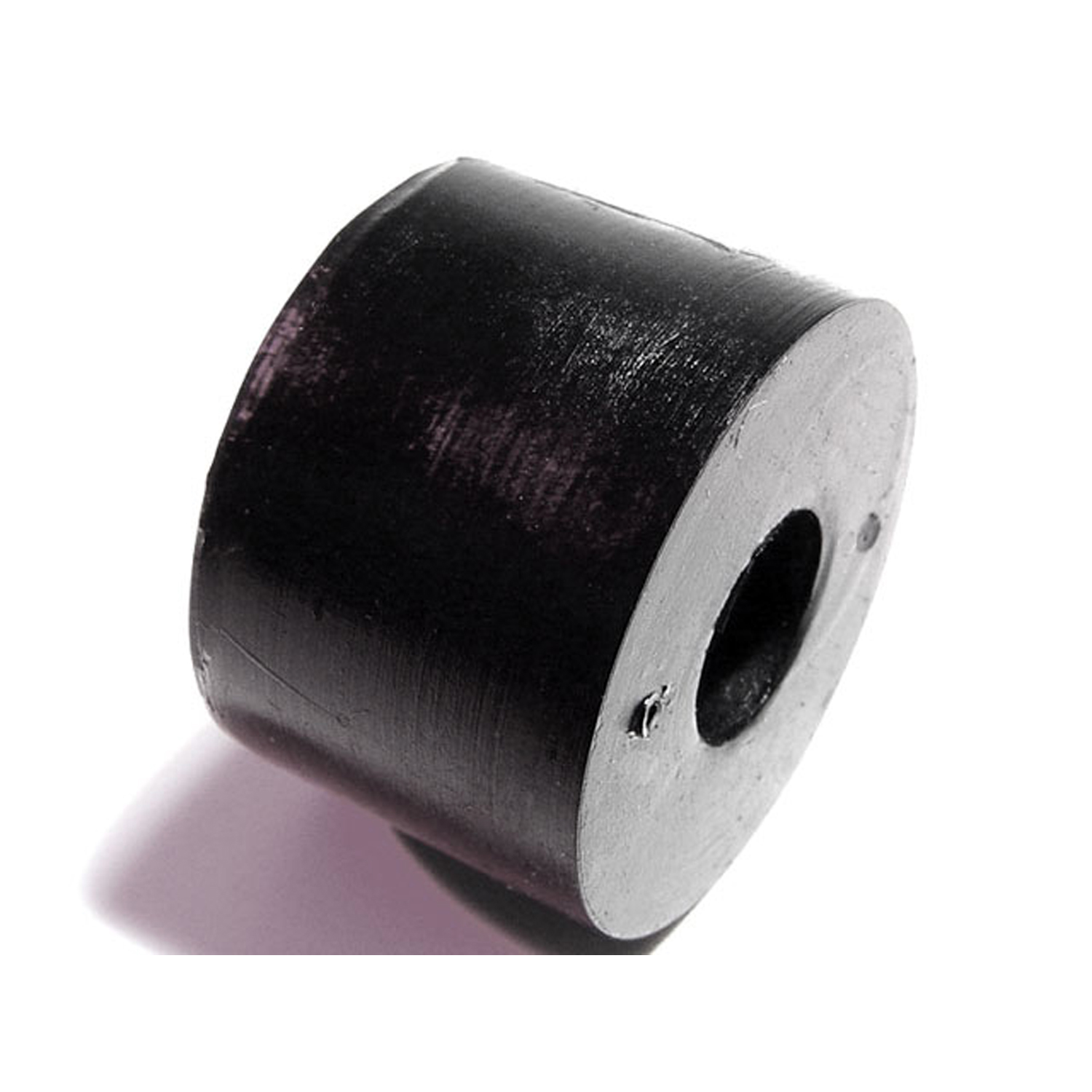 1952 Henry J Vagabond Shock Absorber Grommet. 1" bottom O.D., 5/8" high-BN 13Shock Absorber Grommet. 1" bottom O.D., 5/8" high., with 3/8" I.D. Each
 1952 Henry J Vagabond Clutch and Brake Pedal Pads. 2-1/8" wide X 3-1/4" long-CB 89Clutch and Brake Pedal Pads. 2-1/8" wide X 3-1/4" long. Pair
 1952 Henry J Vagabond Horn contact pad. 3 in. OD x 2 in. ID x 5/8 in. thk-RP 610Horn contact pad. 3 in. OD x 2 in. ID x 5/8 in. thk. Dense rubber. May work as an air-cleaner spacer for Kaiser-Darrin. Each.
Why Choose Metro?
For over 100 years, Metro Moulded Parts has been the pinnacle of quality in classic car restoration parts. Our commitment to precision and authenticity in every component ensures a perfect fit and an OEM-level appearance.
- Expert Craftsmanship & Quality: Each part is a testament to our dedication to reliability and perfection, crafted from original designs and thoroughly tested.
- Advanced Technology: We use cutting-edge techniques to create flawless, long-lasting parts that surpass others in performance.
- SuperSoft Sponge – The Ultimate Door Seal: Not only are our door seals 30% softer than competitors', but they're also guaranteed to never leak. They effectively reduce wind and road noise, enhancing your classic car's comfort and driving experience.
- Proudly American: Our parts are a product of American craftsmanship, made in the USA with a spirit of excellence and heritage.
- Unrivaled Warranty: We back our products with a 30-year industry-leading warranty, a testament to our confidence in their quality.
Join us in preserving the legacy of classic cars with parts that are crafted for perfection, not just made.