

Image of 1953 Henry J Corsair, Note: These illustrations use artistic license and may differ from actual historical models.
Performance Metrics
Fundamental Metrics
Emotional Appeal
MMP Rating
| Engine Specifications | |
|---|---|
| Engine Options: | 161 CID 6-cylinder |
| Displacement Range: | 161 CID |
| Horsepower Range: | 80 HP |
| Torque: | Estimated at 125 lb-ft |
| Compression Ratio: | 7.2:1 |
| Ignition System: | Distributor and coil |
| Cooling System: | Liquid-cooled |
| Performance Specifications | |
| 0-60 Time: | Estimated at 17 seconds |
| 1/4 Mile Time: | Not available |
| Top Speed: | 80 mph |
| Transmission and Drive | |
| Drive Type: | Rear-wheel drive |
| Transmission Type: | 3-speed manual |
| Fuel and Efficiency | |
| Fuel System Type: | Carburetor |
| MPG: | Estimated at 25-30 MPG |
| Dimensions and Brakes | |
| Brakes: | Drum brakes |
| Wheelbase: | 100 inches |
| Weight: | 2,600 lbs |
Note: Specifications for classic cars are given to the best of our ability, considering the limited and variant data available.
1953 Henry J Corsair: The Compact That Took on Detroit
The 1953 Henry J Corsair was a small American sedan with a big mission: make new-car ownership affordable at a time when most Detroit manufacturers were still building larger, heavier cars. Built by Kaiser-Frazer, the Henry J brought postwar economy-car thinking to U.S. buyers in a practical, no-frills package. Its modest size and straightforward engineering were part of the appeal, but its story also reflects the bold, challenging years of an independent American automaker.
The car was named for Henry J. Kaiser, the industrialist who led Kaiser-Frazer. The company introduced the Henry J for the 1951 model year, aiming to attract budget-conscious buyers and compete with both domestic rivals and imported small cars. One intriguing chapter came through Sears: in 1952 and 1953, the retailer sold a closely related version called the Allstate, complete with Sears branding and distinctive trim. It was a rare instance of a major department store entering the new-car business.
Compact Styling, Built for Economy
The Corsair wore clean, restrained styling rather than the elaborate chrome-heavy look increasingly popular on full-size American cars. Its compact body had rounded front fenders, a simple horizontal grille, a short hood, and a gently sloping roof that flowed into a rounded rear. The proportions were tidy and purposeful, with less visual ornament than buyers might find on a larger sedan. That simplicity helped keep the car’s price and weight in check.
The Henry J was offered as a two-door sedan, not a broad range of body styles. The Corsair name identified a more fully equipped version of the compact line, while lower-priced Henry J models emphasized basic transportation. The two-door sedan became the car’s defining shape: economical to build, easy to maneuver, and distinctive among larger contemporary sedans.
Inside, the Corsair was functional rather than luxurious. Upholstery and trim were durable and modest, with a simple dashboard, straightforward instruments, and limited brightwork. Buyers got the essentials, but not the extensive sound insulation, plush materials, or long list of convenience features found in more expensive cars. The cabin’s practical layout suited the car’s mission, though the rear seat and luggage space were inevitably tighter than in a full-size sedan.
Factory paint choices varied by year and trim, with period colors spanning familiar shades such as blue, green, red, gray, white, and black. Two-tone combinations were also in keeping with early-1950s tastes. Exact color names and availability can differ among references, so a restorer should check the car’s paint code and original documentation rather than rely on a color chart for a neighboring model year.
Simple Engineering and the Henry J Formula
The Henry J’s engineering favored proven components and uncomplicated maintenance. Corsair examples are commonly associated with a 161-cubic-inch L-head inline-six rated at about 80 horsepower. Lower-priced Henry J versions could be fitted with a 134-cubic-inch four-cylinder engine rated at roughly 68 horsepower. A three-speed manual transmission was typical, with the shifter mounted on the steering column, and power went to the rear wheels.
There was no automatic transmission to complicate the lineup, and equipment levels were deliberately restrained. That helped Kaiser-Frazer control costs, but it also meant buyers had to accept fewer conveniences than they might find in a larger, better-equipped competitor. The Henry J’s mechanical simplicity remains one of its strongest ownership advantages today: many basic jobs are approachable for a mechanically minded owner, although age, parts availability, and the condition of previous repairs matter more than the car’s original simplicity.
A Different Kind of American Car
The 1953 Corsair arrived during a period when American buyers were becoming more interested in compact cars and fuel economy. It was not the only small car on the market, but it stood apart from the prevailing Detroit formula of ever-larger bodies and increasingly powerful engines. Kaiser-Frazer was betting that a meaningful group of buyers wanted a lower-cost, more efficient alternative.
The Henry J also illustrates the risks faced by independent automakers. Kaiser-Frazer had to compete against manufacturers with larger dealer networks, broader model ranges, and substantial economies of scale. The Corsair’s compact dimensions and economical mission anticipated later shifts in the American market, but the company struggled to turn that foresight into lasting mass-market success. The car’s historical importance lies less in transforming the industry overnight than in showing how early and how seriously an American manufacturer tried to make small-car ownership appealing.
Road Manners and Real-World Performance
Period power ratings were measured under the standards of their day, and surviving cars vary considerably in condition. As a general guide, a six-cylinder Henry J Corsair reaches 60 mph in roughly 17 to 20 seconds, with a top speed in the neighborhood of 80 to 85 mph. A four-cylinder Henry J is slower, especially when carrying passengers or climbing hills. These are estimates rather than guarantees: engine health, gearing, tire size, and tuning all make a noticeable difference.
On the road, the Corsair feels light and compact beside a typical early-1950s American sedan. Its small footprint makes it easy to place in traffic and park, while the manual transmission keeps the driver involved. The three-speed gearbox is a familiar, direct piece of hardware, though modern drivers may need a little practice with its column shift. The six-cylinder engine delivers its power in an unhurried way, accompanied by the subdued mechanical note typical of a low-compression flathead engine.
The suspension is designed for ordinary roads, not hard cornering. It can absorb everyday pavement imperfections, but a short wheelbase and aged suspension components can make sharp bumps more noticeable than they would be in a larger car. On winding roads, the Henry J feels nimble at moderate speeds, though its steering and brakes should be judged by 1950s standards. A well-maintained example is best enjoyed at a relaxed pace, with extra room allowed for stopping and merging into faster traffic.
Living With a Henry J Corsair
Today, most Corsairs serve as show cars, weekend cruisers, or part of a collection focused on independent American makes. A sound, correctly maintained example can still handle local drives, but using one as a daily driver requires careful attention to brakes, tires, cooling, electrical connections, and fuel-system condition. Replacement parts are available through specialist suppliers and enthusiast networks, though some trim and body pieces can take patience to locate.
Routine mechanical work is generally approachable for an experienced home mechanic. The basic layout is uncomplicated, and there is no automatic transmission or complicated electronic system to diagnose. The harder challenges are often rust repair, sourcing original interior pieces, finding model-specific trim, and undoing decades of improvised repairs. Before buying, inspect the body and frame carefully and confirm which engine and components are actually fitted, since old cars are often modified over time.
Henry J Facts Worth Sharing
The Henry J’s best-known economy achievement came in the 1951 Mobilgas Economy Run, where a four-cylinder model demonstrated the fuel-saving potential of the compact design. Results from economy events depended on the route, class, and rules, but the run helped give the car a useful publicity story at launch. The Sears Allstate is another memorable footnote: it was mechanically related to the Henry J but sold through Sears rather than a conventional Kaiser-Frazer dealership network.
The car also attracted criticism for being too basic for some buyers. Its compact cabin, modest power, limited amenities, and pared-back finish could make it feel austere beside a larger domestic sedan. Early Henry Js were especially criticized for lacking an external trunk lid, which made luggage access awkward; later production addressed that complaint with a conventional trunk opening. The Corsair’s practical virtues were real, but so were the compromises required to deliver a low-cost car.
Collector Values and Availability
There is no consistently published production figure for every 1953 Corsair trim and engine combination. A reasonable estimate is that roughly 25,000 Henry Js of all types were produced for the 1953 model year, with the Corsair accounting for an uncertain share. That makes the model uncommon today, but not necessarily rare in the same sense as a limited-production performance car. Survivors are scattered across private collections, regional car clubs, and online listings, and condition varies widely.
As a broad current-market estimate, a project car may sell for about $3,000 to $7,000, while a usable driver often falls around $8,000 to $15,000. A very good or correctly restored Corsair may bring approximately $20,000 to $35,000 or more, depending on originality, documentation, workmanship, and buyer interest. Exceptional cars can exceed that range, but asking prices do not always match completed sale prices.
Values have generally remained modest compared with better-known classic American cars. Well-presented examples have the potential to appreciate as collectors take greater interest in independent makes and early compact cars, but the market is specialized. Condition and originality usually matter more than simply finding a Corsair with a desirable nameplate. As with any vintage car, the best purchase is the one with a solid body, clear history, and realistic restoration needs.
Why the 1953 Corsair Still Matters
The 1953 Henry J Corsair was an economical, compact alternative in an era dominated by bigger cars. Its simple mechanical layout, distinctive proportions, and connection to Kaiser-Frazer’s ambitious independent-car experiment give it a place in postwar automotive history. It was not a luxury car or a performance machine, and it never became a sales giant. Its significance is that it dared to make small, affordable American motoring part of the conversation.
For today’s enthusiast, the Corsair offers something refreshingly different: an honest piece of automotive history that rewards curiosity more than horsepower. It may be modest in size, but the idea behind it was anything but small.
1953 Henry J Corsair Catalog of Parts
 1953 Henry J Corsair Shock Absorber Grommet. 1" bottom O.D-BN 11Shock Absorber Grommet. 1" bottom O.D., 3/4" high, with 5/8" I.D. Each
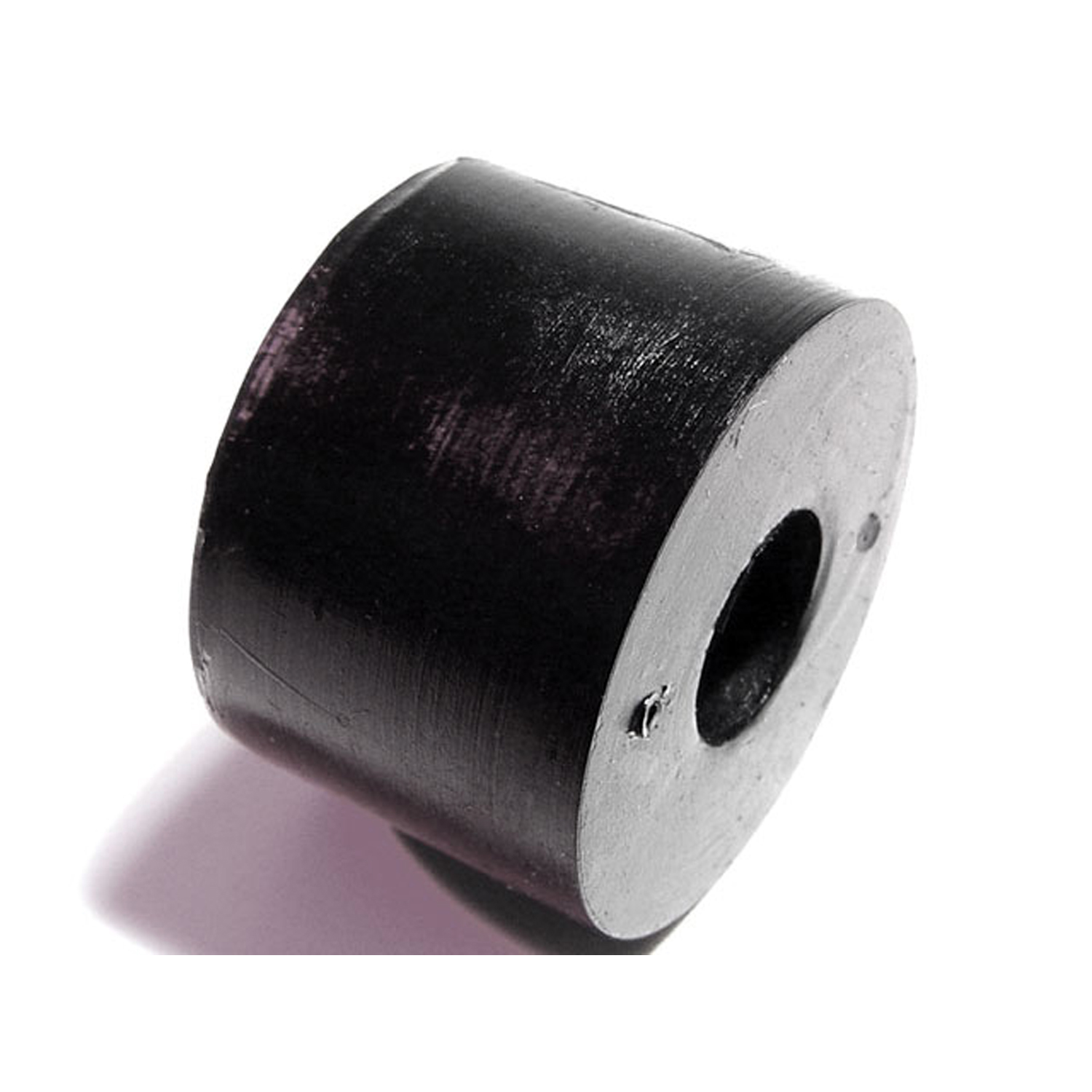 1953 Henry J Corsair Shock Absorber Grommet. 1" bottom O.D., 5/8" high-BN 13Shock Absorber Grommet. 1" bottom O.D., 5/8" high., with 3/8" I.D. Each
 1953 Henry J Corsair Clutch and Brake Pedal Pads. 2-1/8" wide X 3-1/4" long-CB 89Clutch and Brake Pedal Pads. 2-1/8" wide X 3-1/4" long. Pair
 1953 Henry J Corsair Horn contact pad. 3 in. OD x 2 in. ID x 5/8 in. thk-RP 610Horn contact pad. 3 in. OD x 2 in. ID x 5/8 in. thk. Dense rubber. May work as an air-cleaner spacer for Kaiser-Darrin. Each.
Why Choose Metro?
For over 100 years, Metro Moulded Parts has been the pinnacle of quality in classic car restoration parts. Our commitment to precision and authenticity in every component ensures a perfect fit and an OEM-level appearance.
- Expert Craftsmanship & Quality: Each part is a testament to our dedication to reliability and perfection, crafted from original designs and thoroughly tested.
- Advanced Technology: We use cutting-edge techniques to create flawless, long-lasting parts that surpass others in performance.
- SuperSoft Sponge – The Ultimate Door Seal: Not only are our door seals 30% softer than competitors', but they're also guaranteed to never leak. They effectively reduce wind and road noise, enhancing your classic car's comfort and driving experience.
- Proudly American: Our parts are a product of American craftsmanship, made in the USA with a spirit of excellence and heritage.
- Unrivaled Warranty: We back our products with a 30-year industry-leading warranty, a testament to our confidence in their quality.
Join us in preserving the legacy of classic cars with parts that are crafted for perfection, not just made.