

Image of 1954 Henry J Corsair, Note: These illustrations use artistic license and may differ from actual historical models.
Performance Metrics
Fundamental Metrics
Emotional Appeal
MMP Rating
| Engine Specifications | |
|---|---|
| Engine: | 161 CID 6-cylinder |
| Displacement: | 161 CID |
| Horsepower: | 68 HP |
| Torque: | Estimated at 125 lb-ft |
| Compression Ratio: | 7.2:1 |
| Ignition System: | Distributor and coil |
| Cooling System: | Liquid-cooled |
| Performance Specifications | |
| 0-60 Time: | Estimated at 20 seconds |
| 1/4 Mile Time: | Not available |
| Top Speed: | 80 mph |
| Transmission and Drive | |
| Drive Type: | Rear-wheel drive |
| Transmission Type: | 3-speed manual |
| Fuel and Efficiency | |
| Fuel System Type: | Carburetor |
| MPG: | Estimated at 25-30 MPG |
| Dimensions and Brakes | |
| Brakes: | Drum brakes |
| Wheelbase: | 100 inches |
| Weight: | 2,600 lbs |
Note: Specifications for classic cars are given to the best of our ability, considering the limited and variant data available.
1954 Henry J Corsair: Kaiser’s Compact Classic
The 1954 Henry J Corsair was a small car with a big assignment: prove that an American-built automobile could be affordable, practical, and modern without being a full-size sedan. Built by Kaiser-Frazer, it represented industrialist Henry J. Kaiser’s effort to bring low-cost transportation to postwar buyers. Its compact proportions, straightforward engineering, and unusual place in the company’s history make the Corsair an especially interesting American classic today.
The Henry J was named for Kaiser himself and introduced for the 1951 model year. The project was developed during a period when returning service members, young families, and budget-conscious drivers wanted new cars, while manufacturers were still adjusting to the postwar market. Kaiser-Frazer aimed to meet that demand with a less expensive car than the large, chrome-heavy models dominating American showrooms.
By 1954, the Henry J was in its final model year. Production had fallen sharply from its early peak, and the Corsair was among the last versions offered. One intriguing twist in the Henry J story is the Sears Allstate: the retailer sold a closely related car through its stores in the early 1950s, complete with Sears-branded details. That unusual sales experiment helped give the Henry J a place in automotive history beyond its own showroom.
Compact Styling and Practical Design
The Corsair’s exterior is unmistakably early 1950s American, but in a scaled-down package. Its low hood, rounded front fenders, upright cabin, and gently curved roof give it a tidy, almost European profile beside the much larger sedans of its day. The 1954 version received period-appropriate front-end and trim updates, but it retained the simple, clean shape that made the Henry J recognizable.
Its two-door body was the Henry J’s defining configuration. Rather than offering a wide range of body styles, Kaiser concentrated on the compact two-door sedan, keeping the car simple and economical to build. That restrained layout is now part of its appeal: the Corsair looks purposeful rather than ornate, with less chrome and fewer decorative flourishes than many contemporary American cars.
Inside, the Corsair was designed around value rather than luxury. Buyers got a straightforward dashboard, practical controls, and durable upholstery rather than acres of leather or elaborate trim. Materials and finish varied with equipment and condition, but the cabin was generally functional and modest. Today, surviving cars may have cloth or vinyl upholstery, and original interior trim can be harder to find than basic mechanical parts.
Factory paint choices varied by model year and equipment. The palette reflected the era’s mix of conservative solids and brighter, more cheerful colors, while many Corsairs were finished in a single exterior shade. Original paint codes and trim combinations are worth checking against period documentation, since repainting and decades of restoration work can obscure a car’s factory specification.
Engineering for the Everyday Driver
The Henry J’s most important innovation was not a single headline-grabbing gadget. It was the car’s compact, cost-conscious approach to construction. Its unit-body structure helped keep weight and materials in check, while conventional mechanical components made the car approachable for owners and independent repair shops. The engineering was deliberately simple rather than experimental.
Depending on engine and equipment, a 1954 Corsair could be found with a 134-cubic-inch inline four or a 161-cubic-inch inline six. The four-cylinder produced roughly 68 horsepower, while the six was rated at about 80 horsepower. A three-speed manual transmission was typical. As with any surviving example, the engine, transmission, and options should be verified by inspecting the car itself rather than relying solely on a badge or seller’s description.
For the period, the Corsair’s compact dimensions were a practical advantage. It was easier to park and maneuver than a full-size sedan, and its modest weight helped it use less fuel. The trade-off was a simpler ride and less interior space than buyers got in larger cars. The Henry J was built to meet transportation needs at a lower price, not to provide the plushness of a top-of-the-line Kaiser or Cadillac.
Historical Impact of the Henry J
The Henry J arrived at a time when American manufacturers were beginning to explore smaller cars, but the market was still strongly attached to large vehicles. Kaiser-Frazer’s compact had to compete not only on price, but also against established makers with bigger dealer networks and deeper resources. Its business challenge illustrates a broader lesson from the era: a sensible, economical design could still struggle if buyers equated size with value.
What distinguished the Henry J was its attempt to bring compact-car thinking into the American mainstream before that idea had become widely popular. It was not the first small car sold in the United States, nor did it single-handedly transform automotive design. Still, it stands as an early postwar American effort to offer efficient, uncomplicated motoring in a market dominated by larger cars.
The car’s influence is also visible in its production story. Kaiser-Frazer pursued a streamlined, lower-cost product, but shrinking sales and company pressures made the Henry J difficult to sustain. The 1954 Corsair therefore represents both an ambitious compact-car experiment and the closing chapter of Kaiser’s attempt to build a broad American passenger-car business.
Performance, Ride, and Road Manners
Performance figures depend on the engine, gearing, vehicle condition, and period testing method. A healthy six-cylinder Corsair is generally estimated to reach 60 mph in roughly 16 to 18 seconds, with a top speed in the neighborhood of 80 mph. Four-cylinder versions are slower, particularly when carrying passengers or climbing hills. These are best treated as practical estimates, not guaranteed factory test results for every car.
On the road, the Corsair feels light and compact compared with a full-size 1950s sedan. Its steering is relatively direct, and its modest dimensions make narrow streets and parking lots less intimidating. The suspension is conventional, with independent front suspension and a leaf-sprung rear axle. It can take ordinary road bumps in stride, though it does not deliver the soft, floating ride of a heavier luxury car.
On winding roads, a well-maintained Corsair feels nimble by the standards of its era, but it is still a narrow, upright 1950s car with period tires and brakes. Drivers should leave generous stopping distances and avoid expecting modern levels of cornering grip. Crosswinds can also make themselves felt more than they would in a heavier sedan.
The driving experience is part of the car’s charm. The four-cylinder has a modest, hardworking note, while the six sounds smoother but remains unhurried. The driver makes the most of the three-speed gearbox, listens to the engine as it climbs through the gears, and experiences the road through a lighter, more direct-feeling chassis. A Corsair is enjoyable when driven at a relaxed pace, not when asked to behave like a modern performance car.
Living With a 1954 Corsair
Most Henry J Corsairs today are used as weekend cruisers, show cars, or conversation-starting additions to collections focused on lesser-known American makes. Their compact size makes them easier to store than many contemporary classics, and their unusual styling tends to attract attention at local shows. They are not commonly chosen for regular long-distance driving, although a properly sorted example can handle occasional trips.
Basic mechanical work is within reach for an owner familiar with older cars. The engine layout and conventional manual transmission are not especially complicated, and routine servicing follows familiar vintage-car practices. The harder part is finding model-specific pieces. Mechanical components may be sourced through specialist suppliers, clubs, or cross-referencing with related Kaiser-era parts, but trim, body panels, and certain interior items can take patience to locate.
Rust deserves close inspection. Check the floors, rocker panels, lower body seams, wheel openings, trunk area, and structural areas around the suspension. Also examine the car’s wiring, brakes, fuel system, and cooling system before driving it regularly. A running engine does not necessarily mean the car is safe or roadworthy after decades of storage.
Henry J Facts and Common Criticisms
The most famous Henry J variation was the Sears Allstate, a related car sold through Sears rather than a conventional Kaiser-Frazer dealership. It wore Allstate branding and retailer-specific details, making it one of the more unusual examples of a major American retailer entering the new-car business.
The Henry J was not a factory racing legend, and there is no widely recognized production speed or endurance record that defines the Corsair. Its light body and compact layout did, however, make Henry Js attractive to later hot-rodders and drag-racing enthusiasts, who transformed some examples into modified machines. Those custom cars are a separate chapter from the original, economy-minded Corsair.
Common criticisms are easy to understand. The cabin is small by American standards, the interior is plain, and acceleration is leisurely, especially with the four-cylinder engine. The lack of a broad dealer and parts network can also make restoration more demanding than it would be for a Chevrolet or Ford of the same period. The qualities that once helped control cost can now mean fewer conveniences and more effort to find correct parts.
Collector Values and Rarity
The 1954 Henry J is a rare sight, particularly in original or carefully restored condition. A reasonable estimate for total 1954 Henry J production is around 1,100 cars, though exact figures can vary among published references and may not neatly separate every trim or engine configuration. That makes the final-year Corsair scarce, but scarcity alone does not guarantee a high price: demand remains specialized.
In the current U.S. collector market, a project car may bring roughly $2,000 to $5,000, depending on completeness and rust. A usable driver might fall around $5,000 to $12,000, while a sound, well-restored example could sell in the $15,000 to $30,000 range. Exceptional restorations or especially appealing cars may exceed that range, but the result depends heavily on originality, quality, documentation, and buyer interest.
Values have generally been modest compared with better-known American classics. The Corsair’s rarity and distinctive history support collector interest, but demand is not broad enough to ensure rapid appreciation. In inflation-adjusted terms, many examples have been relatively flat or uneven over time. Buyers should choose a car because they enjoy its story and character, not because they expect it to outperform the market.
Why the 1954 Henry J Corsair Matters
The 1954 Henry J Corsair combines compact postwar engineering, understated styling, and a fascinating place in Kaiser-Frazer history. It offered a smaller, more economical alternative to the big American sedans of its time, and its final model year captures the end of an ambitious experiment in affordable motoring.
For collectors, the Corsair is not simply a rare car. It is a reminder that American automotive history was shaped by bold ideas as well as market leaders. Small, unpretentious, and unmistakably individual, the Henry J remains a classic for drivers who appreciate the stories hiding just beyond the usual showroom names.
1954 Henry J Corsair Catalog of Parts
 1954 Henry J Corsair Shock Absorber Grommet. 1" bottom O.D-BN 11Shock Absorber Grommet. 1" bottom O.D., 3/4" high, with 5/8" I.D. Each
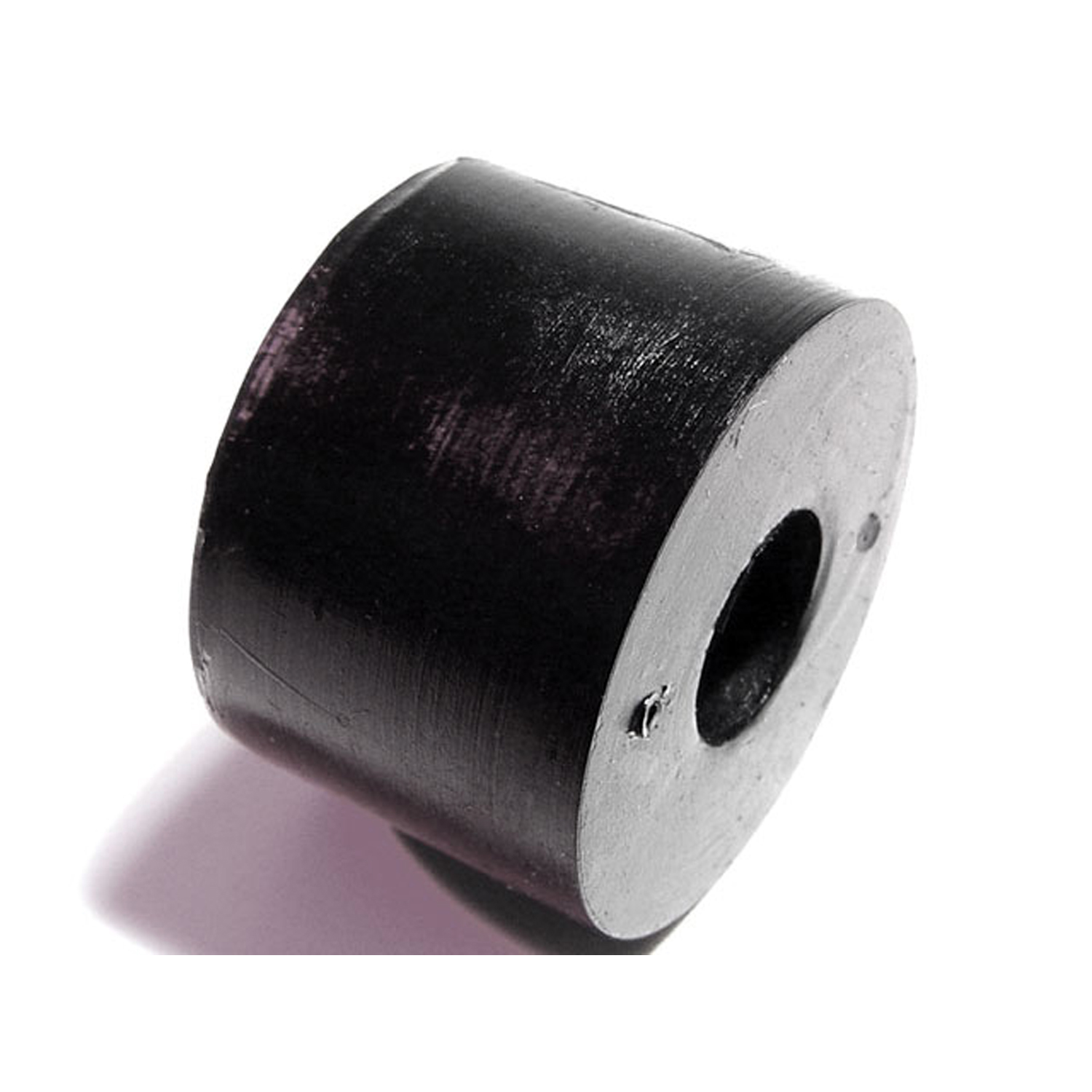 1954 Henry J Corsair Shock Absorber Grommet. 1" bottom O.D., 5/8" high-BN 13Shock Absorber Grommet. 1" bottom O.D., 5/8" high., with 3/8" I.D. Each
 1954 Henry J Corsair Clutch and Brake Pedal Pads. 2-1/8" wide X 3-1/4" long-CB 89Clutch and Brake Pedal Pads. 2-1/8" wide X 3-1/4" long. Pair
 1954 Henry J Corsair Horn contact pad. 3 in. OD x 2 in. ID x 5/8 in. thk-RP 610Horn contact pad. 3 in. OD x 2 in. ID x 5/8 in. thk. Dense rubber. May work as an air-cleaner spacer for Kaiser-Darrin. Each.
Why Choose Metro?
For over 100 years, Metro Moulded Parts has been the pinnacle of quality in classic car restoration parts. Our commitment to precision and authenticity in every component ensures a perfect fit and an OEM-level appearance.
- Expert Craftsmanship & Quality: Each part is a testament to our dedication to reliability and perfection, crafted from original designs and thoroughly tested.
- Advanced Technology: We use cutting-edge techniques to create flawless, long-lasting parts that surpass others in performance.
- SuperSoft Sponge – The Ultimate Door Seal: Not only are our door seals 30% softer than competitors', but they're also guaranteed to never leak. They effectively reduce wind and road noise, enhancing your classic car's comfort and driving experience.
- Proudly American: Our parts are a product of American craftsmanship, made in the USA with a spirit of excellence and heritage.
- Unrivaled Warranty: We back our products with a 30-year industry-leading warranty, a testament to our confidence in their quality.
Join us in preserving the legacy of classic cars with parts that are crafted for perfection, not just made.