
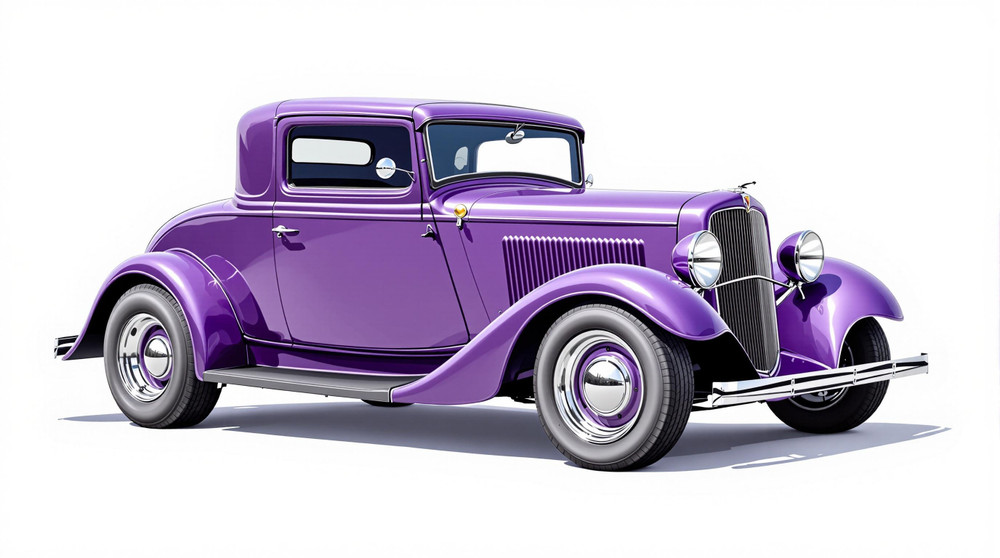
Image of 1930 Horch 500 B, Note: These illustrations use artistic license and may differ from actual historical models.
Performance Metrics
Fundamental Metrics
Emotional Appeal
MMP Rating
| Engine Specifications | |
|---|---|
| Engine Options: | Straight 8 |
| Displacement Range: | 3.5L |
| Horsepower Range: | Estimated 80-100 HP |
| Torque: | Not available |
| Compression Ratio: | Not available |
| Ignition System: | Distributor and coil |
| Cooling System: | Water-cooled |
| Performance Specifications | |
| 0-60 Time: | Not available |
| 1/4 Mile Time: | Not available |
| Top Speed: | 75 mph |
| Transmission and Drive | |
| Drive Type: | Rear-wheel drive |
| Transmission Type: | Manual |
| Fuel and Efficiency | |
| Fuel System Type: | Carburetor |
| MPG: | Not available |
| Dimensions and Brakes | |
| Brakes: | Drum brakes |
| Wheelbase: | 135 inches |
| Weight: | Estimated 3500 lbs |
Note: Specifications for classic cars are given to the best of our ability, considering the limited and variant data available.
1930 Horch 500 B: German Luxury at Full Stretch
The 1930 Horch 500 B was built for people who expected a car to arrive with presence, power, and room to spare. Its long bonnet concealed a large straight-eight engine, while its upright grille and coachbuilt body announced its status before it reached the curb. Produced by Horch in Zwickau, Germany, the 500 B belonged to the company’s prestigious Horch 8 line, a range that helped establish Horch as one of Europe’s leading makers of high-end automobiles.
Horch’s story began with engineer August Horch, who founded his first company in 1899. After leaving it, he established Audi in 1909, while the original Horch company continued under new management. In 1932, Horch became one of the four marques gathered into Auto Union, alongside Audi, DKW, and Wanderer. The 500 B therefore represents both an important chapter in Horch’s own history and part of the heritage behind the famous four-ring group.
One detail that makes the model especially intriguing is its blend of factory engineering and individual coachbuilding. Buyers could order a chassis and have it fitted with a body suited to their taste, meaning two Horch 500 Bs might share their mechanical foundations but look quite different. Exact specifications can vary by year and body, so figures for individual surviving cars should be checked against their chassis records.
Long Bonnet, Tailored Coachwork
The 500 B wears the classic proportions of a grand European automobile from the early 1930s. A tall, narrow radiator grille anchors the front, flanked by large headlamps and a long hood that stretches back toward the passenger compartment. Separate, sweeping front and rear fenders frame the wheels, while running boards connect the two sides of the car and emphasize its considerable length. The overall effect is formal rather than sporty: elegant, imposing, and unmistakably expensive.
Inside, the experience depended on the body style and the first owner’s specification. Fine leather upholstery, polished wood trim, quality carpeting, and carefully finished metal fittings were appropriate to the Horch’s luxury position. In chauffeur-oriented versions, a glass partition could separate the rear passengers from the driver. The 500 B was not designed around modern convenience features. Its luxury came from space, materials, careful finishing, and the ability to commission a body to suit a particular buyer.
Paint and trim were often selected as part of an individual order, rather than drawn from a single, consistently documented palette. Dark, restrained colors such as black, deep blue, and maroon suit the car’s formal character, while two-tone combinations could highlight the sweeping fenders and body lines. Original colors are best confirmed through surviving factory or restoration records, since cars have often been repainted over their long lives.
Body styles included formal limousines, Pullman limousines, landaulets, cabriolets, and touring cars, with availability depending on the coachbuilder and order. The Pullman limousine, with its generous rear compartment and stately profile, is among the most iconic interpretations of a Horch of this class. Cabriolets and open tourers offer a more dramatic view of the long bodywork, but were generally less suited to the chauffeur-driven role many buyers wanted.
Engineering and Historical Importance
At the heart of the Horch 500 B was a large-displacement straight-eight, a configuration prized in luxury cars for its smooth delivery and refined sound. The engine is generally listed at about 5.0 liters, with output commonly reported at roughly 100 metric horsepower, or PS. Power went to the rear wheels through a manual gearbox. In an era when many cars still relied on smaller four- or six-cylinder engines, the Horch’s eight-cylinder layout gave it a clear distinction in both smoothness and prestige.
The 500 B’s significance was not that it invented the luxury automobile. Rather, it showed how German manufacturers were combining substantial engines, high-quality chassis engineering, and custom coachwork to compete at the top of the market. Its straight-eight helped define the character of the Horch 8 family, while the model’s variety of bodies demonstrated that a luxury car could be both a manufactured product and a bespoke commission.
Horch’s reputation for engineering and finish also helped shape the identity of the later Auto Union group. The 500 B came from a period when a manufacturer’s standing was measured not only by performance, but by quietness, durability, comfort, and craftsmanship. Those qualities remain central to how collectors understand the car today.
Performance and Road Manners
Period specifications and later references commonly put the Horch 500 B’s top speed at around 110 km/h, or approximately 68 mph. A reliable factory 0-to-60-mph figure is not readily established, and it would be misleading to present one as definitive. Given the car’s substantial mass, its roughly 100 PS output, and the gearing of the period, a broad estimate of around 25 to 35 seconds is more realistic than a modern-style acceleration claim. Body style, gearing, mechanical condition, and load would all affect the result.
On the road, the Horch is best understood as a fast touring car, not a sports saloon. Its long wheelbase and substantial chassis help it settle into a steady cruise, while the engine’s smooth delivery suits relaxed progress over open roads. On rough surfaces, the tall tires and compliant suspension can soften some bumps, but the car’s age and heavy construction mean it will not ride like a modern luxury vehicle. Broken pavement, tight bends, and narrow roads call for patience and measured inputs.
The driving experience is a conversation with the machinery. The straight-eight produces a deep, even mechanical note rather than a sharp, high-revving sports-car bark. The driver works a manual gearbox, monitors the car’s responses, and plans braking well ahead. Steering effort and brake feel vary with the individual car’s condition and specification, but neither should be expected to match modern standards. A well-sorted 500 B rewards smooth driving and gives its occupants the sense of traveling in a substantial piece of engineering, not simply riding in an old car.
What Ownership Really Involves
Today, a Horch 500 B is primarily a concours, museum, touring, or collection car. It is not a sensible daily driver for most owners. Its size, age, limited parts supply, and specialist maintenance needs make regular modern traffic demanding, while its historical and financial value encourage careful use. Well-prepared examples may appear at classic-car rallies and touring events, where steady pace and mechanical sympathy matter more than outright speed.
Maintenance requires access to specialists familiar with prewar German engineering. Routine work can be manageable for an experienced owner with the right tools and documentation, but significant engine, gearbox, chassis, or body repairs are not weekend jobs for the average enthusiast. Coachwork restoration can be particularly demanding because bodies were often built to individual specifications. Original components and correct trim may also be difficult and expensive to source.
Reliability depends heavily on restoration quality and ongoing care. A properly rebuilt car can be capable of enjoyable touring, but age alone makes inspection essential. Cooling, lubrication, ignition, brakes, tires, and fuel-system condition deserve close attention before any long journey. A car that has been restored cosmetically without equivalent mechanical work may look magnificent and still be unfit for serious road use.
Horch 500 B Facts and Myths
The 500 B’s most notable “custom option” was often the body itself. Rather than being limited to one standardized silhouette, buyers could choose from several body types and, in some cases, commission coachwork tailored to their needs. That makes surviving cars especially interesting to historians and collectors: provenance, coachbuilder, original configuration, and restoration history can matter as much as the model badge.
There is no single, well-established production total for the 500 B that can be applied confidently to every source and model-year definition. As a working estimate, production was likely in the hundreds rather than many thousands, with the number of surviving, documented examples considerably smaller. Exact counts are difficult because records may group related Horch 8 models together or classify cars by chassis and body rather than by the name used today.
The Horch 500 B is not known for a major speed or endurance record, and its appeal does not rest on celebrity ownership or competition victories. Its place in history is quieter but substantial: it represents the upper tier of German automotive craftsmanship just before Horch joined Auto Union. A common criticism is that the car is heavy, complex, and difficult to maintain compared with simpler classics. That is fair, but it also reflects the elaborate construction and luxury expectations that made the Horch special in the first place.
Collector Value and Availability
Values vary widely according to originality, coachwork, restoration quality, provenance, and mechanical condition. As a broad current-market estimate, a complete but project-grade Horch 500 B might fall around $100,000 to $200,000. A well-restored, correctly documented example could plausibly bring about $200,000 to $500,000, while an exceptional car with rare or highly desirable coachwork may exceed that range. These are indicative estimates, not a guarantee of what any specific car will sell for; auction results and private transactions can differ sharply.
The model is exceptionally rare in the ordinary collector-car market. Cars may surface at specialist auctions, through marque networks, or in private collections, but buyers should expect a long search and detailed due diligence. Because the pool of comparable sales is small, value trends are not as easy to chart as they are for better-known classics. The finest examples are likely to remain sought after, while poorer restorations and cars with uncertain histories may be harder to sell. Over the long term, top-quality prewar luxury cars have strong collector appeal, but restoration costs and the limited buyer pool can temper returns.
A Lasting German Grand Tourer
The 1930 Horch 500 B combined a smooth straight-eight, imposing proportions, carefully finished interiors, and the freedom of coachbuilt design. It stood apart from ordinary transport and reflected a time when luxury meant engineering depth, skilled craftsmanship, and the ability to build a car around its owner. Its size and upkeep make it a demanding classic, but those same qualities give it a presence few cars can match.
More than a rare prewar automobile, the Horch 500 B is a rolling reminder of the standards that helped make Horch a name in European luxury and later secured its place in Auto Union history. When one glides past with its long hood and upright grille leading the way, it does not merely recall the past. It shows just how grand the past could be.
1930 Horch 500 B Catalog of Parts
 1930 HORCH 500 B Headlight Pads. 3-1/8" wide X 4-1/4" long. Pair-MP 7971-AHeadlight Pads. 3-1/8" wide X 4-1/4" long. Pair
 1930 HORCH 500 B Luggage Rack Pad. 1-3/4" wide X 6" long. Each-MP 7971-BLuggage Rack Pad. 1-3/4" wide X 6" long. Each
 1930 HORCH 500 B Door Handle (with lock) Pads. 1-7/8" wide X 3-1/2" long-MP 7971-CDoor Handle (with lock) Pads. 1-7/8" wide X 3-1/2" long. Pair
 1930 HORCH 500 B Door handle pads. 1-7/8 in. W x 2-1/2 in. L. Pair. R&L.-MP 7971-DDoor handle pads. 1-7/8 in. W x 2-1/2 in. L. Pair. R&L.
 1930 HORCH 500 B Trunk Light Pad. 3-3/4" long X 8-3/4" wide. Each-MP 7971-ETrunk Light Pad. 3-3/4" long X 8-3/4" wide. Each
Why Choose Metro?
For over 100 years, Metro Moulded Parts has been the pinnacle of quality in classic car restoration parts. Our commitment to precision and authenticity in every component ensures a perfect fit and an OEM-level appearance.
- Expert Craftsmanship & Quality: Each part is a testament to our dedication to reliability and perfection, crafted from original designs and thoroughly tested.
- Advanced Technology: We use cutting-edge techniques to create flawless, long-lasting parts that surpass others in performance.
- SuperSoft Sponge – The Ultimate Door Seal: Not only are our door seals 30% softer than competitors', but they're also guaranteed to never leak. They effectively reduce wind and road noise, enhancing your classic car's comfort and driving experience.
- Proudly American: Our parts are a product of American craftsmanship, made in the USA with a spirit of excellence and heritage.
- Unrivaled Warranty: We back our products with a 30-year industry-leading warranty, a testament to our confidence in their quality.
Join us in preserving the legacy of classic cars with parts that are crafted for perfection, not just made.