
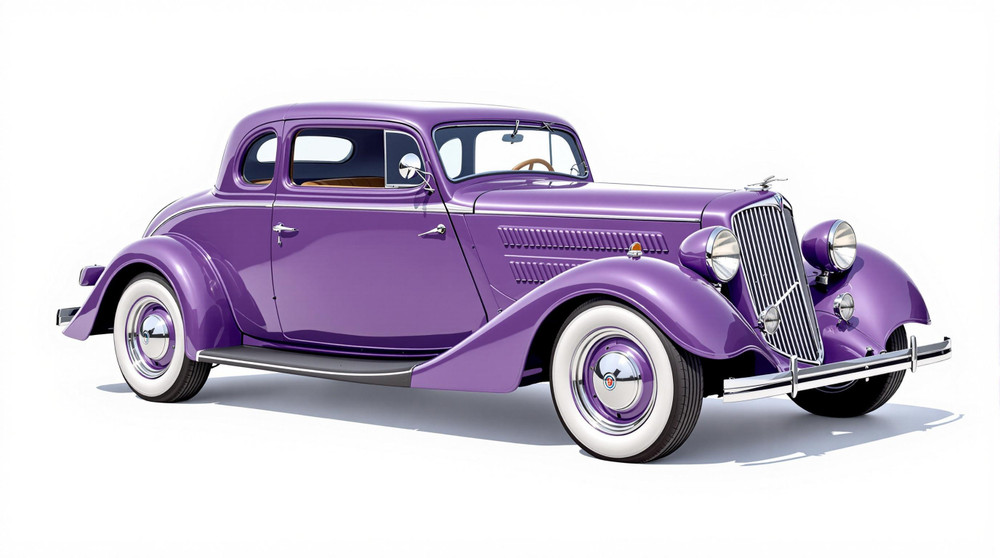
Image of 1934 Horch 600-670, Note: These illustrations use artistic license and may differ from actual historical models.
Performance Metrics
Fundamental Metrics
Emotional Appeal
MMP Rating
| Engine Specifications | |
|---|---|
| Engine Options: | Straight 8 |
| Displacement Range: | 4.9L |
| Horsepower Range: | Estimated 100-120 HP |
| Torque: | Not available |
| Compression Ratio: | Not available |
| Ignition System: | Distributor and coil |
| Cooling System: | Water-cooled |
| Performance Specifications | |
| 0-60 Time: | Not available |
| 1/4 Mile Time: | Not available |
| Top Speed: | 90 mph |
| Transmission and Drive | |
| Drive Type: | Rear-wheel drive |
| Transmission Type: | Manual |
| Fuel and Efficiency | |
| Fuel System Type: | Carburetor |
| MPG: | Not available |
| Dimensions and Brakes | |
| Brakes: | Drum brakes |
| Wheelbase: | 135 inches |
| Weight: | Estimated 2,200 kg |
Note: Specifications for classic cars are given to the best of our ability, considering the limited and variant data available.
1934 Horch 600-670: German Luxury at Its Grandest
The 1934 Horch 600-670 was built for a world in which luxury meant more than polished chrome and a powerful engine: it meant arriving in a hand-finished, coachbuilt automobile that could carry its occupants across country in imposing comfort. Created by Horch in Zwickau, Germany, the 600 and 670 combined a smooth 6.0-liter straight-eight with the craftsmanship of Germany’s finest coachbuilders. They were among the most exclusive German cars of their era, and their rarity today makes them especially compelling to collectors.
Horch’s story began with engineer August Horch, who founded the company in 1904. After leaving the firm, he established Audi in 1909. Horch remained a leading name in German prestige motoring, and in 1932 it became one of the four marques in the newly formed Auto Union, represented by the four rings familiar from Audi today. The 600-670 arrived during the economic hardship of the early 1930s, a strikingly ambitious luxury car for an uncertain time.
One intriguing detail is that “600” and “670” refer to two related chassis versions, not different engine sizes. Both used a 6,019 cc inline-eight. The distinction was chiefly in wheelbase and intended bodywork: the 600 was the longer, more formal platform, while the 670 was the shorter version favored for more sporting, open coachwork.
Long Lines and Coachbuilt Craftsmanship
The Horch’s exterior has the presence of a formal European grand touring car. Its long bonnet, upright radiator grille, flowing wings, separate running boards and carefully shaped rear body give it a stately profile. Large headlamps flank the grille, while polished trim and restrained detailing lend distinction without overwhelming the car’s proportions. The straight-eight beneath the bonnet is echoed in the long, uninterrupted hood line.
Horch supplied the chassis, while specialist coachbuilders created bodies to suit a buyer’s taste and purpose. Versions included formal Pullman limousines and sedans, as well as cabriolets and other open touring styles. The 600’s longer wheelbase made it well suited to chauffeur-driven bodies, while the 670’s shorter chassis offered a more compact foundation for a cabriolet. Elegant open cars by prestigious coachbuilders, including Erdmann & Rossi, are among the most visually memorable interpretations. There was no single universal body style: the customer’s budget and preferences played a major role.
Paint choices were similarly individual. Buyers could specify subdued dark colors such as black, deep blue or maroon, while lighter or two-tone finishes were possible depending on the coachbuilder and commission. Period records do not support a definitive factory color chart for every body, so surviving cars should be assessed by their own documented history. Dark, formal finishes suit the car’s limousine character; a contrasting body and fender treatment can make a cabriolet appear more sporting.
Inside, the emphasis was on space and finish. Depending on the body, occupants could find fine leather upholstery, quality carpeting, polished wood trim and carefully finished metal fittings. Formal versions might include a generous rear compartment designed around passenger comfort, with the driver’s position separated visually or physically from the passenger area. These were bespoke automobiles, so equipment and materials varied from car to car rather than following a modern standardized trim package.
Technology Behind the Prestige
At the heart of the 600-670 was a 6.0-liter overhead-valve inline-eight, generally quoted at about 120 metric horsepower. Its long crankshaft and eight cylinders were designed for smooth, quiet power rather than high-revving excitement. A four-speed manual gearbox sent power to the rear wheels. The car also offered substantial braking hardware for its time, though braking feel and maintenance standards differ from those of a modern automobile.
The engine’s smoothness was itself a luxury feature. An inline-eight delivers power pulses in a way that helps reduce vibration, making it well suited to a large, expensive touring car. Horch paired that refinement with a substantial chassis and a focus on passenger comfort. Exact suspension and equipment details can vary by year, chassis and coachbuilt body, so a particular car’s specifications should be checked against its build records.
Why the Horch 600-670 Mattered
The 600-670 represented the top tier of German motoring at a time when competition came from prestigious names such as Mercedes-Benz and Maybach. Its appeal was not based on one revolutionary gadget. Rather, Horch combined a large, refined engine, a generous chassis and individual coachwork into a cohesive luxury automobile. That approach made the car feel personal as well as prestigious: two examples could share a mechanical foundation yet look strikingly different.
The model also reflects a defining shift in the German automobile industry. Horch’s entry into Auto Union linked the marque to a larger group that included Audi, DKW and Wanderer. While the 600-670 was not a mass-market car, it helped sustain Horch’s reputation for engineering and craftsmanship within that new corporate structure. Its legacy is visible in the broader tradition of high-end German touring cars, where mechanical refinement and coachbuilt individuality mattered as much as outright speed.
Straight-Eight Performance and Road Manners
Period specifications commonly place the Horch 600-670’s top speed at roughly 140 km/h, or about 87 mph, depending on the body and gearing. A reliable factory 0-to-60 mph figure is difficult to establish. Given the car’s weight, period gearing and approximately 120 PS, a rough estimate would be around 20 to 25 seconds, but that should be treated as an informed approximation, not a verified factory test result.
On a smooth road, the car’s character is measured and dignified. The straight-eight builds speed with a deep, subdued mechanical note rather than a sharp sporting bark. The four-speed manual requires the driver to work with the engine’s torque and choose gears thoughtfully. A well-maintained example can make open-road travel feel remarkably composed for a car of its age, though it will not isolate occupants from bumps as effectively as a modern luxury vehicle.
On winding roads, the Horch’s size and weight call for a deliberate approach. It is more comfortable sweeping through broad bends than being hustled through tight corners. Its long wheelbase can help it feel settled, but steering effort, body movement and braking distances demand respect. Poor surfaces also reveal the realities of prewar suspension and large, narrow period tires. The driving experience is less about chasing lap times than enjoying the engine’s smoothness and the car’s stately progress.
Owning a Prewar Horch
A 600-670 today is typically a collector car, concours entrant or carefully exercised touring machine, not a practical daily driver. Its size, age, rarity and value make regular modern traffic a challenge. Owners who do drive them often favor organized vintage tours, club events and carefully planned journeys on suitable roads.
Maintenance is specialized. The engine, gearbox, chassis and electrical system require knowledge of prewar German engineering, and coachwork repairs call for experienced craftspeople. Routine work is manageable for a skilled vintage-car mechanic, but the average owner should not expect the convenience or ready availability of parts found with a more common classic. Correct components can be difficult to source, and a sympathetic restoration may require custom fabrication. Reliability depends heavily on the quality of restoration, ongoing care and the availability of specialist support.
Rare Details and Common Misconceptions
Production figures are scarce and can vary among sources. A reasonable working estimate is roughly 80 Horch 600s and around 50 Horch 670s, for a combined total in the neighborhood of 130 examples. These figures should be treated as estimates rather than a definitive production ledger. Many surviving cars have also been modified, rebodied or restored, which makes documented chassis identity especially important.
The 600-670 is not widely known for a specific speed record or endurance achievement. Its distinction lies instead in exclusivity, engineering and custom craftsmanship. Horch cars were associated with wealthy private owners and official or ceremonial use, but claims that a particular famous person owned a specific 600-670 should be checked against reliable provenance. The model’s place in the Auto Union story is a more secure historical connection than any unverified celebrity anecdote.
Common criticisms are straightforward: the car is large, thirsty by modern standards, expensive to maintain and not especially nimble. Its performance figures may seem modest beside later sports cars, but that misses the point. The Horch was engineered to move its passengers with refinement and authority, not to deliver a lightweight sports-car experience.
Collector Value and Availability
The 600-670 is exceptionally rare on the open market. Values depend on chassis identity, coachbuilder, originality, restoration quality, provenance and whether the car retains its original engine and body. As a broad current-market estimate, a project or incomplete example might fall around $200,000 to $400,000, while a well-restored, documented car could be worth roughly $500,000 to $1 million or more. A particularly desirable cabriolet with exceptional provenance could exceed that range. These are estimates, not guaranteed sale prices, and the small number of transactions makes precise valuation difficult.
In general, top-quality prewar cars with strong documentation have shown long-term collector appeal, but prices are not immune to market changes. Restoration costs can also exceed the value of an average example. The best-preserved and most correctly documented cars are likely to remain the most sought after, especially where bodywork and chassis history are clear.
A Lasting German Grand Tourer
The 1934 Horch 600-670 brought together an exceptionally smooth straight-eight, substantial road-going presence and coachbuilt individuality at the highest level of German prewar motoring. Its performance was impressive for a large luxury car of its time, but its enduring appeal lies just as much in its craftsmanship and the quiet confidence of its design. Rare, demanding to maintain and unmistakably grand, the Horch 600-670 is more than a beautiful survivor: it is a rolling reminder of an era when a luxury car could be engineered as a machine and finished as a personal commission.
1934 Horch 600-670 Catalog of Parts
 1934 HORCH 600-670 Headlight Pads. 3-1/8" wide X 4-1/4" long. Pair-MP 7971-AHeadlight Pads. 3-1/8" wide X 4-1/4" long. Pair
 1934 HORCH 600-670 Luggage Rack Pad. 1-3/4" wide X 6" long. Each-MP 7971-BLuggage Rack Pad. 1-3/4" wide X 6" long. Each
 1934 HORCH 600-670 Door Handle (with lock) Pads. 1-7/8" wide X 3-1/2" long-MP 7971-CDoor Handle (with lock) Pads. 1-7/8" wide X 3-1/2" long. Pair
 1934 HORCH 600-670 Door handle pads. 1-7/8 in. W x 2-1/2 in. L. Pair. R&L.-MP 7971-DDoor handle pads. 1-7/8 in. W x 2-1/2 in. L. Pair. R&L.
 1934 HORCH 600-670 Trunk Light Pad. 3-3/4" long X 8-3/4" wide. Each-MP 7971-ETrunk Light Pad. 3-3/4" long X 8-3/4" wide. Each
 1934 HORCH 600-670 Fender Light Pads. 1-1/2" wide X 2-3/8" long. Pair-MP 7971-HFender Light Pads. 1-1/2" wide X 2-3/8" long. Pair
Why Choose Metro?
For over 100 years, Metro Moulded Parts has been the pinnacle of quality in classic car restoration parts. Our commitment to precision and authenticity in every component ensures a perfect fit and an OEM-level appearance.
- Expert Craftsmanship & Quality: Each part is a testament to our dedication to reliability and perfection, crafted from original designs and thoroughly tested.
- Advanced Technology: We use cutting-edge techniques to create flawless, long-lasting parts that surpass others in performance.
- SuperSoft Sponge – The Ultimate Door Seal: Not only are our door seals 30% softer than competitors', but they're also guaranteed to never leak. They effectively reduce wind and road noise, enhancing your classic car's comfort and driving experience.
- Proudly American: Our parts are a product of American craftsmanship, made in the USA with a spirit of excellence and heritage.
- Unrivaled Warranty: We back our products with a 30-year industry-leading warranty, a testament to our confidence in their quality.
Join us in preserving the legacy of classic cars with parts that are crafted for perfection, not just made.