
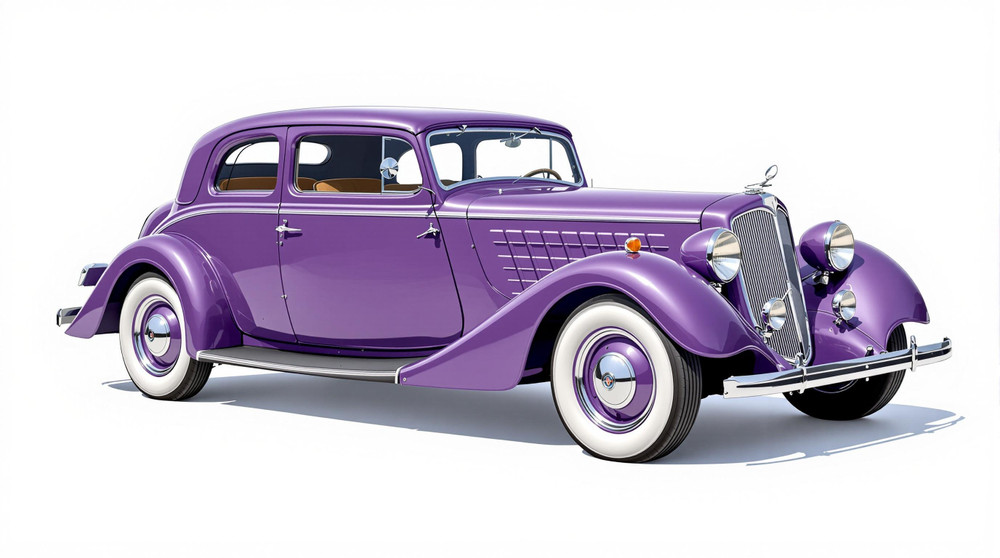
Image of 1934 Horch 850/853, Note: These illustrations use artistic license and may differ from actual historical models.
Performance Metrics
Fundamental Metrics
Emotional Appeal
MMP Rating
| Engine Specifications | |
|---|---|
| Engine: | Straight 8 |
| Displacement: | 4.9L |
| Horsepower: | Estimated 100-120 HP |
| Torque: | Not available |
| Compression Ratio: | Not available |
| Ignition System: | Standard for the period (likely a distributor and points system) |
| Cooling System: | Liquid-cooled |
| Performance Specifications | |
| 0-60 Time: | Not available |
| 1/4 Mile Time: | Not available |
| Top Speed: | 90 mph |
| Transmission and Drive | |
| Drive Type: | Rear-wheel drive |
| Transmission Type: | 4-speed manual |
| Fuel and Efficiency | |
| Fuel System Type: | Carburetor |
| MPG: | Not available |
| Dimensions and Brakes | |
| Brakes: | Drum brakes |
| Wheelbase: | 135 inches |
| Weight: | Estimated 2,800 lbs |
Note: Specifications for classic cars are given to the best of our ability, considering the limited and variant data available.
1934 Horch 850 and 853: A Grand Tourer Ahead of Its Time
A Horch 850 or 853 does not simply arrive; it makes an entrance, with a long bonnet, a deep, sonorous straight-eight and the unmistakable presence of a prewar German luxury car. There is one date detail worth clearing up first: the Horch 850 arrived in 1935, while the more sporting 853 followed in 1937. So a car described as a “1934 Horch 850/853” is likely being identified by its general era, rather than its exact model year.
Horch was a leading German luxury-car manufacturer founded by engineer August Horch. After leaving the company that bore his name, he established a second firm. A trademark dispute meant he could not use “Horch” again, so he translated the word, meaning “listen,” into Latin: “Audi.” Horch later became one of the four marques in Auto Union, alongside Audi, DKW and Wanderer.
The 850 and 853 represented Horch at the height of its prewar prestige. They were built for buyers who wanted imposing coachwork, sophisticated engineering and effortless long-distance travel. A particularly intriguing detail is that these cars were not just anonymous factory products: customers could choose different body styles and coachbuilders, making some examples strikingly individual.
Long Bonnet, Fine Coachwork
The 850 and 853 wore the classic proportions of a grand touring automobile: a tall, upright radiator grille, sweeping front fenders, separate headlamps and a long engine compartment that seemed to stretch toward the horizon. Running boards linked the front and rear fenders, while the rear of the car could be finished as a formal limousine cabin or a more open, sporting tail. Chrome trim and carefully shaped bodywork added distinction without relying on excess ornament.
Inside, the experience depended on the body style and specification, but the materials were appropriate to a top-flight luxury car. Owners could expect finely finished leather upholstery, polished wood trim, quality carpeting and substantial fittings. Limousine versions emphasized passenger comfort, with generous seating and a more formal atmosphere. Cabriolets and sportier bodies placed the driver closer to the engine and the road, while retaining the craftsmanship expected of a Horch.
Color was often a matter of customer preference rather than a short, standardized palette. Dark shades such as black, navy, deep green and burgundy suited the cars’ formal character, while two-tone combinations could emphasize the long fenders and flowing body lines. As with many coachbuilt cars, the exact finish could vary from one example to another.
The Horch 850 range included substantial touring and limousine bodies, as well as cabriolets and other coachbuilt variants. The 853 was the more sporting expression, most famously seen as a dramatic sport cabriolet. Coachbuilders including Gläser and Erdmann & Rossi were associated with Horch bodies, helping create cars that could differ noticeably in detail and character. The 853 Sport Cabriolet is generally the most instantly recognizable and sought-after version.
Luxury Engineering in the Auto Union Era
At the time, the 850 and 853 competed in a demanding luxury market where power alone was not enough. Buyers expected quietness, comfort, high-quality construction and the ability to cover long distances at speed. Horch delivered those qualities with a large straight-eight engine, rear-wheel drive and a substantial chassis. The marque’s engineering and finish helped establish it as one of Germany’s premier luxury names.
The 853’s significance lies partly in how it combined imposing size with sporting intent. It was not a lightweight sports car, but its more powerful engine and elegant open body gave it a distinctly more athletic character than a formal limousine. The model also illustrates an era when a luxury manufacturer could offer a chassis and mechanical package that customers then dressed in a choice of bodies, rather than selling every car in one fixed configuration.
Horch’s four-ring Auto Union connection is another part of the story. The rings represent Audi, DKW, Horch and Wanderer, brought together under the Auto Union name in 1932. Horch occupied the group’s luxury end of the market, while Auto Union’s celebrated racing efforts belonged to a broader corporate program rather than being a direct competition version of the 850 or 853.
Straight-Eight Performance and Road Manners
Both models used a large inline eight-cylinder engine of approximately 4.9 litres. Output varied by model and specification: the 850 is commonly listed at about 100 metric horsepower, while the 853 is often quoted at roughly 120. A four-speed manual gearbox sent power to the rear wheels. Exact figures can vary across references and individual cars, so engine specification should be confirmed for any specific example.
Period performance figures and modern summaries generally put top speed in the neighborhood of 140 to 145 km/h, or about 87 to 90 mph, depending on bodywork, gearing and condition. A 0-to-60-mph time was not always reported consistently for these coachbuilt cars. A reasonable estimate is roughly 20 to 25 seconds, but that should be treated as an approximation rather than a definitive factory figure. These were heavy luxury automobiles, built to cruise rather than sprint.
On a smooth open road, the straight-eight’s strong low-speed pull and measured delivery are the main attraction. The engine is known for a refined, deep mechanical note, not the sharp bark of a high-revving sports car. The long wheelbase and substantial chassis help the car settle into a relaxed touring rhythm. Bumps are best met at a sensible speed: prewar suspension and tall tires cannot isolate passengers like a modern luxury car, and worn components can make the ride unsettled.
On winding roads, the Horch rewards calm inputs. Its size and weight make quick direction changes less natural than in a smaller car, and period steering and braking require more anticipation than modern systems. In crosswinds, the tall body and generous proportions call for a steady hand. The driver is part of the experience, working the manual gearbox and planning ahead rather than relying on effortless modern controls.
What Horch Ownership Involves
Today, a Horch 850 or 853 is best suited to touring events, concours displays, private collections and carefully planned historic motoring. Its scale and rarity make everyday use impractical, though a well-sorted example can certainly be driven. Long-distance events are possible when the car is properly prepared and the route, support and spare-parts needs are considered in advance.
Maintenance is a specialist undertaking. The car’s mechanical systems are understandable to an experienced vintage-car technician, but parts availability, coachwork repairs and the correct restoration of unusual details can be challenging. The average owner should not expect the easy servicing or ready-made replacement parts available for a more common postwar classic. Regular mechanical attention, careful storage and a knowledgeable restorer are essential to preserving both reliability and value.
Condition matters enormously. A car with sound mechanicals, a documented history and well-executed restoration is a very different ownership proposition from one with tired engine components, structural corrosion or poorly repaired coachwork. Because each body can have unique details, careful research is important before buying, restoring or ordering parts.
Rare Facts and Prewar Context
The Horch name has a linguistic twist at its heart: “Horch” means “listen” in German, and “Audi” is its Latin equivalent. That story connects the company’s early history to the four-ring badge still associated with Audi today.
There is no single universally agreed production total for every 850 and 853 variant, partly because sources count model versions and body styles differently. A practical estimate is that production across the 850 and 853 family amounted to roughly a couple of thousand cars, with the 853 and its sporting bodies representing only a portion of that total. The number of surviving cars is smaller still, and especially elegant or well-documented examples are uncommon at auction.
The cars were products of a politically turbulent period in Germany, and Horch automobiles were associated with the country’s wealthy and powerful buyers. That historical setting is part of their provenance, but it should not be confused with the cars’ engineering story or treated as a substitute for careful research into an individual vehicle’s ownership history.
One common criticism is that these cars can be mistaken for one another in photographs. The 850 and 853 share a family resemblance, and coachbuilt variations make identification more complicated. Model badges alone are not enough to establish a car’s exact specification: chassis numbers, factory records, body details and provenance all matter.
Horch 850 and 853 Collector Values
These are rare, high-value classics, and there is no meaningful price for “a Horch” without considering its exact model, body style, originality, restoration quality and history. As a broad current-market estimate, a strong 850 might fall around $500,000 to $1 million. A particularly desirable 853, especially a sport cabriolet, could range from about $1 million to $2.5 million or more. Exceptional cars with distinguished provenance or unusually important coachwork can exceed that range.
Those figures are estimates, not guarantees. Auction results vary widely, and the difference between a well-restored car and a merely attractive one can be substantial. Independent inspection and authentication are especially important for a car whose body and specification may have been altered or reconstructed over its long life.
Availability is limited. A suitable example may take years to find, and the best cars often move through specialist dealers, private collections or invitation-only sales rather than appearing regularly on the open market. In the long term, the model’s rarity and historical importance support collector interest. Values can still move with the broader prewar-car market, however, and restoration costs are high enough that appreciation should never be assumed to make ownership inexpensive.
A Lasting German Grand Tourer
The Horch 850 and 853 combine a powerful straight-eight, elegant coachbuilt styling and the kind of craftsmanship that made Horch a leading luxury marque. The 850 leaned toward imposing touring and limousine comfort, while the 853 gave the same grand tradition a more sporting edge. Their rarity, mechanical character and close connection to Auto Union history make them compelling cars for collectors and enthusiasts alike.
Correctly speaking, neither model belongs to 1934, but both capture the spirit of the mid-1930s at its most ambitious. A Horch 850 or 853 is more than a beautiful survivor: it is a rolling reminder of an era when a great automobile was built to impress before it ever turned a wheel.
1934 Horch 850/853 Catalog of Parts
 1934 HORCH 850/853 Headlight Pads. 3-1/8" wide X 4-1/4" long. Pair-MP 7971-AHeadlight Pads. 3-1/8" wide X 4-1/4" long. Pair
 1934 HORCH 850/853 Luggage Rack Pad. 1-3/4" wide X 6" long. Each-MP 7971-BLuggage Rack Pad. 1-3/4" wide X 6" long. Each
 1934 HORCH 850/853 Door Handle (with lock) Pads. 1-7/8" wide X 3-1/2" long-MP 7971-CDoor Handle (with lock) Pads. 1-7/8" wide X 3-1/2" long. Pair
 1934 HORCH 850/853 Door handle pads. 1-7/8 in. W x 2-1/2 in. L. Pair. R&L.-MP 7971-DDoor handle pads. 1-7/8 in. W x 2-1/2 in. L. Pair. R&L.
 1934 HORCH 850/853 Trunk Light Pad. 3-3/4" long X 8-3/4" wide. Each-MP 7971-ETrunk Light Pad. 3-3/4" long X 8-3/4" wide. Each
 1934 HORCH 850/853 Fender Light Pads. 1-1/2" wide X 2-3/8" long. Pair-MP 7971-HFender Light Pads. 1-1/2" wide X 2-3/8" long. Pair
Why Choose Metro?
For over 100 years, Metro Moulded Parts has been the pinnacle of quality in classic car restoration parts. Our commitment to precision and authenticity in every component ensures a perfect fit and an OEM-level appearance.
- Expert Craftsmanship & Quality: Each part is a testament to our dedication to reliability and perfection, crafted from original designs and thoroughly tested.
- Advanced Technology: We use cutting-edge techniques to create flawless, long-lasting parts that surpass others in performance.
- SuperSoft Sponge – The Ultimate Door Seal: Not only are our door seals 30% softer than competitors', but they're also guaranteed to never leak. They effectively reduce wind and road noise, enhancing your classic car's comfort and driving experience.
- Proudly American: Our parts are a product of American craftsmanship, made in the USA with a spirit of excellence and heritage.
- Unrivaled Warranty: We back our products with a 30-year industry-leading warranty, a testament to our confidence in their quality.
Join us in preserving the legacy of classic cars with parts that are crafted for perfection, not just made.