
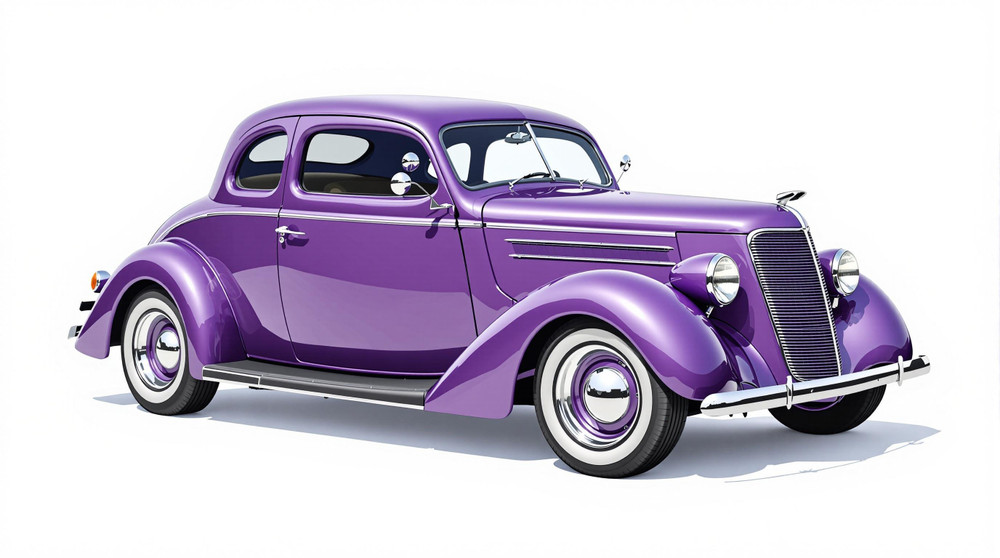
Image of 1935 Horch 400, Note: These illustrations use artistic license and may differ from actual historical models.
Performance Metrics
Fundamental Metrics
Emotional Appeal
MMP Rating
| Engine Specifications | |
|---|---|
| Engine Options: | Straight 8 |
| Displacement Range: | 4.9L |
| Horsepower Range: | Estimated 100-120 HP |
| Torque: | Not available |
| Compression Ratio: | Not available |
| Ignition System: | Distributor and coil |
| Cooling System: | Water-cooled |
| Performance Specifications | |
| 0-60 Time: | Not available |
| 1/4 Mile Time: | Not available |
| Top Speed: | 90 mph |
| Transmission and Drive | |
| Drive Type: | Rear-wheel drive |
| Transmission Type: | Manual |
| Fuel and Efficiency | |
| Fuel System Type: | Carburetor |
| MPG: | Not available |
| Dimensions and Brakes | |
| Brakes: | Drum brakes |
| Wheelbase: | 135 inches |
| Weight: | Estimated 2,200 kg |
Note: Specifications for classic cars are given to the best of our ability, considering the limited and variant data available.
1935 Horch 400: A Name Worth Checking
A long, polished bonnet and the quiet authority of an eight-cylinder engine made a Horch a statement of German luxury in the 1930s. But there is an important detail for anyone researching a “1935 Horch 400”: the Horch 400 belongs to the marque’s earlier Horch 8 range, while the company’s 1935 catalogue featured later models such as the Horch 830 and 850. A car advertised today as a 1935 Horch 400 may have an incorrect date, an informal model description, or a history that needs careful verification.
This guide focuses on the Horch 400, the early-1930s luxury car, and flags where details can vary by year, chassis and coachwork. Horch was founded in Zwickau in 1904 by engineer August Horch. After leaving the company he founded Audi, and Horch later became one of the four marques brought together in Auto Union in 1932. The four-ring emblem represents those four companies, not four Horch models.
The Horch 400’s most intriguing distinction is its place in the company’s celebrated Horch 8 family. Its smooth inline-eight engine embodied the era’s idea of prestige: more cylinders, refined power delivery and a stately presence, rather than sports-car agility. For a car carrying a 1935 date, the first fascinating question is not just how it drives, but what its chassis and factory records say it actually is.
Elegant Horch Styling and Coachwork
The Horch 400 had the proportions expected of a high-class European car of its period. A long bonnet announced the engine beneath it, while the upright radiator, separate front wings and running boards gave the body a formal, architectural shape. Large headlamps flanked the grille, and many examples wore a rear-mounted spare wheel or other touring equipment. The overall effect was imposing without relying on the flamboyant excess seen on some later luxury cars.
Interior trim depended on the body and buyer’s specification. Owners could expect a broad cabin, generous seating and upholstery in materials such as leather or high-quality cloth, with polished wood or painted trim on the dashboard. Instrumentation was functional and clearly laid out by contemporary standards. These were expensive cars, and their finishes were intended to communicate craftsmanship rather than mass production.
Horch offered chassis that could be clothed in different forms, with bodies supplied by the factory or specialist coachbuilders. Saloon and limousine layouts suited owners who travelled with a chauffeur, while open touring bodies and cabriolets offered a more social, wind-in-the-hair experience. The formal limousine or Pullman-style body is among the most evocative interpretations of the Horch, though the exact body styles available depended on the model year and chassis.
Paint choices were often tied to the buyer’s order and coachbuilder, so there is no single dependable “Horch 400 colour list” that applies to every car. Dark, dignified shades such as black, deep blue, burgundy and dark green suit the marque’s luxury image, often with contrasting wings or fine coachlines. Original paint evidence, when it survives, is more meaningful than assuming a particular colour was standard.
Eight-Cylinder Technology and Historical Importance
The Horch 400 was part of the Horch 8 series, a family that helped establish Horch as a leading German luxury manufacturer. The inline-eight layout was a major selling point: compared with many four- and six-cylinder rivals, it offered notably smooth, even power delivery. The 400 is generally described as having an engine of about 4.0 litres, but specifications can differ across the evolving Horch 8 range. Buyers and restorers should verify engine and chassis details against the individual car.
Period Horch engineering combined substantial construction with mechanical systems suited to a high-end touring car. A multi-speed manual gearbox gave the driver control over the engine’s broad power delivery, while braking and chassis equipment reflected the rapid development of luxury-car engineering at the time. Exact components could change across revisions, so a specification sheet for a particular chassis is more reliable than a general model description.
What set the Horch apart was the complete package: a refined engine, formal coachwork and the prestige of a marque competing for Germany’s most affluent customers. The car was not designed to be a lightweight sports machine. Instead, it helped define a luxury-car formula built around smoothness, comfort and presence. That approach carried forward into Horch’s later, more powerful models and contributed to the brand’s enduring reputation.
Horch 400 Performance and Road Manners
Figures commonly associated with the roughly 4.0-litre Horch 400 include output in the region of 80 horsepower and a top speed close to 100 km/h, or about 62 mph. Treat these as indicative period figures, not guaranteed results for every surviving car. Body weight, gearing, engine condition and the exact model revision all affect performance. A factory-style 0-to-60-mph time is not consistently documented; a reasonable modern estimate is around 25 to 35 seconds, and some examples may take longer.
On the road, the Horch’s appeal is measured in smoothness and composure rather than quick acceleration. The inline-eight should build speed with a steady, cultured note, while the manual gearbox asks the driver to plan ahead and make deliberate shifts. The car’s size and mass suit open roads better than tight urban streets, and its braking distances and steering effort belong to another era.
A well-sorted chassis can make a Horch feel composed on a long, flowing route, but bumps are still transmitted through old-fashioned suspension and tall tyres. On winding roads, the driver needs to respect the car’s weight, body roll and period tyres. It rewards a measured pace and anticipation, not abrupt inputs. The best driving experience is a relaxed tour, with the engine humming steadily and the cabin turning every journey into an occasion.
Owning and Maintaining a Horch
A Horch 400 is now primarily a collector and show car, or a participant in carefully planned vintage tours. It is not a sensible everyday driver for most owners. Its historic value, limited parts supply, age and size make regular modern traffic demanding, while long-distance events require preparation and mechanical support.
Maintenance is a specialist undertaking. Routine work such as lubrication, ignition service and adjustment is familiar in principle to a vintage-car mechanic, but sourcing correct components and keeping the engine, gearbox, brakes and electrical system in reliable condition can be difficult. Body and trim repairs may be just as challenging as mechanical work, especially on a coachbuilt car. An average owner can learn to perform basic checks, but a full restoration or major engine repair calls for marque knowledge and access to specialist suppliers.
Reliability depends heavily on restoration quality and ongoing care. Before buying, commission an inspection that checks the chassis number, engine identity, signs of structural corrosion, previous repairs and the provenance of the body. A running car is not automatically a sound car, and a high-quality restoration with records is usually worth more than a superficially shiny example.
Rare Horch Facts and Common Questions
The Horch 400’s model name should not be confused with the cars Horch sold in 1935. That year’s range included later designs such as the 830 and 850 families. Because registration dates, build dates and later catalog descriptions can be mixed up, a seller’s description alone is not proof of a 1935 factory model. Chassis documentation and period records are essential.
Horch’s connection to Auto Union is another notable piece of its story. The four-ring logo became one of the most recognizable emblems in motoring, but Horch remained the group’s luxury name. The company’s prewar cars were built for affluent private owners and official or business use, rather than for mass-market sales.
There is no widely accepted, model-specific production total for the Horch 400 that can be applied confidently to every revision and body style. A cautious working estimate is several hundred to around 1,000 examples, but this should be treated as an estimate, not a confirmed factory figure. Surviving examples are scarce, and cars with documented identity, original coachwork and excellent restorations are scarcer still.
Common criticisms are practical rather than mysterious: the cars are large, thirsty by modern standards, slow to accelerate and expensive to maintain. Their age also means that driving confidence depends more on condition than on the original specification. Those compromises are part of the period experience, but they make a thorough inspection especially important.
Horch 400 Collector Values
Values vary sharply with authenticity, body style, condition and provenance. As a broad current-market estimate, a project or incomplete car might fall around $50,000 to $120,000, while a usable, properly restored Horch 400 could bring roughly $120,000 to $350,000. Exceptional examples with rare coachwork, strong documentation and concours-level restoration could exceed that range. These are guide figures, not an appraisal, and a car described as a “1935 Horch 400” needs its identity verified before any valuation is trusted.
Horch values have benefited from growing appreciation for important prewar European cars, and top-quality examples are likely to remain desirable. The market is nevertheless thin: rare cars do not sell as frequently as mainstream classics, and restoration costs can exceed the value added. Prices can be uneven from one auction or private sale to another, so provenance and condition matter more than broad claims about appreciation.
Availability is very limited. Buyers may wait years for the right car, and a desirable example may change hands privately rather than appear in a public listing. A sensible purchase starts with the chassis identity and a specialist inspection, then moves on to the car’s history and mechanical condition.
A Lasting German Luxury Car
The Horch 400 represents an important moment in German motoring: the rise of the refined, large-capacity inline-eight as a marker of engineering ambition and social prestige. Its formal styling, carefully finished cabin and smooth power delivery made it a compelling luxury car in its day, while its rarity gives it real fascination for today’s collectors.
Just remember that “1935 Horch 400” is a description to investigate, not accept at face value. Identify the car correctly, and the Horch’s real story becomes even more rewarding: a handsome survivor from the era when a quiet eight-cylinder engine could say everything without raising its voice.
1935 Horch 400 Catalog of Parts
 1935 HORCH 400 Headlight Pads. 3-1/8" wide X 4-1/4" long. Pair-MP 7971-AHeadlight Pads. 3-1/8" wide X 4-1/4" long. Pair
 1935 HORCH 400 Luggage Rack Pad. 1-3/4" wide X 6" long. Each-MP 7971-BLuggage Rack Pad. 1-3/4" wide X 6" long. Each
 1935 HORCH 400 Door Handle (with lock) Pads. 1-7/8" wide X 3-1/2" long-MP 7971-CDoor Handle (with lock) Pads. 1-7/8" wide X 3-1/2" long. Pair
 1935 HORCH 400 Door handle pads. 1-7/8 in. W x 2-1/2 in. L. Pair. R&L.-MP 7971-DDoor handle pads. 1-7/8 in. W x 2-1/2 in. L. Pair. R&L.
 1935 HORCH 400 Trunk Light Pad. 3-3/4" long X 8-3/4" wide. Each-MP 7971-ETrunk Light Pad. 3-3/4" long X 8-3/4" wide. Each
 1935 HORCH 400 Fender Light Pads. 1-1/2" wide X 2-3/8" long. Pair-MP 7971-HFender Light Pads. 1-1/2" wide X 2-3/8" long. Pair
Why Choose Metro?
For over 100 years, Metro Moulded Parts has been the pinnacle of quality in classic car restoration parts. Our commitment to precision and authenticity in every component ensures a perfect fit and an OEM-level appearance.
- Expert Craftsmanship & Quality: Each part is a testament to our dedication to reliability and perfection, crafted from original designs and thoroughly tested.
- Advanced Technology: We use cutting-edge techniques to create flawless, long-lasting parts that surpass others in performance.
- SuperSoft Sponge – The Ultimate Door Seal: Not only are our door seals 30% softer than competitors', but they're also guaranteed to never leak. They effectively reduce wind and road noise, enhancing your classic car's comfort and driving experience.
- Proudly American: Our parts are a product of American craftsmanship, made in the USA with a spirit of excellence and heritage.
- Unrivaled Warranty: We back our products with a 30-year industry-leading warranty, a testament to our confidence in their quality.
Join us in preserving the legacy of classic cars with parts that are crafted for perfection, not just made.