
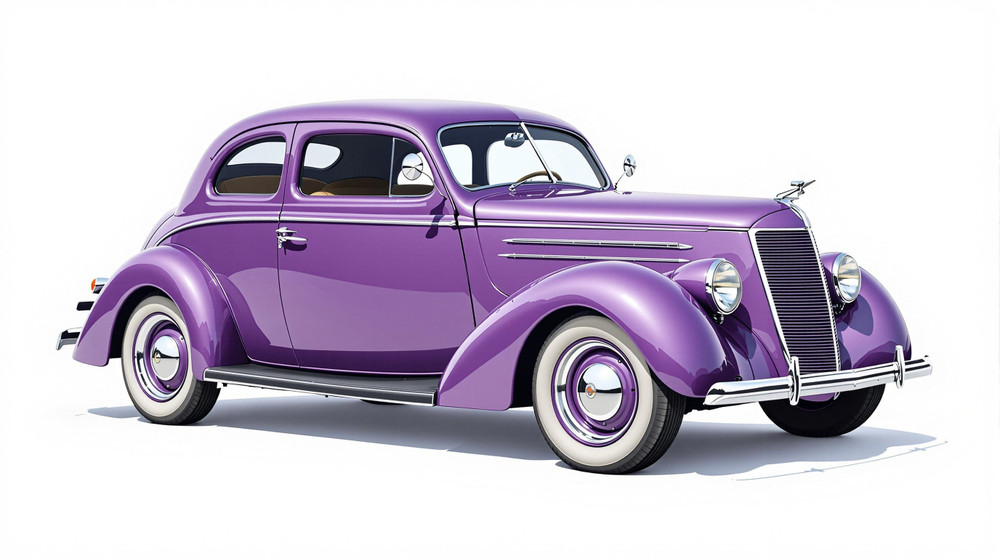
Image of 1936 Horch 830, Note: These illustrations use artistic license and may differ from actual historical models.
Performance Metrics
Fundamental Metrics
Emotional Appeal
MMP Rating
| Engine Specifications | |
|---|---|
| Engine Options: | Straight 8 |
| Displacement Range: | 3.5L |
| Horsepower Range: | Estimated 80-100 HP |
| Torque: | Not available |
| Compression Ratio: | Not available |
| Ignition System: | Distributor and coil |
| Cooling System: | Water-cooled |
| Performance Specifications | |
| 0-60 Time: | Not available |
| 1/4 Mile Time: | Not available |
| Top Speed: | 75 mph |
| Transmission and Drive | |
| Drive Type: | Rear-wheel drive |
| Transmission Type: | Manual |
| Fuel and Efficiency | |
| Fuel System Type: | Carburetor |
| MPG: | Not available |
| Dimensions and Brakes | |
| Brakes: | Drum brakes |
| Wheelbase: | 130 inches |
| Weight: | Estimated 3500 lbs |
Note: Specifications for classic cars are given to the best of our ability, considering the limited and variant data available.
With its long bonnet, upright chrome grille and quietly authoritative V8, the 1936 Horch 830 brought German luxury motoring into a more modern, more accessible form. It was built by Horch in Zwickau, a marque renowned for engineering and prestige, and formed part of the Auto Union family alongside Audi, DKW and Wanderer. The 830 offered an alternative to Horch’s larger, more expensive eight-cylinder models: a refined, spacious car with a compact V8 and unmistakable presence.
One intriguing detail is that “1936 Horch 830” does not point to a single, completely uniform specification. The 830 range was evolving, and cars from this period may be identified as an 830, 830 B or 830 BL depending on their engine, chassis and wheelbase. Original documents and chassis records are important when researching a particular car.
Horch 830: A Luxury V8 for a Changing Era
Horch introduced the 830 in 1933, during a difficult period for the German economy and automotive industry. In 1932, the company became part of Auto Union, whose four-ring emblem represented its four constituent marques. Horch remained the group’s flagship luxury name, associated with substantial engineering, high-quality finishes and cars intended for affluent private owners, businesses and official use.
The 830 helped broaden that reputation. Its V8 was smaller and less costly to produce than the engines in Horch’s grander models, while still delivering the smooth, effortless character expected of a prestige car. For 1936, engine capacity and output depended on the exact version. Early 830s used a roughly 3.0-litre V8 rated at about 70 metric horsepower. Later 830 B and 830 BL versions generally had larger engines and output figures around 75 horsepower or more. These period ratings can differ by version and source.
The car arrived in a decade when luxury motoring was becoming more technically sophisticated, but remained distinctly chauffeur-friendly. A Horch 830 could carry its occupants in comfort and make a statement without the scale and expense of the marque’s most imposing models.
Streamlined Lines and Hand-Finished Cabin
The 830’s styling balanced traditional formality with the smoother shapes emerging in the 1930s. Its tall, vertical grille gave the front end a commanding face, while separate headlamps, flowing front fenders and long running boards emphasized its length. The bonnet stretched forward from a set-back passenger compartment, creating the classic prewar luxury-car profile. Chrome brightwork added distinction without overwhelming the body’s broad, elegant surfaces.
Inside, the experience depended on the body style and specification, but the emphasis was on craftsmanship and comfort. Buyers could expect carefully finished trim, substantial seating and quality upholstery, which might include leather or durable cloth. Wood detailing and fitted accessories could add a richer finish. A long-wheelbase car offered room for rear passengers, and chauffeur-driven versions often prioritized that rear compartment as much as the driver’s area.
There was no single modern-style paint palette that defined every 1936 example. Dark, dignified shades such as black, deep blue, maroon, gray and green suited the car’s formal character, while coachbuilt cars could be ordered in individual combinations. Original paint records, where available, are a better guide than assumptions based on surviving restorations.
Horch offered the 830 family in several forms, including saloons and longer-wheelbase Pullman-style limousines, as well as open cabriolets and other special-bodied cars. The closed sedan was the practical, comparatively restrained choice; the cabriolet is often the most visually striking today. Coachbuilding and equipment could vary, so two cars carrying the same model designation may look quite different.
Engineering That Set the 830 Apart
The 830’s central technical feature was its V8 engine. A V8 could be shorter than a comparable straight-eight, helping engineers package a smooth, powerful engine in a less imposing car. Its multi-cylinder layout also delivered a more refined flow of power than the four-cylinder engines common in ordinary cars of the period. The 830 was not a racing special, but it brought the polish of a luxury powerplant to a broader part of Horch’s range.
As with many prestigious cars of its era, the 830 combined mechanical sophistication with traditional chassis construction. Its substantial frame, long wheelbase and comfort-oriented suspension were designed for composed travel, not sharp sports-car responses. Equipment and details changed across the series, so claims about a specific car’s brakes, transmission or suspension should be checked against its exact chassis and factory specification.
Its influence was less about a single industry-changing invention than about the way it combined a modern V8 with formal luxury-car proportions. The 830 helped establish a formula familiar in later premium cars: smooth power, a quiet and spacious cabin, and an exterior that signaled status without relying on flamboyant styling.
Road Manners and Period Performance
Depending on the engine and body, a 1936 Horch 830 could reach roughly 105 to 115 km/h, or about 65 to 71 mph. The lighter or more powerful versions tended toward the upper end of that range. A reliable factory 0-to-60 mph figure is not commonly available. Based on the car’s power, weight and gearing, a period example would likely take around 25 to 30 seconds, though that should be treated as an estimate rather than a definitive specification.
On a smooth road, the V8’s appeal was its steady, unhurried delivery. Instead of demanding constant high revs, it was intended to move the car forward with dignity. The engine’s subdued burble, the broad bonnet ahead and the elevated seating position all contributed to a relaxed, commanding driving experience.
The Horch’s long wheelbase helped it settle over ordinary road imperfections, though its age and suspension design mean it should not be expected to glide over bumps like a modern luxury sedan. On winding roads, the car’s size, weight and period tires call for measured inputs. It rewards a smooth driving style, with early braking and deliberate steering, rather than quick direction changes. In modern traffic, its speed and stopping distances demand extra space and attention.
Owning and Maintaining a Prewar Horch
Today, an 830 is primarily a show car, touring-car entrant or carefully used collector vehicle. Some owners enjoy participating in vintage rallies, where steady cruising and period character matter more than outright speed. It is not an easy daily driver by modern standards: traffic, limited safety equipment, older electrical systems and the scarcity of specialist support all make regular use challenging.
Maintenance is manageable for an experienced vintage-car mechanic, but not necessarily for the average owner working from a generic repair manual. Correct parts can be difficult to source, and restoration may require specialist knowledge of the engine, chassis, bodywork and original trim. Before buying, inspect the frame for corrosion or poor repairs, check the V8 for oil pressure and cooling problems, and look closely for evidence of an incomplete restoration. Matching numbers and credible provenance can matter greatly to collectors.
Reliability depends heavily on restoration quality and ongoing care. A properly maintained example can be driven on suitable tours, but it needs regular attention and should not be judged by the service expectations of a modern car. Many surviving cars have been restored or altered over their long lives, making documentation especially valuable.
Horch 830 Trivia and Historical Context
The 830 was produced in Germany during the 1930s, a period of political upheaval under Nazi rule. Like other prestigious cars, Horchs could be found in private, corporate and official settings. Some cars from the broader Horch range were used for government or military transport, but it is better not to assume that a particular 830 had such a history without documentary evidence.
Although Auto Union became famous for its Grand Prix racing program, the Horch 830 was a road-going luxury car, not one of the racing machines represented by the company’s celebrated Silver Arrows. Its achievement was comfort and refinement rather than speed records or competition victories. No major production or endurance record is generally associated with the 830.
A common criticism today is that the 830 can be overshadowed by the larger, more dramatic Horch 850 and 853 models. It is also heavy, relatively slow by modern standards and demanding to maintain. Yet those qualities are part of its appeal: the 830 offers Horch’s prewar craftsmanship and V8 character in a somewhat more understated package.
Collector Values and Rarity
Horch produced approximately 11,600 cars across the 830 family, including its related versions, though published totals and model breakdowns vary. That figure is not a production count for 1936 alone. The surviving population is difficult to establish, and well-documented examples are scarce on the open market. A particular body style, condition, originality and restoration history can make a substantial difference to availability and value.
As a broad current-market estimate, a project or incomplete sedan might fall around $40,000 to $80,000 USD. A sound, usable or well-restored closed car could be in the approximate $80,000 to $180,000 range. A high-quality cabriolet or especially desirable coachbuilt example may bring roughly $180,000 to $350,000 or more. These are guide figures, not guaranteed sale prices; exceptional provenance or originality can shift the result considerably.
Values have generally benefited from renewed interest in significant prewar European cars, but the market is selective. Top-quality, correctly restored examples tend to hold attention, while cars needing extensive work can be difficult to sell because restoration costs are high. The 830 is likely to remain a niche collectible: historically important, but less widely recognized than the most famous Horch flagships.
Why the 1936 Horch 830 Still Matters
The 1936 Horch 830 brought together a smooth V8, imposing prewar styling and careful craftsmanship in a car that sat below Horch’s grandest models without giving up the marque’s sense of occasion. Its specifications varied across the evolving 830 range, and its performance was measured by relaxed progress rather than acceleration or records.
For collectors, the 830 is both an elegant piece of Auto Union history and a reminder of how ambitious luxury motoring had become before the war. It may not be the fastest Horch or the best-known, but its quiet authority is precisely what makes it memorable.
1936 Horch 830 Catalog of Parts
 1936 HORCH 830 Headlight Pads. 3-1/8" wide X 4-1/4" long. Pair-MP 7971-AHeadlight Pads. 3-1/8" wide X 4-1/4" long. Pair
 1936 HORCH 830 Luggage Rack Pad. 1-3/4" wide X 6" long. Each-MP 7971-BLuggage Rack Pad. 1-3/4" wide X 6" long. Each
 1936 HORCH 830 Door Handle (with lock) Pads. 1-7/8" wide X 3-1/2" long-MP 7971-CDoor Handle (with lock) Pads. 1-7/8" wide X 3-1/2" long. Pair
 1936 HORCH 830 Door handle pads. 1-7/8 in. W x 2-1/2 in. L. Pair. R&L.-MP 7971-DDoor handle pads. 1-7/8 in. W x 2-1/2 in. L. Pair. R&L.
 1936 HORCH 830 Trunk Light Pad. 3-3/4" long X 8-3/4" wide. Each-MP 7971-ETrunk Light Pad. 3-3/4" long X 8-3/4" wide. Each
 1936 HORCH 830 Fender Light Pads. 1-1/2" wide X 2-3/8" long. Pair-MP 7971-HFender Light Pads. 1-1/2" wide X 2-3/8" long. Pair
Why Choose Metro?
For over 100 years, Metro Moulded Parts has been the pinnacle of quality in classic car restoration parts. Our commitment to precision and authenticity in every component ensures a perfect fit and an OEM-level appearance.
- Expert Craftsmanship & Quality: Each part is a testament to our dedication to reliability and perfection, crafted from original designs and thoroughly tested.
- Advanced Technology: We use cutting-edge techniques to create flawless, long-lasting parts that surpass others in performance.
- SuperSoft Sponge – The Ultimate Door Seal: Not only are our door seals 30% softer than competitors', but they're also guaranteed to never leak. They effectively reduce wind and road noise, enhancing your classic car's comfort and driving experience.
- Proudly American: Our parts are a product of American craftsmanship, made in the USA with a spirit of excellence and heritage.
- Unrivaled Warranty: We back our products with a 30-year industry-leading warranty, a testament to our confidence in their quality.
Join us in preserving the legacy of classic cars with parts that are crafted for perfection, not just made.