

Image of 1936 Horch 850/853, Note: These illustrations use artistic license and may differ from actual historical models.
Performance Metrics
Fundamental Metrics
Emotional Appeal
MMP Rating
| Engine Specifications | |
|---|---|
| Engine: | Straight 8 |
| Displacement: | 4.9L |
| Horsepower: | Estimated 100-120 HP |
| Torque: | Not available |
| Compression Ratio: | Not available |
| Ignition System: | Standard for the period (likely mechanical breaker-point ignition) |
| Cooling System: | Liquid-cooled |
| Performance Specifications | |
| 0-60 Time: | Not available |
| 1/4 Mile Time: | Not available |
| Top Speed: | 93 mph |
| Transmission and Drive | |
| Drive Type: | Rear-wheel drive |
| Transmission Type: | 4-speed manual |
| Fuel and Efficiency | |
| Fuel System Type: | Carburetor |
| MPG: | Not available |
| Dimensions and Brakes | |
| Brakes: | Drum brakes |
| Wheelbase: | 135 inches |
| Weight: | 2,200 kg |
Note: Specifications for classic cars are given to the best of our ability, considering the limited and variant data available.
1936 Horch 850 and 853: German Luxury in the Auto Union Era
The 1936 Horch 850 was built to make distance feel effortless: a long, imposing luxury car with a smooth straight-eight engine and the craftsmanship to rival the finest automobiles of its day. It came from Horch, the German manufacturer founded by engineer August Horch, whose name had already become a byword for prestige. The closely related Horch 853 took the same grand-touring idea in a sportier direction, though it appeared later, around 1937. That distinction matters: a car described as a “1936 Horch 850/853” is generally best understood as an 850 from 1936 or as part of the broader 850-and-853 family.
Horch was one of the four marques brought together in Auto Union in 1932, represented by the four interlocking rings still associated with Audi. Within the group, Horch occupied the luxury end of the market. Its big eight-cylinder cars were aimed at wealthy private buyers and official customers, competing with prestigious German machines from Mercedes-Benz. A striking detail is that many Horchs were not simply bought from a showroom in a single standard body style: customers could choose a factory body or commission specialist coachwork, making individual surviving cars as much works of craftsmanship as products of a marque.
Long Lines and Coachbuilt Style
The 850 has the unmistakable proportions of a prewar prestige car. Its long bonnet stretches ahead of a tall, upright radiator grille, flanked by large headlamps and gracefully curved front wings. A sweeping hood line, generous running boards, and a broad cabin give the car a formal, stately presence. On a closed limousine, the roof and passenger compartment emphasize dignity and comfort. In an open cabriolet, the same long chassis becomes more theatrical, with a folding fabric top and a flowing rear body that shows off the car’s proportions.
The 850 range included formal limousines and touring bodies, while cabriolets and other special bodies could be supplied or commissioned. The 853 is especially associated with sporting cabriolet coachwork, including elegant open cars by specialist bodybuilders such as Gläser. Some Horchs also received bespoke designs from celebrated coachbuilding firms. For collectors, the body’s maker and originality can be almost as important as the model badge.
Paint was often selected to suit the buyer and the coachwork rather than a single fixed palette. Dark, formal shades such as black, deep blue, burgundy, and dark green suit the 850’s imposing character, while two-tone finishes can accentuate a cabriolet’s sweeping wings and beltline. Original color documentation is valuable because a car’s present finish may not match its factory specification.
A Quietly Lavish Cabin
Inside, the Horch was designed around comfort and refinement rather than minimalism. Depending on the body and specification, occupants could find finely upholstered leather or high-quality cloth, polished wood trim, substantial carpeting, and carefully finished metal fittings. A limousine put rear-seat comfort and privacy first; an open touring model made the cabin part of the experience, with passengers exposed to the sound, air, and scenery of the road.
Horch’s engineering was equally focused on making a large car feel polished. The 850 used a 4,944 cc inline-eight with overhead valves and a four-speed manual gearbox. The engine’s long, even firing sequence helped it run with a smoothness that suited luxury motoring. Period specifications vary by version and body, but the 850 is commonly listed at about 100 horsepower. The 853 retained the five-litre straight-eight concept, with output and performance depending on the particular model and specification.
Engineering for the Open Road
In the 1930s, a large straight-eight was a statement of engineering ambition as well as status. The Horch’s engine delivered its power progressively, helping move a heavy chassis without the strained, hurried feel of a smaller engine working at its limit. The four-speed transmission gave the driver useful ratios for setting off and climbing, while the car’s substantial dimensions and high-quality construction suited long-distance travel.
Horch’s place in Auto Union also gave the marque a prominent role in a period when German manufacturers were investing heavily in engineering and design. The 850 was not a racing car, nor was it intended to be. Its achievement was to combine a smooth, powerful engine, imposing coachbuilt styling, and touring comfort in a road car for a small, wealthy market. That combination helped define the luxury grand tourer: a car that could cover distance at speed while treating its occupants to an unusually refined ride.
Performance and Road Manners
Exact performance figures depend on the body, gearing, condition, and source. A sound Horch 850 is generally quoted with a top speed in the region of 130 km/h, or about 81 mph. The related 853 is often credited with a top speed around 135 km/h, or 84 mph, though individual cars and specifications differ. Period acceleration tests are not consistently available, so a modern 0-to-60 mph estimate should be treated as an approximation: roughly 25 to 30 seconds for a heavy 850, with the lighter or more powerful 853 potentially quicker.
On a smooth, open road, the Horch’s long wheelbase and weight help it settle into a relaxed stride. It is not a modern sports saloon, and tight, winding roads reveal its size. Steering takes more effort at low speed, body lean is part of the experience, and the driver must plan braking and corner entry well ahead. On broken surfaces, the long chassis can soften the sharpness of bumps, but the car’s age, suspension condition, tires, and body style make a major difference to ride quality.
Behind the wheel, the straight-eight is more of a refined mechanical presence than a loud performance soundtrack. It produces a smooth, deep note that builds as the revs rise, while the manual gearbox asks for deliberate, unhurried shifts. The impression is of commanding a substantial machine rather than simply pointing a small car down a road. A well-restored Horch feels most at home touring at a steady pace, with enough power in reserve to make open-road progress feel effortless by prewar standards.
Historical Significance and Lasting Appeal
The Horch 850 and 853 show how luxury-car design in the 1930s brought together engineering, coachbuilding, and social status. Their long bonnets and formal grilles communicated prestige from a distance; their straight-eight engines provided the smoothness expected at the top of the market; and the choice of bodywork allowed buyers to make a car personal. The result was not one universal design, but a family of related cars shaped by individual tastes and specialist craftsmanship.
That approach distinguishes Horch from many mass-produced contemporaries. A production model might share its chassis and mechanical components with other examples, yet look dramatically different when fitted with a special cabriolet or limousine body. This close relationship between manufacturer and coachbuilder is one reason surviving Horchs are judged individually. Their design language also remains part of Audi’s heritage through the Auto Union story, although the Horch marque itself is a distinct piece of that history.
Ownership, Maintenance, and Reliability
Today, a Horch 850 or 853 is primarily a concours, museum, or carefully managed touring car, not a practical daily driver. Its size, age, value, and scarcity make regular modern traffic use difficult. A well-sorted example can take part in vintage rallies and long-distance events, but owners typically plan routes, arrange specialist support, and avoid conditions that could put the car or its irreplaceable components at risk.
Maintenance is a specialist undertaking. The straight-eight is mechanically understandable to an experienced vintage-car technician, but parts are scarce, and many repairs require period knowledge, careful measurement, or custom fabrication. Body and trim work can be especially demanding because coachbuilt details may be unique to a particular car. Reliability depends heavily on restoration quality and regular upkeep. For the average owner without access to a specialist workshop, repairs are neither easy nor inexpensive.
Common criticisms are practical rather than surprising: high running costs, limited parts availability, a large turning circle, modest braking performance by modern standards, and the challenge of preserving original coachwork. These are important considerations for ownership, but they are also part of what makes the car a collectible piece of hand-built automotive history.
Rare Horch Facts and Trivia
The Horch name has an unusual connection to the Audi name. August Horch left the company bearing his surname and later founded another car company. Because he could not simply reuse his own name for the new firm, “Horch,” meaning “listen” in German, was translated into Latin as “Audi.” The later merger that created Auto Union brought Horch and Audi together under one corporate umbrella.
There is no single, dependable production figure that covers every body style and variant in the 850 and 853 families. Published totals and classifications differ, particularly when special bodies and related versions are counted. A reasonable broad estimate is that production across the family numbered in the low thousands, rather than tens of thousands. Individual versions and coachbuilt bodies are much scarcer, and the number of original cars still surviving is far smaller.
Horchs were associated with the wealth and official life of 1930s Germany, a period that also makes their history inseparable from the politics of the era. They are now encountered most often in collections, museums, and classic-car events. Rather than claiming a universal speed or endurance record, it is more accurate to regard the 850 and 853 as exceptional prestige road cars built in limited numbers. Their rarity and quality, not a racing trophy, are the central parts of their appeal.
Collector Values and Market Outlook
Values vary sharply with model, coachbuilder, originality, restoration quality, provenance, and documentation. As a broad current-market estimate, a complete but unrestored or project example might fall around US$300,000 to US$700,000, while a high-quality, correctly restored car could bring roughly US$700,000 to US$1.5 million. A particularly desirable 853 cabriolet or rare, documented coachbuilt example may exceed US$2 million, with exceptional cars potentially selling for more. These are guide ranges, not guaranteed valuations; auction results can differ substantially from one car to another.
Supply is extremely limited, and suitable cars seldom appear on the open market. The best examples have generally benefited from the wider growth in demand for significant prewar luxury cars, though prices are sensitive to condition, originality, and the strength of the collector market. Restoration costs can be enormous, so a visually impressive car is not automatically the best investment. For a Horch, a documented history and authentic details often matter more than a recent cosmetic refresh.
Why the Horch 850 Still Matters
The 1936 Horch 850 represents a particular kind of prewar luxury: a smooth straight-eight, a long and commanding chassis, and bodywork shaped to the owner’s taste. Its close relative, the 853, carried that formula into a more sporting grand-touring role. Both are rare today, demanding to maintain, and among the most compelling expressions of German coachbuilt motoring.
More than a beautiful old car, a Horch is a surviving example of a time when engineering, craftsmanship, and personal style could meet in one extraordinary machine. Its presence on the road is a reminder that some automobiles were built not merely to travel, but to make every mile an occasion.
1936 Horch 850/853 Catalog of Parts
 1936 HORCH 850/853 Headlight Pads. 3-1/8" wide X 4-1/4" long. Pair-MP 7971-AHeadlight Pads. 3-1/8" wide X 4-1/4" long. Pair
 1936 HORCH 850/853 Luggage Rack Pad. 1-3/4" wide X 6" long. Each-MP 7971-BLuggage Rack Pad. 1-3/4" wide X 6" long. Each
 1936 HORCH 850/853 Door Handle (with lock) Pads. 1-7/8" wide X 3-1/2" long-MP 7971-CDoor Handle (with lock) Pads. 1-7/8" wide X 3-1/2" long. Pair
 1936 HORCH 850/853 Door handle pads. 1-7/8 in. W x 2-1/2 in. L. Pair. R&L.-MP 7971-DDoor handle pads. 1-7/8 in. W x 2-1/2 in. L. Pair. R&L.
 1936 HORCH 850/853 Trunk Light Pad. 3-3/4" long X 8-3/4" wide. Each-MP 7971-ETrunk Light Pad. 3-3/4" long X 8-3/4" wide. Each
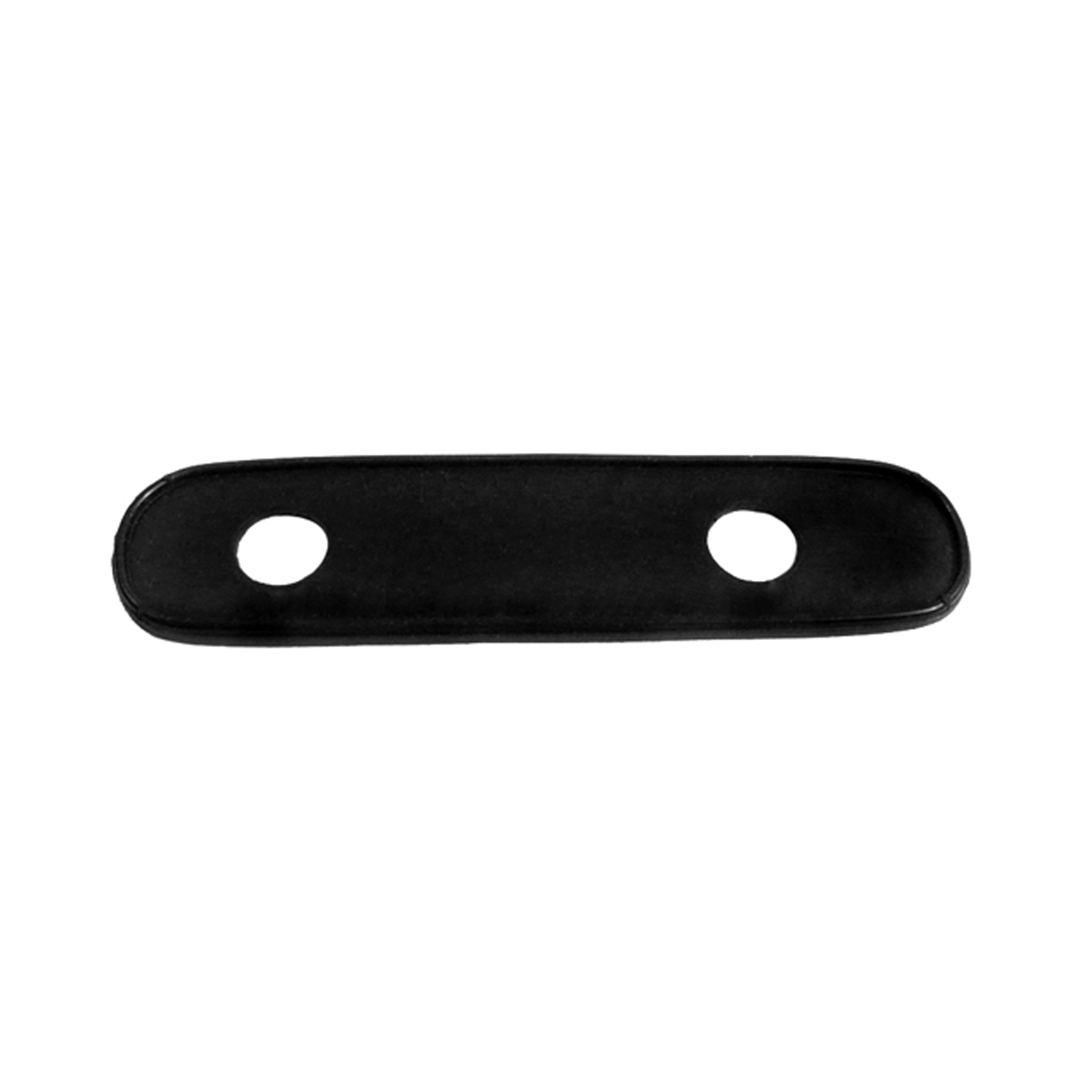 1936 HORCH 850/853 Trunk Rack Bracket Pad. 1-3/16" wide X 3-5/8" long. Each-MP 7971-GTrunk Rack Bracket Pad. 1-3/16" wide X 3-5/8" long. Each
 1936 HORCH 850/853 Fender Light Pads. 1-1/2" wide X 2-3/8" long. Pair-MP 7971-HFender Light Pads. 1-1/2" wide X 2-3/8" long. Pair
Why Choose Metro?
For over 100 years, Metro Moulded Parts has been the pinnacle of quality in classic car restoration parts. Our commitment to precision and authenticity in every component ensures a perfect fit and an OEM-level appearance.
- Expert Craftsmanship & Quality: Each part is a testament to our dedication to reliability and perfection, crafted from original designs and thoroughly tested.
- Advanced Technology: We use cutting-edge techniques to create flawless, long-lasting parts that surpass others in performance.
- SuperSoft Sponge – The Ultimate Door Seal: Not only are our door seals 30% softer than competitors', but they're also guaranteed to never leak. They effectively reduce wind and road noise, enhancing your classic car's comfort and driving experience.
- Proudly American: Our parts are a product of American craftsmanship, made in the USA with a spirit of excellence and heritage.
- Unrivaled Warranty: We back our products with a 30-year industry-leading warranty, a testament to our confidence in their quality.
Join us in preserving the legacy of classic cars with parts that are crafted for perfection, not just made.