

Image of 1937 Horch 951, Note: These illustrations use artistic license and may differ from actual historical models.
Performance Metrics
Fundamental Metrics
Emotional Appeal
MMP Rating
| Engine Specifications | |
|---|---|
| Engine Options: | Straight 8 |
| Displacement Range: | 4.9L |
| Horsepower Range: | Estimated 100-120 HP |
| Torque: | Not available |
| Compression Ratio: | Not available |
| Ignition System: | Distributor and coil |
| Cooling System: | Water-cooled |
| Performance Specifications | |
| 0-60 Time: | Not available |
| 1/4 Mile Time: | Not available |
| Top Speed: | 90 mph |
| Transmission and Drive | |
| Drive Type: | Rear-wheel drive |
| Transmission Type: | 4-speed manual |
| Fuel and Efficiency | |
| Fuel System Type: | Carburetor |
| MPG: | Not available |
| Dimensions and Brakes | |
| Brakes: | Drum brakes |
| Wheelbase: | 135 inches |
| Weight: | Estimated 2,200 kg |
Note: Specifications for classic cars are given to the best of our ability, considering the limited and variant data available.
1937 Horch 951: A German Luxury Car at Its Peak
The 1937 Horch 951 was built to make distance feel effortless and arrival feel important. Made by Horch in Zwickau, Germany, it belonged to the country’s most prestigious prewar luxury-car tradition: imposing, finely finished automobiles powered by smooth, large-capacity engines. The 951 was part of the Auto Union era, when Horch shared a corporate family with Audi, DKW and Wanderer. The four rings in Auto Union’s emblem represented those four marques.
Horch traced its roots to August Horch, an engineer and entrepreneur who founded the company that bore his name in the early 1900s. By the 1930s, Horch had become a leading rival to Mercedes-Benz in Germany’s high-end market. The 951 continued that reputation with a long chassis, a refined straight-eight engine and coachwork designed for buyers who expected comfort as well as prestige.
One intriguing detail is that “Horch 951” did not mean every car left the factory looking alike. Many were delivered as chassis for bodies built or finished to a customer’s specifications. As a result, a 951 could be a formal limousine, a stately touring car or a more personal cabriolet, each with its own character.
Elegant Styling and Hand-Finished Interiors
The Horch 951’s design was grand without being delicate. Its long bonnet announced the inline-eight beneath it, while the upright radiator grille, broad fenders and sweeping running boards gave the car a confident, formal stance. Large headlamps sat proudly at the front, and the wheelbase allowed the body to stretch into a spacious passenger compartment. Depending on the coachwork, rear-mounted spare wheels and elegant luggage arrangements added to its unmistakable prewar silhouette.
Inside, the emphasis was on craftsmanship and space. Buyers could expect generous seating, carefully finished wood trim, quality upholstery and substantial metal fittings. Limousine versions put particular focus on rear-seat comfort, while open cars offered a more sociable, touring-oriented feel. Materials and details varied with the body and the original specification, so there is no single interior layout that represents every 951.
Paint choices were similarly dependent on the buyer and coachbuilder. Dark, dignified shades such as black, deep blue, green and maroon suited the car’s formal purpose, while two-tone finishes could emphasize the long body and sweeping fenders. Original paint records are not available for every surviving example, so a car’s present color should not automatically be assumed to be its factory finish.
The most iconic forms are the imposing limousine and Pullman-style bodies, although elegant cabriolets are especially admired by collectors. Other open and closed touring configurations were possible. The 951’s appeal was partly its flexibility: a luxurious chassis could be tailored for official transport, private motoring or long-distance travel.
Engineering in the Auto Union Years
The 951 was a product of a period when top German manufacturers were competing to combine speed, refinement and mechanical sophistication. Its 5.0-liter inline-eight was designed for smooth, quiet power rather than sporting urgency. The long engine and substantial chassis helped make the car feel composed at cruising speed, while the advanced-for-its-era engineering reflected Horch’s ambition to stand at the top of the market.
Horch’s work helped establish the idea that a luxury car should be more than a large engine in a large body. It should deliver a complete experience: controlled power, polished coachwork, comfortable accommodation and technology suited to fast, long-distance travel. The 951 did not create that formula alone, but it represents one of its most impressive prewar expressions.
Its historical importance also comes from its timing. The car appeared during the rise of Auto Union and just before the Second World War disrupted German luxury-car production. Horch’s factories were in Zwickau, and the marque’s prewar reputation became part of the foundation for the company’s later history, even as postwar political and industrial changes transformed the region and its automotive industry.
Eight-Cylinder Performance and Road Manners
The 1937 Horch 951 is generally associated with a 5,010 cc straight-eight producing around 100 metric horsepower, although output and specification can vary between versions and model years. Contemporary-style figures place top speed at roughly 120 to 125 km/h, or about 75 to 78 mph, depending on the body, gearing and vehicle condition. That was serious pace for a large luxury car of its time.
A precise 0-to-60 mph figure is difficult to pin down, and it was not the measure by which buyers judged a 951. Given its weight, gearing and period tires, a reasonable estimate is somewhere around 20 to 25 seconds, with substantial variation between bodies and individual cars. The eight-cylinder engine’s real talent was delivering power smoothly and making a heavy car feel unhurried on open roads.
On a rough road, the Horch’s long wheelbase and comfort-oriented suspension helped soften bumps, though its age and considerable mass mean it cannot be expected to ride like a modern limousine. On winding roads, the driver needs to plan ahead. The steering is more deliberate than quick, and body roll, narrow tires and period braking performance call for a measured pace. A well-maintained example should feel stable and dignified, not nimble.
From behind the wheel, the experience is about mechanical presence. The straight-eight produces a subdued, even note rather than a sharp sporting bark. The broad bonnet stretches ahead, the controls require more physical effort than modern ones, and the car rewards smooth inputs. It is a vehicle for enjoying the journey, not attacking corners or chasing traffic lights.
Living With a Horch 951
Today, a 951 is best suited to concours events, historic tours, museum displays and carefully planned pleasure drives. Its size, rarity and value make everyday use impractical, while its historical significance gives owners strong reasons to preserve original details. A sound example can still cover distance, but it needs experienced attention and sympathetic use.
Maintenance is not a casual weekend job for the average owner. The engine, chassis and electrical systems require knowledge of prewar German engineering, and parts can be difficult to source. Some components may need to be repaired or reproduced rather than replaced off the shelf. Specialist restoration shops and marque experts are valuable allies, particularly for work involving the engine, transmission, brakes, bodywork or coachbuilt trim.
Reliability depends heavily on restoration quality and regular maintenance. A car that has been carefully rebuilt and exercised is a very different proposition from one that has sat unused for decades. Before purchase, a specialist inspection should cover the chassis and frame, engine condition, cooling system, gearbox, brakes, electrical equipment and the authenticity of the body. Keeping a 1937 Horch dependable is possible, but it takes time, expertise and a substantial budget.
Horch 951 Facts and Common Misconceptions
The 951’s most notable “option” was often its body. Buyers could choose among formal closed cars and open touring styles, with coachwork and trim giving each example a distinct identity. That makes surviving cars fascinating to compare, but it also complicates attempts to assign a single standard specification to every 1937 model.
The car is sometimes grouped loosely with the most famous German state and official vehicles of the 1930s. Horch limousines were appropriate for high-ranking and formal transport, but claims that a particular 951 belonged to a named political leader should be backed by reliable provenance. The model’s association with its era is not, by itself, proof of a specific owner or historical appearance.
There is no widely recognized production or speed record that defines the Horch 951. Its significance is better understood through its place in the luxury market and the quality of its engineering. A common criticism is that the car can seem ponderous by modern standards. That is fair if it is judged as a sporting machine, but misses the point: the 951 was built to transport its occupants in comfort and style.
Rarity, Values and Collecting
Exact production totals for the 951 are difficult to establish because model designations, body styles and production records can be reported differently. A reasonable estimate is around 1,000 cars across the 951 family, rather than a precise figure for 1937 examples alone. Only a small number are likely to survive, and the market for them is international and highly specialized.
As a broad current-market estimate, a complete but unrestored or project-quality car might fall around US$150,000 to $300,000, depending on its condition, completeness and body style. A strong, correctly restored example could be in the US$300,000 to $700,000 range. Exceptional coachwork, documented history and concours-level restoration may push a car beyond that range, while a rare open body can command a substantial premium. These are guide estimates, not fixed values: Horch sales are infrequent, and individual provenance can change the result dramatically.
Over the long term, major prewar German luxury cars have benefited from their rarity and historical importance. The 951 is likely to remain desirable, but its market is relatively thin. Restoration costs, changing collector tastes and the difficulty of comparing one coachbuilt car with another can all affect prices. Buyers should prioritize condition, authenticity and documented history over the assumption that every rare example will automatically appreciate.
Why the 1937 Horch 951 Still Matters
The Horch 951 brings together the qualities that defined a great prewar luxury automobile: a smooth straight-eight, confident proportions, carefully finished interiors and a chassis intended for long-distance comfort. Its range of body styles makes every example a little different, while its Auto Union heritage places it at an important crossroads in German automotive history.
It is not a car for hurried commutes or casual repairs. It is a remarkable piece of engineering and craftsmanship, best appreciated at a measured pace. Nearly nine decades on, the Horch 951 still makes its purpose clear: to turn simply getting there into an occasion.
1937 Horch 951 Catalog of Parts
 1937 HORCH 951 Headlight Pads. 3-1/8" wide X 4-1/4" long. Pair-MP 7971-AHeadlight Pads. 3-1/8" wide X 4-1/4" long. Pair
 1937 HORCH 951 Luggage Rack Pad. 1-3/4" wide X 6" long. Each-MP 7971-BLuggage Rack Pad. 1-3/4" wide X 6" long. Each
 1937 HORCH 951 Door Handle (with lock) Pads. 1-7/8" wide X 3-1/2" long-MP 7971-CDoor Handle (with lock) Pads. 1-7/8" wide X 3-1/2" long. Pair
 1937 HORCH 951 Door handle pads. 1-7/8 in. W x 2-1/2 in. L. Pair. R&L.-MP 7971-DDoor handle pads. 1-7/8 in. W x 2-1/2 in. L. Pair. R&L.
 1937 HORCH 951 Trunk Light Pad. 3-3/4" long X 8-3/4" wide. Each-MP 7971-ETrunk Light Pad. 3-3/4" long X 8-3/4" wide. Each
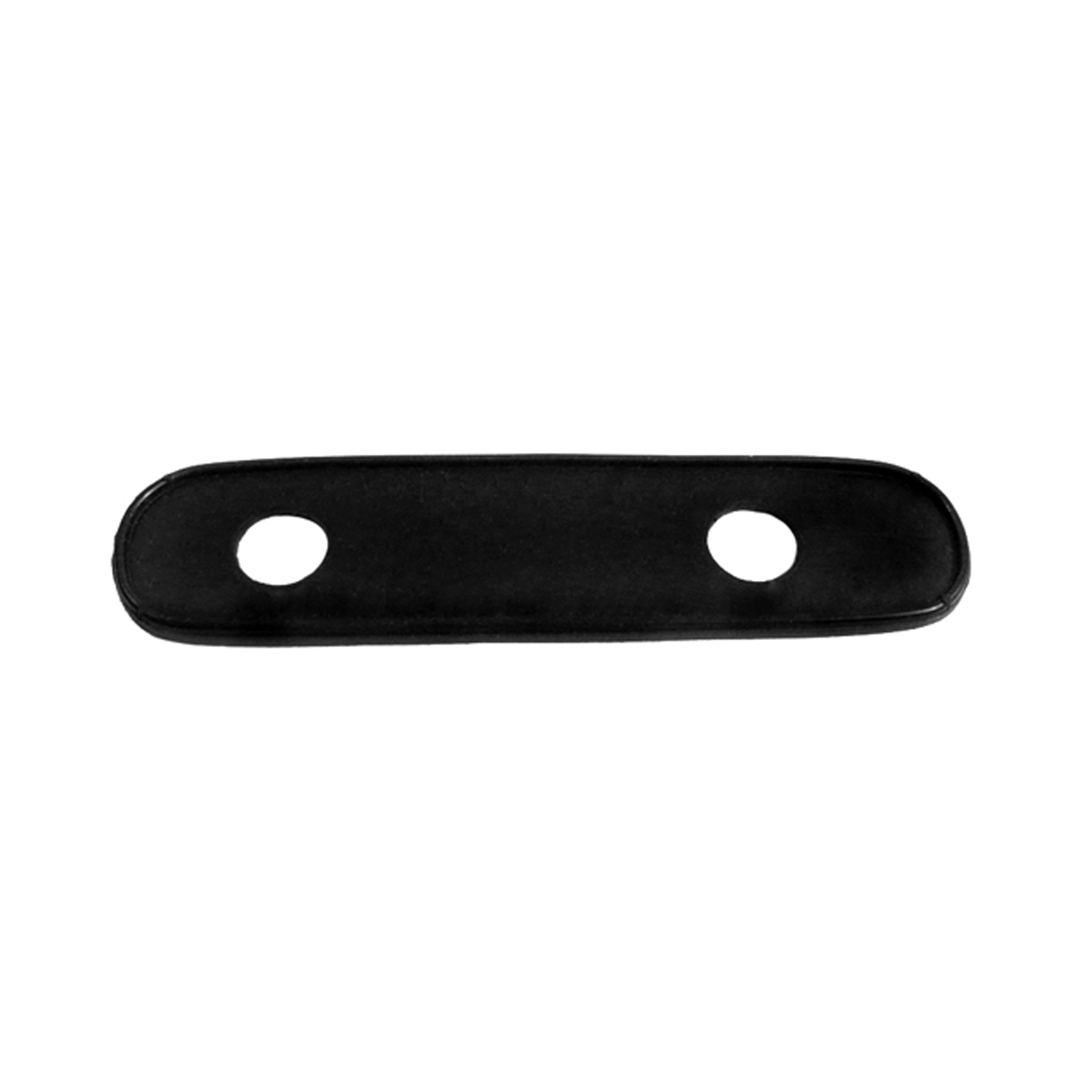 1937 HORCH 951 Trunk Rack Bracket Pad. 1-3/16" wide X 3-5/8" long. Each-MP 7971-GTrunk Rack Bracket Pad. 1-3/16" wide X 3-5/8" long. Each
 1937 HORCH 951 Fender Light Pads. 1-1/2" wide X 2-3/8" long. Pair-MP 7971-HFender Light Pads. 1-1/2" wide X 2-3/8" long. Pair
Why Choose Metro?
For over 100 years, Metro Moulded Parts has been the pinnacle of quality in classic car restoration parts. Our commitment to precision and authenticity in every component ensures a perfect fit and an OEM-level appearance.
- Expert Craftsmanship & Quality: Each part is a testament to our dedication to reliability and perfection, crafted from original designs and thoroughly tested.
- Advanced Technology: We use cutting-edge techniques to create flawless, long-lasting parts that surpass others in performance.
- SuperSoft Sponge – The Ultimate Door Seal: Not only are our door seals 30% softer than competitors', but they're also guaranteed to never leak. They effectively reduce wind and road noise, enhancing your classic car's comfort and driving experience.
- Proudly American: Our parts are a product of American craftsmanship, made in the USA with a spirit of excellence and heritage.
- Unrivaled Warranty: We back our products with a 30-year industry-leading warranty, a testament to our confidence in their quality.
Join us in preserving the legacy of classic cars with parts that are crafted for perfection, not just made.