
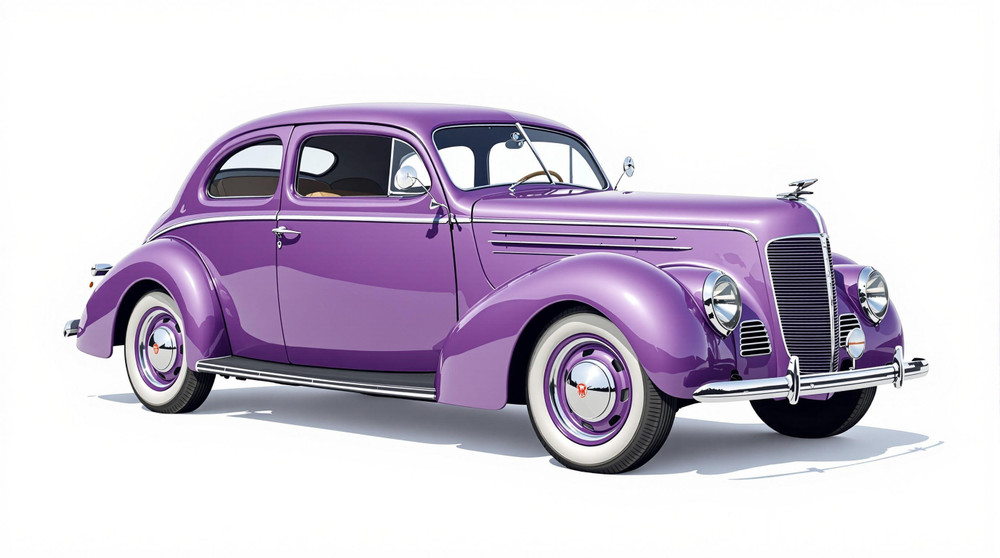
Image of 1938 Horch 830, Note: These illustrations use artistic license and may differ from actual historical models.
Performance Metrics
Fundamental Metrics
Emotional Appeal
MMP Rating
| Engine Specifications | |
|---|---|
| Engine Options: | Straight 8 |
| Displacement Range: | 3.5L - 4.9L |
| Horsepower Range: | Estimated 80 - 120 HP |
| Torque: | Not available |
| Compression Ratio: | Not available |
| Ignition System: | Distributor and coil |
| Cooling System: | Water-cooled |
| Performance Specifications | |
| 0-60 Time: | Not available |
| 1/4 Mile Time: | Not available |
| Top Speed: | 75 - 85 mph |
| Transmission and Drive | |
| Drive Type: | Rear-wheel drive |
| Transmission Type: | Manual |
| Fuel and Efficiency | |
| Fuel System Type: | Carburetor |
| MPG: | Not available |
| Dimensions and Brakes | |
| Brakes: | Drum brakes |
| Wheelbase: | 130 inches |
| Weight: | Estimated 3500 - 4000 lbs |
Note: Specifications for classic cars are given to the best of our ability, considering the limited and variant data available.
1938 Horch 830: German Luxury with a V8 Heart
Before Germany’s luxury-car reputation became closely associated with postwar marques, the Horch 830 was already combining a quiet V8, sophisticated engineering, and imposing coachwork into a distinctly high-end automobile. Built by Horch, one of the premium names within Auto Union, the 1938 830 offered a different kind of prestige from the company’s larger, more expensive straight-eight models: it delivered much of the refinement in a more compact package.
Horch was founded by engineer August Horch, who established his original company in 1899 and later formed Horch Automobilwerke in Zwickau. In 1932, Horch became one of the four companies united as Auto Union, alongside Audi, DKW, and Wanderer. The four-ring emblem represented those four marques. Horch remained the group’s luxury standard, and the 830 helped broaden that appeal with a V8-powered alternative to the flagship cars.
The 1938 model year sits within a family that evolved over several versions, so an “830” may refer to different engines and chassis specifications. Depending on the exact variant, a late-1930s car could have a 3.5-liter or 3.8-liter V8. That detail matters when judging performance, originality, and value. One intriguing point is that the 830’s V8 was not simply a smaller version of the big Horch straight-eight: it gave the marque a more compact, relatively accessible route into eight-cylinder luxury.
Elegant Bodywork and a Carefully Finished Cabin
The Horch 830 had the stately proportions expected of a prewar luxury car. Its tall, upright grille formed the visual center of the nose, flanked by prominent headlamps and long, flowing front fenders. A long hood announced the engine beneath it, while running boards connected the front and rear fenders in a continuous sweep. The overall effect was formal but not ponderous, with smooth curves softening the car’s imposing profile.
Coachwork varied by chassis and body supplier. Buyers could find sedans, limousines, cabriolets, and more formal chauffeur-oriented bodies, including long-wheelbase configurations in the broader 830 range. Closed sedans and limousines suited the model’s luxury mission, while cabriolets offered a more dramatic, open-air presentation. The exact choice of body could have a major impact on rarity today. A factory-bodied car and a special coachbuilt example may share a nameplate but be very different collector propositions.
Inside, the 830 aimed for comfort and craftsmanship rather than sporting minimalism. Depending on specification, occupants might find leather or high-quality cloth upholstery, polished wood trim, deep carpeting, and a substantial dashboard with clearly arranged instruments. Rear-seat space and ride comfort were important priorities, particularly on limousine versions. Materials and fittings can differ from car to car, so surviving examples should be assessed individually rather than assumed to match a single universal interior specification.
Paint choices were typically in keeping with the period’s formal taste. Black and other dark, restrained finishes suited the car’s official and executive character, while richer colors could be chosen for private buyers or special bodies. Exact factory color availability depended on year, body, and order. On a restoration, original paint evidence is more useful than relying on a generic color list for all 830s.
V8 Engineering Ahead of Its Time
The 830’s key technical feature was its compact V8 engine. Earlier versions used a 3.0-liter unit, while later developments increased displacement and output. Late-1930s specifications are commonly associated with engines around 3.5 or 3.8 liters, with power varying by version. A four-speed manual gearbox sent power to the rear wheels. The chassis was engineered for comfortable, composed travel, with independent front suspension and a conventional live rear axle on relevant versions. Hydraulic braking was also part of the car’s modern equipment for its era.
These details helped distinguish the 830 from many contemporaries that relied on larger, longer straight-eight engines or more conservative chassis layouts. The V8 made it possible to deliver smooth power without requiring the longest engine bay or the most extravagant dimensions. It was an important example of how a luxury car could combine prestige with more compact mechanical packaging.
Horch’s engineering reputation was also shaped by the broader Auto Union organization. The company’s racing achievements belonged primarily to the Auto Union Grand Prix cars, not the 830 itself, but that technical culture helped define the group’s image. The 830 was a road car, designed to make long-distance travel refined and effortless rather than to chase competition records.
Road Manners: Quiet Power, Unhurried Pace
Performance depends on the specific engine, body, gearing, and condition of the car. Late 830 variants are generally associated with top speeds in the neighborhood of 115 to 125 km/h, or roughly 71 to 78 mph. A precise factory 0-to-60 mph figure is not consistently available for every 1938 configuration. Given the car’s substantial weight and period gearing, a rough estimate would be around 25 to 30 seconds, with heavier limousines likely slower. These figures are best treated as period-performance context, not guaranteed test results for every surviving example.
On the road, the Horch’s V8 was intended to deliver smooth, steady acceleration rather than a sharp burst of speed. The engine would produce a deep, restrained mechanical note, growing more audible under load but typically working in the background during relaxed cruising. The four-speed gearbox asks for deliberate, well-timed shifts by modern standards, and the driver must plan overtakes well in advance.
The suspension favors comfort. It can soften broken pavement and uneven roads better than a taut sporting chassis, though a nearly 90-year-old car’s real ride quality depends heavily on its springs, dampers, bushings, tires, and restoration work. On a winding road, the 830 rewards a measured pace. Its size, period steering, and high center of gravity make it feel more like a dignified touring car than a corner-carving sports sedan. In crosswinds, the tall body and large side profile also call for a steady hand.
A Luxury Car in a Changing Germany
The Horch 830 arrived during a period of rapid change in German industry and society. The 1932 formation of Auto Union brought four established manufacturers under one corporate umbrella, allowing the group to organize a broad range of products. Horch occupied the prestigious end of that range, while the 830 gave the marque a V8 model below its largest and most costly cars.
Its significance lies less in one revolutionary invention than in the way it brought advanced engineering into a coherent luxury package. A smooth V8, independent front suspension, modern braking, and carefully appointed coachwork made the 830 a serious rival in the European premium market. It also demonstrated that technical sophistication did not have to mean adopting the biggest engine available.
Production and civilian use were disrupted by the Second World War. As a result, surviving cars are scarce, and the model’s story reflects both the ambition of prewar German engineering and the upheaval that brought that era to an abrupt end. The 830 is best understood as a luxury touring car from a remarkably inventive period, rather than as a competition car or a mass-market vehicle.
Ownership, Maintenance, and Reliability
Today, a Horch 830 is primarily a collector car, museum vehicle, or special-event automobile. Its size, historical importance, and limited availability make it an impractical daily driver for most owners. A well-sorted example can be used for touring and shows, but regular use requires specialist knowledge, secure storage, and access to people familiar with prewar German machinery.
Maintenance is not straightforward for the average owner. The basic mechanical layout is understandable to an experienced vintage-car mechanic, but parts availability is a major challenge. Engine components, trim, electrical equipment, and body-specific fittings may need to be sourced through specialist networks or carefully reproduced. A car that has been restored without documentation can be especially difficult to assess, since later repairs may conceal incorrect parts or modifications.
Reliability depends more on the quality of the restoration and ongoing care than on the model’s reputation alone. Cooling-system condition, lubrication, fuel delivery, ignition, brakes, and tires all deserve close attention before road use. A prewar car that has sat for years should not be treated as ready to drive simply because its engine starts. A full mechanical inspection is essential.
Rare Details and Collector Appeal
Horch 830 production is generally counted in the thousands across the wider model family, though totals vary depending on which versions and years a source includes. A reasonable broad estimate is around 11,000 to 12,000 cars for the 830 family over its production run. That figure should not be confused with the number built specifically in 1938, or with the much smaller number of surviving cars in any particular body style.
The model is not known for a single headline speed record or endurance triumph. Its appeal is instead rooted in its role as a sophisticated Auto Union luxury car and in the scarcity of surviving examples. The four rings on its badge connect it to one of the most recognizable corporate identities in motoring history, while the Horch name signals the prestige at the top of the group’s range.
There is no widely established list of celebrity owners that defines the 830’s reputation. Individual cars may have notable ownership histories, but provenance needs to be verified for each example. The model also does not have one universally famous historical appearance. Its connection to the 1930s and wartime era gives it historical weight, but buyers should distinguish documented history from stories added later to a car’s sales description.
A common criticism is that the 830 can seem less glamorous than Horch’s larger straight-eight models, and it is not an especially quick car by modern standards. Its complexity and parts scarcity can also make ownership expensive. Yet those drawbacks are part of what makes a properly preserved example interesting: it offers a more unusual view of prewar luxury than the better-known flagship cars.
Horch 830 Values and Availability
Market values vary dramatically with body style, originality, restoration quality, documentation, and provenance. As a broad estimate, a sound but less exceptional sedan might fall around US$60,000 to US$150,000. A superbly restored or unusually rare example could exceed that range, while a special cabriolet or significant coachbuilt car may reach roughly US$200,000 to US$400,000 or more. These are indicative estimates, not a substitute for recent comparable sales or a specialist appraisal.
Availability is limited. A buyer may wait a long time to find the right car, and the number of examples offered publicly in any given year is likely to be small. Values for rare prewar luxury cars tend to be uneven rather than steadily rising: exceptional, documented cars can hold strong interest, while average examples may be harder to sell because restoration and upkeep costs are high. Over the long term, the 830’s scarcity and historical importance support collector appeal, but condition and provenance remain decisive.
Why the 1938 Horch 830 Still Matters
The 1938 Horch 830 brought together a refined V8, thoughtful chassis engineering, elegant coachwork, and the craftsmanship expected of Auto Union’s most prestigious marque. It was not built to set a speed record or dominate a racetrack. Its achievement was to make advanced engineering feel composed, comfortable, and unmistakably luxurious.
For collectors, the Horch 830 is both a rewarding piece of automotive history and a demanding commitment. For everyone else, it remains a vivid reminder that prewar luxury was about more than size or ornament. It was about the quiet confidence of a well-engineered car, carrying its passengers through a changing world with a deep V8 murmur beneath the hood.
1938 Horch 830 Catalog of Parts
 1938 HORCH 830 Headlight Pads. 3-1/8" wide X 4-1/4" long. Pair-MP 7971-AHeadlight Pads. 3-1/8" wide X 4-1/4" long. Pair
 1938 HORCH 830 Luggage Rack Pad. 1-3/4" wide X 6" long. Each-MP 7971-BLuggage Rack Pad. 1-3/4" wide X 6" long. Each
 1938 HORCH 830 Door Handle (with lock) Pads. 1-7/8" wide X 3-1/2" long-MP 7971-CDoor Handle (with lock) Pads. 1-7/8" wide X 3-1/2" long. Pair
 1938 HORCH 830 Door handle pads. 1-7/8 in. W x 2-1/2 in. L. Pair. R&L.-MP 7971-DDoor handle pads. 1-7/8 in. W x 2-1/2 in. L. Pair. R&L.
 1938 HORCH 830 Trunk Light Pad. 3-3/4" long X 8-3/4" wide. Each-MP 7971-ETrunk Light Pad. 3-3/4" long X 8-3/4" wide. Each
 1938 HORCH 830 Fender Light Pads. 1-1/2" wide X 2-3/8" long. Pair-MP 7971-HFender Light Pads. 1-1/2" wide X 2-3/8" long. Pair
Why Choose Metro?
For over 100 years, Metro Moulded Parts has been the pinnacle of quality in classic car restoration parts. Our commitment to precision and authenticity in every component ensures a perfect fit and an OEM-level appearance.
- Expert Craftsmanship & Quality: Each part is a testament to our dedication to reliability and perfection, crafted from original designs and thoroughly tested.
- Advanced Technology: We use cutting-edge techniques to create flawless, long-lasting parts that surpass others in performance.
- SuperSoft Sponge – The Ultimate Door Seal: Not only are our door seals 30% softer than competitors', but they're also guaranteed to never leak. They effectively reduce wind and road noise, enhancing your classic car's comfort and driving experience.
- Proudly American: Our parts are a product of American craftsmanship, made in the USA with a spirit of excellence and heritage.
- Unrivaled Warranty: We back our products with a 30-year industry-leading warranty, a testament to our confidence in their quality.
Join us in preserving the legacy of classic cars with parts that are crafted for perfection, not just made.