
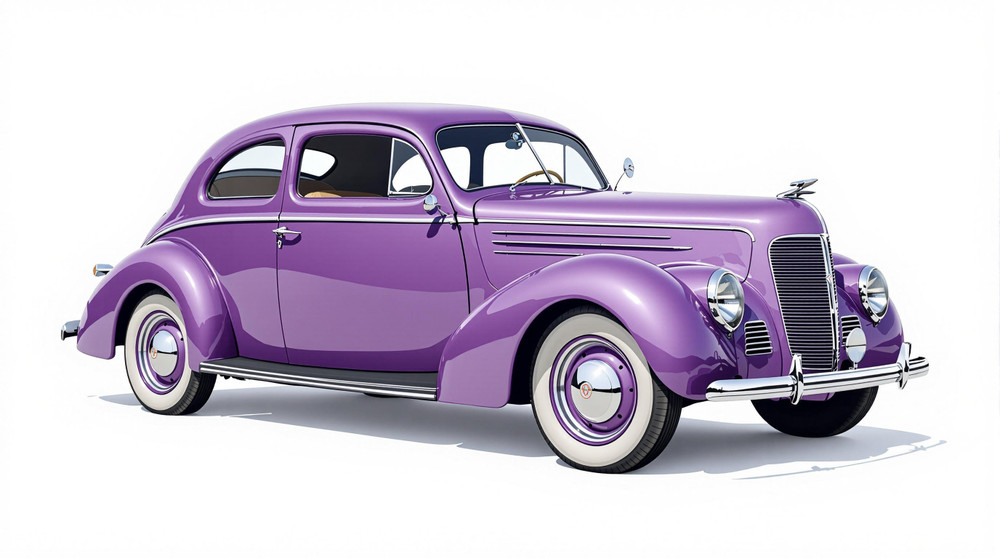
Image of 1938 Horch 855, Note: These illustrations use artistic license and may differ from actual historical models.
Performance Metrics
Fundamental Metrics
Emotional Appeal
MMP Rating
| Engine Specifications | |
|---|---|
| Engine: | Straight 8 |
| Displacement: | 4.9L |
| Horsepower: | Estimated 100-120 HP |
| Torque: | Not available |
| Compression Ratio: | Not available |
| Ignition System: | Distributor and coil |
| Cooling System: | Water-cooled |
| Performance Specifications | |
| 0-60 Time: | Not available |
| 1/4 Mile Time: | Not available |
| Top Speed: | 85 mph |
| Transmission and Drive | |
| Drive Type: | Rear-wheel drive |
| Transmission Type: | 4-speed manual |
| Fuel and Efficiency | |
| Fuel System Type: | Carburetor |
| MPG: | Not available |
| Dimensions and Brakes | |
| Brakes: | Drum brakes |
| Wheelbase: | 135 inches |
| Weight: | Estimated 2,200 kg |
Note: Specifications for classic cars are given to the best of our ability, considering the limited and variant data available.
1938 Horch 855: An Ultra-Rare German Roadster
The 1938 Horch 855 was built for a very small circle of people who wanted the comfort of a grand touring car and the drama of an open sports roadster. Created by Horch in Zwickau, Germany, it was a short-chassis, coachbuilt luxury car from the final years before the Second World War reshaped the European automobile industry.
Horch was founded by engineer August Horch in 1904 and became one of Germany’s leading prestige manufacturers. By the late 1930s, it belonged to Auto Union, the group whose four interlocking rings represented Audi, DKW, Horch, and Wanderer. The 855 sat near the top of Horch’s range, combining a powerful straight-eight engine with custom-built bodywork. Its defining distinction was scarcity: only a handful were made, with production often estimated at around seven examples.
One detail that makes the 855 especially intriguing is that it was not simply a regular Horch with a sporty body attached. Its shortened chassis gave it a distinct character from the larger 853, while its bespoke coachwork made each car feel like a personal commission.
Horch 855 Design and Coachwork
The 855 has the proportions of a classic prewar roadster: a long, sculpted bonnet, a low passenger compartment, sweeping front fenders, and a tapered rear deck. Its upright grille and prominent headlamps give it the formal presence expected of a Horch, while the open cockpit and flowing body lines add a more athletic edge. The overall effect is elegant rather than aggressive, with the car’s size and detailing doing the talking.
Like other elite cars of the period, the 855 relied on specialist coachbuilding rather than mass-produced bodywork. Gläser of Dresden is commonly associated with Horch roadster bodies, although individual cars and their histories may differ. The 855 is best understood as a limited, coachbuilt roadster, not a model offered in a wide range of standard factory body styles.
Inside, the cabin was finished to a standard befitting a luxury automobile. Owners could expect quality leather upholstery, polished wood trim, carefully finished metal fittings, and a well-appointed dashboard. Exact materials and details could vary from car to car, reflecting the bespoke nature of the work. The car offered comfortable accommodation for its era, though its roadster layout prioritized style and open-air touring over the enclosed space of a formal limousine.
There was no single, universal paint palette that defined every 855. Coachbuilt cars could be ordered in individual colors, and dark, dignified shades such as black, deep blue, and burgundy suit the model’s formal character. Lighter or contrasting finishes could also emphasize the body’s curves. Any claim that one color was definitively the most popular should be treated cautiously because so few cars were built and surviving records are incomplete.
Luxury Technology in 1938
The Horch 855’s engineering combined a large eight-cylinder engine with the sort of chassis and comfort features expected in a high-end German car. Its inline-eight was smooth by the standards of the day, and a four-speed manual transmission gave the driver control over its substantial power. The chassis was designed for composed touring, not competition use.
Independent front suspension helped improve comfort and steering response compared with the rigid front axles still found on many cars of the period. The car also had power-assisted braking in the period sense of a well-developed braking system, but it did not have modern electronic aids, power steering, or contemporary safety equipment. Its technology was advanced for a luxury car of the late 1930s, but it remained a hands-on machine that demanded skill and attention from its driver.
Historical Importance of the Horch 855
The 855 belongs to the high point of German prewar luxury motoring. It demonstrated how a manufacturer could combine sophisticated mechanical engineering with individual coachbuilding, creating a car that was both a means of transport and a statement of status. The short chassis and open body gave the model a sportier profile than a formal touring limousine, without sacrificing the refinement associated with Horch.
Horch’s place within Auto Union also connects the car to a significant chapter in automotive history. Auto Union became famous for its Grand Prix racing program and its streamlined Silver Arrows, but the 855 was not itself a racing car and should not be confused with those competition machines. Its significance lies instead in luxury design, craftsmanship, and the extraordinary level of exclusivity available to wealthy prewar buyers.
The 855 did not establish a mass-market design trend. Its influence is better seen in the enduring appeal of the coachbuilt grand touring car: a powerful chassis, a distinctive body tailored by a specialist, and an interior finished to individual taste. That formula remains central to how collectors value important prewar automobiles.
Horch 855 Performance and Driving Feel
The 855’s 5.0-liter inline-eight is generally reported at about 120 metric horsepower, or roughly 118 brake horsepower. Published specifications can vary, and surviving cars may differ in condition or restoration, but the engine’s reputation rests on smooth, effortless delivery rather than high-revving performance. A top speed in the region of 135 to 140 km/h, or about 84 to 87 mph, is a reasonable period estimate.
Reliable factory acceleration figures are difficult to establish. A 0-to-60-mph time of roughly 18 to 20 seconds is a plausible modern estimate for a healthy example, but it should not be treated as a verified factory specification. The 855 was a heavy luxury roadster, not a lightweight sports car, and its strengths were relaxed pace and refinement rather than rapid acceleration.
On a smooth road, the car would feel imposing and composed, with the long bonnet stretching ahead and the straight-eight producing a deep, even mechanical note. The suspension could soften ordinary road imperfections, while the car’s mass and wheelbase helped it settle into a steady touring rhythm. On tight, winding roads, however, its size, period steering, and substantial weight would require deliberate inputs. Crosswinds and uneven surfaces would also remind the driver that this is a 1930s roadster, not a modern grand tourer.
Driving one today is an involving experience. The driver must manage the manual gearbox, anticipate braking distances, and read the road well ahead. With the roof down, engine sound and mechanical sensations become part of the journey. The 855 rewards smooth, measured driving rather than hurried progress.
Owning and Maintaining a Horch 855
A Horch 855 is best suited to concours events, historic rallies, carefully planned tours, and private collections. It is not a sensible daily driver. The car’s rarity, value, age, and specialized construction make routine modern use impractical, while its prewar mechanical systems require an owner who understands vintage-car operation.
Maintenance is a specialist undertaking. The straight-eight engine, chassis, transmission, brakes, and electrical system need knowledgeable care, and some parts may have to be repaired or reproduced rather than ordered from a standard supplier. An average owner would find the car difficult and costly to maintain without access to an experienced prewar specialist. Reliability depends heavily on restoration quality, correct setup, and careful storage, not simply on the car’s original reputation.
Owners should also plan for conservation as well as mechanical work. Original coachwork, trim, and fittings are difficult to replace, and an incorrect restoration can affect both historical value and authenticity. For a car this rare, documentation and careful preservation are every bit as important as getting it started.
Rare Facts and Common Misconceptions
The most striking fact about the 855 is its tiny production run. Around seven examples is a frequently cited estimate, but the number should be treated as an informed approximation rather than a definitive factory tally. Exact production and survival figures are hard to confirm for a model built in such small numbers during a turbulent period.
The car is sometimes discussed alongside Auto Union’s celebrated racing heritage, but the 855 was a road-going luxury model, not a Grand Prix racer. Nor is it known for a major speed or endurance record. Its distinction is exclusivity and craftsmanship, rather than a headline competition victory.
A common criticism of the 855 is one shared by many grand touring cars of its era: it is large, heavy, and demanding by modern standards. Its brakes, steering, and safety provisions cannot match those of a contemporary car. The open cockpit also offers limited protection from weather. These are not defects in the context of its time, but they are important realities for anyone considering ownership today.
Horch 855 Collector Value and Rarity
The Horch 855 is exceptionally rare on the collector market. With only a handful believed to have been built, opportunities to buy one are scarce and may depend on a car appearing at a major international auction or changing hands privately. A precise count of surviving examples is difficult to establish, and the history and originality of each individual car matter enormously.
As a broad estimate, a documented, high-quality example could be worth several million dollars. A reasonable guide range might be approximately $3 million to $8 million or more, depending on provenance, condition, originality, restoration quality, and market circumstances. This is an estimate, not a fixed price guide; a particularly important example could fall outside that range.
Values for top-tier prewar cars have tended to favor rarity, provenance, and outstanding craftsmanship, but the market can be uneven. Exceptional cars remain sought after, while restoration costs and a smaller pool of buyers can make selling a niche model less predictable. The 855’s limited supply supports its long-term appeal, though no collector car is guaranteed to appreciate steadily.
Why the 1938 Horch 855 Still Matters
The 1938 Horch 855 brings together the defining ingredients of an important prewar luxury car: a refined straight-eight, a distinctive short-chassis roadster layout, elegant coachbuilt styling, and an extraordinarily small production run. It was created for a very different era, but its craftsmanship and presence still make an immediate impression.
Today, the 855 is far more than a rare automobile. It is a surviving expression of the ambition and artistry of 1930s German coachbuilding, and a reminder that the finest cars were once designed as much for individuality as for transport. Few roadsters make that idea feel as tangible as the Horch 855.
1938 Horch 855 Catalog of Parts
 1938 HORCH 855 Headlight Pads. 3-1/8" wide X 4-1/4" long. Pair-MP 7971-AHeadlight Pads. 3-1/8" wide X 4-1/4" long. Pair
 1938 HORCH 855 Luggage Rack Pad. 1-3/4" wide X 6" long. Each-MP 7971-BLuggage Rack Pad. 1-3/4" wide X 6" long. Each
 1938 HORCH 855 Door Handle (with lock) Pads. 1-7/8" wide X 3-1/2" long-MP 7971-CDoor Handle (with lock) Pads. 1-7/8" wide X 3-1/2" long. Pair
 1938 HORCH 855 Door handle pads. 1-7/8 in. W x 2-1/2 in. L. Pair. R&L.-MP 7971-DDoor handle pads. 1-7/8 in. W x 2-1/2 in. L. Pair. R&L.
 1938 HORCH 855 Trunk Light Pad. 3-3/4" long X 8-3/4" wide. Each-MP 7971-ETrunk Light Pad. 3-3/4" long X 8-3/4" wide. Each
 1938 HORCH 855 Fender Light Pads. 1-1/2" wide X 2-3/8" long. Pair-MP 7971-HFender Light Pads. 1-1/2" wide X 2-3/8" long. Pair
Why Choose Metro?
For over 100 years, Metro Moulded Parts has been the pinnacle of quality in classic car restoration parts. Our commitment to precision and authenticity in every component ensures a perfect fit and an OEM-level appearance.
- Expert Craftsmanship & Quality: Each part is a testament to our dedication to reliability and perfection, crafted from original designs and thoroughly tested.
- Advanced Technology: We use cutting-edge techniques to create flawless, long-lasting parts that surpass others in performance.
- SuperSoft Sponge – The Ultimate Door Seal: Not only are our door seals 30% softer than competitors', but they're also guaranteed to never leak. They effectively reduce wind and road noise, enhancing your classic car's comfort and driving experience.
- Proudly American: Our parts are a product of American craftsmanship, made in the USA with a spirit of excellence and heritage.
- Unrivaled Warranty: We back our products with a 30-year industry-leading warranty, a testament to our confidence in their quality.
Join us in preserving the legacy of classic cars with parts that are crafted for perfection, not just made.