

Image of 1938 Horch 951, Note: These illustrations use artistic license and may differ from actual historical models.
Performance Metrics
Fundamental Metrics
Emotional Appeal
MMP Rating
| Engine Specifications | |
|---|---|
| Engine: | V8 |
| Displacement: | 4.9L |
| Horsepower: | Estimated 100-120 HP |
| Torque: | Information not available |
| Compression Ratio: | Information not available |
| Ignition System: | Distributor ignition |
| Cooling System: | Liquid cooled |
| Performance Specifications | |
| 0-60 Time: | Information not available |
| 1/4 Mile Time: | Information not available |
| Top Speed: | 90 mph |
| Transmission and Drive | |
| Drive Type: | Rear-wheel drive |
| Transmission Type: | Manual |
| Fuel and Efficiency | |
| Fuel System Type: | Carburetor |
| MPG: | Information not available |
| Dimensions and Brakes | |
| Brakes: | Drum brakes |
| Wheelbase: | 135 inches |
| Weight: | Estimated 2,200 kg |
Note: Specifications for classic cars are given to the best of our ability, considering the limited and variant data available.
1938 Horch 951: A German Luxury Car Before the War
The 1938 Horch 951 was built for people who expected a motorcar to be more than transportation: it was a rolling display of engineering, craftsmanship, and status. Produced by Horch in Zwickau, Germany, it belonged to the upper tier of prewar European luxury cars, competing with prestigious models from Mercedes-Benz and other leading makers.
Horch’s roots reach back to engineer August Horch, who founded his first car company in 1899. After leaving it, he established a new business under the name Audi, a Latin translation of his surname, which means “listen” in German. Horch later became one of the four marques brought together in Auto Union in 1932, alongside Audi, DKW, and Wanderer. The 951 represented the traditional, imposing side of the group’s range: a large, powerful car intended for owners who valued comfort and presence.
Its moment in history was short. The 951 appeared as Germany’s luxury-car industry reached a high point in craftsmanship and technical ambition, but civilian production was curtailed as the country shifted toward wartime manufacturing. That makes surviving examples not only rare automobiles but also reminders of a sophisticated prewar industry interrupted by conflict.
Formal Lines and Hand-Finished Luxury
The Horch 951 wore its size with restraint. Its long bonnet, upright radiator grille, sweeping front fenders, and substantial cabin gave it the formal proportions expected of a luxury car of the late 1930s. Running boards connected the front and rear fenders, while details such as brightwork, lamps, and carefully shaped body panels added polish without making the design look excessively ornate. The overall effect was stately rather than sporty.
Inside, the 951 was designed around comfort and finish. Depending on its body and specification, the cabin could feature leather upholstery, polished wood trim, plush carpeting, and carefully detailed instruments. In chauffeur-driven limousine versions, rear-seat comfort was especially important, with generous legroom and a more private, enclosed atmosphere. Materials and fittings could vary because some cars were supplied as chassis for specialist coachbuilders to complete.
For its day, the 951 combined a large straight-eight engine with modern conveniences and a substantial chassis. Hydraulic braking and a multi-speed gearbox helped make a heavy luxury car more manageable than its size might suggest. Exact equipment could differ by model year and individual car, so surviving examples should be assessed by their build specification rather than assumed to share every feature.
Buyers could order cars in a range of finishes, and custom paint was part of the appeal of this market. Dark shades such as black, deep blue, and burgundy suited the car’s formal character, while grey and other subdued colors were also appropriate period choices. Upholstery and trim combinations varied with the body and customer’s wishes, so there was no single universally standard color scheme.
The 951 was offered in several body configurations, including closed limousine-style bodies and open cabriolets, with coachbuilt variations adding further differences. The Pullman limousine is among the most representative forms: its long, dignified profile and roomy cabin made the Horch’s luxury mission unmistakable. Open cars, by contrast, offered a more dramatic way to enjoy the engine and the landscape, but were generally less common.
Horch’s Place in Automotive History
The 951’s importance lies less in one revolutionary feature than in how it brought together the qualities expected of a first-rank European automobile. It paired a large, smooth-running engine with a robust chassis, careful finish, and bodywork suited to both private owners and professional chauffeurs. At a time when many cars were becoming more streamlined and mass-produced, Horch continued to make luxury feel individual and substantial.
Its closest rivals included high-end Mercedes-Benz models and other large European cars. The Horch stood out through its straight-eight powerplant, its imposing proportions, and the craftsmanship associated with the marque. It was also part of Auto Union’s broader effort to maintain a prestigious German luxury presence alongside the group’s more widely known racing activities and other passenger-car brands.
The 951 did not create a direct template that later luxury cars simply copied. Its lasting significance is instead as an accomplished example of prewar German coachbuilt luxury, showing how engineering, bespoke bodywork, and social status were combined before the automotive industry was reshaped by war and postwar mass production.
Straight-Eight Performance and Road Manners
The Horch 951 used a 4.9-liter inline-eight. Output figures varied by version and specification, but roughly 100 to 120 horsepower is commonly associated with cars in this family. That was substantial power for a large luxury car of the period, though the 951’s purpose was smooth, confident travel rather than sharp acceleration.
Published performance figures are not consistent across body styles and versions. A sound, suitably specified example is often quoted with a top speed in the region of 125 to 130 km/h, or about 78 to 81 mph. A modern 0-to-60 mph estimate is not a reliable period measurement, but a heavy limousine would likely need roughly 25 to 30 seconds, with lighter bodies potentially doing somewhat better. Those figures should be treated as estimates, not guaranteed factory test results.
On the road, the straight-eight’s appeal is its measured delivery. Rather than delivering a modern burst of acceleration, it gathers speed smoothly and quietly for its era. The long wheelbase and weight help the car settle over ordinary road imperfections, although worn suspension, old tires, and poor road surfaces can quickly change the experience. On narrow or winding roads, the 951’s size and mass call for anticipation. It is not a car to toss into corners; it rewards a calm driver who looks ahead and makes deliberate inputs.
From behind the wheel, the engine’s subdued mechanical note, the substantial controls, and the slow, stately progress are central to the experience. Steering and braking feel very different from those of a modern car, and a driver must leave room for the car’s weight and period braking performance. In good condition, though, the 951 offers a composed, dignified ride that makes a long journey feel like an occasion.
Living With a Horch 951 Today
Today, a Horch 951 is best suited to concours events, historic motoring gatherings, private collections, and carefully planned touring. Its size, age, rarity, and running costs make it impractical as an everyday car. It is also too valuable and historically important for casual use in modern traffic, where parts availability and the risk of damage are serious concerns.
Maintenance is a specialist undertaking. The engine, gearbox, brakes, suspension, and electrical systems require knowledge of prewar European engineering, while coachbuilt bodywork and interior trim may need the attention of experienced craftspeople. Routine work is not necessarily mysterious, but sourcing correct parts and preserving originality can be difficult and expensive. A mechanically capable owner can handle some basic servicing, but a full restoration or major repair is beyond the average home mechanic.
Reliability depends heavily on the quality of restoration and ongoing care. A well-maintained car can be driven, but age-related issues such as deteriorated wiring, tired cooling components, and worn brake hydraulics deserve close inspection. Before purchase, a specialist should check the chassis and body structure, verify the engine and drivetrain, and establish whether important components are original or replaced.
Rare Details and Common Misconceptions
Horch 951s are often discussed alongside the closely related 951A, and the precise specification can vary by version and year. That distinction matters when comparing performance figures or identifying a car. Buyers should rely on chassis records, period documentation, and marque specialists rather than a general model description alone.
There is no single widely recognized speed or endurance record associated with the 951. Its reputation rests on luxury, engineering, and rarity rather than competition success. Nor is it best known for a single celebrity owner or a defining film appearance. Its historical setting is notable in itself: the car belongs to the final years of Germany’s prewar luxury-car culture, before civilian production was redirected and the industry was transformed.
One fair criticism is that the 951’s size and weight make it less nimble than a sporting car, while its complex, handcrafted construction can make restoration costly. It also lacks the parts support and everyday usability of more common classics. Those drawbacks are part of the ownership calculation, not surprises to discover after purchase.
Horch 951 Values and Rarity
Exact production totals for the 951 can be difficult to pin down because figures may combine related versions, chassis, and body styles. A reasonable working estimate for the 951 family is around 1,000 cars produced, though the number of surviving examples is far smaller. The car is rarely offered for sale, and open or especially well-documented coachbuilt examples are scarcer still.
Values depend greatly on body style, originality, restoration quality, provenance, and completeness. As a broad current-market estimate, a presentable but less exceptional example might fall around US$250,000 to US$500,000. A high-quality, correctly restored car with desirable coachwork and strong documentation could bring roughly US$500,000 to US$1 million or more. These are indicative ranges, not a formal valuation, and a specific car may differ substantially.
Like many top-tier prewar classics, the 951’s long-term appeal is supported by genuine scarcity and historical importance. Prices can be uneven because the buyer pool is small and restoration costs are high. Exceptional cars may remain highly sought after, while less complete or poorly documented examples can be harder to sell. Condition and provenance matter far more than a simple model-year comparison.
Why the 1938 Horch 951 Still Matters
The Horch 951 combined a smooth straight-eight, commanding road presence, hand-finished luxury, and a choice of formal or open body styles. It was a serious rival in the prewar luxury market and a product of a German automotive industry at the height of its craftsmanship. Its rarity, demanding ownership, and interrupted production make it a specialist’s classic rather than an everyday collectible.
More than a large old limousine, the 1938 Horch 951 is a surviving expression of an era when a luxury car could be tailored around its owner and built with the confidence of a coachmaker’s craft. That combination of engineering and individuality is what keeps this Horch remarkable today.
1938 Horch 951 Catalog of Parts
 1938 HORCH 951 Headlight Pads. 3-1/8" wide X 4-1/4" long. Pair-MP 7971-AHeadlight Pads. 3-1/8" wide X 4-1/4" long. Pair
 1938 HORCH 951 Luggage Rack Pad. 1-3/4" wide X 6" long. Each-MP 7971-BLuggage Rack Pad. 1-3/4" wide X 6" long. Each
 1938 HORCH 951 Door Handle (with lock) Pads. 1-7/8" wide X 3-1/2" long-MP 7971-CDoor Handle (with lock) Pads. 1-7/8" wide X 3-1/2" long. Pair
 1938 HORCH 951 Door handle pads. 1-7/8 in. W x 2-1/2 in. L. Pair. R&L.-MP 7971-DDoor handle pads. 1-7/8 in. W x 2-1/2 in. L. Pair. R&L.
 1938 HORCH 951 Trunk Light Pad. 3-3/4" long X 8-3/4" wide. Each-MP 7971-ETrunk Light Pad. 3-3/4" long X 8-3/4" wide. Each
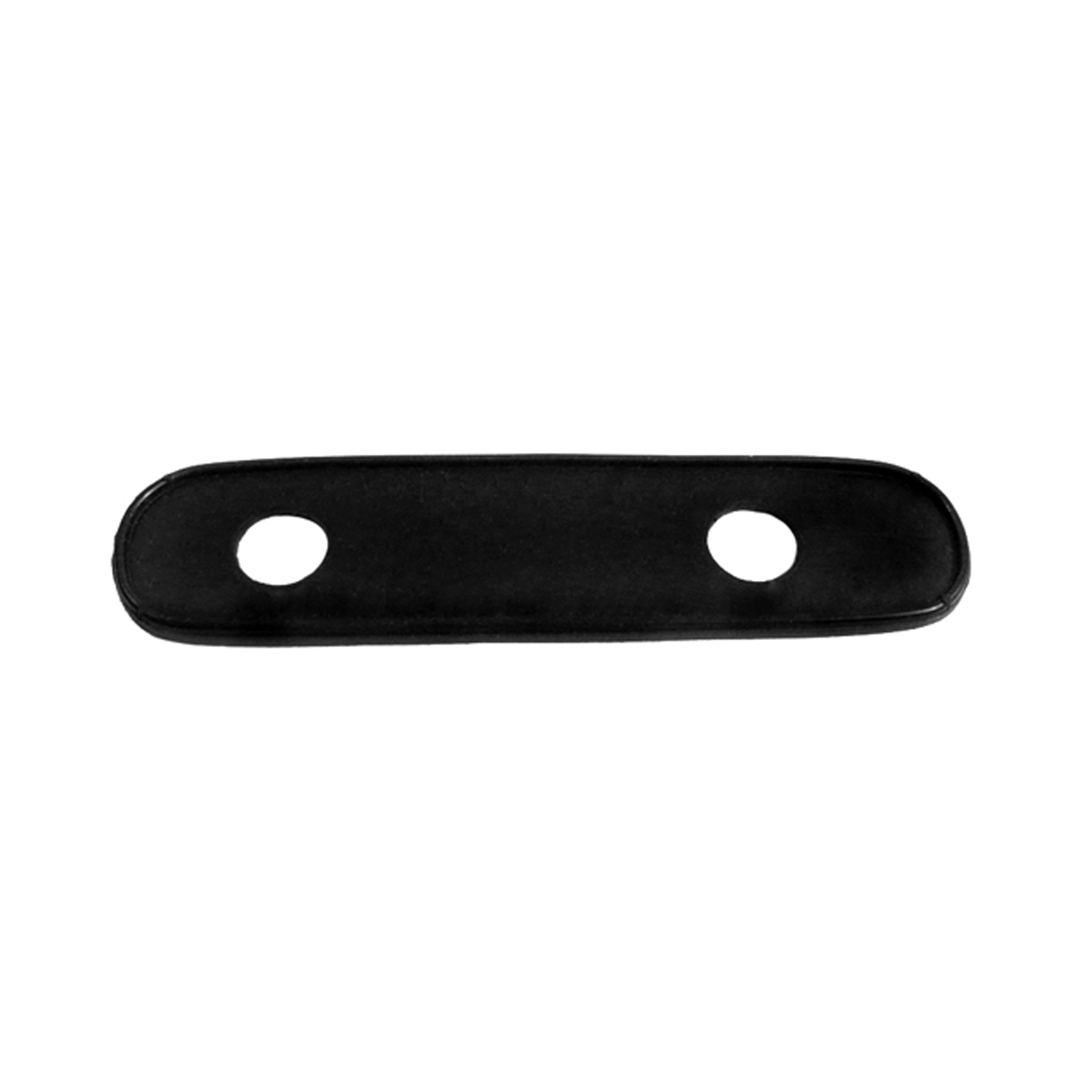 1938 HORCH 951 Trunk Rack Bracket Pad. 1-3/16" wide X 3-5/8" long. Each-MP 7971-GTrunk Rack Bracket Pad. 1-3/16" wide X 3-5/8" long. Each
 1938 HORCH 951 Fender Light Pads. 1-1/2" wide X 2-3/8" long. Pair-MP 7971-HFender Light Pads. 1-1/2" wide X 2-3/8" long. Pair
Why Choose Metro?
For over 100 years, Metro Moulded Parts has been the pinnacle of quality in classic car restoration parts. Our commitment to precision and authenticity in every component ensures a perfect fit and an OEM-level appearance.
- Expert Craftsmanship & Quality: Each part is a testament to our dedication to reliability and perfection, crafted from original designs and thoroughly tested.
- Advanced Technology: We use cutting-edge techniques to create flawless, long-lasting parts that surpass others in performance.
- SuperSoft Sponge – The Ultimate Door Seal: Not only are our door seals 30% softer than competitors', but they're also guaranteed to never leak. They effectively reduce wind and road noise, enhancing your classic car's comfort and driving experience.
- Proudly American: Our parts are a product of American craftsmanship, made in the USA with a spirit of excellence and heritage.
- Unrivaled Warranty: We back our products with a 30-year industry-leading warranty, a testament to our confidence in their quality.
Join us in preserving the legacy of classic cars with parts that are crafted for perfection, not just made.