
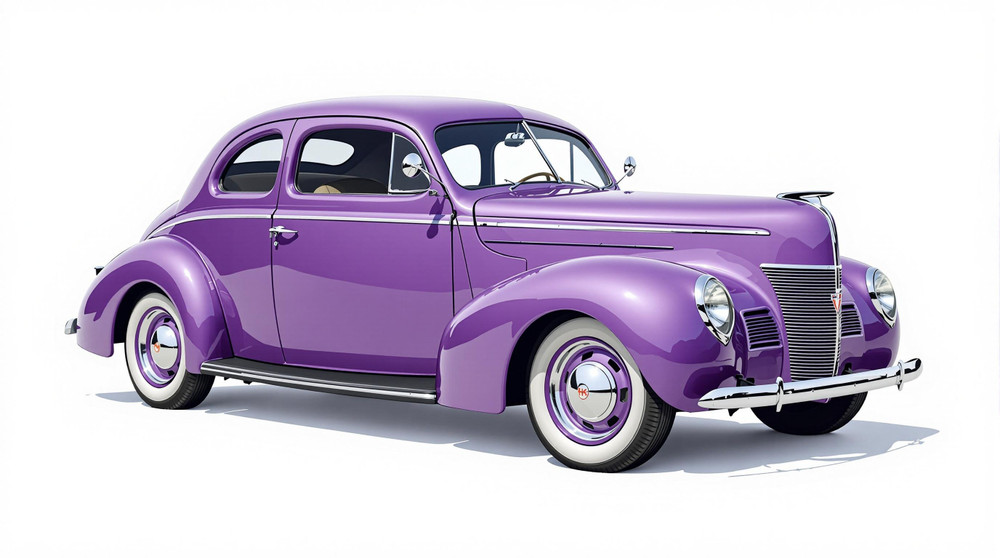
Image of 1939 Horch 108, Note: These illustrations use artistic license and may differ from actual historical models.
Performance Metrics
Fundamental Metrics
Emotional Appeal
MMP Rating
| Engine Specifications | |
|---|---|
| Engine Options: | Straight 8 |
| Displacement Range: | 3.5L - 3.8L |
| Horsepower Range: | Estimated 80 - 90 HP |
| Torque: | Not available |
| Compression Ratio: | Not available |
| Ignition System: | Distributor and coil |
| Cooling System: | Water-cooled |
| Performance Specifications | |
| 0-60 Time: | Not available |
| 1/4 Mile Time: | Not available |
| Top Speed: | 75 mph |
| Transmission and Drive | |
| Drive Type: | Rear-wheel drive |
| Transmission Type: | 4-speed manual |
| Fuel and Efficiency | |
| Fuel System Type: | Carburetor |
| MPG: | Not available |
| Dimensions and Brakes | |
| Brakes: | Drum brakes |
| Wheelbase: | 3,200 mm |
| Weight: | Estimated 2,000 kg |
Note: Specifications for classic cars are given to the best of our ability, considering the limited and variant data available.
1939 Horch 108: A German Military 4x4
The 1939 Horch 108 was less a road car than a formidable piece of military engineering: a heavy, four-wheel-drive staff vehicle built to carry officers and equipment across terrain that would stop an ordinary saloon in its tracks. It came from Horch, the Zwickau-based marque that was part of Auto Union, the German automotive group whose four-ring emblem later became associated with Audi.
The Horch name also appeared on elegant prewar luxury cars, but the 108 belonged to a very different world. Developed for German military service in the late 1930s, it was designed for cross-country mobility and rugged use. One intriguing detail is its four-wheel steering system: on early examples, the rear wheels could turn with the fronts, helping the large vehicle maneuver in tight spaces despite its substantial size.
Military Design and Horch Craftsmanship
The Horch 108 had a tall, upright profile, a long bonnet, slab-sided bodywork and prominent front fenders. Its military purpose was written into every line. Large wheels, generous ground clearance and a broad stance gave it a purposeful look, while the open body made it practical for carrying personnel and gear. The visual effect was imposing rather than graceful, though the underlying engineering reflected the precision Horch was known for.
Inside, the cabin prioritized utility. The seats and trim were far more practical than the richly finished interiors found in Horch’s civilian luxury cars. Materials and fittings varied by body and production run, but drivers could expect robust upholstery, simple instruments and controls that were easy to reach while wearing gloves. Space was arranged for occupants, field equipment and military communications gear, depending on the vehicle’s role.
Its most notable technology was mechanical rather than electronic. The 108 combined a V8 engine with four-wheel drive, a low-range transfer case and, on early versions, four-wheel steering. Independent suspension helped keep the wheels in contact with uneven ground. These features made it a sophisticated off-road vehicle for its era, although they also added complexity and weight.
There was no broad civilian paint palette. Vehicles were finished in military colors appropriate to their period and assignment, with shades and markings changing as wartime regulations evolved. Early wartime examples were commonly seen in field-gray tones; later German vehicles often received dark-yellow finishes, sometimes with camouflage. Exact colors could vary with repainting, theater of service and subsequent restoration.
Body Styles and Military Roles
Rather than being offered as a conventional consumer model with a menu of trims, the Horch 108 appeared in bodies tailored to military work. Open personnel and command-car configurations were among its most recognizable forms. Other versions carried radios, equipment or additional passengers, and military designations reflected their intended function.
The open command and staff-car style is especially iconic today. Its exposed cabin and practical layout make it instantly recognizable in wartime photographs and surviving-vehicle displays. The exact equipment and seating arrangement could differ, so two Horch 108s may look similar from a distance while having quite different details.
Why the Horch 108 Mattered
The 108 demonstrated how far manufacturers could push a prewar passenger-car platform toward serious off-road service. Four-wheel drive, low gearing and four-wheel steering were not everyday features in 1939. Together, they gave the vehicle a degree of maneuverability and terrain capability that set it apart from ordinary staff cars and many contemporary road vehicles.
It was part of a broader German effort to standardize military vehicles and improve mobility. The Horch 108 was not the only vehicle pursuing those goals, and its mechanical sophistication came with trade-offs. Still, its combination of a V8, advanced steering and all-wheel drive helped establish it as one of the more technically ambitious heavy military cars of its period. Its lasting influence is less a direct line to a modern production model than an example of early, integrated off-road vehicle engineering.
V8 Performance and Off-Road Handling
Most Horch 108s are associated with a 3.8-liter V8 producing about 80 metric horsepower. Power went through a four-speed manual gearbox and a transfer case that provided four-wheel drive and low gearing. Specifications varied across versions, but the vehicle’s mission was traction and load-carrying ability, not quick acceleration.
Top speed is generally quoted at around 80 km/h, or 50 mph, depending on condition and configuration. That means a 0-60 mph time is not applicable: a standard Horch 108 was not designed to reach 60 mph. Period test figures for acceleration are not consistently available, and modern estimates would depend heavily on vehicle weight, gearing, tire choice and mechanical condition.
On rough ground, the suspension and four-wheel drive were major assets. Low range helped the driver crawl through difficult sections, while the steering system made a large vehicle more manageable at low speeds. On paved roads, the Horch’s mass, tall body and military tires made it feel very different from a modern SUV. It was not built for fast cornering, and a winding road called for measured steering inputs and plenty of anticipation.
From the driver’s seat, the V8 would have delivered a deep, steady mechanical rumble rather than a high-revving sports-car note. The ride was firm and workmanlike, with bumps transmitted through a chassis built to carry weight and endure hard use. Driving one is an exercise in planning ahead: select the right gear, manage the vehicle’s momentum and let the drivetrain do its job.
Living With a Horch 108 Today
In its original role, the Horch 108 was a military staff, command or transport vehicle. Today, surviving examples are primarily museum pieces, historic military-vehicle displays and collector vehicles. Some take part in carefully managed historic motoring events, but regular daily use is unusual and generally impractical.
Maintenance is demanding by modern standards. The V8, four-wheel-drive system, transfer case and steering mechanisms need knowledgeable attention, and specialized parts can be difficult to source. The vehicle’s military origins do not make it simple to repair: its mechanical systems are substantial and, in some respects, unusually complex for the period. A mechanically skilled owner may handle routine servicing, but a full restoration or major drivetrain repair is a specialist undertaking.
Reliability depends greatly on provenance and restoration quality. A correctly maintained example can be driven, but age, scarce components and the need to preserve historically important details all argue for careful use. Before purchase, buyers should inspect the chassis, steering linkages, drivetrain, engine condition and availability of model-specific parts.
Horch 108 Facts and Caveats
The 108’s four-wheel steering is its standout engineering talking point. It was intended to improve maneuverability, especially at low speeds, but it also increased mechanical complexity. Not every Horch 108 encountered today will have identical equipment, since versions and production details changed over time.
The vehicle is closely associated with German military service during the Second World War. It appeared in wartime settings and period imagery, but no single famous celebrity ownership story or widely recognized speed record defines the model. Its significance comes from its engineering and military role, not competition success.
Common criticisms include its fuel consumption, weight, complicated running gear and demanding maintenance. Those drawbacks were real, but they reflect the vehicle’s intended purpose. The Horch 108 was built to move people and equipment across difficult terrain, not to be economical or inexpensive to repair.
Rarity, Values and Collector Interest
Exact production totals for the Horch 108 are difficult to pin down because sources may count different versions, body types or related model designations. A reasonable working estimate is a few thousand early Horch 108 vehicles, perhaps in the range of 2,000 to 3,000, rather than a definitive factory total. Wartime losses and decades of use mean that complete, authentic examples are scarce today.
As a broad collector-market estimate, a running but unrestored or incomplete vehicle might fall around US$30,000 to $60,000. A well-restored, historically correct example could bring roughly US$60,000 to $120,000, with exceptional provenance or an unusually rare configuration potentially pushing beyond that range. These are estimates, not a formal valuation: condition, originality, documentation, location and auction demand can shift the price substantially.
Interest in historically significant military vehicles has supported values for good examples, while restoration costs and limited parts supply constrain the market. The best vehicles are likely to remain sought after, but buyers should not assume every Horch 108 will rise steadily in value. Authenticity and mechanical condition matter more than a glossy repaint.
A Distinctive Chapter in Horch History
The 1939 Horch 108 brought together a powerful V8, four-wheel drive and unusually advanced steering in a vehicle built for demanding service. Its open military body, rugged stance and sophisticated running gear made it unlike both Horch’s luxury cars and ordinary staff vehicles of the era. Today, it stands as a rare, technically ambitious survivor from a turbulent period in automotive history, and a reminder that Horch engineering could be just as striking in the field as it was on the boulevard.
1939 Horch 108 Catalog of Parts
 1939 HORCH 108 Headlight Pads. 3-1/8" wide X 4-1/4" long. Pair-MP 7971-AHeadlight Pads. 3-1/8" wide X 4-1/4" long. Pair
 1939 HORCH 108 Luggage Rack Pad. 1-3/4" wide X 6" long. Each-MP 7971-BLuggage Rack Pad. 1-3/4" wide X 6" long. Each
 1939 HORCH 108 Door Handle (with lock) Pads. 1-7/8" wide X 3-1/2" long-MP 7971-CDoor Handle (with lock) Pads. 1-7/8" wide X 3-1/2" long. Pair
 1939 HORCH 108 Door handle pads. 1-7/8 in. W x 2-1/2 in. L. Pair. R&L.-MP 7971-DDoor handle pads. 1-7/8 in. W x 2-1/2 in. L. Pair. R&L.
 1939 HORCH 108 Trunk Light Pad. 3-3/4" long X 8-3/4" wide. Each-MP 7971-ETrunk Light Pad. 3-3/4" long X 8-3/4" wide. Each
 1939 HORCH 108 Fender Light Pads. 1-1/2" wide X 2-3/8" long. Pair-MP 7971-HFender Light Pads. 1-1/2" wide X 2-3/8" long. Pair
Why Choose Metro?
For over 100 years, Metro Moulded Parts has been the pinnacle of quality in classic car restoration parts. Our commitment to precision and authenticity in every component ensures a perfect fit and an OEM-level appearance.
- Expert Craftsmanship & Quality: Each part is a testament to our dedication to reliability and perfection, crafted from original designs and thoroughly tested.
- Advanced Technology: We use cutting-edge techniques to create flawless, long-lasting parts that surpass others in performance.
- SuperSoft Sponge – The Ultimate Door Seal: Not only are our door seals 30% softer than competitors', but they're also guaranteed to never leak. They effectively reduce wind and road noise, enhancing your classic car's comfort and driving experience.
- Proudly American: Our parts are a product of American craftsmanship, made in the USA with a spirit of excellence and heritage.
- Unrivaled Warranty: We back our products with a 30-year industry-leading warranty, a testament to our confidence in their quality.
Join us in preserving the legacy of classic cars with parts that are crafted for perfection, not just made.