
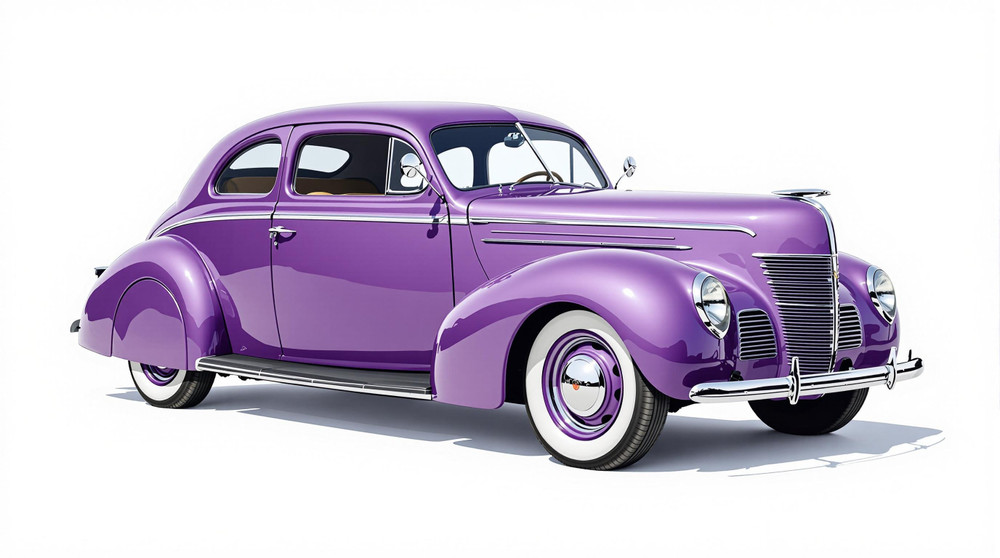
Image of 1939 Horch 855, Note: These illustrations use artistic license and may differ from actual historical models.
Performance Metrics
Fundamental Metrics
Emotional Appeal
MMP Rating
| Engine Specifications | |
|---|---|
| Engine: | Straight 8 |
| Displacement: | 4.9L |
| Horsepower: | Estimated 100-120 HP |
| Torque: | Not available |
| Compression Ratio: | Not available |
| Ignition System: | Distributor ignition |
| Cooling System: | Liquid cooled |
| Performance Specifications | |
| 0-60 Time: | Not available |
| 1/4 Mile Time: | Not available |
| Top Speed: | 93 mph |
| Transmission and Drive | |
| Drive Type: | Rear wheel drive |
| Transmission Type: | 4-speed manual |
| Fuel and Efficiency | |
| Fuel System Type: | Carburetor |
| MPG: | Not available |
| Dimensions and Brakes | |
| Brakes: | Drum brakes |
| Wheelbase: | 135 inches |
| Weight: | Estimated 2,200 kg |
Note: Specifications for classic cars are given to the best of our ability, considering the limited and variant data available.
1939 Horch 855: A German Grand-Touring Rarity
The 1939 Horch 855 was built for a world where arriving in style mattered as much as getting there, and few prewar cars made that statement more dramatically. A low, long-hooded roadster from one of Germany’s most prestigious manufacturers, it combined hand-finished coachwork with the smooth power of a large straight-eight engine.
Horch was founded by August Horch and became part of Auto Union in 1932, alongside Audi, DKW, and Wanderer. The Horch name sat at the luxury end of the group, competing with marques such as Mercedes-Benz and Maybach. The 855 belonged to the company’s 850 series, but its shorter, sportier chassis and exclusive roadster body gave it a character all its own.
Its rarity is part of the appeal. The 855 was made in very small numbers, commonly estimated at around seven examples. It was not a mass-produced luxury car but a costly, specialist machine for buyers who wanted something more individual than a conventional limousine or cabriolet.
Roadster Proportions and Coachbuilt Detail
The 855’s shape is classic prewar grand touring: a sweeping bonnet, upright chrome grille, separate front wings, running boards, and a compact open cockpit set well back from the nose. Its long hood draws the eye toward the radiator, while the rear tapers into a neatly finished tail. The result is stately without looking ponderous, with a sportier stance than the larger formal Horch models.
Coachwork was a major part of the car’s identity. The 855 is best known as a Spezial Roadster, a bespoke-bodied open car rather than a model offered in a broad range of factory body styles. Buyers looking across the wider Horch 850 family could find several kinds of cabriolet and limousine, but the 855’s defining configuration was the special roadster.
Inside, the emphasis was on craftsmanship and comfort. Period Horch interiors typically used high-quality leather upholstery, polished wood trim, deep carpeting, and substantial metal fittings. The dashboard carried clear instruments in a carefully arranged panel, with switches and controls finished to match the car’s luxurious character. Exact materials and colors could vary between individual cars because coachbuilt vehicles were often tailored to their first owners.
Paint choices were similarly dependent on the buyer and the coachwork. Dark, formal shades such as black, deep blue, and burgundy suited the car’s imposing presence, while lighter or two-tone combinations could emphasize its flowing body lines. There is no single color that defines every 855; original paint evidence and documented restoration history matter more than assumptions about what was “standard.”
Eight-Cylinder Power for the Open Road
At the heart of the 855 was Horch’s 4,944 cc straight-eight engine. Depending on specification, published figures for the 850-series cars are often given at around 120 metric horsepower for the sportier 855, paired with a manual gearbox. The engine’s long, even firing sequence was designed to deliver smooth, unhurried power rather than the sharp, high-revving response of a competition car.
Period specifications and modern summaries differ, so performance figures should be treated as approximate. A top speed in the region of 135 to 140 km/h, or about 84 to 87 mph, is commonly associated with the 855. A 0-to-60 mph time of roughly 20 to 25 seconds is a reasonable estimate for a heavy prewar luxury roadster, but a reliable factory acceleration figure is not widely documented.
On a smooth road, the car’s long wheelbase and substantial chassis would help it settle into a calm touring rhythm. The suspension was intended to absorb rough surfaces, though period tires, narrow by modern standards, and the car’s considerable weight would make sharp bumps and broken pavement something to approach with care. On winding roads, the 855 would reward measured inputs. It is a grand tourer, not a modern sports car: steering, braking, and body movement require anticipation rather than quick corrections.
The driving experience is as much about sensation as speed. The straight-eight’s subdued mechanical hum, the movement of the large steering wheel, and the wind over the open cockpit create a distinctly prewar feel. The driver is actively involved, managing the gearbox and reading the road, while the car encourages a relaxed pace and smooth technique.
Why the Horch 855 Mattered
The 855 showed how a luxury manufacturer could give a large touring car a more sporting personality without abandoning comfort or craftsmanship. Its combination of a powerful straight-eight, a carefully proportioned chassis, and bespoke bodywork captured an important prewar design ideal: performance expressed through effortless motion and elegant form rather than aggressive styling.
It also represents the peak of Horch’s coachbuilt luxury era. In the late 1930s, premium German cars competed through engineering, finish, and exclusivity. The 855 stood apart from more common production models because it was an uncommon and highly specialized roadster, built in numbers too small to become a familiar sight even when new.
Its influence is best understood as part of the broader tradition of European grand touring cars. The 855 did not create a mass-market technology or launch a major racing program. Instead, it preserved a standard of hand-built luxury and individualized design that became increasingly difficult to sustain as the automotive industry and the political situation in Europe changed.
Ownership: A Preservation Project, Not a Commuter
A Horch 855 today is primarily a concours, museum, or carefully managed touring car. Its value, age, and scarcity make daily use impractical. Owners are more likely to exercise it on special events and appropriate vintage tours than expose it to routine traffic, modern parking conditions, or long periods of unattended storage.
Maintenance calls for specialist knowledge. The engine and chassis are complex by the standards of an ordinary prewar car, and some components may require careful rebuilding or custom fabrication. The coachwork presents a separate challenge: restoring a bespoke body correctly takes period research, skilled metalwork, and close attention to the car’s individual history. For the average owner without vintage-car experience, repairs would not be straightforward.
Reliability depends heavily on the quality of the restoration and ongoing care. Regular running, correct lubrication, careful cooling-system monitoring, and properly maintained brakes and tires are essential. A well-sorted example can be driven, but it should be treated as a valuable historic machine rather than expected to behave like a modern luxury car.
Rare Facts and Common Misconceptions
The 855’s production is generally estimated at approximately seven cars, though surviving documentation and definitions of individual body versions can make exact totals difficult to state with absolute certainty. That tiny run makes it one of the rarest and most collectible members of Horch’s prewar range.
Unlike some famous sports cars, the 855 is not chiefly remembered for racing records or a widely documented celebrity owner. Its distinction lies in exclusivity, engineering, and coachbuilt design. It was a road-going luxury roadster, not a dedicated competition car, so its significance is better measured by its rarity and craftsmanship than by lap times or speed records.
A common criticism of the 855 is inherent in its mission: it is large, heavy, and mechanically demanding compared with a lighter sports car. Its performance is modest by modern standards, and its bespoke construction can make restoration expensive and time-consuming. Those limitations are also part of its character. The car was designed to travel elegantly, not to chase contemporary traffic.
Collector Values and Market Rarity
A genuine Horch 855 is exceptionally scarce, and examples rarely appear on the open market. A reasonable broad estimate for a correctly identified, high-quality car would be about US$2 million to US$5 million, with exceptional originality, documented provenance, and concours-level restoration potentially pushing values beyond that range. This is an informed estimate rather than a fixed price guide; individual history and condition can move the figure substantially.
Values for prewar European coachbuilt cars tend to reward originality, important provenance, and documented restoration. The top end of the market can be volatile because very few comparable 855s change hands publicly. Over the long term, the car’s rarity and historical appeal support strong collector interest, though short-term prices can rise or fall with the wider market for major prewar cars.
When assessing one, buyers should verify chassis and engine identity, establish whether the bodywork is original or reconstructed, and review restoration records in detail. With a car this rare, provenance is not a footnote. It is central to both authenticity and value.
A Distinctive Chapter in Horch History
The 1939 Horch 855 brought together a smooth straight-eight, carefully engineered touring-car foundations, and bespoke roadster styling in a remarkably scarce package. It was not built to dominate a racetrack or fill a showroom. It was built to make long-distance travel feel special.
Nearly nine decades later, the 855 remains a vivid expression of Horch’s ambition and the artistry of prewar coachbuilding. Its lasting appeal comes from more than rarity: it embodies a time when a car could be both sophisticated engineering and a one-of-a-kind work of automotive design.
1939 Horch 855 Catalog of Parts
 1939 HORCH 855 Headlight Pads. 3-1/8" wide X 4-1/4" long. Pair-MP 7971-AHeadlight Pads. 3-1/8" wide X 4-1/4" long. Pair
 1939 HORCH 855 Luggage Rack Pad. 1-3/4" wide X 6" long. Each-MP 7971-BLuggage Rack Pad. 1-3/4" wide X 6" long. Each
 1939 HORCH 855 Door Handle (with lock) Pads. 1-7/8" wide X 3-1/2" long-MP 7971-CDoor Handle (with lock) Pads. 1-7/8" wide X 3-1/2" long. Pair
 1939 HORCH 855 Door handle pads. 1-7/8 in. W x 2-1/2 in. L. Pair. R&L.-MP 7971-DDoor handle pads. 1-7/8 in. W x 2-1/2 in. L. Pair. R&L.
 1939 HORCH 855 Trunk Light Pad. 3-3/4" long X 8-3/4" wide. Each-MP 7971-ETrunk Light Pad. 3-3/4" long X 8-3/4" wide. Each
 1939 HORCH 855 Fender Light Pads. 1-1/2" wide X 2-3/8" long. Pair-MP 7971-HFender Light Pads. 1-1/2" wide X 2-3/8" long. Pair
Why Choose Metro?
For over 100 years, Metro Moulded Parts has been the pinnacle of quality in classic car restoration parts. Our commitment to precision and authenticity in every component ensures a perfect fit and an OEM-level appearance.
- Expert Craftsmanship & Quality: Each part is a testament to our dedication to reliability and perfection, crafted from original designs and thoroughly tested.
- Advanced Technology: We use cutting-edge techniques to create flawless, long-lasting parts that surpass others in performance.
- SuperSoft Sponge – The Ultimate Door Seal: Not only are our door seals 30% softer than competitors', but they're also guaranteed to never leak. They effectively reduce wind and road noise, enhancing your classic car's comfort and driving experience.
- Proudly American: Our parts are a product of American craftsmanship, made in the USA with a spirit of excellence and heritage.
- Unrivaled Warranty: We back our products with a 30-year industry-leading warranty, a testament to our confidence in their quality.
Join us in preserving the legacy of classic cars with parts that are crafted for perfection, not just made.