
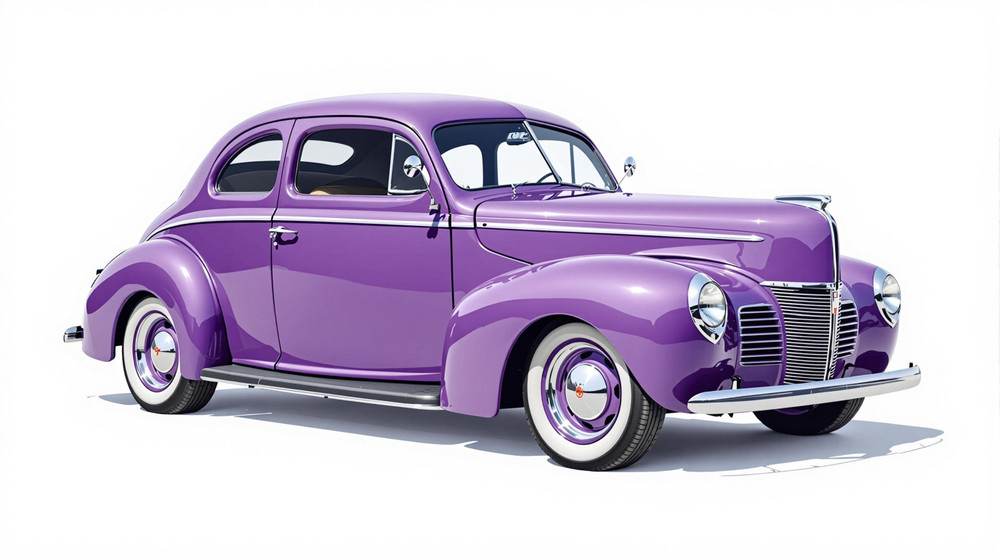
Image of 1940 Horch 108, Note: These illustrations use artistic license and may differ from actual historical models.
Performance Metrics
Fundamental Metrics
Emotional Appeal
MMP Rating
| Engine Specifications | |
|---|---|
| Engine Options: | Straight 8 |
| Displacement Range: | 3.5L - 3.8L |
| Horsepower Range: | Estimated 80 - 90 HP |
| Torque: | Not available |
| Compression Ratio: | Not available |
| Ignition System: | Distributor and points |
| Cooling System: | Liquid-cooled |
| Performance Specifications | |
| 0-60 Time: | Not available |
| 1/4 Mile Time: | Not available |
| Top Speed: | 75 mph |
| Transmission and Drive | |
| Drive Type: | Rear-wheel drive |
| Transmission Type: | 4-speed manual |
| Fuel and Efficiency | |
| Fuel System Type: | Carburetor |
| MPG: | Not available |
| Dimensions and Brakes | |
| Brakes: | Drum brakes |
| Wheelbase: | 3,200 mm |
| Weight: | Estimated 2,000 kg |
Note: Specifications for classic cars are given to the best of our ability, considering the limited and variant data available.
1940 Horch 108: The German V8 Built for Rough Ground
The 1940 Horch 108 was less a polished boulevard cruiser than a commanding piece of military engineering: a large, four-wheel-drive staff car designed to carry officers and equipment across terrain that would stop an ordinary road car. It came from Horch, the upscale German marque founded by August Horch and later incorporated into Auto Union, the company represented by the familiar four-ring emblem.
Built during the late 1930s and around the start of the Second World War, the Horch 108 belonged to Germany’s effort to standardize military vehicles. Its combination of a V8 engine, four-wheel drive and, on early versions, four-wheel steering made it an unusually ambitious off-road passenger car. That rear-steering system is one of the model’s most intriguing details: it helped the long vehicle maneuver, but also added mechanical complexity that military users did not always need or want.
Military Styling and Horch Craftsmanship
The Horch 108 had a purposeful, upright profile. Its long hood housed the V8, while the tall, flat-sided body made room for a crew and their gear. Large fenders, exposed running boards, a spare wheel and chunky tires gave it a distinctly utilitarian look. Many examples had an open four-door touring body with a folding canvas roof and removable side curtains. The result was part staff car, part field vehicle, with little of the streamlining seen on contemporary luxury cars.
Horch was known for high-quality automobiles, and the 108 retained a measure of that workmanship in its mechanical components and cabin. But this was a military vehicle, not a lavish civilian limousine. The interior favored durable upholstery, straightforward instruments and practical controls over decorative trim. The driver sat behind a broad steering wheel and a simple instrument panel, with the transfer-case and gearbox controls reflecting the vehicle’s serious off-road purpose.
Its engine was a 3.8-liter V8 producing about 80 metric horsepower. A four-speed manual gearbox worked with a two-speed transfer case to provide four-wheel drive and low gearing for difficult ground. Early examples also used rear-wheel steering, allowing the rear wheels to help the long vehicle turn. That feature was technically striking, though later production changes favored simpler arrangements.
Military examples were commonly finished in subdued service colors rather than a broad consumer color palette. Dark gray was typical of German vehicles in the period, with other finishes appearing according to date, theater and repainting. Because the Horch 108 was a military model, there was no standard menu of fashionable factory colors in the way there was for a civilian luxury car.
Body Styles and Field Roles
The open touring body is the best-known Horch 108 configuration. It suited command and staff duties, offering space for passengers and visibility useful in the field. Chassis and body variations also supported communications, utility and other military roles. Equipment and fittings could differ substantially, so surviving vehicles may not match one another even when they share the Horch 108 name.
The open staff-car form remains the most iconic today. Its canvas top, upright windshield and exposed spare tire make it instantly recognizable, while its practical layout explains why the type was useful beyond paved roads.
Why the Horch 108 Mattered
The Horch 108 represented a significant step in the development of high-mobility military passenger vehicles. Four-wheel drive was not new, but combining it with a powerful V8 and, in early versions, four-wheel steering made the Horch a sophisticated answer to the demands of military transport. It was built to move people and equipment over poor roads and uneven ground, not merely to look imposing in a parade.
It also illustrates a recurring engineering trade-off. Advanced systems can offer real benefits, but they bring weight, cost and maintenance demands. The rear-wheel-steering arrangement improved maneuverability, yet it was more complicated than a conventional steering layout. As the war placed pressure on manufacturers to simplify and scale production, complex features became harder to justify.
The Horch 108 was not a direct ancestor of today’s civilian SUVs, but it belongs to the broader history of four-wheel-drive passenger vehicles. Its design showed how a relatively comfortable car could be adapted for demanding terrain, while its service life exposed the importance of reliability and repairability in military equipment.
V8 Performance and Road Manners
With about 80 metric horsepower from its 3.8-liter V8, the Horch 108 was strong for its era and class, but it was also a heavy, high-clearance vehicle built for traction rather than speed. Period specifications commonly put its maximum speed at roughly 80 km/h, or about 50 mph. A 0-to-60-mph time is therefore not applicable: the vehicle was not designed to reach 60 mph, and its top speed was below that figure. No dependable factory 0-to-60 figure is generally cited.
On the road, the V8 would have produced a deep, steady mechanical rumble rather than the sharp note of a high-revving sports car. Low gearing helped the Horch pull through mud, ruts and steep approaches, but acceleration would have felt deliberate. The driver had to work the manual gearbox and transfer case, choosing gears to suit the surface instead of relying on modern automatic systems or electronic traction aids.
Its ground clearance and four-wheel drive helped it cope with rough tracks, but they did not make it a comfortable modern off-roader. Large bumps, narrow roads and crosswinds demanded attention, especially with an open body and canvas top. The steering and controls would feel heavy by modern standards, and the vehicle’s size made tight turns a task to plan rather than improvise. On a winding road, careful speed and smooth inputs mattered more than outright pace.
Owning and Maintaining a Horch 108
In period, the Horch 108 was primarily a military staff, command and utility vehicle. Today, its role is usually quite different: it is a collector vehicle, a museum exhibit or a carefully maintained participant in historic vehicle events. Its imposing appearance makes it a natural display car, but its size, age and military specification make regular modern commuting impractical.
Maintenance is a specialist undertaking. The V8 and manual driveline are mechanical rather than electronic, but that does not make the vehicle easy for an average owner to repair. Parts can be scarce, and components such as the transfer case, steering system and suspension may require expert knowledge or careful fabrication. A vehicle with early four-wheel steering can be especially demanding to restore and keep correctly adjusted.
Reliability depends heavily on condition and the quality of the restoration. A sound example can be used for short tours and events, but age, limited parts supply and the demands of a heavy off-road vehicle make preventive maintenance essential. Before buying, collectors should look closely at the chassis, drivetrain, steering components, corrosion and the authenticity of the body and military fittings.
Horch 108 Facts and Common Criticisms
One standout fact is the early model’s rear-wheel steering, an unusual solution for a vehicle of this size. It gave the Horch 108 a tighter turning capability than its long body might suggest, but it also created extra maintenance work. The vehicle’s powerful V8 was another notable feature, particularly in a military car intended to travel away from good roads.
The Horch 108 was not built to set racing or speed records, and it is not chiefly remembered for a single celebrity owner or famous competitive victory. Its significance comes from its military service and its place in the development of all-terrain passenger vehicles. Like many wartime vehicles, examples served in different settings and were modified or repainted over time, which can make the history of an individual survivor difficult to establish.
Common criticisms include its thirst for fuel, weight and mechanical complexity. The sophisticated steering arrangement could be a liability when parts or skilled mechanics were unavailable. These are fair criticisms, but they also explain the vehicle’s character: the Horch 108 was engineered for a demanding job, not for low-cost ownership or effortless speed.
Rarity and Collector Value
Production estimates are not perfectly consistent across references and variants, but a reasonable working estimate is roughly 2,000 to 2,500 Horch 108 vehicles. That makes surviving, well-documented examples scarce, especially those retaining correct bodywork, drivetrain and military details. The market is thin, and asking prices can vary widely with condition, provenance and restoration quality.
As a broad 2026 estimate, a project or incomplete example might fall around $50,000 to $100,000 USD, while a running, presentable vehicle could bring roughly $100,000 to $250,000. An exceptional, highly original or expertly restored example may exceed that range. These figures are estimates rather than a formal appraisal, and a specialist auction result can differ sharply from a private sale.
Values for rare military vehicles tend to be supported by scarcity, historical interest and condition. The Horch 108’s limited supply gives it long-term collector appeal, but its specialist nature means it is not as liquid as a mass-produced classic car. Over time, strong examples are more likely to hold or gain value than poor projects, though restoration costs can easily outrun the value added.
A Distinctive Chapter in Horch History
The 1940 Horch 108 brought together a refined V8, four-wheel drive and ambitious steering technology in a military vehicle built for difficult conditions. Its open touring body gives it a memorable silhouette, while its mechanical complexity tells a deeper story about the balance between innovation and practical serviceability.
It was never a fast road car or an easy everyday classic. Its importance lies in what it attempted and what it represents: a bold, capable Horch engineered to take its occupants far beyond the smooth pavement.
1940 Horch 108 Catalog of Parts
 1940 HORCH 108 Headlight Pads. 3-1/8" wide X 4-1/4" long. Pair-MP 7971-AHeadlight Pads. 3-1/8" wide X 4-1/4" long. Pair
 1940 HORCH 108 Luggage Rack Pad. 1-3/4" wide X 6" long. Each-MP 7971-BLuggage Rack Pad. 1-3/4" wide X 6" long. Each
 1940 HORCH 108 Door Handle (with lock) Pads. 1-7/8" wide X 3-1/2" long-MP 7971-CDoor Handle (with lock) Pads. 1-7/8" wide X 3-1/2" long. Pair
 1940 HORCH 108 Door handle pads. 1-7/8 in. W x 2-1/2 in. L. Pair. R&L.-MP 7971-DDoor handle pads. 1-7/8 in. W x 2-1/2 in. L. Pair. R&L.
 1940 HORCH 108 Trunk Light Pad. 3-3/4" long X 8-3/4" wide. Each-MP 7971-ETrunk Light Pad. 3-3/4" long X 8-3/4" wide. Each
 1940 HORCH 108 Fender Light Pads. 1-1/2" wide X 2-3/8" long. Pair-MP 7971-HFender Light Pads. 1-1/2" wide X 2-3/8" long. Pair
Why Choose Metro?
For over 100 years, Metro Moulded Parts has been the pinnacle of quality in classic car restoration parts. Our commitment to precision and authenticity in every component ensures a perfect fit and an OEM-level appearance.
- Expert Craftsmanship & Quality: Each part is a testament to our dedication to reliability and perfection, crafted from original designs and thoroughly tested.
- Advanced Technology: We use cutting-edge techniques to create flawless, long-lasting parts that surpass others in performance.
- SuperSoft Sponge – The Ultimate Door Seal: Not only are our door seals 30% softer than competitors', but they're also guaranteed to never leak. They effectively reduce wind and road noise, enhancing your classic car's comfort and driving experience.
- Proudly American: Our parts are a product of American craftsmanship, made in the USA with a spirit of excellence and heritage.
- Unrivaled Warranty: We back our products with a 30-year industry-leading warranty, a testament to our confidence in their quality.
Join us in preserving the legacy of classic cars with parts that are crafted for perfection, not just made.