
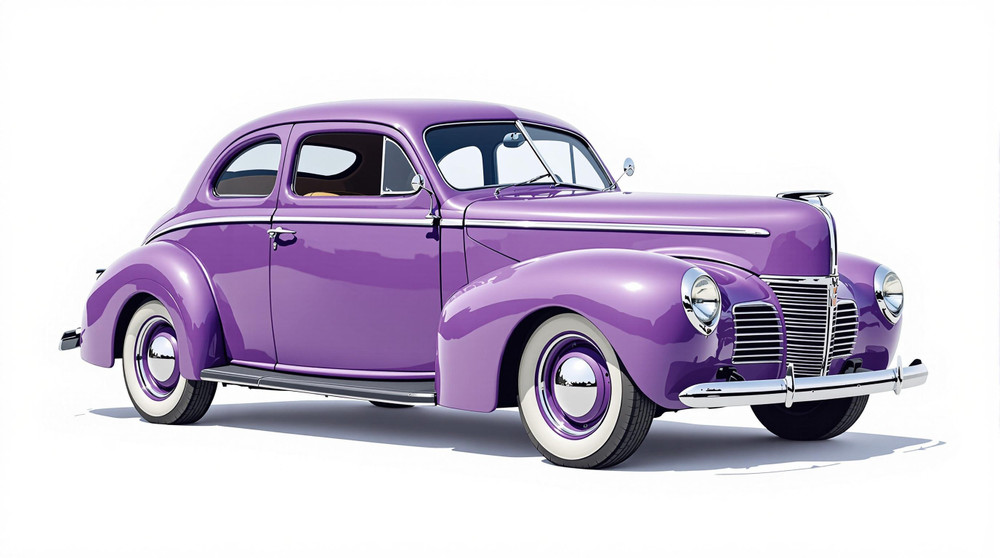
Image of 1940 Horch 855, Note: These illustrations use artistic license and may differ from actual historical models.
Performance Metrics
Fundamental Metrics
Emotional Appeal
MMP Rating
| Engine Specifications | |
|---|---|
| Engine: | Straight 8 |
| Displacement: | 4.9L |
| Horsepower: | Estimated 100-120 HP |
| Torque: | Not available |
| Compression Ratio: | Not available |
| Ignition System: | Standard for the period (likely a distributor and points system) |
| Cooling System: | Liquid-cooled |
| Performance Specifications | |
| 0-60 Time: | Not available |
| 1/4 Mile Time: | Not available |
| Top Speed: | 87 mph |
| Transmission and Drive | |
| Drive Type: | Rear-wheel drive |
| Transmission Type: | 4-speed manual |
| Fuel and Efficiency | |
| Fuel System Type: | Carburetor |
| MPG: | Not available |
| Dimensions and Brakes | |
| Brakes: | Drum brakes |
| Wheelbase: | 135 inches |
| Weight: | 2,200 kg |
Note: Specifications for classic cars are given to the best of our ability, considering the limited and variant data available.
1940 Horch 855: Germany’s Great Prewar Roadster
The 1940 Horch 855 was less a car for ordinary roads than a rolling showcase of German coachbuilding at its most ambitious. Built by Horch, the luxury marque within the Auto Union group, the 855 combined a powerful straight-eight engine with elegant, individually crafted roadster bodywork. Its rarity is part of its mystique: production is commonly reported at just seven examples, although surviving records do not make the final count entirely certain.
Horch had established its reputation well before the 855 appeared. Founded by engineer August Horch in the early 20th century, the company became one of Germany’s leading makers of large, technically sophisticated automobiles. In 1932, Horch joined Audi, DKW, and Wanderer in Auto Union. The group’s four-ring emblem represented those four companies, while Horch remained its prestigious luxury name.
The 855 arrived near the end of the prewar era, when wealthy buyers could still commission cars tailored to their tastes. A particularly intriguing detail is that the 855 was not simply a standard production model with a different badge. It was a short-chassis, special roadster, built in extremely small numbers and finished with coachwork that made each car feel like a bespoke creation.
Long Bonnet, Low-Slung Presence
The 855’s proportions make an immediate impression. Its long hood stretches ahead of a compact passenger compartment, while a low windscreen, flowing fenders, and sweeping rear bodywork give the car a graceful, purposeful stance. The distinctive front end carries a tall, upright grille and separate headlamps, creating a formal face that still looks athletic from the side. Wire wheels, running boards, and restrained bright trim complete the period-correct luxury look.
The cabin is intimate by grand-touring standards, with space for two occupants and, depending on the individual car’s equipment, occasional seating or luggage accommodation behind them. Interiors were finished to a high standard, typically with carefully fitted leather upholstery, polished wood details, and metal instruments. The 855’s appeal was not based on gadgetry. Its craftsmanship, materials, and tailored fit were the luxuries.
Mechanical equipment was advanced for a large luxury car of its day. The 855 used a 4,944 cc inline-eight, a four-speed manual gearbox, and rear-wheel drive. Its chassis and suspension were designed to deliver a more composed ride than a simple, rigid prewar platform, while its large brakes helped manage the substantial car. Exact equipment and details can vary between surviving examples and should be checked against each car’s chassis history.
Paint was a matter of personal taste rather than a short, fixed menu of modern-style trim packages. Deep blues, greens, maroons, and black suited the car’s formal character, while lighter or two-tone finishes could emphasize the flowing coachwork. There is no single color that defines every 855; original documentation and the history of each individual car matter more than assumptions based on a general factory palette.
The 855 itself is best understood as a special roadster rather than a model offered in several regular body styles. Horch’s broader 850-series family included other body configurations, including large touring and cabriolet models, but the 855’s short-chassis roadster form is the version that made it iconic.
A Bespoke Alternative to Mass Production
The Horch 855 arrived in an era when luxury-car makers competed through engineering, presence, and coachbuilding. Its significance lies less in introducing one revolutionary feature than in bringing these qualities together at an exceptionally high level. The car’s straight-eight power, substantial chassis, and bespoke roadster body reflected a tradition in which the buyer could expect a hand-finished automobile rather than a standardized product.
That approach set the 855 apart from more numerous luxury cars of the period. It was rarer and more individualized than a typical factory-built sedan, yet it retained the mechanical foundation and engineering resources of a major manufacturer. The result helped define the prewar European luxury roadster: imposing without being clumsy, elegant without giving up long-distance ability.
Its legacy is also a reminder of how abruptly the era ended. The Second World War disrupted production and transformed Germany’s industrial landscape. Horch’s prewar cars became artifacts of a vanished coachbuilt world, and the 855’s tiny production run made it especially important to collectors and automotive historians.
Straight-Eight Performance and Road Manners
The 855’s 4.9-liter straight-eight produced about 120 horsepower, a strong figure for a luxury car of its time. Published specifications and reported performance can differ, but a top speed in the neighborhood of 90 mph is a reasonable guide for a healthy example. A modern 0-to-60 mph time is not a well-established factory figure. Given the car’s weight, gearing, and period technology, roughly 20 to 25 seconds is a cautious estimate, not a verified test result.
On a smooth road, the engine’s greatest strength is its relaxed delivery. Rather than demanding high revs, the long eight-cylinder engine provides a steady stream of torque and a smooth, subdued mechanical note. The four-speed manual asks for deliberate shifts, and the car rewards a driver who anticipates traffic and treats the drivetrain with sympathy.
The 855 is a large prewar automobile, not a modern sports car. Its long hood and substantial mass are always present from behind the wheel. A well-maintained chassis should feel composed on open roads, but rough surfaces call for patience: narrow tires, period suspension geometry, and an old body structure cannot erase sharp bumps. On winding roads, measured inputs are essential. The steering, brakes, and tires require more planning than those of a contemporary car, particularly at speed.
Driving one is an involving experience. The engine’s smooth hum, the movement of the manual gear lever, and the view over that long bonnet make every journey feel ceremonial. The 855 is at its best when allowed to cover ground steadily, not when pushed as though it were a modern performance car.
Ownership, Maintenance, and Reliability
Today, the Horch 855 is primarily a concours, collection, and special-event car. Its rarity, value, and historical importance make routine daily use unrealistic for most owners. A carefully preserved example may appear at major classic-car gatherings, touring events, or museum exhibitions, but every outing requires thoughtful preparation.
Maintenance is a specialist undertaking. The straight-eight is mechanically understandable to an experienced vintage-engine technician, but parts, correct components, and knowledgeable labor are not readily available through ordinary repair shops. Bodywork and trim can be even more challenging: coachbuilt panels, woodwork, upholstery, and period-correct details may require specialist restoration skills.
Reliability depends heavily on condition and maintenance history. A car that has been properly restored and regularly exercised can be usable for carefully planned tours, but age-related issues such as fuel-system trouble, cooling problems, brake wear, and electrical faults are always possible. For an average owner, repairs are neither especially easy nor inexpensive. Pre-purchase inspection should include expert review of the chassis, engine, coachwork, documentation, and any restoration work.
Rare Facts and Common Misconceptions
The production figure most often associated with the Horch 855 is seven cars. It is a useful indication of rarity, but it should be treated as a commonly cited figure rather than an unquestionable factory total. The model is sometimes confused with other large Horch 850-series cars, especially the more familiar 853. That distinction matters: a car described as an 855 should be supported by convincing chassis records and provenance.
The 855 is not known for a major speed or endurance record. Its achievement was exclusivity and craftsmanship, not racing glory. Nor is it sensible to attach a famous owner to every surviving example without documentary evidence. In the politically charged period in which it was built, luxury cars existed alongside the upheavals of Nazi Germany and the coming war; ownership histories deserve careful research rather than romantic embellishment.
Common criticisms are practical ones. The car is large, thirsty by modern standards, mechanically demanding, and difficult to service outside specialist circles. Its performance figures also look modest beside modern sports cars. But those comparisons miss the point: the 855 was designed as a prestigious, powerful roadster for its own time, not as a contemporary track machine.
Collector Value and Market Rarity
The Horch 855 is exceptionally scarce and rarely appears on the open market. With so few believed to have been built, condition and documentation have an outsized effect on value. A car with compelling provenance, original components, and a high-quality restoration can command a substantial premium over one with uncertain history or significant needs.
As a broad current-market estimate, a genuine, well-documented Horch 855 could fall in the range of roughly $4 million to $8 million, with exceptional examples potentially exceeding that range in the right sale. One reported auction result for a 1939 Horch 855 Spezial Roadster was about $5.17 million in 2012. That figure is a useful historical reference, not a guaranteed present-day price; private sales, market conditions, and differences between individual cars make direct comparisons difficult.
Over the long term, the model’s extreme rarity and place in prewar automotive history support strong collector interest. Values are not immune to changing tastes or broader economic conditions, but a genuine 855 is more likely to be treated as a blue-chip historic automobile than as an ordinary vintage car. Its scarcity also means that published price trends can be misleading: a single high-profile transaction may significantly influence the apparent market.
Why the Horch 855 Still Matters
The 1940 Horch 855 brought together a smooth 4.9-liter straight-eight, elegant short-chassis roadster proportions, and the painstaking craft of Germany’s prewar luxury-car industry. Its tiny production run, demanding ownership, and exceptional market value make it an unlikely daily driver, but an unforgettable piece of automotive history.
More than a rare badge or auction headline, the 855 represents a moment when a luxury automobile could be engineered like a machine and finished like a bespoke work of art. That is why, decades later, its long bonnet and sweeping roadster lines still command attention.
1940 Horch 855 Catalog of Parts
 1940 HORCH 855 Headlight Pads. 3-1/8" wide X 4-1/4" long. Pair-MP 7971-AHeadlight Pads. 3-1/8" wide X 4-1/4" long. Pair
 1940 HORCH 855 Luggage Rack Pad. 1-3/4" wide X 6" long. Each-MP 7971-BLuggage Rack Pad. 1-3/4" wide X 6" long. Each
 1940 HORCH 855 Door Handle (with lock) Pads. 1-7/8" wide X 3-1/2" long-MP 7971-CDoor Handle (with lock) Pads. 1-7/8" wide X 3-1/2" long. Pair
 1940 HORCH 855 Door handle pads. 1-7/8 in. W x 2-1/2 in. L. Pair. R&L.-MP 7971-DDoor handle pads. 1-7/8 in. W x 2-1/2 in. L. Pair. R&L.
 1940 HORCH 855 Trunk Light Pad. 3-3/4" long X 8-3/4" wide. Each-MP 7971-ETrunk Light Pad. 3-3/4" long X 8-3/4" wide. Each
 1940 HORCH 855 Fender Light Pads. 1-1/2" wide X 2-3/8" long. Pair-MP 7971-HFender Light Pads. 1-1/2" wide X 2-3/8" long. Pair
Why Choose Metro?
For over 100 years, Metro Moulded Parts has been the pinnacle of quality in classic car restoration parts. Our commitment to precision and authenticity in every component ensures a perfect fit and an OEM-level appearance.
- Expert Craftsmanship & Quality: Each part is a testament to our dedication to reliability and perfection, crafted from original designs and thoroughly tested.
- Advanced Technology: We use cutting-edge techniques to create flawless, long-lasting parts that surpass others in performance.
- SuperSoft Sponge – The Ultimate Door Seal: Not only are our door seals 30% softer than competitors', but they're also guaranteed to never leak. They effectively reduce wind and road noise, enhancing your classic car's comfort and driving experience.
- Proudly American: Our parts are a product of American craftsmanship, made in the USA with a spirit of excellence and heritage.
- Unrivaled Warranty: We back our products with a 30-year industry-leading warranty, a testament to our confidence in their quality.
Join us in preserving the legacy of classic cars with parts that are crafted for perfection, not just made.