
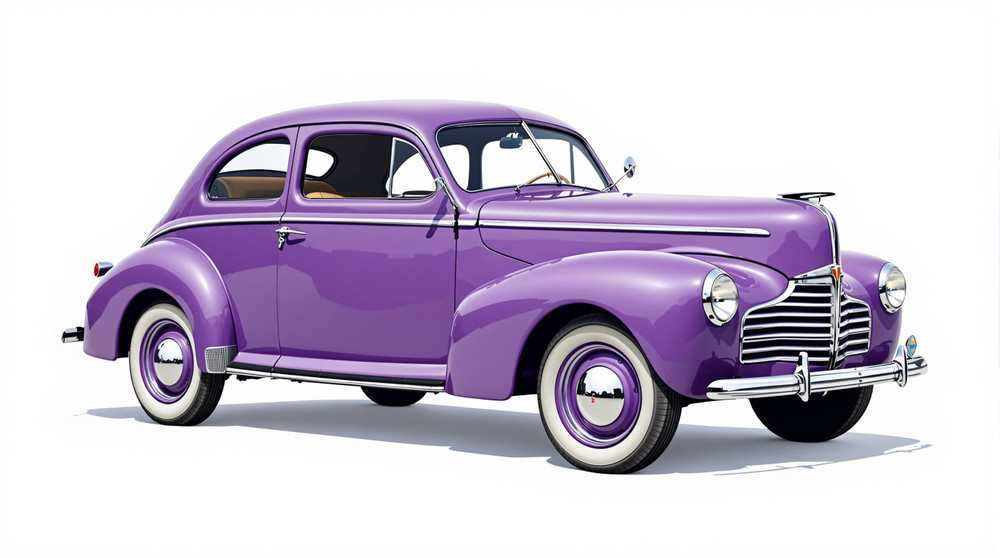
Image of 1941 Horch Kubelwagen 830r, Note: These illustrations use artistic license and may differ from actual historical models.
Performance Metrics
Fundamental Metrics
Emotional Appeal
MMP Rating
| Engine Specifications | |
|---|---|
| Engine: | Estimated: 4-cylinder |
| Displacement: | Estimated: 1.5 - 2.0 L |
| Horsepower: | Estimated: 40 - 50 HP |
| Torque: | Estimated: 60 - 70 lb-ft |
| Compression Ratio: | Estimated: 6.0:1 |
| Ignition System: | Estimated: Distributor and coil |
| Cooling System: | Estimated: Liquid-cooled |
| Performance Specifications | |
| 0-60 Time: | Estimated: 30 - 35 seconds |
| 1/4 Mile Time: | Estimated: 25 - 30 seconds |
| Top Speed: | Estimated: 50 - 60 mph |
| Transmission and Drive | |
| Drive Type: | Estimated: Rear-wheel drive |
| Transmission Type: | Estimated: 4-speed manual |
| Fuel and Efficiency | |
| Fuel System Type: | Estimated: Carburetor |
| MPG: | Estimated: 15 - 20 mpg |
| Dimensions and Brakes | |
| Brakes: | Estimated: Drum brakes |
| Wheelbase: | Estimated: 90 - 100 inches |
| Weight: | Estimated: 2000 - 2500 lbs |
Note: Specifications for classic cars are given to the best of our ability, considering the limited and variant data available.
1941 Horch 830 R Kübelwagen: A Luxury V8 Turned Military Workhorse
The 1941 Horch 830 R Kübelwagen brought an unusual combination to the wartime road: the substantial V8 engineering of a prestigious German marque wrapped in an open, practical military body. Built by Horch, part of Auto Union, it was intended for military transport rather than civilian motoring. Its story reflects a period when automakers redirected their factories toward wartime needs, adapting established passenger-car technology for service in difficult conditions.
Horch had earned its reputation making refined, technically ambitious cars. The 830 R drew on that experience, but it was no parade-ground limousine. The open body, simplified fittings, and military equipment were designed for utility. One intriguing distinction is that the 830 R was rear-wheel drive, unlike the better-known Horch 901, a four-wheel-drive military vehicle. The similar names can make the two easy to confuse.
Military Style and Horch Engineering
The 830 R’s exterior traded civilian elegance for a purposeful, upright look. Its tall grille, separate front fenders, exposed running boards, and squared-off body gave it the unmistakable profile of a prewar staff car. The open cabin made it easier for occupants to get in and out, while the folding windshield and simple canvas weather equipment suited field use. Details varied by production period and equipment, but the overall impression was of a large touring car stripped back for military duties.
Inside, the emphasis was on function rather than luxury. The spacious cabin had straightforward instruments and durable, easy-to-clean surfaces instead of the polished wood and elaborate trim associated with Horch’s civilian models. Seating and upholstery materials could vary, and surviving vehicles may have been altered during or after service. A restored example may therefore look more finished than one that retains a strictly utilitarian military interior.
Power came from a front-mounted, water-cooled V8 of about 3.8 litres, commonly listed at roughly 92 metric horsepower. A four-speed manual gearbox sent power to the rear wheels. For its time, a V8 in a military open car was a notable piece of equipment: it offered smooth, flexible power and made the 830 R feel more substantial than many smaller, simpler utility vehicles. It was not, however, a modern off-roader. Its rear-wheel-drive layout limited traction in deep mud or snow compared with dedicated four-wheel-drive designs.
Military finish depended on the vehicle’s build date, assignment, and subsequent repainting. Field grey and other subdued military shades are strongly associated with the type. Later wartime camouflage colors may also appear on vehicles restored to represent later service. There was no broad civilian-style palette of fashionable colors; appearance was governed by military requirements.
The defining body style was the open four-door Kübelwagen, a term used for a practical, bucket-seat-style military car. Equipment and body details could differ, and some vehicles may have had additional weather protection, but the open staff-car configuration is the iconic form collectors look for.
Why the 830 R Matters
The Horch 830 R is a useful example of how manufacturers adapted existing engineering for wartime production. Rather than creating a vehicle wholly unrelated to its passenger-car range, Horch used its experience with large engines and substantial chassis to produce a military transport car. That approach offered the benefits of familiar components and established manufacturing knowledge, while the simplified body better suited service use.
Its significance is also in the contrast it represents. Horch was associated with prestige and refinement, yet the 830 R served a military purpose in a conflict that devastated Europe. It should be understood as both an automotive artifact and a product of that historical setting, not simply as a glamorous luxury car with its doors removed.
Compared with compact military vehicles, the 830 R offered a larger engine and more room for occupants. Compared with purpose-built four-wheel-drive cars, it was less capable on very rough or slippery terrain. That trade-off helps explain its character: it was a roomy, powerful staff and transport car, not an all-terrain specialist.
V8 Performance and Road Manners
Published specifications commonly put the Horch 830 R’s top speed at approximately 100 km/h, or 62 mph, though actual performance would depend on condition, gearing, load, and road surface. A dependable factory 0-to-60 mph figure is difficult to establish. As a large military vehicle with a modest power-to-weight ratio by modern standards, it would be slow off the line; a rough estimate might place the run in the 25-to-35-second range, but that should be treated as an approximation rather than a verified period specification.
On a decent road, the V8’s appeal would have been its smoothness and steady pulling power rather than dramatic acceleration. The engine would produce a deep mechanical note, while the manual gearbox would ask the driver to work through its ratios deliberately. Steering and braking require the attention expected of a heavy prewar vehicle, and modern traffic speeds can make the 830 R feel unhurried.
On bumps and uneven ground, the tall tires and generous suspension travel would help soften the ride, but the open body and military chassis were not designed to isolate occupants like a modern luxury car. On winding roads, its size, mass, and period tires call for measured inputs. In mud, snow, or steep terrain, rear-wheel drive is a real limitation. The best driving experience is at a relaxed pace, where the V8’s steady character and the car’s distinctive open-air presence can be appreciated.
Living With a Horch 830 R
Today, an 830 R is primarily a collector vehicle, restoration project, or museum and event car. It is not a sensible daily driver. Historic-vehicle gatherings and military-vehicle displays are more appropriate uses, with careful consideration of the vehicle’s wartime associations and the symbols it may carry.
Maintenance can be challenging for an average owner. The basic mechanical layout is understandable to an experienced vintage-car mechanic, but parts availability is a major concern. Engine components, body panels, military fittings, and correct instruments may be scarce or require specialist sourcing and fabrication. A pre-purchase inspection should include the V8’s internal condition, cooling system, gearbox, chassis, brakes, and evidence of corrosion or poorly executed repairs.
Reliability depends heavily on restoration quality and regular use. Long periods of storage can create problems with fuel systems, seals, cooling, and electrical connections. A carefully maintained example can be driven, but it needs more attention and mechanical sympathy than a modern car. Owners should plan for specialist support and avoid assuming that its Horch badge guarantees easy access to replacement parts.
Notable Details and Common Misconceptions
The most useful fact for identifying the 830 R is its distinction from the Horch 901. Both served military roles and both carried Horch engineering, but the 830 R was rear-wheel drive, while the 901 was designed with four-wheel drive. The 830 R’s V8 and open body can also make it look like a straightforward conversion of a civilian car, but its military specification and equipment gave it a distinct role.
There is no widely recognized speed or endurance record associated with the 830 R, and reliable, well-documented production totals are difficult to pin down. A figure of roughly 4,000 to 5,000 vehicles is sometimes used as a broad estimate, but it should not be treated as a confirmed factory total. Surviving examples are uncommon, and original components or documented histories can be harder to find than the vehicles themselves.
A common criticism is that the 830 R’s size and rear-wheel-drive layout made it less suitable for severe off-road work than purpose-built four-wheel-drive machines. Its V8 also adds complexity compared with simpler military vehicles. Those are fair limitations, but they reflect its intended role as a staff and transport car rather than a dedicated cross-country vehicle.
Collector Values and Rarity
The Horch 830 R is a rare, specialist-market vehicle. Values depend on originality, restoration quality, provenance, mechanical condition, and the completeness of its military equipment. As a broad present-day estimate, a project or incomplete example might fall around $60,000 to $120,000, while a well-restored, running vehicle could bring roughly $120,000 to $250,000. An unusually authentic example with strong documentation could exceed that range, but prices vary substantially by market and sale conditions.
These figures are estimates, not a guaranteed valuation. The pool of potential buyers is smaller than for familiar postwar classics, and restoration costs can be substantial. Over the long term, the model’s rarity and Horch heritage support collector interest, but its specialist nature can make prices uneven. Well-documented, correctly restored examples are generally best positioned to hold or increase their value.
A Distinctive Chapter in Horch History
The 1941 Horch 830 R Kübelwagen stands apart because it combined a smooth, large-capacity V8 with an open military body and a distinctly prewar approach to vehicle design. It was roomy and powerful for its class, yet its rear-wheel-drive layout made it less capable in rough terrain than dedicated four-wheel-drive alternatives. Today, its rarity, engineering, and connection to a difficult period in European history make it a compelling but demanding collector vehicle. The 830 R is more than an unusual Horch: it is a rolling reminder of how dramatically the automobile changed when peacetime craftsmanship was redirected toward war.
1941 Horch Kubelwagen 830r Catalog of Parts
 1941 HORCH KUBELWAGEN 830R Headlight Pads. 3-1/8" wide X 4-1/4" long. Pair-MP 7971-AHeadlight Pads. 3-1/8" wide X 4-1/4" long. Pair
 1941 HORCH KUBELWAGEN 830R Luggage Rack Pad. 1-3/4" wide X 6" long. Each-MP 7971-BLuggage Rack Pad. 1-3/4" wide X 6" long. Each
 1941 HORCH KUBELWAGEN 830R Door Handle (with lock) Pads. 1-7/8" wide X 3-1/2" long-MP 7971-CDoor Handle (with lock) Pads. 1-7/8" wide X 3-1/2" long. Pair
 1941 HORCH KUBELWAGEN 830R Door handle pads. 1-7/8 in. W x 2-1/2 in. L. Pair. R&L.-MP 7971-DDoor handle pads. 1-7/8 in. W x 2-1/2 in. L. Pair. R&L.
 1941 HORCH KUBELWAGEN 830R Trunk Light Pad. 3-3/4" long X 8-3/4" wide. Each-MP 7971-ETrunk Light Pad. 3-3/4" long X 8-3/4" wide. Each
Why Choose Metro?
For over 100 years, Metro Moulded Parts has been the pinnacle of quality in classic car restoration parts. Our commitment to precision and authenticity in every component ensures a perfect fit and an OEM-level appearance.
- Expert Craftsmanship & Quality: Each part is a testament to our dedication to reliability and perfection, crafted from original designs and thoroughly tested.
- Advanced Technology: We use cutting-edge techniques to create flawless, long-lasting parts that surpass others in performance.
- SuperSoft Sponge – The Ultimate Door Seal: Not only are our door seals 30% softer than competitors', but they're also guaranteed to never leak. They effectively reduce wind and road noise, enhancing your classic car's comfort and driving experience.
- Proudly American: Our parts are a product of American craftsmanship, made in the USA with a spirit of excellence and heritage.
- Unrivaled Warranty: We back our products with a 30-year industry-leading warranty, a testament to our confidence in their quality.
Join us in preserving the legacy of classic cars with parts that are crafted for perfection, not just made.