
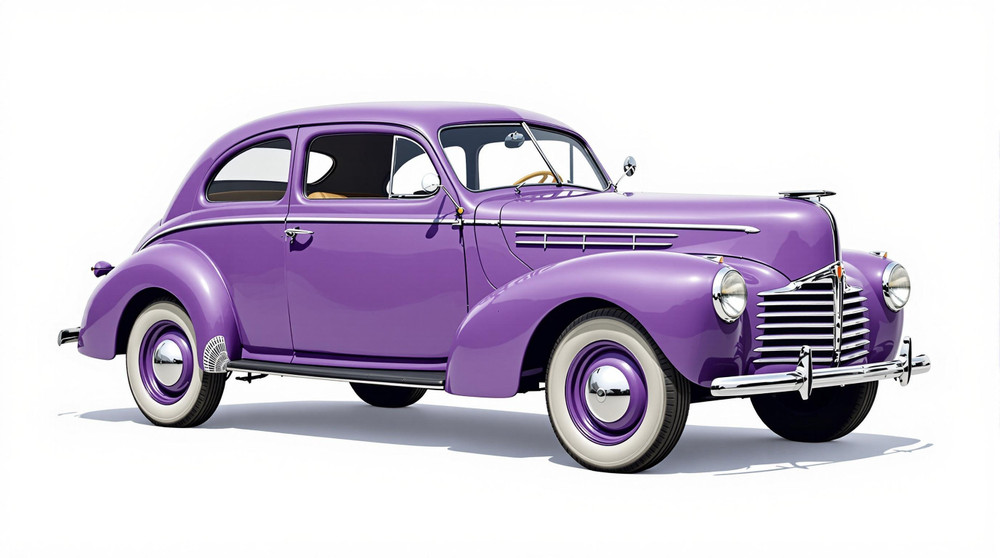
Image of 1942 Horch Kubelwagen 830r, Note: These illustrations use artistic license and may differ from actual historical models.
Performance Metrics
Fundamental Metrics
Emotional Appeal
MMP Rating
| Engine Specifications | Performance Specifications | Transmission and Drive | Fuel and Efficiency | Dimensions and Brakes | |||||
|---|---|---|---|---|---|---|---|---|---|
|
Engine: Single Displacement: Approx. 1.1L Horsepower: Approx. 25-40 HP Torque: Unknown Compression Ratio: Approx. 6.0:1 Ignition System: Distributor and coil Cooling System: Air-cooled |
0-60 Time: Unknown 1/4 Mile Time: Unknown Top Speed: Approx. 50 mph |
Drive Type: Rear Wheel Drive Transmission Type: 4-speed manual |
Fuel System Type: Carburetor MPG: Unknown |
Brakes: Drum brakes Wheelbase: Approx. 2400 mm Weight: Approx. 715 kg |
|||||
Note: Specifications for classic cars are given to the best of our ability, considering the limited and variant data available.
1942 Horch 830R: The Wehrmacht’s V8 Touring Car
With a deep V8 burble beneath its long hood and an open, utilitarian body above its chassis, the Horch 830R looked like a luxury car drafted into military service. Built by Horch in Zwickau, Germany, it belonged to a family of refined prewar automobiles adapted for wartime duties. The “1942” date often attached to an 830R may describe a vehicle’s service history rather than a distinct 1942 production version, so individual chassis records matter.
Horch was founded by engineer August Horch and became one of the four marques that formed Auto Union in 1932, alongside Audi, DKW, and Wanderer. The 830 series arrived in 1933, bringing V8 power to Horch’s upper-middle-class and luxury cars. Military 830R versions carried that road-going engineering into a tougher, more practical role as staff and transport vehicles.
One detail separates the 830R from many people’s mental picture of a wartime German vehicle: it was not the same machine as the four-wheel-drive Horch 901. The 830R was generally a rear-wheel-drive car, and its impressive V8 did not make it a specialist off-road truck. That distinction is central to understanding both its capabilities and its place in military history.
Horch 830R Design and Cabin
The 830R’s military body exchanged the sleek, enclosed coachwork of a civilian Horch for a practical open-sided layout. Its long, upright hood, broad front fenders, near-vertical windshield, and squared-off rear gave it a purposeful profile. The body typically had cut-down doors or low sides for easier entry, with a folding fabric top and a windshield that could be lowered or folded forward. Details can vary between surviving vehicles, restorations, and period photographs.
Inside, the cabin was functional rather than lavish. The civilian 830’s reputation rested partly on its well-finished interiors, but the 830R’s military role called for hard-wearing surfaces and straightforward fittings. Expect a broad bench or simple individual seating, basic instrumentation, and durable upholstery rather than elaborate wood trim or plush carpeting. Some vehicles may retain civilian-style components, while others were altered during military service or later restoration.
Useful equipment included a folding top, a simple and legible dashboard, and controls designed for operation in gloves or rough conditions. The V8 was a notable feature in a military passenger car of its era, but the 830R was not packed with modern conveniences. There was no power steering, electronic starting aid, or synchronized, effortless operation by today’s standards. The driver had to work the controls with care.
Military examples were generally finished in service colors rather than a broad range of showroom paints. Early-war German vehicles were commonly painted dark gray, while later wartime standards shifted toward dark yellow, with field-applied camouflage sometimes added. A 1942 vehicle would most plausibly be encountered in a gray finish, though repainting, theater of service, and later restoration can complicate the story. Civilian Horch colors are not a reliable guide to the original finish of a military 830R.
Engine, Performance, and Road Manners
Horch 830-family specifications changed over time, and military vehicles can differ in engine, tune, and equipment. The 830R is commonly associated with a roughly 3.5-liter V8 producing around 80 metric horsepower, though exact figures depend on the particular version. It was paired with a manual transmission and rear-wheel drive. Buyers and restorers should confirm the engine and chassis details of an individual car rather than relying on a single headline specification.
A reasonable period-performance estimate puts top speed in the neighborhood of 100 to 110 km/h, or about 62 to 68 mph, on a suitable road. A dependable factory 0-to-60 mph figure is difficult to establish. Given the vehicle’s weight, gearing, and modest power by modern standards, a run in the region of 25 to 30 seconds is a practical estimate, not a verified manufacturer claim.
On pavement, the V8 would have made the 830R feel smoother and more relaxed than many utilitarian vehicles of its day. Its long chassis helped it settle into a steady cruise, while the engine’s low, even rumble suited open-road travel. Acceleration was gradual, and overtaking required planning. The driver would hear mechanical noise and feel the road through the steering wheel and suspension, rather than being insulated from it.
On rough tracks, the car’s ground clearance and rugged construction helped, but rear-wheel drive limited traction in mud, snow, and steep terrain. It could manage bumps at sensible speeds, though a heavy, tall open body was not something to throw aggressively into tight corners. On windy roads, the driver needed to anticipate body lean and use measured steering inputs. The 830R was a capable staff car, not a high-speed sports tourer or a dedicated four-by-four.
Why the 830R Matters
The Horch 830R illustrates how prewar manufacturers adapted civilian engineering for military needs. Its V8 offered smooth power and respectable road performance, while its open body made it easier for occupants to get in and out and gave the vehicle a distinctly military appearance. In an era when many army vehicles were basic four-cylinder machines, a large-engine Horch carried a level of refinement that set it apart.
Its significance is less about inventing a new technology than about representing a particular path in automotive design: using a sophisticated passenger-car platform for official and military transport. The 830R also belongs to the broader Horch story, in which advanced engines and high-quality construction established the marque as one of Germany’s leading prestige manufacturers before and during the Auto Union era.
The model’s limitations are part of its historical interest. It should not be mistaken for the Horch 901, whose four-wheel-drive layout made it much better suited to demanding cross-country work. The 830R’s road-car ancestry brought comfort and smoothness, but its rear-wheel-drive arrangement restricted it when conditions turned difficult. That contrast shows how varied German military transport was, even within a single manufacturer’s range.
Wartime Use and Ownership
Horch 830R-type vehicles were suited to staff transport, officer travel, liaison duties, and movement on roads or relatively firm tracks. Their open bodies made them useful where quick access and visibility mattered. They were not designed for racing, and today their natural roles are preservation, museum display, historic motoring events, and carefully managed military-vehicle gatherings.
Ownership is a specialist undertaking. The V8 and its supporting systems require knowledge of prewar German engineering, and parts are not as easy to find as those for a mass-produced postwar classic. Fuel, ignition, cooling, brakes, tires, and electrical components all need regular attention. Long periods of storage can be especially hard on an old engine, so careful recommissioning is essential before road use.
Repairs are possible for a skilled owner, but this is not an ideal first restoration project. Some maintenance work is straightforward in principle, yet correct parts, accurate specifications, and body details can be difficult to source. A vehicle with a documented history, a sound chassis, and a complete engine is usually a better prospect than a superficially shiny example with extensive undocumented repairs.
Horch 830R Facts and Common Myths
The most useful fact to remember is the difference between the 830R and the Horch 901. Both are associated with wartime Germany and Horch, but they are distinct vehicles with different layouts and intended uses. The 830R’s V8 and open body can make it look like a rugged off-roader, yet rear-wheel drive was a meaningful limitation away from firm roads.
There is no widely recognized speed, endurance, or sales record associated specifically with the 830R. Its historical importance comes from its role as a military adaptation of a prestigious passenger-car line, rather than from a headline-grabbing competition victory. Individual examples may have appeared in wartime service, but claims connecting a particular vehicle to a famous event or person should be supported by chassis records, photographs, or other documentation.
Common criticisms include limited off-road ability compared with four-wheel-drive vehicles, modest acceleration, and the difficulty of sourcing correct parts. Its open cabin also offered less weather protection than an enclosed car. Those drawbacks are balanced by its smooth V8 character, distinctive appearance, and rarity.
Collector Value and Rarity
Exact 830R production figures are difficult to establish from commonly available reference material, and surviving vehicles are rarely straightforward to count. As a cautious estimate, production may have been in the hundreds to perhaps around 1,500 examples, with only a small fraction surviving. That range is a reasoned estimate, not a confirmed factory total. Original military cars with traceable histories are particularly scarce.
For a collector, condition and authenticity matter enormously. A complete, running example needing work might fall around $70,000 to $130,000 USD. A well-restored, correctly specified vehicle with strong documentation could plausibly reach $150,000 to $250,000 or more. Exceptional provenance or a rare, highly original specification could push a price higher, while incomplete cars or major mechanical projects may sell for less. These are broad estimates; location, exchange rates, restoration quality, and auction demand can all change the result.
Values for rare prewar German vehicles have generally benefited from growing interest in historically important cars, but the market is small and can be uneven. The 830R’s rarity supports collector interest, while the cost of restoration and limited parts supply can restrain demand. A carefully documented, mechanically sound car is likely to hold its appeal better than a poorly researched restoration.
Why the Horch 830R Endures
The Horch 830R combines a refined V8 heritage with the purposeful appearance of a wartime staff car. It was neither a mass-market runabout nor an all-terrain specialist, but a distinctive road-going vehicle adapted for military service. Its design, mechanical character, and scarcity make it an absorbing subject for enthusiasts who value the engineering behind history as much as the history itself.
In the 830R, Horch’s prewar luxury-car skill met the practical demands of wartime transport. The result is a rare and characterful machine whose story is best understood not as a tale of off-road conquest, but as a reminder that even military vehicles could carry the refinement of the cars from which they came.
1942 Horch Kubelwagen 830r Catalog of Parts
 1942 HORCH KUBELWAGEN 830R Headlight Pads. 3-1/8" wide X 4-1/4" long. Pair-MP 7971-AHeadlight Pads. 3-1/8" wide X 4-1/4" long. Pair
 1942 HORCH KUBELWAGEN 830R Luggage Rack Pad. 1-3/4" wide X 6" long. Each-MP 7971-BLuggage Rack Pad. 1-3/4" wide X 6" long. Each
 1942 HORCH KUBELWAGEN 830R Door Handle (with lock) Pads. 1-7/8" wide X 3-1/2" long-MP 7971-CDoor Handle (with lock) Pads. 1-7/8" wide X 3-1/2" long. Pair
 1942 HORCH KUBELWAGEN 830R Door handle pads. 1-7/8 in. W x 2-1/2 in. L. Pair. R&L.-MP 7971-DDoor handle pads. 1-7/8 in. W x 2-1/2 in. L. Pair. R&L.
 1942 HORCH KUBELWAGEN 830R Trunk Light Pad. 3-3/4" long X 8-3/4" wide. Each-MP 7971-ETrunk Light Pad. 3-3/4" long X 8-3/4" wide. Each
Why Choose Metro?
For over 100 years, Metro Moulded Parts has been the pinnacle of quality in classic car restoration parts. Our commitment to precision and authenticity in every component ensures a perfect fit and an OEM-level appearance.
- Expert Craftsmanship & Quality: Each part is a testament to our dedication to reliability and perfection, crafted from original designs and thoroughly tested.
- Advanced Technology: We use cutting-edge techniques to create flawless, long-lasting parts that surpass others in performance.
- SuperSoft Sponge – The Ultimate Door Seal: Not only are our door seals 30% softer than competitors', but they're also guaranteed to never leak. They effectively reduce wind and road noise, enhancing your classic car's comfort and driving experience.
- Proudly American: Our parts are a product of American craftsmanship, made in the USA with a spirit of excellence and heritage.
- Unrivaled Warranty: We back our products with a 30-year industry-leading warranty, a testament to our confidence in their quality.
Join us in preserving the legacy of classic cars with parts that are crafted for perfection, not just made.