

Image of 1957 Hudson Hornet, Note: These illustrations use artistic license and may differ from actual historical models.
Performance Metrics
Fundamental Metrics
Emotional Appeal
MMP Rating
| Engine Specifications | |
|---|---|
| Engine: | 327 cu in (5.4 L) V8 |
| Displacement: | 327 cu in (5.4 L) |
| Horsepower: | 255 hp |
| Torque: | 345 lb-ft |
| Compression Ratio: | 10.0:1 |
| Ignition System: | Conventional points ignition system |
| Cooling System: | Liquid-cooled |
| Performance Specifications | |
| 0-60 Time: | Estimated 10 seconds |
| 1/4 Mile Time: | Estimated 17 seconds |
| Top Speed: | 120 mph |
| Transmission and Drive | |
| Drive Type: | Rear-wheel drive |
| Transmission Type: | 3-speed automatic |
| Fuel and Efficiency | |
| Fuel System Type: | Carburetor |
| MPG: | Estimated 10-12 mpg |
| Dimensions and Brakes | |
| Brakes: | Drum brakes |
| Wheelbase: | 119 inches |
| Weight: | 3,600 lbs |
Note: Specifications for classic cars are given to the best of our ability, considering the limited and variant data available.
1957 Hudson Hornet: The Last of the Hudsons
The 1957 Hudson Hornet arrived with a famous name, a modern American Motors V8, and a body that signaled just how much the automotive industry had changed. It was the final model-year car to wear the Hudson badge, closing the chapter on a marque once celebrated for engineering ingenuity and NASCAR dominance.
Hudson Motor Car Company had merged with Nash-Kelvinator in 1954 to form American Motors Corporation, or AMC. By 1957, Hudson and Nash no longer had distinct bodies of their own. The Hornet shared its basic structure with the Nash Ambassador, assembled in Kenosha, Wisconsin, and used Hudson-specific trim and identity to give the familiar shape a different character.
There is an important distinction between the 1957 Hornet and the racing legends that made the name famous. The original “Fabulous Hudson Hornets” were mainly early-1950s cars, with Hudson’s low-slung Step-Down design and powerful six-cylinder engines. The 1957 model was a very different kind of Hornet: a late-era AMC product with a V8 and a shared Nash-derived body. That contrast is part of what makes it such an intriguing classic.
Hudson Hornet Styling and Interior
The 1957 Hornet wore the broad, substantial proportions typical of a full-size American car of the period. Its front end featured a wide grille, bright chrome accents, and quad headlamps, while restrained tail fins and sculpted rear-quarter trim supplied a dash of the decade’s jet-age style. Hudson badges and model-specific details helped distinguish it from its Nash relative, but the underlying family resemblance was unmistakable.
Inside, the Hornet offered a roomy cabin with a broad dashboard, expansive glass, and bench seating suited to long-distance cruising. Depending on trim and upholstery, buyers could find cloth, vinyl, or combinations of the two, along with bright metal accents and carefully patterned seat fabrics. The overall impression was comfortable and substantial rather than sporty or minimalist.
Factory paint choices included solid colors and two-tone combinations, a popular way to emphasize the car’s long body and brightwork. Period-appropriate combinations included light-colored roofs over darker bodies, as well as reds, blues, greens, and neutral shades. Exact colors and trim combinations varied by model and market, so original paint records or paint codes are valuable to restorers.
The Hornet range centered on sedan and hardtop body styles. The four-door sedan was the practical choice, while the two-door Hollywood hardtop delivered the more dramatic, pillarless profile many collectors find especially appealing. Equipment varied with trim and options; power steering, power brakes, an automatic transmission, and air conditioning were among the kinds of comfort features buyers could specify.
Engineering at the End of an Era
Hudson’s most influential engineering achievement was its earlier Step-Down construction, introduced for 1948. The passenger floor sat low within the frame structure, helping create a lower center of gravity and giving those earlier Hudsons a handling advantage that became especially valuable in stock-car racing. The 1957 Hornet did not use that original Hudson body architecture. Its significance lies instead in representing the last stage of Hudson’s transition into AMC.
Under the hood, the 1957 Hornet used AMC’s 327-cubic-inch V8. Depending on specification, the engine was rated at roughly 225 horsepower or up to about 255 horsepower with a four-barrel carburetor. It was an AMC engine, not a Chevrolet 327, which would not arrive until later. A three-speed manual transmission was available, while many cars were ordered with an automatic.
For its time, the Hornet offered a familiar but useful mix of American-car technology: V8 power, automatic-transmission convenience, power-assist options, and a spacious, unitized-body design shared with the Nash Ambassador. What it lacked was the distinctive engineering identity that had once set Hudson apart. In that sense, the 1957 car captures both AMC’s effort to streamline its lineup and the cost of losing Hudson’s separate product identity.
Performance and Road Manners
With the stronger V8, a healthy 1957 Hornet could reach an estimated top speed of around 105 to 110 mph. A reasonable period-style estimate for 0 to 60 mph is roughly 10 to 12 seconds, depending on engine tune, transmission, gearing, and vehicle condition. These figures are best treated as estimates rather than guarantees: surviving cars may have different equipment, decades of wear, or modern drivetrain changes.
The Hornet was built for relaxed travel, not sharp cornering. Its broad cabin and soft suspension make it comfortable over ordinary road imperfections, though a worn example may bounce, wander, or feel loose until its springs, shocks, steering components, and tires are brought up to standard. On a winding road, expect leisurely responses and noticeable body lean rather than sports-sedan precision. Crosswinds can also remind the driver that this is a large car with a generous side profile.
Behind the wheel, the experience is defined by scale and smoothness. The V8 supplies a deep, unhurried rumble, and the automatic-equipped cars suit an easy cruising pace. Steering effort can be substantial without power assist, especially at parking speeds. A well-maintained Hornet feels composed on a highway, but its size and period braking performance call for more space and anticipation than a modern driver may expect.
Ownership, Maintenance, and Reliability
Today, the 1957 Hornet is most often used as a show car, weekend cruiser, or piece of American automotive history rather than a daily driver. A sound example can handle local touring comfortably, but regular use depends on careful attention to cooling, brakes, tires, fuel delivery, and electrical systems. Age and previous repairs matter more than the reputation of the model alone.
The AMC 327 V8 is sturdy when maintained, and many routine mechanical jobs are familiar to an experienced classic-car mechanic. The challenge is often finding the correct Hudson- or Nash-specific trim, body, and interior parts. Mechanical components may be shared with other AMC-era cars, but cosmetic pieces can take patience to locate. Before buying, inspect for rust, accident repairs, improvised wiring, and hard-to-replace brightwork.
For an owner comfortable with basic maintenance, tasks such as fluid changes, ignition work, and routine tune-ups are manageable. More involved restoration work benefits from a Hudson club, marque specialists, and a parts network. Originality can affect value substantially, so document any modifications and keep removed factory components when possible.
Hudson Hornet Facts and Myths
The name “Fabulous Hudson Hornet” belongs most directly to the NASCAR-winning Hudsons of the early 1950s, not the 1957 model. Hudson racers were formidable in the Grand National series: the 1952 Hudson team scored 27 wins in 34 races, a remarkable season that helped cement the Hornet’s competition reputation. The later 1957 car inherited that celebrated name, but it was not the same race-bred Step-Down machine.
The earlier Hornets also helped inspire Doc Hudson in Pixar’s Cars. That character is associated with the low, rounded racing Hudsons of the early 1950s, a useful reminder that the Hornet story spans several very different generations. The 1957 model’s own claim to fame is more historical than sporting: it was the last Hudson-badged production car.
One common criticism is that the 1957 Hornet can feel like a Nash Ambassador wearing Hudson identity rather than a truly separate Hudson design. That criticism is fair, but it also reflects the difficult economics of the period. AMC was a smaller competitor trying to remain viable against much larger automakers, and sharing bodies and components was a practical way to control costs.
1957 Hudson Hornet Collector Values
Production figures for the final Hudson year are small by mainstream American-car standards. A commonly cited total for all Hudson-badged cars in 1957 is about 4,108, though exact counts can vary by source and by how models are classified. The Hornet represented only part of that total. A reasonable working estimate is roughly 2,000 to 3,000 Hornets, but buyers should treat that as an estimate, not a verified model-by-model production tally.
Surviving cars are uncommon, and the two-door Hollywood hardtop is generally the most eye-catching body style. Availability depends heavily on location and condition. A project car may be found in the broad range of about $8,000 to $20,000, while a usable driver can fall around $20,000 to $40,000. A well-restored example may bring roughly $40,000 to $70,000, with exceptional, highly original, or particularly desirable cars sometimes exceeding that range. These are broad market estimates, not appraisals; rust, originality, documentation, and restoration quality can move a price considerably.
Values have generally been steady to selectively stronger for well-presented, uncommon American classics, but the Hornet remains a niche purchase. It is unlikely to command the same broad demand as the best-known 1950s Chevrolet or Ford models. Buyers tend to be enthusiasts who understand the Hudson story, so excellent originality and a complete restoration can matter more than flashy modifications.
Why the Final Hudson Hornet Matters
The 1957 Hudson Hornet combines a celebrated name, a capable AMC V8, comfortable full-size-car manners, and the bittersweet history of a marque in its final year. It was not the same engineering icon that dominated early-1950s stock-car racing, and its shared Nash-derived body drew criticism even when new. Yet that very transition makes the car a valuable snapshot of a changing American industry.
For collectors, the Hornet offers something beyond horsepower or tailfins: the closing chapter of Hudson. Its appeal comes from the story carried in its badges, its uncommon presence, and the contrast between the racing legend of its name and the practical realities of its final form. The last Hudson Hornet may have been the end of the line, but it remains a memorable survivor of a fiercely inventive American marque.
1957 Hudson Hornet Catalog of Parts
 1957 Hudson Hornet Accessory Floor Mat - 12"X17"-AC 35Accessory Floor Mat - made of high quality black rubber with molded original emblem. Also designed to be sewn into new carpets. 12"X17", Each
 1957 Hudson Hornet Accelerator Pedal Pad, 2-5/8" X 9", Each-AP 23Accelerator Pedal Pad, 2-5/8" X 9", Each
 1957 Hudson Hornet Front Door to Cowl Drain Seal. 12-1/2" long. Pair-ELP 4501Front Door to Cowl Drain Seal. 12-1/2" long. Pair
 1957 Hudson Hornet Roof Antenna Pad. 1-9/16" O.D., 1-1/8" I.D. Each-MP 798-KKRoof Antenna Pad. 1-9/16" O.D., 1-1/8" I.D. Each
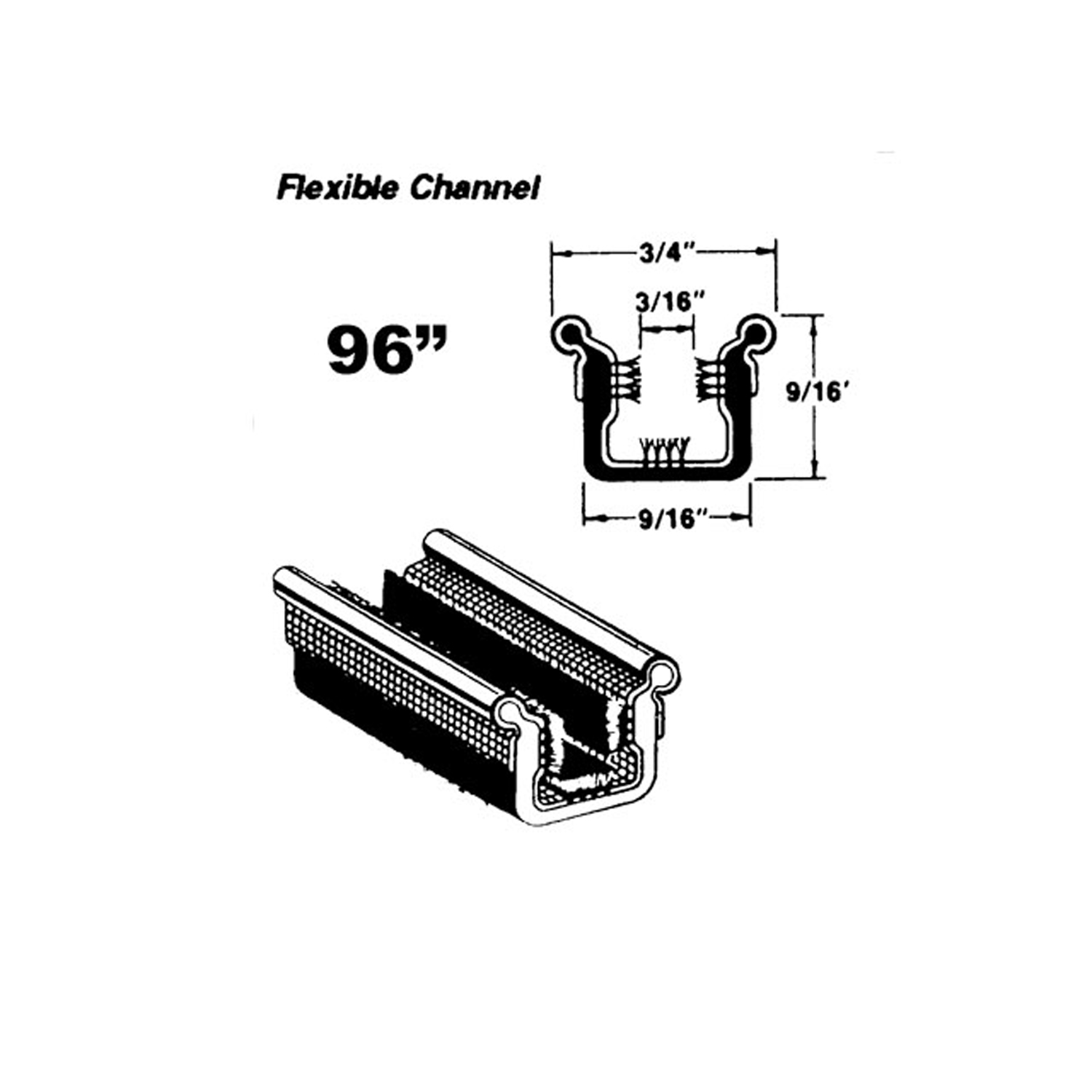 1957 Hudson Hornet Flexible window channel-WC 10-96Flexible window channel. Rubber covered with mohair lining and stainless steel bead. 96 in. long. Each. NOTE: $20 special shipping charge applies for domestic orders. Call or email for overseas shipping costs. Part can be sectioned in two or three equal lengths to reduce overseas shipping costs.
Why Choose Metro?
For over 100 years, Metro Moulded Parts has been the pinnacle of quality in classic car restoration parts. Our commitment to precision and authenticity in every component ensures a perfect fit and an OEM-level appearance.
- Expert Craftsmanship & Quality: Each part is a testament to our dedication to reliability and perfection, crafted from original designs and thoroughly tested.
- Advanced Technology: We use cutting-edge techniques to create flawless, long-lasting parts that surpass others in performance.
- SuperSoft Sponge – The Ultimate Door Seal: Not only are our door seals 30% softer than competitors', but they're also guaranteed to never leak. They effectively reduce wind and road noise, enhancing your classic car's comfort and driving experience.
- Proudly American: Our parts are a product of American craftsmanship, made in the USA with a spirit of excellence and heritage.
- Unrivaled Warranty: We back our products with a 30-year industry-leading warranty, a testament to our confidence in their quality.
Join us in preserving the legacy of classic cars with parts that are crafted for perfection, not just made.