
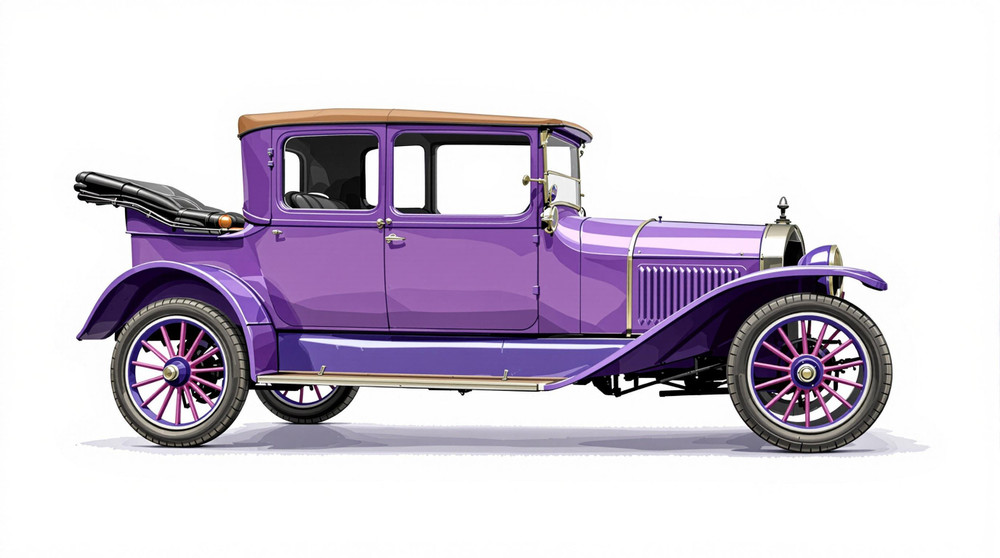
Image of 1915 Hupmobile Model K, Note: These illustrations use artistic license and may differ from actual historical models.
Performance Metrics
Fundamental Metrics
Emotional Appeal
MMP Rating
| Engine Specifications | |
|---|---|
| Engine: | 4-cylinder |
| Displacement: | 3.0L |
| Horsepower: | Estimated 20-30 HP |
| Torque: | Not available |
| Compression Ratio: | Not available |
| Ignition System: | Magneto |
| Cooling System: | Water-cooled |
| Performance Specifications | |
| 0-60 Time: | Not available |
| 1/4 Mile Time: | Not available |
| Top Speed: | 45 mph |
| Transmission and Drive | |
| Drive Type: | Rear-wheel drive |
| Transmission Type: | 3-speed manual |
| Fuel and Efficiency | |
| Fuel System Type: | Carburetor |
| MPG: | Not available |
| Dimensions and Brakes | |
| Brakes: | Mechanical drum brakes |
| Wheelbase: | 112 inches |
| Weight: | Estimated 1,800 lbs |
Note: Specifications for classic cars are given to the best of our ability, considering the limited and variant data available.
1915 Hupmobile Model K: A Detroit-Built Classic
The 1915 Hupmobile Model K brought sturdy, practical motoring to a rapidly changing America, when paved roads were scarce and a dependable automobile still felt like a technological marvel. Built by the Hupp Motor Car Company of Detroit, Michigan, it belonged to a marque that had earned a reputation for engineering and value since its first cars appeared in 1909.
Hupmobile was founded by Robert Craig Hupp, an automotive pioneer who had worked in the emerging car industry before starting his own company. The Model K arrived during the transition from the early brass-era automobile to more standardized, everyday transportation. One appealing detail is that “Model K” was not a famous racing special or one-off luxury car. Its interest lies in how it represented a practical, well-engineered car from a major early Detroit manufacturer.
Model K Design and Features
The Model K has the upright, purposeful stance typical of a 1910s touring car. Its long hood leads to a tall radiator and separate, rounded front fenders, while exposed lamps, running boards, and narrow tires emphasize its mechanical character. The open bodywork gives the car an airy profile, with a high seating position and a folding top for protection from sun and rain. Details can differ between surviving cars, especially after decades of restoration.
Inside, the emphasis was on function rather than modern convenience. The cabin generally featured leather upholstery, a simple dashboard, a large steering wheel, and exposed, easy-to-understand controls. Wood framing and trim were common in bodies of the period, paired with painted metal fittings. The materials were respectable for a practical automobile, but the finish was not intended to rival a custom-built luxury car.
Period Hupmobiles were offered in restrained colors rather than today’s broad palette of factory finishes. Dark shades such as black, deep blue, maroon, or green suit the Model K’s period appearance, though exact options depended on the body, year, and market. Original paint records for individual cars are not always available, so restoration colors should be checked against factory literature or evidence on the car itself.
Open touring and roadster forms are the most recognizable Model K configurations. Touring bodies offered room for several passengers and were well suited to family travel, while a roadster gave the car a sportier, more intimate character. Closed bodies were also part of the broader early Hupmobile market, but availability could vary by catalog and year. The open touring car is the image most closely associated with a 1915 Hupmobile.
Engineering for Everyday Motoring
The Model K belongs to Hupmobile’s four-cylinder, approximately 32-horsepower class. Typical period specifications describe a water-cooled engine, a manual three-speed transmission, and rear-wheel drive. Those were established technologies by 1915, but putting them together in a durable, reasonably accessible car was central to Hupmobile’s appeal.
It is best to view the Model K as an example of sound contemporary engineering rather than a car that introduced a single industry-changing feature. Hupmobile helped make the automobile feel less like an experimental contraption and more like a usable product. Its conventional layout was familiar to mechanics, and its straightforward construction suited owners who expected to maintain their cars rather than send them to a specialist workshop for every adjustment.
Performance and Driving Feel
A sound Model K is generally estimated to reach roughly 40 to 50 mph, depending on condition, gearing, body style, tires, and road surface. Reliable period acceleration figures are not readily established, and a 0-to-60-mph time is not especially meaningful: many cars in this class were not designed to reach 60 mph routinely. Their useful performance was measured in dependable progress over rough roads, not quick sprints.
On a level road, the four-cylinder engine produces the steady mechanical rumble and exhaust beat expected of an early car. The driver works a manual gear lever, manages the engine’s speed with period-style controls, and relies on a large steering wheel for leverage. Compared with a modern car, steering is heavier, braking requires more planning, and the driver is much more involved in every part of the trip.
The suspension can soften ordinary road irregularities, but tall wheels, narrow tires, and an open body make rough surfaces feel pronounced by modern standards. On a winding road, the Model K rewards a deliberate pace. Its high stance and period steering geometry call for smooth inputs, not sharp cornering. Wind, dust, rain, and road noise are part of the experience, especially with the top lowered.
Owning and Maintaining a Hupmobile
In 1915, a Model K could serve as family transportation, a touring car, or a useful runabout for business and social visits. Today, most examples are enjoyed as show cars, parade vehicles, and occasional touring machines. Regular road use is possible, but it calls for careful preparation and realistic expectations about speed, braking, and traffic.
Maintenance is approachable for an owner with mechanical skills and access to marque-specific parts and advice. The basic engine and drivetrain layout is comparatively straightforward, but age brings its own challenges. Ignition, fuel delivery, cooling, lubrication, brakes, wheels, and tires all need careful inspection. Replacement parts may require specialist suppliers, swap meets, or custom fabrication, and original components can be costly. A car that starts easily in a collection setting still needs a thorough mechanical check before a long drive.
Hupmobile Facts and Common Misconceptions
The Hupp Motor Car Company began producing automobiles in Detroit in 1909 and became one of the city’s notable early manufacturers. The Hupmobile name later continued through several generations of cars, giving the marque a longer history than this 1915 model alone suggests. The Model K is part of that early chapter, when manufacturers were working to make motoring more dependable and accessible.
There is no widely recognized Model K speed record or major endurance title to define the car’s reputation, and specific celebrity ownership claims are not well established. Its historical interest is more everyday than headline-grabbing: it represents the kind of capable automobile that helped normalize car ownership in the 1910s. A common criticism from modern drivers is its slow pace and demanding controls, but those traits are part of the period experience rather than defects by the standards of its own time.
Collector Value and Rarity
Model-specific production totals are difficult to establish from readily available public records, so any figure should be treated as an estimate rather than a factory-confirmed count. A reasonable working estimate is that several thousand Model Ks may have been built, perhaps in the range of 5,000 to 10,000. That does not mean thousands survive: early cars were used hard, and surviving examples are dispersed among private collections and museums.
As a broad 2026 market estimate, a project car or incomplete example might bring about $10,000 to $20,000. A sound, presentable car could fall around $20,000 to $40,000, while a high-quality restoration or especially attractive, well-documented example could exceed that range. Body style, originality, mechanical condition, restoration quality, and the availability of records all have a major effect on value. These are guide figures, not an appraisal, and the market for early cars can be thin.
Values have generally benefited from the growing appreciation of brass- and nickel-era automobiles, but the Model K is not as instantly recognizable as a Ford Model T. That can limit demand and make sales slower. Excellent examples may hold or gain value over time, but restoration costs can easily exceed resale value, so collectors usually buy a Hupmobile for its character and history as much as for investment potential.
Why the 1915 Hupmobile Model K Matters
The 1915 Hupmobile Model K combines straightforward four-cylinder engineering, classic open-car styling, and the practical spirit of early Detroit manufacturing. It was not built to chase speed records or luxury-car prestige. Instead, it offered a sturdy way to travel at a time when every journey demanded more from both car and driver.
That is the Model K’s lasting appeal: it turns a piece of automotive history into a hands-on experience. Hear its engine settle into a steady rhythm, feel the road through its narrow tires, and the automobile’s significance becomes clear. The Hupmobile is not merely an old car. It is a rolling reminder of how everyday motoring began.
1915 Hupmobile Model K Catalog of Parts
 1915 Hupmobile Model K Accessory Floor Mat - 12"X17"-AC 39Accessory Floor Mat - made of high quality black rubber with molded original emblem. Also designed to be sewn into new carpets. 12"X17", Each
 1915 Hupmobile Model K Clutch and Brake Pedal Pads. 3" wide X 4-1/8" long. Pair-CB 52Clutch and Brake Pedal Pads. 3" wide X 4-1/8" long. Pair
Why Choose Metro?
For over 100 years, Metro Moulded Parts has been the pinnacle of quality in classic car restoration parts. Our commitment to precision and authenticity in every component ensures a perfect fit and an OEM-level appearance.
- Expert Craftsmanship & Quality: Each part is a testament to our dedication to reliability and perfection, crafted from original designs and thoroughly tested.
- Advanced Technology: We use cutting-edge techniques to create flawless, long-lasting parts that surpass others in performance.
- SuperSoft Sponge – The Ultimate Door Seal: Not only are our door seals 30% softer than competitors', but they're also guaranteed to never leak. They effectively reduce wind and road noise, enhancing your classic car's comfort and driving experience.
- Proudly American: Our parts are a product of American craftsmanship, made in the USA with a spirit of excellence and heritage.
- Unrivaled Warranty: We back our products with a 30-year industry-leading warranty, a testament to our confidence in their quality.
Join us in preserving the legacy of classic cars with parts that are crafted for perfection, not just made.