
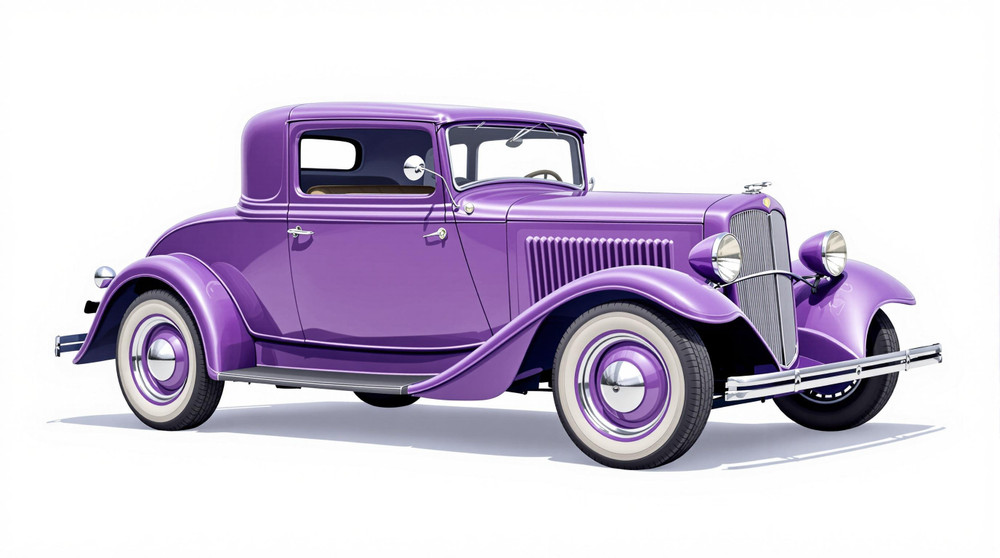
Image of 1930 Hupmobile Model C, Note: These illustrations use artistic license and may differ from actual historical models.
Performance Metrics
Fundamental Metrics
Emotional Appeal
MMP Rating
| Engine Specifications | |
|---|---|
| Engine Options: | Inline 6 |
| Displacement Range: | 3.3L |
| Horsepower Range: | Estimated 70-80 HP |
| Torque: | Not available |
| Compression Ratio: | Not available |
| Ignition System: | Distributor and coil |
| Cooling System: | Water-cooled |
| Performance Specifications | |
| 0-60 Time: | Not available |
| 1/4 Mile Time: | Not available |
| Top Speed: | 60-70 mph |
| Transmission and Drive | |
| Drive Type: | Rear-wheel drive |
| Transmission Type: | 3-speed manual |
| Fuel and Efficiency | |
| Fuel System Type: | Carburetor |
| MPG: | Not available |
| Dimensions and Brakes | |
| Brakes: | Mechanical drum brakes |
| Wheelbase: | 112.5 inches |
| Weight: | Estimated 2,800 lbs |
Note: Specifications for classic cars are given to the best of our ability, considering the limited and variant data available.
1930 Hupmobile Model C: A Distinctive American Classic
The 1930 Hupmobile Model C was a substantial, well-engineered American car from a company that once stood among the country’s important independent automakers. Built by the Hupp Motor Car Corporation of Detroit, it offered the comfort and presence buyers expected from a mid-priced automobile, at a moment when the automobile industry was moving from the exuberance of the 1920s into the hard realities of the Great Depression.
Hupp Motor Car Company was founded in 1909 by Robert C. Hupp. Its early success helped establish the company as a serious competitor to much larger manufacturers. The Model C belongs to the marque’s later, more mature period, when Hupmobile cars were known for sturdy construction and a broad choice of body styles. A notable twist in the company’s story is that Hupmobile would later turn to celebrated industrial designer Raymond Loewy for its striking streamlined cars of the 1930s. The 1930 Model C, by contrast, shows the classic upright form that was soon to give way to more integrated, aerodynamic styling.
Classic Styling and Model C Body Choices
The Model C has the formal, confident look of a car from the close of the 1920s. Its upright radiator and tall hood give the front end a strong, square-shouldered profile, while separate fenders sweep over the wheels. Running boards connect the front and rear fenders, and the exposed lamps, prominent bumpers, and wire wheels add bright details against the bodywork. The overall effect is substantial rather than sporty: a car designed to look composed outside a hotel, country home, or city office.
Hupmobile offered its cars in several body configurations across the range, with choices that could include sedans, coupes, open touring cars, and other enclosed or convertible styles. Exact Model C availability can vary by catalog and market, so surviving cars and period references are the best guide to a particular configuration. The closed sedan is an especially recognizable choice today, combining a formal profile with practical protection from weather. Coupes and open bodies are less common sights at modern shows.
Period paint choices depended on body style and specification. Black was a familiar, practical option, while dark blues, greens, and maroons suited the formal character of the car. Some bodies could be finished in contrasting colors or with complementary trim. Original paint schedules are not consistently documented for every Model C body, so a particular color should not be described as factory-correct without supporting records.
Interior Trim and Period Equipment
Inside, the Model C reflects the era’s emphasis on space, comfort, and craftsmanship. A typical example has a broad bench seat, a large steering wheel, a clearly arranged instrument panel, and substantial door and window hardware. Upholstery materials and trim varied with body style and equipment level; cloth was common in closed cars, while leather or other durable finishes could appear in more expensive or open models. Wood trim and carefully finished metal fittings helped give the cabin a more substantial feel than a basic economy car.
Like other cars of its period, the Model C relied on straightforward mechanical controls rather than modern conveniences. The driver had to manage a manual gearbox, use the clutch and throttle thoughtfully, and pay close attention to the road. Features such as electric starting and lighting were established technologies by 1930, but equipment details could differ by specification. This was a comfortable automobile for its day, not a car built around later conveniences such as power steering, automatic transmission, or modern climate control.
Engineering in the 1930 Automotive Market
Model names and specifications in Hupmobile records can be confusing, and surviving cars are sometimes described differently in advertisements and registries. The Model C is generally associated with a six-cylinder configuration, but buyers and restorers should verify an individual car’s engine and chassis details using its serial number and period documentation. Published specifications are not perfectly consistent across sources.
Broadly, the Model C followed conventional, proven practice: a front-mounted engine, rear-wheel drive, a manual transmission, and a separate chassis with suspension designed for the roads of the day. Four-wheel mechanical drum brakes were part of the period’s move toward safer, more capable stopping systems. These were meaningful features in a car intended for real touring, though they require a very different driving technique from modern hydraulic-brake vehicles.
What set Hupmobile apart was not a single revolutionary device, but its effort to combine solid engineering, comfortable bodies, and appealing styling in a competitive price class. The company was an independent maker trying to distinguish itself against giants such as Ford and General Motors. That challenge shaped the Model C: it needed to feel well appointed and dependable while remaining within reach of buyers who had alternatives from much larger companies.
Performance, Top Speed, and Road Manners
Performance figures should be treated as period-appropriate estimates rather than guaranteed factory numbers. Depending on engine specification, body weight, gearing, and condition, a Model C could plausibly reach roughly 60 to 70 mph. A 0-to-60-mph time was rarely measured or advertised in the modern way; a reasonable estimate for a six-cylinder car of this size is around 25 to 35 seconds. A heavy sedan, worn engine, or tall final-drive gearing could make it slower.
On a smooth road, the Model C’s long wheelbase and substantial chassis should give it a steady, unhurried feel. Broken pavement is a different story. Its period suspension can absorb larger bumps, but it will not isolate occupants like a modern car, and rough surfaces can send movement through the body. On winding roads, the driver needs to plan ahead, use the gearbox, and keep speeds modest. Narrow tires, substantial mass, and period steering geometry make quick changes of direction less natural than in a contemporary vehicle.
From the driver’s seat, the experience is part of the appeal. Expect the mechanical sounds of an older engine and transmission, the cadence of a manual shift, and a more direct connection to the road than most modern motorists are used to. Steering effort can be considerable at low speed, and braking requires anticipation. A well-maintained Model C is best enjoyed at a relaxed touring pace, not pushed as if it were a modern sports sedan.
Why the Model C Matters
The 1930 Model C captures a pivotal moment in American motoring. Cars had become increasingly accessible, and closed bodies, electric starting, and four-wheel braking were helping make them more practical for everyday transport. At the same time, the stock-market crash of 1929 and the economic contraction that followed put independent manufacturers under severe pressure. Hupmobile had to compete in a market where the largest companies could spread development and manufacturing costs across far greater production volumes.
The Model C’s lasting significance is therefore both technical and historical. It represents the capable, conventionally engineered American car before streamlined bodies and mass-market consolidation transformed the industry. It is not as famous for a single breakthrough as some landmark models, but it offers a useful look at how an ambitious independent manufacturer tried to meet buyers’ expectations for comfort, quality, and modern equipment.
Ownership, Maintenance, and Reliability
Today, a 1930 Hupmobile is most often used for club touring, local shows, museum displays, and occasional fair-weather drives. It can be made roadworthy, but it is not an ideal everyday vehicle. Traffic moves faster than it did in 1930, and the car lacks modern safety equipment, lighting, braking, and crash protection.
Mechanical simplicity can make routine work approachable for an experienced home mechanic. The car’s systems are largely mechanical, and many repairs follow familiar vintage-car principles. The harder part is often sourcing correct parts, finding a specialist who knows Hupmobile details, and distinguishing original components from later substitutions. Before buying, inspect the frame, body structure, brakes, steering, cooling system, electrical wiring, and engine carefully. A complete, well-documented car is usually a better starting point than an inexpensive project missing unique trim or mechanical pieces.
Reliability depends heavily on upkeep. Old cars need regular lubrication, careful cooling-system attention, proper fuel and ignition adjustment, and brake maintenance. Even a beautifully restored car benefits from frequent checks and should be driven with its age and limitations in mind.
Hupmobile Model C Facts and Myths
Hupmobile’s identity has a personal origin: the company took its name from founder Robert C. Hupp. The marque’s later history also includes a dramatic styling chapter, when designer Raymond Loewy helped create some of Hupmobile’s memorable streamlined designs. Those later cars are distinct from the upright 1930 Model C, but they help explain why the brand remains interesting to design enthusiasts.
There is no widely recognized speed, endurance, or production record specifically associated with the Model C, and no reliable basis for attaching a famous celebrity owner to the model as a whole. Its appeal is quieter: surviving examples preserve the character of a respected independent make during a major turning point in the American auto industry.
Common criticisms are practical rather than mysterious. Parts can be difficult to find, specialist knowledge is valuable, and the driving experience feels slow and physically demanding beside a modern car. Those same qualities are part of its charm for collectors who want an authentic prewar touring car rather than a vehicle that behaves like a newer classic.
Collector Value, Rarity, and Market Outlook
There does not appear to be a dependable, widely published production total for the 1930 Model C by itself. As a best-guess estimate, production may have been in the low thousands, perhaps around 2,000 to 5,000 cars across relevant Model C configurations. Treat that as an informed estimate, not a confirmed factory figure. Hupmobile was a much smaller producer than the industry leaders, and surviving Model Cs are uncommon, with open body styles and complete, original examples especially hard to find.
As a broad current-market estimate, a project or incomplete car might sell for roughly $5,000 to $15,000. A sound, presentable driver could fall around $15,000 to $35,000, while a high-quality restoration or especially desirable body style may reach approximately $35,000 to $60,000 or more. Condition, provenance, originality, engine specification, and the quality of the restoration can move the price substantially. These are guide ranges, not a formal appraisal, and niche prewar cars can take time to sell.
Values for Hupmobiles generally follow the wider market for prewar classics, but rarer does not automatically mean more valuable. Demand, parts support, and buyer familiarity matter. Well-presented cars with clear histories are likely to hold their appeal, while rough projects can be difficult to move. Rather than assuming steady appreciation, collectors should buy the best example they can afford and budget for specialist maintenance.
A Prewar Classic with Independent Spirit
The 1930 Hupmobile Model C combines imposing prewar styling, practical period engineering, and the story of an independent automaker facing a rapidly changing industry. Its upright lines and mechanical controls make it a vivid contrast to today’s cars, while its rarity gives it a special place at vintage events and in marque collections. For enthusiasts willing to maintain and drive it at an unhurried pace, the Model C is more than an old sedan: it is a rolling reminder of the moment American motoring stood between the optimism of the 1920s and the new realities of the 1930s.
1930 Hupmobile Model C Catalog of Parts
 1930 Hupmobile Model C Accessory Floor Mat - 12"X17"-AC 39Accessory Floor Mat - made of high quality black rubber with molded original emblem. Also designed to be sewn into new carpets. 12"X17", Each
 1930 Hupmobile Model C Clutch and Brake Pedal Pads. 3" wide X 4-1/8" long. Pair-CB 52Clutch and Brake Pedal Pads. 3" wide X 4-1/8" long. Pair
Why Choose Metro?
For over 100 years, Metro Moulded Parts has been the pinnacle of quality in classic car restoration parts. Our commitment to precision and authenticity in every component ensures a perfect fit and an OEM-level appearance.
- Expert Craftsmanship & Quality: Each part is a testament to our dedication to reliability and perfection, crafted from original designs and thoroughly tested.
- Advanced Technology: We use cutting-edge techniques to create flawless, long-lasting parts that surpass others in performance.
- SuperSoft Sponge – The Ultimate Door Seal: Not only are our door seals 30% softer than competitors', but they're also guaranteed to never leak. They effectively reduce wind and road noise, enhancing your classic car's comfort and driving experience.
- Proudly American: Our parts are a product of American craftsmanship, made in the USA with a spirit of excellence and heritage.
- Unrivaled Warranty: We back our products with a 30-year industry-leading warranty, a testament to our confidence in their quality.
Join us in preserving the legacy of classic cars with parts that are crafted for perfection, not just made.