
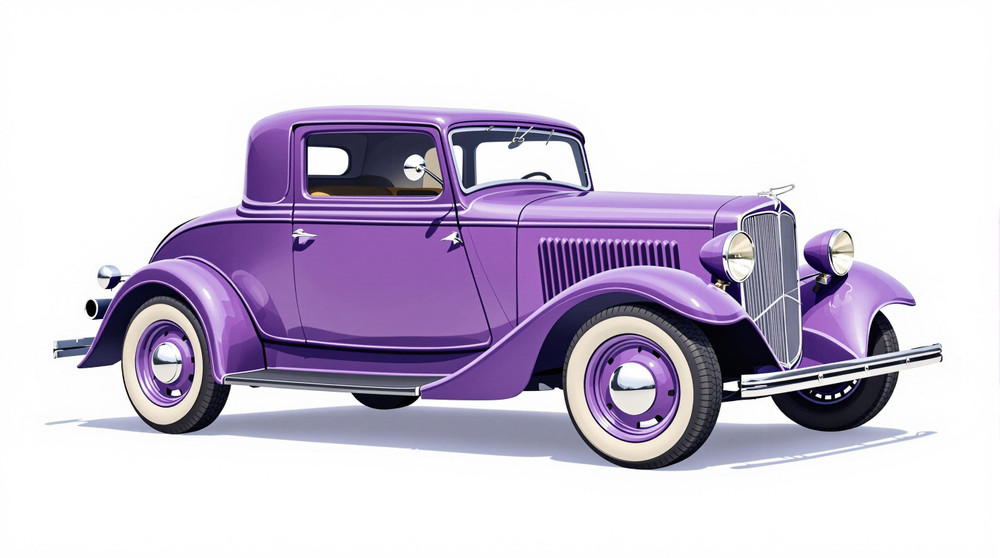
Image of 1930 Hupmobile Model S, Note: These illustrations use artistic license and may differ from actual historical models.
Performance Metrics
Fundamental Metrics
Emotional Appeal
MMP Rating
| Engine Specifications | |
|---|---|
| Engine Options: | Inline 6 |
| Displacement Range: | 3.3L |
| Horsepower Range: | Estimated 70-80 HP |
| Torque: | Not available |
| Compression Ratio: | Not available |
| Ignition System: | Distributor and coil |
| Cooling System: | Water-cooled |
| Performance Specifications | |
| 0-60 Time: | Not available |
| 1/4 Mile Time: | Not available |
| Top Speed: | 60-70 mph |
| Transmission and Drive | |
| Drive Type: | Rear-wheel drive |
| Transmission Type: | 3-speed manual |
| Fuel and Efficiency | |
| Fuel System Type: | Carburetor |
| MPG: | Not available |
| Dimensions and Brakes | |
| Brakes: | Mechanical drum brakes |
| Wheelbase: | 112.75 inches |
| Weight: | Estimated 2,800 lbs |
Note: Specifications for classic cars are given to the best of our ability, considering the limited and variant data available.
1930 Hupmobile Model S: A Classic Eight With Quiet Confidence
The 1930 Hupmobile Model S paired a smooth straight-eight engine with the substantial, carefully finished bodywork expected of an American mid-priced car. It came from the Hupp Motor Car Company of Detroit, a manufacturer founded by Robert Craig Hupp, whose early automobiles helped establish the company’s reputation for practical engineering and solid construction. The Model S arrived as the Great Depression began to reshape the industry, making it a snapshot of a confident era just before the market turned sharply more difficult.
One detail that makes the car especially interesting is its place in Hupmobile’s shift toward more advanced styling. The Model S still wore the formal, upright look of the late 1920s, but it belonged to the same company that would later pursue much more streamlined designs. Hupmobile’s story moved from conservative, well-made cars to striking experiments in automotive design, and the Model S sits near the hinge between those chapters.
Upright Style, Thoughtful Cabin
The Model S has the classic proportions of a fine American car from around 1930: a long hood, tall radiator shell, prominent round headlamps, sweeping front fenders, and a passenger compartment set well back from the engine. Running boards connect the front and rear fenders, while wire wheels and bright trim lend the car a formal, finished appearance. Its profile is imposing without being flamboyant. The straight-eight under the hood gives the car a long, dignified stance that smaller six-cylinder models could not quite match.
Inside, the emphasis was on comfort and finish rather than gadgets. Depending on body style and original specification, occupants could find broad upholstered seats in cloth or leather, a neatly arranged instrument panel, wood or wood-finished trim, and thoughtful fittings such as pull-down shades or an armrest in some closed-car configurations. Materials and trim varied with the body and equipment, but the Model S was intended to feel like a substantial step up from a basic transportation car.
Period paint choices varied by body and catalog year, so there is no single color combination that defines every Model S. Dark solid colors, including deep blue, green, maroon, and black, suited the car’s formal character. Two-tone finishes were also a natural fit for its sweeping fenders and long bodywork. Today, both a carefully researched period color and a tasteful two-tone restoration can look right, provided the finish complements the car rather than overwhelms it.
Hupmobile offered the Model S in a range of body configurations, with closed sedans and coupes among the most recognizable forms. Open body styles were also part of the broader Hupmobile range, though exact availability could depend on the model series and coachwork. For many enthusiasts, the sedan is the quintessential Model S: its tall roof, enclosed cabin, and formal proportions show the car at its most representative.
Engineering in a Changing Era
The Model S’s defining mechanical feature was its straight-eight engine. An inline eight delivers power in a smooth, even rhythm, and that refinement was a meaningful selling point in an era when many cars still relied on less powerful four- and six-cylinder engines. The Model S is generally identified with a roughly 303-cubic-inch eight-cylinder engine rated at about 100 horsepower. Exact specifications can vary across reference sources and individual cars, so buyers should confirm engine and chassis details against the car’s identification plates and period documentation.
That engine was paired with the conventional technology of its day: a manual transmission, mechanical controls, and chassis hardware designed for the road surfaces of the early 1930s. The Model S was not a modern car in disguise, but its smooth power delivery and substantial construction helped make it feel sophisticated for its time. Its significance lies less in one revolutionary invention than in the way it combined the increasingly desirable eight-cylinder layout with comfortable, well-finished American touring-car design.
Compared with contemporaries, the Hupmobile offered refinement and presence without the prestige price of the most expensive luxury marques. It was part of a competitive middle-to-upper market where manufacturers had to balance performance, comfort, and value. Its lasting influence is also connected to what came later: Hupmobile would eventually work with industrial designer Raymond Loewy on more modern-looking models. The upright Model S and the later streamlined Hupmobiles show how quickly American automotive styling was changing.
How the Model S Drives
A healthy Model S is best understood as a relaxed touring car, not a quick modern classic. With roughly 100 horsepower, a top speed in the neighborhood of 75 to 80 mph is a reasonable period-style estimate, though the actual figure depends on gearing, body weight, mechanical condition, and tire choice. A precise 0-to-60-mph figure is not well established for every Model S configuration. Based on its power, weight, and period gearing, roughly 20 to 25 seconds is a sensible estimate rather than a factory-certified performance claim.
The straight-eight should sound smooth and measured, with a low mechanical murmur that builds steadily as the car gathers speed. The manual gearbox requires deliberate shifts, and the driver needs to work with the car rather than expect modern levels of instant response. Steering is generally heavier at low speed, while braking and cornering require more anticipation than in a contemporary vehicle.
On a straight, reasonably smooth road, the Model S feels composed and substantial. Its long wheelbase helps it settle over gentle undulations, but it is still a car of its era: broken pavement can unsettle the chassis, and narrow tires offer less grip than modern rubber. On winding roads, the driver should slow early, keep inputs smooth, and avoid treating the car like a modern sports sedan. Crosswinds can also make a tall-bodied car feel less settled, especially at highway speeds. The reward is a distinctive, unhurried driving experience that makes ordinary trips feel like a period motoring event.
Living With a 1930 Hupmobile
Today, a Model S is most often a show car, touring car, or treasured weekend driver. Some owners take their cars to vintage motoring events and local parades, while others prefer occasional drives on quiet roads. It can be used regularly, but it is not an easy substitute for a modern daily driver. Traffic, limited braking performance, changing weather, and the availability of appropriate parts all call for planning.
Routine maintenance is familiar in principle to anyone who knows older cars: lubrication, ignition and fuel-system attention, cooling-system checks, brake adjustment, and regular inspection of tires and steering components. The mechanical layout is comparatively straightforward, and a capable vintage-car mechanic can service it without modern diagnostic equipment. The challenge is often not complexity but parts availability. Some components may need to be sourced through specialist suppliers, repaired, or fabricated, and body or trim pieces can be especially difficult to find.
Reliability depends heavily on restoration quality and how consistently the car has been maintained. A carefully sorted Model S can tour reliably at sensible speeds, but an old car that has spent years sitting may need significant work before it is ready for the road. Before buying, inspect the engine, cooling system, transmission, brakes, chassis, and electrical system, and look closely for poor repairs or corrosion in structural areas.
Hupmobile Facts and Common Misconceptions
The Hupp Motor Car Company was a Detroit manufacturer, and the Hupmobile name was closely associated with Robert Hupp’s early automotive ventures. The company’s later design history is a fun contrast to the formal Model S: in the 1930s, Hupmobile pursued more aerodynamic forms, including work associated with Raymond Loewy. That broader story helps explain why the Model S is interesting beyond its specifications. It represents a traditional approach just as the industry was beginning to embrace a more modern visual language.
There is no widely recognized speed, endurance, or sales record attached specifically to the 1930 Model S, and claims of a famous celebrity owner should be checked against reliable documentation. Its appeal is quieter than that of a record-setting race car or a celebrity-owned classic. It is a substantial example of a respected independent manufacturer working through one of the most difficult transitions in American automotive history.
A common criticism is that the Model S can be mistaken for other formal American cars of the period. Its design is handsome, but not as instantly recognizable as some later Hupmobile models. Parts scarcity and the realities of prewar driving can also make ownership demanding. For enthusiasts who appreciate understated engineering and period craftsmanship, however, those drawbacks are part of the car’s character rather than reasons to dismiss it.
Collector Value and Availability
Exact production figures for the 1930 Model S are not consistently documented in commonly available references. A reasonable working estimate is that perhaps 5,000 to 10,000 were built, but that should be treated as an informed approximation, not a verified factory total. Surviving examples are uncommon, and a particular body style or well-documented original car may be considerably harder to find than a general production estimate suggests.
As a broad 2026 collector-market guide, a project car or incomplete example might fall around $10,000 to $20,000, while a sound driver or older restoration could be roughly $20,000 to $40,000. A high-quality, correctly restored car may reach approximately $40,000 to $65,000 or more, depending on body style, originality, condition, provenance, and the quality of the work. These are estimates, not appraisals; uncommon coachwork and exceptional presentation can change the result substantially.
Values for niche prewar cars like the Model S tend to move gradually rather than follow the sharp swings seen in more famous sports cars. Well-restored examples may hold their value or appreciate modestly, but restoration costs can exceed the car’s eventual market price. Originality, sound structure, and documented mechanical work often make a stronger ownership case than an expensive restoration completed without close attention to period correctness.
Why the 1930 Hupmobile Model S Matters
The 1930 Hupmobile Model S combines a smooth straight-eight, traditional American styling, and the workmanship of an ambitious Detroit manufacturer. It was not the fastest or most radical car of its day, but it offered refinement and road presence at a moment when the automobile industry was changing quickly. Its upright body and considered cabin preserve the feel of late-1920s motoring, while the later history of Hupmobile points toward the streamlined designs that would follow.
For collectors, the Model S is an appealing choice for those who value history, craftsmanship, and a less predictable badge on the show field. It rewards patient maintenance and measured driving, and it offers a direct connection to the independent automakers that helped shape the American car industry. The Hupmobile may not shout for attention, but its straight-eight still makes a memorable case for the enduring charm of a well-built classic.
1930 Hupmobile Model S Catalog of Parts
 1930 Hupmobile Model S Accessory Floor Mat - 12"X17"-AC 39Accessory Floor Mat - made of high quality black rubber with molded original emblem. Also designed to be sewn into new carpets. 12"X17", Each
 1930 Hupmobile Model S Clutch and Brake Pedal Pads. 3" wide X 4-1/8" long. Pair-CB 52Clutch and Brake Pedal Pads. 3" wide X 4-1/8" long. Pair
Why Choose Metro?
For over 100 years, Metro Moulded Parts has been the pinnacle of quality in classic car restoration parts. Our commitment to precision and authenticity in every component ensures a perfect fit and an OEM-level appearance.
- Expert Craftsmanship & Quality: Each part is a testament to our dedication to reliability and perfection, crafted from original designs and thoroughly tested.
- Advanced Technology: We use cutting-edge techniques to create flawless, long-lasting parts that surpass others in performance.
- SuperSoft Sponge – The Ultimate Door Seal: Not only are our door seals 30% softer than competitors', but they're also guaranteed to never leak. They effectively reduce wind and road noise, enhancing your classic car's comfort and driving experience.
- Proudly American: Our parts are a product of American craftsmanship, made in the USA with a spirit of excellence and heritage.
- Unrivaled Warranty: We back our products with a 30-year industry-leading warranty, a testament to our confidence in their quality.
Join us in preserving the legacy of classic cars with parts that are crafted for perfection, not just made.