
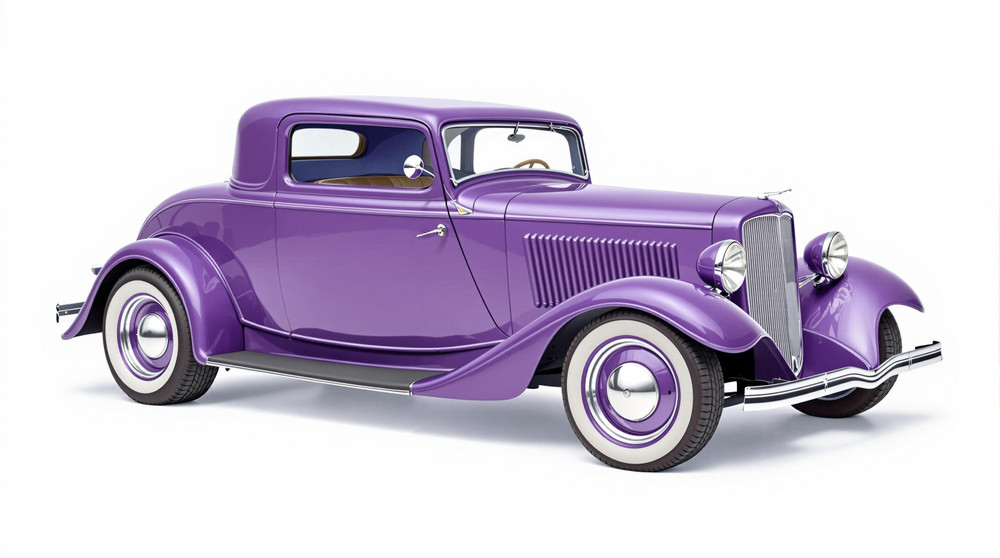
Image of 1932 Hupmobile Series F-222, Note: These illustrations use artistic license and may differ from actual historical models.
Performance Metrics
Fundamental Metrics
Emotional Appeal
MMP Rating
| Engine Specifications | |
|---|---|
| Engine: | Inline 8 |
| Displacement: | 3.6L |
| Horsepower: | Estimated 100-120 HP |
| Torque: | Not available |
| Compression Ratio: | Not available |
| Ignition System: | Battery and coil |
| Cooling System: | Water-cooled |
| Performance Specifications | |
| 0-60 Time: | Not available |
| 1/4 Mile Time: | Not available |
| Top Speed: | 75 mph |
| Transmission and Drive | |
| Drive Type: | Rear-wheel drive |
| Transmission Type: | 3-speed manual |
| Fuel and Efficiency | |
| Fuel System Type: | Carburetor |
| MPG: | Not available |
| Dimensions and Brakes | |
| Brakes: | Mechanical drum brakes |
| Wheelbase: | 127 inches |
| Weight: | 3,200 lbs |
Note: Specifications for classic cars are given to the best of our ability, considering the limited and variant data available.
1932 Hupmobile Series F-222: A Classic American Six
The 1932 Hupmobile Series F-222 was built for motorists who wanted a substantial, well-equipped American car without stepping up to a costly luxury marque. Produced by the Hupp Motor Car Corporation of Detroit, it paired traditional six-cylinder power with the comfort and road presence expected of a full-size car during one of the toughest years in the industry.
Hupmobile’s story began with engineer and entrepreneur Robert C. Hupp, who founded the company in 1909. Its early cars earned a reputation for solid construction and practical engineering. By 1932, however, the Great Depression had sharply reduced demand for new cars, and Hupp was competing in a crowded market while trying to keep its business viable. The F-222 is a snapshot of that moment: an ambitious, carefully finished automobile from a respected independent maker working under considerable economic pressure.
One detail that makes the F-222 especially interesting is how easily it can be overlooked beside more familiar names such as Ford, Chevrolet, and Buick. Hupmobile was neither a tiny experimental concern nor one of the dominant giants. It occupied the middle ground, building substantial cars for buyers who valued something a little less common.
Exterior Design and Cabin Details
The F-222 wears the formal proportions typical of an early-1930s American automobile. Its long hood leads to a tall, upright radiator grille, while the separate fenders arc over the wheels and the running boards create a continuous step between them. Headlamps sit prominently at the front, giving the car a purposeful, almost architectural face. Depending on body style and trim, brightwork around the grille, lamps, and window frames adds contrast without overwhelming the design.
Inside, the emphasis was on comfort and a sense of quality rather than modern minimalism. A broad bench seat, a large steering wheel, and clear, period-style instruments made up the driver’s workspace. Upholstery and trim varied with body style and equipment, but buyers could expect durable fabrics or other period-appropriate materials, finished with polished metal details and wood-grain-style accents in some interiors. Original cars may differ considerably today because upholstery, dashboards, and trim are often restored or replaced.
Factory paint choices depended on body and trim combinations, and surviving documentation does not always provide a complete, easy-to-verify color list for every F-222. Like many cars of the period, it was offered in restrained solid colors and two-tone combinations. Deep blues, greens, maroons, and blacks suit the car’s formal lines particularly well, though an authentic restoration should follow the paint information for the specific body rather than assume one color was universal.
The F-222 name identifies a particular Hupmobile series and model configuration, not a single body shape. Closed bodies such as sedans and coupes were part of the range, with availability varying by catalog and market. The sedan is the most recognizable choice for a family-use car, while a coupe has a sportier profile and is often more visually striking today. Open cars are less commonly encountered and can command additional interest when their history and originality are well documented.
Engineering in the 1932 Hupmobile
Published specifications commonly associate the F-222 with a side-valve, or L-head, inline six of about 228 cubic inches, producing roughly 80 horsepower. It used a conventional front-engine, rear-wheel-drive layout and a manual transmission. Exact details can vary with model configuration and surviving reference sources, so buyers restoring one should confirm specifications using the car’s serial numbers, original literature, and marque records.
Those figures were respectable for a mid-priced six-cylinder car of the time. The engine’s design favored smooth, dependable everyday operation over high-revving performance. Four-wheel braking and the increasingly common conveniences of the era helped make the Hupmobile a more composed road car than an earlier touring machine, though its controls and braking feel remain distinctly vintage by modern standards.
The F-222 was not a technological revolution, and that is part of its appeal. It brought established engineering together in a solid, comfortable package. Its significance lies in representing the capabilities of a serious independent manufacturer during a period when automobile design was moving toward more integrated bodies, improved passenger comfort, and greater attention to road manners.
Road Performance and Driving Feel
There is no single dependable factory acceleration figure for every F-222 body, and period performance depends on gearing, condition, load, and maintenance. As a practical estimate, a sound car might reach approximately 65 to 75 mph, while a 0-to-60-mph run would likely take somewhere around 25 to 35 seconds. These are modern estimates, not guaranteed factory test results. An 80-horsepower engine moving a heavy early-1930s car was built for steady progress, not quick starts.
On a smooth road, the Hupmobile should feel substantial and relaxed. Its long chassis and large tires soften many bumps, while the upright seating position gives the driver a commanding view. On broken pavement, the suspension is more forgiving than that of many smaller cars, though worn springs, shocks, bushings, and steering components can make an old example wander or bounce.
On a winding road, expect to plan ahead. The steering is slower than a modern car’s, body roll is noticeable, and the brakes require more anticipation. The engine’s low, measured exhaust note, the movement of the long gear lever, and the effort required at the steering wheel are all part of the experience. Driving one is less about attacking corners and more about settling into a measured pace and enjoying the view from the broad cabin.
Living With an F-222
Today, the Series F-222 is best suited to touring, local club events, museum displays, and judged or informal car shows. It can be driven on the road, but most owners do not use one as a daily driver. Modern traffic, limited crash protection, vintage braking performance, and the challenge of finding parts all make regular commuting a poor fit.
Routine work is approachable for an experienced home mechanic. The engine bay is relatively accessible, and much of the car’s mechanical layout is straightforward by classic-car standards. Ignition, carburetion, cooling, lubrication, brakes, and electrical systems all reward careful maintenance. The bigger challenge is locating model-specific parts, body hardware, trim, and correct interior materials. Mechanical components may sometimes be repaired or adapted, but originality-focused restorations require patience and help from marque clubs or specialist suppliers.
Reliability depends heavily on condition. A properly rebuilt engine and carefully sorted fuel, cooling, brake, and electrical systems can make an F-222 a pleasant tour car. A neglected example may need extensive work before it is safe to drive. As with any prewar car, inspect the frame, body mounts, floor structure, brakes, and steering before buying, and do not assume that a car is roadworthy simply because it starts and moves.
Hupmobile Facts and Common Criticisms
Hupmobile’s history is closely tied to Detroit’s independent manufacturers. The company produced cars from 1909 until 1940, surviving the early years of the Depression but ultimately unable to compete with the financial strength and production scale of the largest automakers. The 1932 F-222 therefore represents more than an individual model: it belongs to the final difficult chapter of an established American marque.
No widely recognized speed, endurance, or sales record is associated specifically with the F-222, and celebrity ownership claims should be treated cautiously unless supported by documentation. Its best-known distinction is its connection to a manufacturer that built substantial, technically competent cars outside the Big Three. Hupmobile also became associated later with more dramatically streamlined styling, but those later designs should not be confused with the F-222’s more conventional 1932 appearance.
Common criticisms are familiar to owners of many cars from the period: modest acceleration, heavy controls, limited parts availability, and braking performance that demands a cautious driver. The F-222 also lacks the instant recognition and broad reproduction-parts support enjoyed by more popular Ford and Chevrolet models. Those drawbacks are balanced by its distinctive badge, attractive proportions, and the satisfaction of preserving a less-common American marque.
Collector Value and Rarity
There is no consistently published production total for the F-222 alone. Hupmobile’s 1932 output was limited compared with that of the major manufacturers, and production varied across its model range. A reasonable working estimate is that the F-222 was built in the low thousands, perhaps around 2,000 to 5,000 cars, but that is an informed estimate rather than a verified factory count. Surviving examples are much scarcer than that original number suggests, especially in complete, running condition.
As a broad North American market estimate, a project car might sell for roughly $5,000 to $15,000, while a usable driver could fall around $15,000 to $30,000. A well-restored, highly original, or particularly desirable body style may bring approximately $30,000 to $50,000 or more. These ranges are not appraisals: condition, documentation, originality, location, and the cost of completing a restoration can shift the price substantially.
Values for less widely known prewar cars tend to be uneven. The F-222’s rarity can attract marque enthusiasts, but it also limits the pool of buyers and the availability of comparable sales. Over time, well-presented examples may benefit from growing interest in independent American manufacturers, but buyers should prioritize condition and history over the assumption that rarity alone guarantees appreciation.
Why the 1932 Hupmobile F-222 Matters
The 1932 Hupmobile Series F-222 combines a smooth six-cylinder engine, formal prewar styling, and the solid presence of a full-size American car. It was not a record-breaker or a mass-market design that changed the industry. Its importance is quieter: it shows what an established independent automaker could offer during the Depression, and it preserves a distinctive piece of Detroit’s automotive history.
For collectors, the F-222 offers something increasingly appealing: a classic with genuine character that does not appear at every show. Keep one maintained, drive it at the pace it was built for, and its long hood, upright grille, and steady six-cylinder rhythm tell the story better than any spec sheet can.
1932 Hupmobile Series F-222 Catalog of Parts
 1932 Hupmobile Series F-222 Accessory Floor Mat - 12"X17"-AC 39Accessory Floor Mat - made of high quality black rubber with molded original emblem. Also designed to be sewn into new carpets. 12"X17", Each
 1932 Hupmobile Series F-222 Clutch and Brake Pedal Pads. 3" wide X 4-1/8" long. Pair-CB 52Clutch and Brake Pedal Pads. 3" wide X 4-1/8" long. Pair
Why Choose Metro?
For over 100 years, Metro Moulded Parts has been the pinnacle of quality in classic car restoration parts. Our commitment to precision and authenticity in every component ensures a perfect fit and an OEM-level appearance.
- Expert Craftsmanship & Quality: Each part is a testament to our dedication to reliability and perfection, crafted from original designs and thoroughly tested.
- Advanced Technology: We use cutting-edge techniques to create flawless, long-lasting parts that surpass others in performance.
- SuperSoft Sponge – The Ultimate Door Seal: Not only are our door seals 30% softer than competitors', but they're also guaranteed to never leak. They effectively reduce wind and road noise, enhancing your classic car's comfort and driving experience.
- Proudly American: Our parts are a product of American craftsmanship, made in the USA with a spirit of excellence and heritage.
- Unrivaled Warranty: We back our products with a 30-year industry-leading warranty, a testament to our confidence in their quality.
Join us in preserving the legacy of classic cars with parts that are crafted for perfection, not just made.